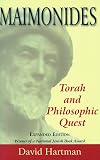
Maimonides: Torah and Philosophic Quest
by David Hartman, David Hartman (Author)
On This Page
Description
In his 1976 "Maimonides: Torah and Philosophical Quest," David Hartman departs from traditional scholarly views about Maimonides by offering a new way of understanding the great man and his work. This expanded edition contains Hartman's new postscript. A 12th-century rabbi, scholar, physician, and philosopher, Moses Maimonides is best known for his two great works on Judaism: Mishneh Torah and Guide to the Perplexed. They have often been viewed by scholars as having different audiences and show more different messages, together reflecting the two sides of the author himself: Maimonides the halakhist, who focused on piety through obedience to Jewish law; and Maimonides the philosopher, who advocated closeness with God through reflection and knowledge of nature. Hartman argues that while many scholars look at one aspect of Maimonides to the exclusion or dismissal of the other, the way to really understand him is to see both adherence to the law and philosophical pursuits as two essential aspects of Judaism. Hartman's 2009 postscript sheds new light on his argument and indeed on Judaism as Maimonides interpreted it. In it Hartman explains that while Maimonides never envisioned the integration of halakhah with philosophy, he did view them as existing in a symbiotic relationship. While the focus of the Mishneh Torah was halakha and obedience to Jewish law, Guide to the Perplexed spoke to individuals whose love of God grew through their passion, devotion and yearning to understand God's wisdom and power in nature. Both modes of spiritual orientation lived in the thought of Maimonides. show lessTags
Recommendations














Member Reviews
Dr. Rabbi Hartman starts off with a good intro into the 4 different categories of people and how they deal with information/dogma that is contrary to their way of thinking. I'm looking foward to finishing this book and reading how Hartman explains how Rambam integrates Philosophy and Torah, and the balance between the two.
Chapter 1 covers how the patriarches were able to come to a knowledge of Hashem, without the Torah, by logical reasoning. Then, the role of the Torah in keeping this knowledge alive through action is discussed.
More to follow...
Chapter 1 covers how the patriarches were able to come to a knowledge of Hashem, without the Torah, by logical reasoning. Then, the role of the Torah in keeping this knowledge alive through action is discussed.
More to follow...
Ratings
Members
- Recently Added By
Author Information

46+ Works 659 Members
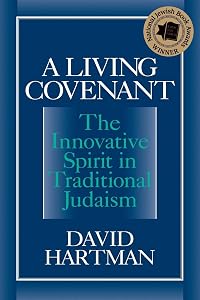
David Hartman is founder of the Shalom Hartman Institute in Jerusalem, the world-renown center for the study of classical Jewish sources and of contemporary Israeli and Jewish issues. He is the author of A Living Covenant: The Innovative Spirit in Traditional Judaism and Israelis and the Jewish Tradition: An Ancient People Debating Its Future. Dr. show more Hartman received his rabbinical ordination from Yeshiva University and his PhD in philosophy from McGill University. show less
Awards and Honors
Awards
Common Knowledge
- Original publication date
- 1976
Classifications
Statistics
- Members
- 124
- Popularity
- 262,917
- Reviews
- 1
- Rating
- (3.75)
- Languages
- English
- Media
- Paper, Ebook
- ISBNs
- 8