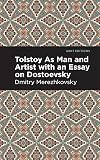
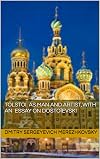
Tolstoy As Man and Artist with an Essay on Dostoyevsky (Mint Editions (In Their Own Words: Biographical and Autobiographical Narratives))
by Dmitry Sergeyevich Merezhkovsky
On This Page
Description
Tolstoy as Man and Artist with an Essay on Dostoevsky (1901) is a work of literary criticism by Dmitriy Merezhkovsky. Having turned from his work in poetry to a new, spiritually charged interest in fiction, Merezhkovsky sought to develop his theory of the Third Testament, an apocalyptic vision of Christianity's fulfillment in twentieth century humanity. In this collection of essays on Tolstoy and Dostoevsky, Merezhkovsky explores the spiritual dimensions of the written word by examining the show more interconnection of being and writing for two of Russian literature's most iconic writers. For Dmitriy Merezhkovsky, an author who always wrote with philosophical and spiritual purpose, the figure of the artist as a human being is a powerful tool for understanding the quality and focus of that artist's work. Leo Tolstoy, author of such classics as War and Peace and Anna Karenina, developed a reputation as an ascetic, deeply spiritual man who envisioned his art as an extension of his political and religious beliefs. Dostoevsky, while perhaps more interested in the psychological aspects of human life, pursued a similar path in such novels as The Brothers Karamazov and Crime and Punishment. In Merezhkovsky's view, these writers came to embody in their lives and works the particularly Russian conflict between truths both human and divine. Tolstoy as Man and Artist with an Essay on Dostoevsky is an invaluable text both for its analysis of its subjects and for its illumination of the philosophical concepts explored by Merezhkovsky throughout his storied career. With a beautifully designed cover and professionally typeset manuscript, this edition of Dmitriy Merezhkovsky's Tolstoy as Man and Artist with an Essay on Dostoevsky is a classic work of Russian literature reimagined for modern readers. show lessTags
Member Reviews
Books about writers form a wonderful genre. I like to be surprised by the insights the author gains from the books he is reading, even if they substantially differ from mine.
In the case of “Lev Tolstoy and Dostoevsky” these surprises are manifold. But if you are at all acquainted with Dmitri Sergeevich Merezhkovsky (DSM) you can recognize a familiar pattern.
DSM (1865-1941) was the son of wealthy parents. He was well educated and devoted his life to literature, philosophy and religion. His religious views were rather eccentric. He believed that after the Old Testament of the Father and the New Testament of the Son, we should expect (real soon) a Third Testament dealing with the Holy Ghost. The Russian people, he felt, should actively show more strive for social an religious reforms, and this is a recurring theme in his publications.
LT&D was published from 1900 to 1902 as a feuilleton in Mir Iskusstva, the magazine of which he was an editor, and subsequently published as a book in 1902. The first half was translated into English in the same year. This is available in scanned form on www.archive.org, and that is what I have mostly used for this review.
The preface is only in the Russian editions. Here DSM doesn’t mention Tolstoy much. The themes are: Peter the Great, Westernizers vs. Slavophiles, Dostoevsky as Slavophile with Westernizing characteristics, Pushkin, LT and D as successors to Pushkin in their own way, Nietzsche, God-man vs. Man-god, Russia in front of the abyss...
Chapters 1 to 5 tell about the life of Tolstoy. DSM focuses on the dichotomy between T’s persona as someone who desires to follow Christ by leaving all worldly goods, and the fact of him being found at Yasnaya Polyana, receiving guests, now working with the peasants, then studying in his room, now castigating himself, then “for three days do nothing but lie abed and revel in reading novels and eating gingerbread and Kronov honey, which he bought with his last few pence”.
Chapters 6 to 8 describe Dostoevsky’s life. His early literary heroes are Homer, Shakespeare, Schiller, Hoffmann, Corneille, Racine and Pushkin. Tolstoy apparently (CBY) sticks to Dumas, Sue and Paul de Kock. D weeps when he hears of Pushkins death. T associates Pushkin with “a little book in a yellow binding, which he read and studied as a child”. D writes for a living, for T writing is but one of his many activities, and his estate guarantees his income.
Chapters 9 to 13 deal with T’s writing. DSM remarks that many characters have a single characteristic that identifies them throughout the whole novel: Princess Maria has down on her lip, Karataev has roundness all over, Napoleon a small white plump hand.
The characters of W&P do not look and act like they should around 1800, they are much more like people from the second half of the nineteenth century.
DSM places T in the Homeric epic tradition: all participants are victims of fate.
Religious development is covered in Chapter 13. Unfortunately this is discussed in terms that are now extremely politically incorrect.,
Chapters 14 and 15 concern the writing of D. His characters stand apart because of their speech: haughty, simple, excited. In contrast, T’s characters are said to talk all in the same register. D’s stories are mostly tragedies, DSM states that D would have made a good playwright if the times had been favourable for the tragic stage.
Chapter 16 tries to synthesise all of the preceding material. The relation of Art and Religion is discussed, a far-fetched comparison is made between Russian literature and Italian renaissance art. This culminates in a call to arms:
“There is a handful of Russians— certainly no more— hungering and thirsting after the fulfilment of their new religious Idea : who believe that in a fusion between the thought of Tolstoy and that of
Dostoevsky will be found the Symbol — the union—to lead and revive.”
Unfortunately, the translation stops here, where the Russian version continues with endless reflections on the religion of T and D. Instead, we’re informed that
“The author has continued the above subject in a Study of the Religion of Tolstoy and Dostoevsky. Whether this Study shall be given to the English and American public will depend upon the reception accorded to his foregoing book, — Ed.”
Apparently the reception was not sufficiently enthusiastic.
In “Tolstoy or Dostoevsky”, George Steiner calls Merezhkovsky “a fickle, untrustworthy, but enlightening witness” (or something like that, I only have a Dutch translation). Is this fair? For his purposes, yes, but I also enjoyed reading it as pure rhetoric. As a bonus, he quotes some of my favourite authors (Goethe, Nietzsche, Pushkin) and digs up obscure biographic facts about T and D. show less
In the case of “Lev Tolstoy and Dostoevsky” these surprises are manifold. But if you are at all acquainted with Dmitri Sergeevich Merezhkovsky (DSM) you can recognize a familiar pattern.
DSM (1865-1941) was the son of wealthy parents. He was well educated and devoted his life to literature, philosophy and religion. His religious views were rather eccentric. He believed that after the Old Testament of the Father and the New Testament of the Son, we should expect (real soon) a Third Testament dealing with the Holy Ghost. The Russian people, he felt, should actively show more strive for social an religious reforms, and this is a recurring theme in his publications.
LT&D was published from 1900 to 1902 as a feuilleton in Mir Iskusstva, the magazine of which he was an editor, and subsequently published as a book in 1902. The first half was translated into English in the same year. This is available in scanned form on www.archive.org, and that is what I have mostly used for this review.
The preface is only in the Russian editions. Here DSM doesn’t mention Tolstoy much. The themes are: Peter the Great, Westernizers vs. Slavophiles, Dostoevsky as Slavophile with Westernizing characteristics, Pushkin, LT and D as successors to Pushkin in their own way, Nietzsche, God-man vs. Man-god, Russia in front of the abyss...
Chapters 1 to 5 tell about the life of Tolstoy. DSM focuses on the dichotomy between T’s persona as someone who desires to follow Christ by leaving all worldly goods, and the fact of him being found at Yasnaya Polyana, receiving guests, now working with the peasants, then studying in his room, now castigating himself, then “for three days do nothing but lie abed and revel in reading novels and eating gingerbread and Kronov honey, which he bought with his last few pence”.
Chapters 6 to 8 describe Dostoevsky’s life. His early literary heroes are Homer, Shakespeare, Schiller, Hoffmann, Corneille, Racine and Pushkin. Tolstoy apparently (CBY) sticks to Dumas, Sue and Paul de Kock. D weeps when he hears of Pushkins death. T associates Pushkin with “a little book in a yellow binding, which he read and studied as a child”. D writes for a living, for T writing is but one of his many activities, and his estate guarantees his income.
Chapters 9 to 13 deal with T’s writing. DSM remarks that many characters have a single characteristic that identifies them throughout the whole novel: Princess Maria has down on her lip, Karataev has roundness all over, Napoleon a small white plump hand.
The characters of W&P do not look and act like they should around 1800, they are much more like people from the second half of the nineteenth century.
DSM places T in the Homeric epic tradition: all participants are victims of fate.
Religious development is covered in Chapter 13. Unfortunately this is discussed in terms that are now extremely politically incorrect.,
Chapters 14 and 15 concern the writing of D. His characters stand apart because of their speech: haughty, simple, excited. In contrast, T’s characters are said to talk all in the same register. D’s stories are mostly tragedies, DSM states that D would have made a good playwright if the times had been favourable for the tragic stage.
Chapter 16 tries to synthesise all of the preceding material. The relation of Art and Religion is discussed, a far-fetched comparison is made between Russian literature and Italian renaissance art. This culminates in a call to arms:
“There is a handful of Russians— certainly no more— hungering and thirsting after the fulfilment of their new religious Idea : who believe that in a fusion between the thought of Tolstoy and that of
Dostoevsky will be found the Symbol — the union—to lead and revive.”
Unfortunately, the translation stops here, where the Russian version continues with endless reflections on the religion of T and D. Instead, we’re informed that
“The author has continued the above subject in a Study of the Religion of Tolstoy and Dostoevsky. Whether this Study shall be given to the English and American public will depend upon the reception accorded to his foregoing book, — Ed.”
Apparently the reception was not sufficiently enthusiastic.
In “Tolstoy or Dostoevsky”, George Steiner calls Merezhkovsky “a fickle, untrustworthy, but enlightening witness” (or something like that, I only have a Dutch translation). Is this fair? For his purposes, yes, but I also enjoyed reading it as pure rhetoric. As a bonus, he quotes some of my favourite authors (Goethe, Nietzsche, Pushkin) and digs up obscure biographic facts about T and D. show less
Members
- Recently Added By
Author Information

76+ Works 1,016 Members
Classifications
- Genres
- Literature Studies and Criticism, Fiction and Literature
- DDC/MDS
- 891.7 — Literature & rhetoric Literatures of other languages East Indo-European and Celtic literatures Russian and East Slavic languages
- LCC
- PG3385 .M4 — Language and Literature Slavic languages and literatures. Baltic languages. Albanian language Slavic. Baltic. Albanian Russian literature Individual authors and works 1800-1870 Tolstoi
- BISAC
Statistics
- Members
- 15
- Popularity
- 1,449,210
- Reviews
- 1
- Rating
- (4.00)
- Languages
- English, German, Russian
- Media
- Paper, Ebook
- ISBNs
- 5
- ASINs
- 3