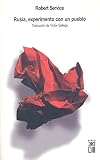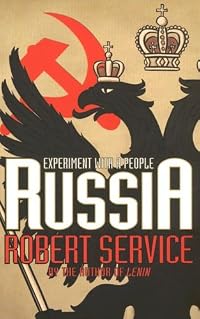
Russia: Experiment with a People
by Robert Service
On This Page
Description
Since the fall of communism, Russia has witnessed a dramatic struggle between old and new, continuity and change. Corruption and violence have plagued society. Most people have benefited little from the new capitalist order. But positive changes are evident. Russians can speak and act more freely in a state that no longer intrudes on their privacy. They are able to travel abroad, enjoy unprecedented access to information from around the world, and organize and campaign for improvement in show more their living conditions. In this engrossing account Robert Service traces the formation of the new Russia from the end of the Soviet Union in 1991 to the present. He paints a fascinating picture of a people in metamorphosis. In wide-ranging discussions on topics from Kremlin politics to rock music and macroeconomics to contemporary poetry, Service takes us inside to witness the changes from both the top down and the bottom up. He examines the reforms of the Yeltsin and Putin administrations in the context of the complex communist legacy, deftly interweaving political history, intellectual thought, and popular consciousness to illuminate the real difficulties Russia has faced on its rocky path to reform. For the second time in less than a century, the Russians have been engaged in a fundamental reshaping of their society, and the results will prove of vital importance to the global community. Robert Service has provided a valuable and engaging guide to their recent remarkable journey. show lessTags
Recommendations


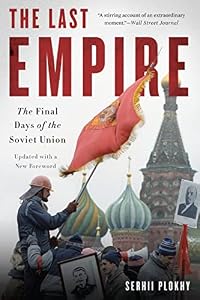
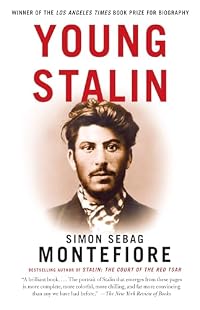
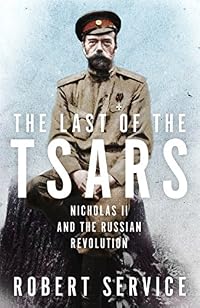
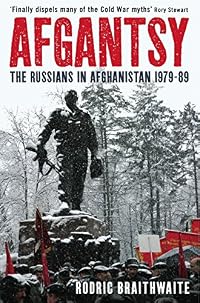



Member Reviews
An account of post-Soviet Russia, from an author who has obviously delved deep into the history and culture of the region. I must confess I was a bit taken aback at the start at the author's style, which consists of a series of ultra-short, staccato statements that seemed like he was speaking down to what he may have imagined a somewhat dim-witted audience. However, the style warms up further on, the sentences become more well-rounded and adult in tone, and the author really gets into his stride. The book presents information from the inside on almost all aspects, especially the deep rooted corruption and self-serving cynicism of the oligarchs and ruling groups, and the stoic resignation of the masses.
My own reaction after reading to show more the end, is a silent thanks to our leaders in newly independent India, for having chosen a middle path between dictatorial communism on the one hand, and unbridled capitalism and privatization on the other. The Indians chose to trundle along with an in-between model with both public and private sector enterprises, and did not immediately abandon the responsibilities of the State as regards education, health, and civic services, whatever the quality. India also has been able to achieve a balance between provincial (State) interests and the central government interests, including accommodation of provincial or regional ethnic and language interests, without losing the people's commitment to the idea of India as one whole. This has apparently been a problem for Russia throughout its 1000-odd year history, and one would think that they could explore with benefits the Indian model of a multi-cultural federal state with a strong center. show less
My own reaction after reading to show more the end, is a silent thanks to our leaders in newly independent India, for having chosen a middle path between dictatorial communism on the one hand, and unbridled capitalism and privatization on the other. The Indians chose to trundle along with an in-between model with both public and private sector enterprises, and did not immediately abandon the responsibilities of the State as regards education, health, and civic services, whatever the quality. India also has been able to achieve a balance between provincial (State) interests and the central government interests, including accommodation of provincial or regional ethnic and language interests, without losing the people's commitment to the idea of India as one whole. This has apparently been a problem for Russia throughout its 1000-odd year history, and one would think that they could explore with benefits the Indian model of a multi-cultural federal state with a strong center. show less
10 cent score!
Ratings
Members
- Recently Added By
Author Information

20+ Works 3,070 Members
Robert Service was born on October 29, 1947. He received an MA in modern languages from the University of Cambridge and an MA and a PhD in government from the University of Essex. He is a Russian historian and political commentator. He has written numerous books including Comrades: A World History of Communism; Stalin: A Biography, Lenin: A show more Biography, and Spies and Commissars. He received the 2009 Duff Cooper Prize for Trotsky: A Biography. (Bowker Author Biography) show less
Classifications
- Genres
- History, Nonfiction, General Nonfiction, Politics and Government
- DDC/MDS
- 947.086 — History & geography History of Europe Eastern European Counties and Russia Russian & Slavic History by Period 1855- 1991-
- LCC
- DK510.763 .S445 — History of Europe, Asia, Africa and Oceania Russia. Soviet Union. Former Soviet Republics – Poland History of Russia. Soviet Union. Former Soviet Republics Local history and description Russia (Federation). Russian S.F.S.R.
- BISAC
Statistics
- Members
- 76
- Popularity
- 414,462
- Reviews
- 2
- Rating
- (3.89)
- Languages
- English, Spanish
- Media
- Paper
- ISBNs
- 5