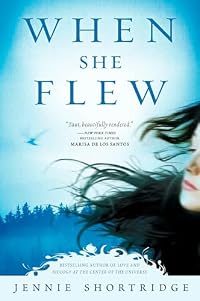
When She Flew
by Jennie Shortridge
On This Page
Description
A new novel about faith, family, and finding the courage to do the right thing from the author of Love and Biology at the Center of the Universe.Police officer Jessica Villareal has always played by the book and tried to do the right thing. But now, she finds herself approaching midlife divorced, estranged from her daughter, alone, and unhappy. And she’s wondering if she ever made a right choice in her life.
But then Jess discovers a girl and her father living off the radar in the Oregon show more woods, avoiding the comforts—and curses—of modern life. Her colleagues on the force are determined to uproot and separate them, but Jess knows the damage of losing those you love. She recognizes her chance to make a difference by doing something she’s never dared. Because even though she’s used to playing by the rules, there are times when they need to be broken…. show less
Tags
Recommendations
















Member Reviews
Wow! I know it's become cliche to say a book is compelling but never was a book more fit for the verb than When She Flew. From the moment I broke the spine I had to find out what happened next. I even neglected my precious computer. This is seriously good reading.
Thirteen year old Lindy has been living undetected with her Iraq vet father for 5 years in a wildlife sanctuary in Oregon when she is spotted. Police are sent to investigate and make sure the girl is in no danger. Officer Jess Villareal disagrees with her Sergeant who has decided that Lindy should be put in foster care until her safety is verified. Jess has a sense about people and her sense tells her that separation from her father will cause more damage to Lindy than good, so show more she does something she has never done before: she goes against protocol and helps the father and daughter escape from police custody. Jess is just doing what she believes to be right but it will have farther reaching consequences than she could have imagined.
There is just nothing about this book that I didn't love. The characters were all sympathetic and courageous(except the mom who, thankfully, was given very little ink). Lindy was beautiful and brave. Jess was strong and full of righteous conviction. The reactions of the police department as well as the community felt genuine. Even the excessive cussing was what I believe would be accurate to this type of situation. This was a story that could definitely be real. In fact it was based on a real circumstance that the author touches on in a small interview in the back of the book.
What I admired the most about this novel was that everyone (except mom) was trying to do the right thing. They were all honorable in their own way. They stayed in character and they developed consistently within that character. I kept rooting for the good guys and dreading the dangerous possibilities. The cover blurb says, "Taut, beautifully rendered." I agree 100%.
You should read this book. Seriously. Now! show less
Thirteen year old Lindy has been living undetected with her Iraq vet father for 5 years in a wildlife sanctuary in Oregon when she is spotted. Police are sent to investigate and make sure the girl is in no danger. Officer Jess Villareal disagrees with her Sergeant who has decided that Lindy should be put in foster care until her safety is verified. Jess has a sense about people and her sense tells her that separation from her father will cause more damage to Lindy than good, so show more she does something she has never done before: she goes against protocol and helps the father and daughter escape from police custody. Jess is just doing what she believes to be right but it will have farther reaching consequences than she could have imagined.
There is just nothing about this book that I didn't love. The characters were all sympathetic and courageous(except the mom who, thankfully, was given very little ink). Lindy was beautiful and brave. Jess was strong and full of righteous conviction. The reactions of the police department as well as the community felt genuine. Even the excessive cussing was what I believe would be accurate to this type of situation. This was a story that could definitely be real. In fact it was based on a real circumstance that the author touches on in a small interview in the back of the book.
What I admired the most about this novel was that everyone (except mom) was trying to do the right thing. They were all honorable in their own way. They stayed in character and they developed consistently within that character. I kept rooting for the good guys and dreading the dangerous possibilities. The cover blurb says, "Taut, beautifully rendered." I agree 100%.
You should read this book. Seriously. Now! show less
 This review was written for LibraryThing Early Reviewers.
Something prompts Officer Jess Villareal to volunteer for a search mission the night she meets Ray and Lindy — something visceral, something she can’t quite explain. Knowing only that a young girl was spotted in the dense woods of Oregon, alone and running from passersby, the Columbia Police Force heads off to find her. And everyone knows they don’t leave the forest until they do.
And the story of Ray and his 13-year-old daughter Lindy is discovered — along with their clean, well-stocked camp in the woods, a place they have lived undetected for years. An Iraq War veteran, Ray lives a quiet life filled with Bible verses and patrolling the perimeter — all an attempt to keep his daughter safe. Unable to work and plagued by show more memories of his younger brother’s death in the war, Ray does the only thing he knows how: loves his daughter. Honestly, openly and steadfastly. But is that enough?
Jennie Shortridge’s When She Flew alternates between Lindy’s first-person narrative accounts of life as one of the “forest people,” as the media dubs them, and the third-person look at Jess’s attempts to reconcile the love she feels for her distant daughter, Nina, with the way that love has been outwardly demonstrated to Nina. It’s a novel about family, really — how we’re tethered to them, but how we would return even if we weren’t.
Shortridge does a remarkable job of making Ray, a man who could be construed as mentally ill, into a sympathetic character — a man we feel for and with as he struggles to keep his daughter close, the only person left in his life he feels he can protect. But something about the novel’s slow pacing kept me from turning the pages . . . perhaps the fact that by the halfway point in the novel, we were still in the same day we were when it started. Like Jess, overcome with exhaustion, I felt like we were never going to get out of that forest! Where was the daylight? And where was the impetus? The characters were interesting, but the pacing dragged me down.
But overall, I would recommend When She Flew to fans of contemporary fiction who will appreciate a book told from the perspective of a policewoman — definitely a different sort of character. None of the characters in Shortridge’s novel felt like caricatures or stereotypes; they were unique, warm people. The novel introduces Big Themes — like inadequate assistance for our war vets — but doesn’t really expound on them. Does it need to? I’ll let you be the judge. show less
And the story of Ray and his 13-year-old daughter Lindy is discovered — along with their clean, well-stocked camp in the woods, a place they have lived undetected for years. An Iraq War veteran, Ray lives a quiet life filled with Bible verses and patrolling the perimeter — all an attempt to keep his daughter safe. Unable to work and plagued by show more memories of his younger brother’s death in the war, Ray does the only thing he knows how: loves his daughter. Honestly, openly and steadfastly. But is that enough?
Jennie Shortridge’s When She Flew alternates between Lindy’s first-person narrative accounts of life as one of the “forest people,” as the media dubs them, and the third-person look at Jess’s attempts to reconcile the love she feels for her distant daughter, Nina, with the way that love has been outwardly demonstrated to Nina. It’s a novel about family, really — how we’re tethered to them, but how we would return even if we weren’t.
Shortridge does a remarkable job of making Ray, a man who could be construed as mentally ill, into a sympathetic character — a man we feel for and with as he struggles to keep his daughter close, the only person left in his life he feels he can protect. But something about the novel’s slow pacing kept me from turning the pages . . . perhaps the fact that by the halfway point in the novel, we were still in the same day we were when it started. Like Jess, overcome with exhaustion, I felt like we were never going to get out of that forest! Where was the daylight? And where was the impetus? The characters were interesting, but the pacing dragged me down.
But overall, I would recommend When She Flew to fans of contemporary fiction who will appreciate a book told from the perspective of a policewoman — definitely a different sort of character. None of the characters in Shortridge’s novel felt like caricatures or stereotypes; they were unique, warm people. The novel introduces Big Themes — like inadequate assistance for our war vets — but doesn’t really expound on them. Does it need to? I’ll let you be the judge. show less
In 2004, a Vietnam vet and his 12-year-old daughter were discovered living in Portland Oregon's Forest Park. The man and girl had lived in the park for four years. According to police, they appeared clean, well fed and healthy, and the girl was well-spoken beyond her years. A police officer found the man a job and a place for the two to live on a friend's horse farm in Yamhill County.
Shortridge adapted the facts of this actual case to construct a very likeable story about Ray Wiggs (an Iraqi vet with Post Traumatic Stress Disorder), his daughter Lindy, and a female police officer who helped find them, thirty-eight-year-old single mom Jess Villereal.
The chapters alternate between the voices of Jess and of Lindy. Jess feels like she show more failed as a mother to her daughter Nina, who now is also a single mother. Nina still harbors resentments against her mother: for the divorce, for Jess’s demanding career, and for a lifetime of misunderstandings and slights. So the two are estranged, and it hurts Jess deeply. Thus Jess feels drawn to Lindy, almost as if she has gotten another chance to “do it right.”
Police procedure dictates that Ray be taken to a shelter and Lindy to social services for foster care placement; the two would be separated and there would be no guarantee Lindy would end up in a good situation. Jess is determined to help Lindy and Ray stay together, even though this would contravene her duties as a police officer.
Lindy has to navigate between her own needs and those of her dad. He has always taken the best care of her, and when he has episodes of PTSD, she wants to reciprocate for the care-giving she has received. If they are separated, there is no telling what would happen to Ray.
The story of the relationships among Jess, Nina, Jess’s mother, and Lindy interweave in the resolution of the struggle. The author reveals in an Afterward that the title “When She Flew” refers to the fact that “each of the female characters in this story tries out her wings – tries something different from usual – and each experiences a metamorphosis by doing so.”
Evaluation: I was very impressed with this book. The plot just had soap opera written all over it, yet the author did a great job in eschewing bathos and constructing a good story. The characters seem very realistic: likeable, yet human with moods and foibles and uncertainty and insecurity. Jess’s musing on her shortcomings as a parent will have most adults nodding in recognition. But this is not a book with a negative tone; on the contrary, it’s very upbeat, optimistic, and affirming. Overall, it is a very engaging novel. show less
Shortridge adapted the facts of this actual case to construct a very likeable story about Ray Wiggs (an Iraqi vet with Post Traumatic Stress Disorder), his daughter Lindy, and a female police officer who helped find them, thirty-eight-year-old single mom Jess Villereal.
The chapters alternate between the voices of Jess and of Lindy. Jess feels like she show more failed as a mother to her daughter Nina, who now is also a single mother. Nina still harbors resentments against her mother: for the divorce, for Jess’s demanding career, and for a lifetime of misunderstandings and slights. So the two are estranged, and it hurts Jess deeply. Thus Jess feels drawn to Lindy, almost as if she has gotten another chance to “do it right.”
Police procedure dictates that Ray be taken to a shelter and Lindy to social services for foster care placement; the two would be separated and there would be no guarantee Lindy would end up in a good situation. Jess is determined to help Lindy and Ray stay together, even though this would contravene her duties as a police officer.
Lindy has to navigate between her own needs and those of her dad. He has always taken the best care of her, and when he has episodes of PTSD, she wants to reciprocate for the care-giving she has received. If they are separated, there is no telling what would happen to Ray.
The story of the relationships among Jess, Nina, Jess’s mother, and Lindy interweave in the resolution of the struggle. The author reveals in an Afterward that the title “When She Flew” refers to the fact that “each of the female characters in this story tries out her wings – tries something different from usual – and each experiences a metamorphosis by doing so.”
Evaluation: I was very impressed with this book. The plot just had soap opera written all over it, yet the author did a great job in eschewing bathos and constructing a good story. The characters seem very realistic: likeable, yet human with moods and foibles and uncertainty and insecurity. Jess’s musing on her shortcomings as a parent will have most adults nodding in recognition. But this is not a book with a negative tone; on the contrary, it’s very upbeat, optimistic, and affirming. Overall, it is a very engaging novel. show less
The seeds of a story can come from anywhere: a conversation overheard, the sound of a train rolling by, our own life experiences or even a story heard in the news. Jennie Shortridge was inspired by the true life story of a Vietnam Veteran and his daughter who had been living in the woods for a number of years. The daughter was healthy and well-adjusted, home schooled by her father. They had lived in the wooded park for four years, living off the land. Shortridge's wonderings about their life began to spin together into what would become the novel When She Flew.
After completing When She Flew, I just had to know more about the real life father and daughter who had lived in Forest Park near Portland, if only to know they were okay. While show more Shortridge's story is very much her own, echoes of Frank and Ruth's story, the real life father and daughter pair, can be seen.
Ray is an Iraqi veteran, disabled and down on his luck. Unable to find work, Ray and his daughter, Lindy, take refuge in the forest of a park in Columbia, Oregon where they end up living for years. One fateful day as Lindy follows a heron, she wanders too far from home and a couple of bird watchers catch sight of her. Her quiet little world is suddenly upended.
Police Officer Jessica Villareal is one of the officers assigned to search the woods for the girl. Recent violent crimes against children have the police force on high alert. They fear for her safety and only want to ensure she is alright. Jess's interest in the girl is twofold, both as a cop and as a mother. She has always played by the rules, tried to do her best on the job and for her daughter. Approaching 40, divorced, and estranged from her daughter who has a child of her own, Jess is doubting herself, doubting the choices she has made throughout her life.
Jess and her colleagues are shocked at what they find in the forest. Ray and Lindy seem happy and strongly connected, and Jess soon realizes that separating them could be the worst thing that could happen to the pair. Her fellow officers and superior do not agree and Jess must make a choice: break up a family or risk her own career to stand up for what she believes is right?
It took me a few pages to warm up to Jess, and I think that is a testament to the author. Jess is the kind of person who does not know how to let people get close to her. On the job especially, she is the consummate professional. And yet underneath that tough exterior lies someone who is lonely and sad. Jess has had to wear a hard shell much of her life, both as a child and as a mother. In trying to protect her daughter she only alienated her more, creating a strain that Jess longed to heal but unsure how. She feels it even more now that she has a grandchild. Her relationship with her own mother is not an easy one and has not been since the death of her father, who died when Jess was a child.
I especially liked the voice of Lindy, the 13 year old girl who had been living in the forest with her father. She seemed so innocent and yet wise beyond her years. She is perceptive and smart. Her father encourages her and loves her, and it shows. It is through her eyes that the reader understands why Lindy and her father are living in the forest and just how strong the bond is between them. My heart ached at the thought of the two of them being separated.
Ray himself is a complicated character. He is a disabled war veteran suffering from Post Traumatic Stress Disorder. His life has not been an easy one and he bears a lot of guilt. He clearly loves his daughter and wants to do right by her. What he thinks is right, however, may not be what others think is right.
Having read and enjoyed Love and Biology and the Center of the Universe, I looked forward to reading When She Flew. And Jennie Shortridge proves yet again that she has a talent for creating characters that are real in every way but flesh. They are flawed and vulnerable and yet strong and capable. I longed for a happy ending for all the characters, hoping they would find peace. I cared about each of them that much. And I truly hated to see the novel end. Days after finishing the book, I still wonder what Ray and Lindy are up to.
It's not just the characters themselves though that draw me to Shortridge's novels. She tackles the many sides of relationships, putting them under a microscope. The parent/child relationship is one we can all relate to in some way, each of us having parents, some of us having children. Jess's struggles with her own mother mirror those she has with her daughter in some respects. The anger and blame. The self-doubts. The events in the novel prove to be a turning point in their relationships, just as it is for Ray and Lindy. My only complaint is that I wish more time could have been spent on Jess and her daughter, especially near the end. The resolution to their story seemed to come too easily. Even so, that's minor compared to my enjoyment of the book overall.
On a more social scale, When She Flew brings into light the issue of the U.S. war veterans and homelessness as well as those with disabilities and mental health issues, particularly Post Traumatic Stress Disorder. And what of homelessness of parents with children? Shortridge puts human faces to terms and labels we all hear so frequently in the media and our everyday lives.
When She Flew deals with heavy topics but Shortridge's writing is like sitting down with a friend for an afternoon meal. The story flows across the pages and I lost track of time as I read. The novel is both thought provoking and entertaining. I really cannot say which I like better. Love and Biology and the Center of the Universe or When She Flew. Both books are so different from one another.
Now to remember to set the book near my purse Monday morning so I'll remember to take it with me. I think this is one my boss will really like as well. show less
After completing When She Flew, I just had to know more about the real life father and daughter who had lived in Forest Park near Portland, if only to know they were okay. While show more Shortridge's story is very much her own, echoes of Frank and Ruth's story, the real life father and daughter pair, can be seen.
Ray is an Iraqi veteran, disabled and down on his luck. Unable to find work, Ray and his daughter, Lindy, take refuge in the forest of a park in Columbia, Oregon where they end up living for years. One fateful day as Lindy follows a heron, she wanders too far from home and a couple of bird watchers catch sight of her. Her quiet little world is suddenly upended.
Police Officer Jessica Villareal is one of the officers assigned to search the woods for the girl. Recent violent crimes against children have the police force on high alert. They fear for her safety and only want to ensure she is alright. Jess's interest in the girl is twofold, both as a cop and as a mother. She has always played by the rules, tried to do her best on the job and for her daughter. Approaching 40, divorced, and estranged from her daughter who has a child of her own, Jess is doubting herself, doubting the choices she has made throughout her life.
Jess and her colleagues are shocked at what they find in the forest. Ray and Lindy seem happy and strongly connected, and Jess soon realizes that separating them could be the worst thing that could happen to the pair. Her fellow officers and superior do not agree and Jess must make a choice: break up a family or risk her own career to stand up for what she believes is right?
It took me a few pages to warm up to Jess, and I think that is a testament to the author. Jess is the kind of person who does not know how to let people get close to her. On the job especially, she is the consummate professional. And yet underneath that tough exterior lies someone who is lonely and sad. Jess has had to wear a hard shell much of her life, both as a child and as a mother. In trying to protect her daughter she only alienated her more, creating a strain that Jess longed to heal but unsure how. She feels it even more now that she has a grandchild. Her relationship with her own mother is not an easy one and has not been since the death of her father, who died when Jess was a child.
I especially liked the voice of Lindy, the 13 year old girl who had been living in the forest with her father. She seemed so innocent and yet wise beyond her years. She is perceptive and smart. Her father encourages her and loves her, and it shows. It is through her eyes that the reader understands why Lindy and her father are living in the forest and just how strong the bond is between them. My heart ached at the thought of the two of them being separated.
Ray himself is a complicated character. He is a disabled war veteran suffering from Post Traumatic Stress Disorder. His life has not been an easy one and he bears a lot of guilt. He clearly loves his daughter and wants to do right by her. What he thinks is right, however, may not be what others think is right.
Having read and enjoyed Love and Biology and the Center of the Universe, I looked forward to reading When She Flew. And Jennie Shortridge proves yet again that she has a talent for creating characters that are real in every way but flesh. They are flawed and vulnerable and yet strong and capable. I longed for a happy ending for all the characters, hoping they would find peace. I cared about each of them that much. And I truly hated to see the novel end. Days after finishing the book, I still wonder what Ray and Lindy are up to.
It's not just the characters themselves though that draw me to Shortridge's novels. She tackles the many sides of relationships, putting them under a microscope. The parent/child relationship is one we can all relate to in some way, each of us having parents, some of us having children. Jess's struggles with her own mother mirror those she has with her daughter in some respects. The anger and blame. The self-doubts. The events in the novel prove to be a turning point in their relationships, just as it is for Ray and Lindy. My only complaint is that I wish more time could have been spent on Jess and her daughter, especially near the end. The resolution to their story seemed to come too easily. Even so, that's minor compared to my enjoyment of the book overall.
On a more social scale, When She Flew brings into light the issue of the U.S. war veterans and homelessness as well as those with disabilities and mental health issues, particularly Post Traumatic Stress Disorder. And what of homelessness of parents with children? Shortridge puts human faces to terms and labels we all hear so frequently in the media and our everyday lives.
When She Flew deals with heavy topics but Shortridge's writing is like sitting down with a friend for an afternoon meal. The story flows across the pages and I lost track of time as I read. The novel is both thought provoking and entertaining. I really cannot say which I like better. Love and Biology and the Center of the Universe or When She Flew. Both books are so different from one another.
Now to remember to set the book near my purse Monday morning so I'll remember to take it with me. I think this is one my boss will really like as well. show less
I may have a bit of bias here, since I was already a fan of Jennie Shortridge before picking up When She Flew, but let me just say that this book was pretty wonderful. I definitely expected something great after loving Love and Biology at the Center of the Universe, and I was not at all disappointed.
Let’s start with Jess. She was such a perfect character, in that she was just so real. She had always done what was expected of her, was always selfless so that her daughter could have the best life she was able to give her, and by the time she was in her thirties, she was beginning to realize that maybe her some of those selfless decisions backfired on her over the years. Her own daughter couldn’t see how much she loved her, choosing to show more live with Jess’s ex-husband after giving birth to her son at sixteen, effectively cutting Jess out from her grandson’s life. This part of the story really just broke my heart. It was so clear to me how much Jess had sacrificed for Nina, yet Nina mostly acted like a spoiled child and was blind to her mother’s love. Throughout the book, more was revealed about their relationship that made it a little easier to understand why Nina was so angry with Jess, but I was still so upset by the fact that Nina was so immature about everything. Reading about all these hardships in Jessica’s life just made me all the more proud when she discovered Lindy and Ray and made the decisions she did about them later on in the story.
I loved the way Jennie Shortridge chose to tell this story, switching between third person POV for Jessica and first person POV for Lindy. Hearing from Lindy really helped me get more invested in the story and caused me to root for her and her father to be allowed to stay together in the end. Lindy was such a great character too, so mature and independent for her age, yet so dependent on her father, the only person in the world who she truly loved and trusted. She was incredibly self-sufficient but also couldn’t bear to be away from Ray for more than a few minutes, not only for herself but also because she was trying to protect him.
The subject matter in When She Flew really gave me a lot of food for thought. In this day and age, it’s easy to think that it wouldn’t be possible to live off the land, with all the modern conveniences that the world has to offer us and that we feel are necessary to our lives, but the true story that Ray and Lindy were based off of tells us that simply isn’t true. For some people, nature and solitude are preferable to living surrounded by other people, and who are we to judge them if that’s a choice they’ve made? It gets interesting when there’s a child in the mix, when someone is raising a child in such “primitive” conditions, but in the case of Ray and Lindy, she was intelligent, clean, and obviously well cared for. This situation really made me think about our role, as a society, in determining how people should or shouldn’t raise their kids. Apparently it’s illegal to raise a child in this way, but should it be? If a child is loved and provided for, safe in every measurable way, and generally happy with life, isn’t a parent doing his or her job just fine? And why would we want to take a kid away from his or her parent(s) when this is the case? When She Flew definitely poses an answer to this question, and I agree with where the book went with the story, but I have to admit that I thought about a lot while reading this book that I’d never taken the time to consider before.
As you can see, I really loved When She Flew and would highly recommend the novel. I found it just about impossible to put down, it drew me in from the beginning and really never let go. I’m happy to say that Jennie Shortridge not only lived up to my expectations with this read, she defied them by writing a book even better than what I’ve read from her in the past. I plan to read the rest of her novels in the near future and I’ll be eagerly anticipating her next publication. show less
Let’s start with Jess. She was such a perfect character, in that she was just so real. She had always done what was expected of her, was always selfless so that her daughter could have the best life she was able to give her, and by the time she was in her thirties, she was beginning to realize that maybe her some of those selfless decisions backfired on her over the years. Her own daughter couldn’t see how much she loved her, choosing to show more live with Jess’s ex-husband after giving birth to her son at sixteen, effectively cutting Jess out from her grandson’s life. This part of the story really just broke my heart. It was so clear to me how much Jess had sacrificed for Nina, yet Nina mostly acted like a spoiled child and was blind to her mother’s love. Throughout the book, more was revealed about their relationship that made it a little easier to understand why Nina was so angry with Jess, but I was still so upset by the fact that Nina was so immature about everything. Reading about all these hardships in Jessica’s life just made me all the more proud when she discovered Lindy and Ray and made the decisions she did about them later on in the story.
I loved the way Jennie Shortridge chose to tell this story, switching between third person POV for Jessica and first person POV for Lindy. Hearing from Lindy really helped me get more invested in the story and caused me to root for her and her father to be allowed to stay together in the end. Lindy was such a great character too, so mature and independent for her age, yet so dependent on her father, the only person in the world who she truly loved and trusted. She was incredibly self-sufficient but also couldn’t bear to be away from Ray for more than a few minutes, not only for herself but also because she was trying to protect him.
The subject matter in When She Flew really gave me a lot of food for thought. In this day and age, it’s easy to think that it wouldn’t be possible to live off the land, with all the modern conveniences that the world has to offer us and that we feel are necessary to our lives, but the true story that Ray and Lindy were based off of tells us that simply isn’t true. For some people, nature and solitude are preferable to living surrounded by other people, and who are we to judge them if that’s a choice they’ve made? It gets interesting when there’s a child in the mix, when someone is raising a child in such “primitive” conditions, but in the case of Ray and Lindy, she was intelligent, clean, and obviously well cared for. This situation really made me think about our role, as a society, in determining how people should or shouldn’t raise their kids. Apparently it’s illegal to raise a child in this way, but should it be? If a child is loved and provided for, safe in every measurable way, and generally happy with life, isn’t a parent doing his or her job just fine? And why would we want to take a kid away from his or her parent(s) when this is the case? When She Flew definitely poses an answer to this question, and I agree with where the book went with the story, but I have to admit that I thought about a lot while reading this book that I’d never taken the time to consider before.
As you can see, I really loved When She Flew and would highly recommend the novel. I found it just about impossible to put down, it drew me in from the beginning and really never let go. I’m happy to say that Jennie Shortridge not only lived up to my expectations with this read, she defied them by writing a book even better than what I’ve read from her in the past. I plan to read the rest of her novels in the near future and I’ll be eagerly anticipating her next publication. show less
This review was written for LibraryThing Early Reviewers.The Short of It:
When She Flew is a gem of a little book. This story gently unfolds into a beautiful thing.
The Rest of It:
This is one of those stories that flows effortlessly. From the moment I picked it up, I knew it was going to be one of those books. As I was reading about Jessica and her relationship with her own daughter, I was struck with how realistically her life was drawn. The life of a cop, a female cop no less…the need to maintain a game face at all times, the pressure to hold it all together, it all rings true. Women struggle to be everything, to everyone and sometimes fail in the process. Jess isn’t perfect, and we see her flaws but she is an easy character to relate to. I appreciated the fact that Jess was strong, but show more flawed. It made her more human.
As she deals with Ray and Lindy, the ‘forest people’ trying desperately to make a life of their own on what little they have, we see what happens when oil and water meet. Jess has ideas of what a good parent is and she berates herself daily, over the mistakes she has made with her own daughter. However, when she sees the fierce love that Ray has for Lindy, she begins to realize that there may be more than one way to be a good parent. That providing the basics such as food and shelter is just a part of what being a parent is.
The story is told with alternating points of view, one of which being Lindy’s. Lindy is a delicate bird. At the age of thirteen, she is becoming a young lady and has learned to appreciate all she has. Taken from an abusive mother, her father sheltered her from society, yet raised her to be self-sufficient, to live off the land. She is educated and wiser than her years but she is anything but fragile. Like a bird, she is ready to take flight but possesses a sensibility that most young girls do not possess at this age.
Ray, Lindy’s father, is an Iraq war vet battling post-traumatic stress. He lives on a very small income and creates a sanctuary for Lindy out in the middle of the forest. Shortridge takes great care with Ray. As a reader, you cannot judge Ray. He’s troubled but makes the best decisions he can for the sake of his daughter. I was touched by his tenderness.
While I was reading the book, there was a small part of me expecting a very pat ending. I am happy to report that this is not the case. Shortridge crafts a beautiful story with well-developed characters. When I finished reading it, I felt the weight of it, and lingered in its warmth for a bit. show less
When She Flew is a gem of a little book. This story gently unfolds into a beautiful thing.
The Rest of It:
This is one of those stories that flows effortlessly. From the moment I picked it up, I knew it was going to be one of those books. As I was reading about Jessica and her relationship with her own daughter, I was struck with how realistically her life was drawn. The life of a cop, a female cop no less…the need to maintain a game face at all times, the pressure to hold it all together, it all rings true. Women struggle to be everything, to everyone and sometimes fail in the process. Jess isn’t perfect, and we see her flaws but she is an easy character to relate to. I appreciated the fact that Jess was strong, but show more flawed. It made her more human.
As she deals with Ray and Lindy, the ‘forest people’ trying desperately to make a life of their own on what little they have, we see what happens when oil and water meet. Jess has ideas of what a good parent is and she berates herself daily, over the mistakes she has made with her own daughter. However, when she sees the fierce love that Ray has for Lindy, she begins to realize that there may be more than one way to be a good parent. That providing the basics such as food and shelter is just a part of what being a parent is.
The story is told with alternating points of view, one of which being Lindy’s. Lindy is a delicate bird. At the age of thirteen, she is becoming a young lady and has learned to appreciate all she has. Taken from an abusive mother, her father sheltered her from society, yet raised her to be self-sufficient, to live off the land. She is educated and wiser than her years but she is anything but fragile. Like a bird, she is ready to take flight but possesses a sensibility that most young girls do not possess at this age.
Ray, Lindy’s father, is an Iraq war vet battling post-traumatic stress. He lives on a very small income and creates a sanctuary for Lindy out in the middle of the forest. Shortridge takes great care with Ray. As a reader, you cannot judge Ray. He’s troubled but makes the best decisions he can for the sake of his daughter. I was touched by his tenderness.
While I was reading the book, there was a small part of me expecting a very pat ending. I am happy to report that this is not the case. Shortridge crafts a beautiful story with well-developed characters. When I finished reading it, I felt the weight of it, and lingered in its warmth for a bit. show less
Jennie Shortridge's When She Flew is a beautifully written novel about pivotal decisions and their unexpected consequences. Told from the point of view of Officer Jessica Villareal and Melinda aka Lindy Wiggs, the novel shifts from the legal ramifications of Villareal's decision not to split up Melinda from her family and Melinda's experiences with her Iraq War veteran father, her drug addicted mother, and her new home. The novel is peppered with beautiful imagery and a number of passages with birds, which emphasize flight and escape.
"Pater keeps looking out the windows, walking from on to the other, hitching up his pants. he reminds me of a finch, all nervous and fidgety, eyes darting this way and that." (Page 255)
Lindy's narration show more focuses mainly on the love of the forest in which she lives, of her father, and even of her mother whom she left behind, but there are glimpses into the terrible events of her life under the guardianship of her mother while her father served his country. She misses her mother, but for the most part there is a sense of contentment until one day she follows a blue heron too far.
"The central library was my favorite building. It's like going to a palace full of books. I feel like a princess or an important person when I walk up the steps toward that huge brick building with its pretty windows and a roof that looks like a steeple, and go inside the tall oak doors, and the man in uniform smiles and says, 'Good afternoon.' I feel even more like royalty when we glide across the shiny stone floor. Everything is so elegant that I want to just stand and look but Pater always says to hurry along." (Page 14)
Officer Villareal is a mother who hasn't exactly lived up to her own expectations as an officer or as a mother, but she copes with her circumstances by working and burying herself in memories of her daughter Nina, who escaped her mother's tight supervision to live with her father and raise her own son.
"The dirt dwellers she dealt with were like subterranean worms and bugs: drug dealers and pimps, abusive parents, gangsters and thieves. She had tried for years not to notice them when off duty, but she couldn't help it." (Page 5)
Shortridge's prose is gorgeous and immediate, sucking readers into the world she's created in the wilderness of Oregon and the small town outside the forest. When She Flew is about finding one's convictions to break the mold and follow the right path. It is about striving to be better and to find the freedom to grow. Shortridge's writing will blow readers away. show less
"Pater keeps looking out the windows, walking from on to the other, hitching up his pants. he reminds me of a finch, all nervous and fidgety, eyes darting this way and that." (Page 255)
Lindy's narration show more focuses mainly on the love of the forest in which she lives, of her father, and even of her mother whom she left behind, but there are glimpses into the terrible events of her life under the guardianship of her mother while her father served his country. She misses her mother, but for the most part there is a sense of contentment until one day she follows a blue heron too far.
"The central library was my favorite building. It's like going to a palace full of books. I feel like a princess or an important person when I walk up the steps toward that huge brick building with its pretty windows and a roof that looks like a steeple, and go inside the tall oak doors, and the man in uniform smiles and says, 'Good afternoon.' I feel even more like royalty when we glide across the shiny stone floor. Everything is so elegant that I want to just stand and look but Pater always says to hurry along." (Page 14)
Officer Villareal is a mother who hasn't exactly lived up to her own expectations as an officer or as a mother, but she copes with her circumstances by working and burying herself in memories of her daughter Nina, who escaped her mother's tight supervision to live with her father and raise her own son.
"The dirt dwellers she dealt with were like subterranean worms and bugs: drug dealers and pimps, abusive parents, gangsters and thieves. She had tried for years not to notice them when off duty, but she couldn't help it." (Page 5)
Shortridge's prose is gorgeous and immediate, sucking readers into the world she's created in the wilderness of Oregon and the small town outside the forest. When She Flew is about finding one's convictions to break the mold and follow the right path. It is about striving to be better and to find the freedom to grow. Shortridge's writing will blow readers away. show less
Members
- Recently Added By
Author Information

6 Works 910 Members
Common Knowledge
- Canonical title
- When She Flew
- Original publication date
- 2009
- People/Characters
- Jessica Villareal; Melinda "Lindy" Wiggs; Ray "Pater" Wiggs; Nina Villareal; Mateo; Ellis Jenkins (show all 11); William Everett; Takei; Chris Zusmanovich; Reverend Rosetta; Michael Rogers
- Important places
- Columbia, Oregon, USA
- Important events
- Iraq War
- Epigraph
- "For a while, she flew only when she thought no one else was watching." -- Brian Andreas
- Dedication
- For the good-hearted people of the Pacific Northwest.
- First words
- The baby clothes drew Jess first, even though her grandson was now turning three.
- Quotations
- It wasn't beautiful anymore, not with all the wear and tear it got, and maybe it never was. Maybe it was just my wanting it to be that had made it so.
She had crossed some indefinable boundary, crawled to the underside of the rock, where day was night and night was day, where children were wise and adults could be clueless, and where those who were supposed to do good did m... (show all)ore harm than she had ever let herself believe. - Last words
- (Click to show. Warning: May contain spoilers.)Somehow, I think it's better that way.
- Blurbers
- de los Santos, Marisa ; Bauermeister, Erica; Coburn, Randy Sue; Barbieri, Heather; Stein, Garth; Loevy, Diana (show all 11); Edwards, Seldon; White, Karen; Samuel, Barbara; Pearl, Nancy; Wood, Summer
Classifications
Statistics
- Members
- 124
- Popularity
- 262,159
- Reviews
- 32
- Rating
- (3.63)
- Languages
- English
- Media
- Paper, Ebook
- ISBNs
- 4
- ASINs
- 2