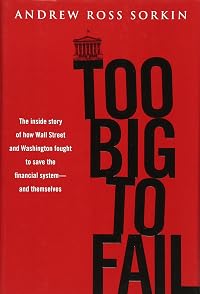
Too Big to Fail: The Inside Story of How Wall Street and Washington Fought to Save the Financial System—and Themselves
by Andrew Ross Sorkin
On This Page
Description
Presents a moment-by-moment account of the recent financial collapse that documents state efforts to prevent an economic disaster, offering insight into the pivotal consequences of decisions made throughout the past decade.Tags
Recommendations
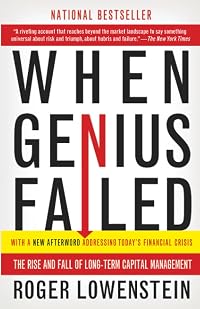
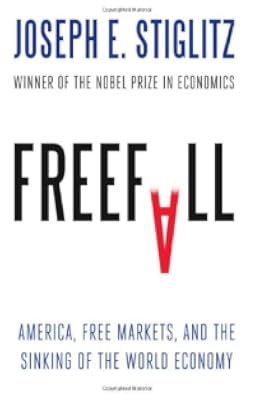
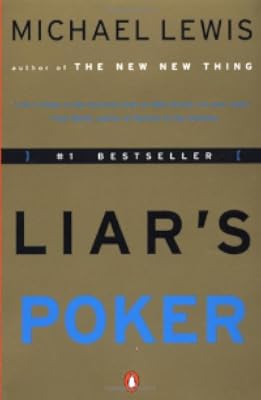
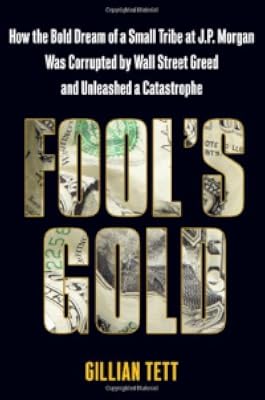

Member Recommendations
Member Reviews
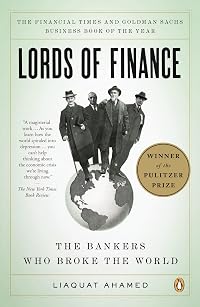
This is the story of how Treasury Secretary Hank Paulson and the Federal Reserve tried but failed to head off the collapse of Lehman Brothers in 2008 as told in the voices of the principal players. Just after I read this book I began reading Lords of Finance, a similar tale about the failure of the national bankers in the 1920's to head of the crash of '29. Both stories have a similar ring: the adults come in to restore order after the children get out of hand, but the "adults" in both cases underestimate the power of events and overestimate their authority. In 2008 the institutions underestimated the amount of so-called risk in the system because they could not control the financial commitments the players had made, to the tune of show more trillions of dollars. In the 20's, bank regulators could not control the volume of credit flowing into the US stock market from foreign sources. What does this mean? And is there any similarity to the current threat of sovereign default in the European system? If money is not the promise of something being there when a debt is called, what is the nature of money, paper or otherwise? Here we have the dilemma of modern finance: when people and governments promise wealth or social security nets it is really not the promise of something that is real, but something that is wished for, not so unlike a gambling casino. We try to set up toll booths to regulate the promise-making machines, bank regulators, government auditors, credit-rating agencies, and the like, but the institutions cannot protect us against our fantasies getting ahead of reality. That we overcommit ourselves and our institutions is not so bad, after all, because optimism is a constituent of human nature it seems. Greed likewise is hard-wired into us. It greases the wheels of commerce. I'd hate to think of a world where we were not optimists. My business would certainly fail, so would many others. I'm not seeing any grand solutions in these books, but I sure am getting a dose of reality. show less
Andrew Ross Sorkin manages to document the near-collapse of the US economy in 2008 in this near brilliant, true-life financial thriller. Working from thousands of sources, he manages to craft a story so compelling it literally becomes a page-turner.
Starting with brief biographical summaries of each of the major players as they are introduced to the story helps to humanize what could be an overwhelming, data-driven work. The players who showed glimpses of humanity are contrasted with those whose own greed and lust for material wealth prevented them from realizing the risks involved.
By the time the fateful weeks in September 2008 roll around, even though we know the outcome, the reader is hooked. The egos in the conference rooms should show more have precluded any possible resolution from being reached, but the efforts of the Treasury and Fed, particularly in the guises of Hank Paulson and Tim Geithner, to practically force the senior executives of the financial firms to work together to save the economy are depicted as near Herculean feats of strength.
No one goes untarnished in this account, not the regulators who should have been watching, not the government agencies who should have been more aware and definitely not the executives themselves who should have known better than to risk not just their own companies but the entire US and global economies all in a mindless pursuit of short-term profits.
The only disappointment for me was not enough time spent on the roots of the crisis, the deregulation, the near giveaways of mortgages with no proof of payment, the culture that rewards executives for obscene short-term profits with no regard for the long-term impacts. Additionally, while some potential preventive measures are discussed, I would have appreciated more detail on how these repeated bubble-burst cycles could be diminished.
Overall, for anyone interested in a thrilling account of some of the most trying days in the US economy's history, you can't do better than this book. show less
Starting with brief biographical summaries of each of the major players as they are introduced to the story helps to humanize what could be an overwhelming, data-driven work. The players who showed glimpses of humanity are contrasted with those whose own greed and lust for material wealth prevented them from realizing the risks involved.
By the time the fateful weeks in September 2008 roll around, even though we know the outcome, the reader is hooked. The egos in the conference rooms should show more have precluded any possible resolution from being reached, but the efforts of the Treasury and Fed, particularly in the guises of Hank Paulson and Tim Geithner, to practically force the senior executives of the financial firms to work together to save the economy are depicted as near Herculean feats of strength.
No one goes untarnished in this account, not the regulators who should have been watching, not the government agencies who should have been more aware and definitely not the executives themselves who should have known better than to risk not just their own companies but the entire US and global economies all in a mindless pursuit of short-term profits.
The only disappointment for me was not enough time spent on the roots of the crisis, the deregulation, the near giveaways of mortgages with no proof of payment, the culture that rewards executives for obscene short-term profits with no regard for the long-term impacts. Additionally, while some potential preventive measures are discussed, I would have appreciated more detail on how these repeated bubble-burst cycles could be diminished.
Overall, for anyone interested in a thrilling account of some of the most trying days in the US economy's history, you can't do better than this book. show less
Too big to fail - and apparently the egos of the major players are as well. This group of men - all in-bred for having worked or having dealt with each other - are quite comfortable asking each other for millions of dollars. Some come up "smelling" better than others. Their clever "instruments" helped them build a system based on promises. One of the best quotes in the book comes from a retired financier who announces that they weren't innovative for the public - the only innovation in 10 years that helped the public was the ATM. The story definitely reads as a journalistic "edge of your seat" thriller, written in excruciating detail. I'm glad to have a better understanding of the events and personalities of the debacle.
I read this book for book club but it was always on my never-ending list of books to read. The financial crisis is like a genetically compromised octopus with 100 tentacles and growing. People who understand the banking and financial industry will sail through this book. The rest of us (me!) -- though not lacking in intelligence, education, and experience -- will have a difficult time keeping track of the characters and events and coming away with a finely-attuned sense of how everything connects (it all does) and what lessons may have been learned (none).
The book blessedly contains a cast of characters, both home-grown and international, at the front of the book, but there were so many incestuous business relationships and show more intermarriage among banks and CEOs, that it may be of little use. Most readers will merely recognize names from their ubiquitous appearances in the daily news. The book also contains a very detailed bibliography and index.
Sorkin's book details the events and background during a short period of time encompassing the government's bail-out of all the investments houses except for Lehman Brothers. Yes, the book does read like a best-selling thriller, even without understanding the details. It's hard to put it down or put it out of one's mind but reading it even at the broad level at which I did will occupy a very large chunk of one's days/weeks. It's worth the effort if only to realize every diabolical and sleazy thought you've ever had about Wall Street and the evil that lurks there is more true than you could ever imagine, even if you possess an Ivy League MBA. You may even, as I did, find yourself rooting for the financial collapse of the entire banking system just so it can start all over from scratch with unforgiving enforcement of meaningful rules and regulations, sanity, and real concern for the people whose money is being played with -- notwithstanding the ensuing international crisis unlike one we've ever before witnessed. Without that, taxpayers (you and me) will be rescuing the banks and the players in perpetuity and they will continue to get rich and stay rich while they stealing from us and paying themselves obscene salaries out of money that never existed. If you read this book and then grab your backpack for an OWS protest, good for you! We need more protesters. show less
The book blessedly contains a cast of characters, both home-grown and international, at the front of the book, but there were so many incestuous business relationships and show more intermarriage among banks and CEOs, that it may be of little use. Most readers will merely recognize names from their ubiquitous appearances in the daily news. The book also contains a very detailed bibliography and index.
Sorkin's book details the events and background during a short period of time encompassing the government's bail-out of all the investments houses except for Lehman Brothers. Yes, the book does read like a best-selling thriller, even without understanding the details. It's hard to put it down or put it out of one's mind but reading it even at the broad level at which I did will occupy a very large chunk of one's days/weeks. It's worth the effort if only to realize every diabolical and sleazy thought you've ever had about Wall Street and the evil that lurks there is more true than you could ever imagine, even if you possess an Ivy League MBA. You may even, as I did, find yourself rooting for the financial collapse of the entire banking system just so it can start all over from scratch with unforgiving enforcement of meaningful rules and regulations, sanity, and real concern for the people whose money is being played with -- notwithstanding the ensuing international crisis unlike one we've ever before witnessed. Without that, taxpayers (you and me) will be rescuing the banks and the players in perpetuity and they will continue to get rich and stay rich while they stealing from us and paying themselves obscene salaries out of money that never existed. If you read this book and then grab your backpack for an OWS protest, good for you! We need more protesters. show less
Written as if the author was an omnipresent, mind-reading ghost. The dramatization strains credulity. I appreciate some of the amusing vignettes (true or not) like the one when bankers stuck in traffic just drive down the cycling lane but it's so gratuitous. To be fair the author never claims to be impartial.
This is an always interesting description of the people and events of the financial crisis from the sale of Bear Stearns in 2008 through the passage of TARP at year end. This is not a book about the causes of the panic, nor was it meant to be.
A few things strike me.
Until TARP, the government is always reacting, trying to catch up to events. The crisis accelerates and expands and yet the response is sequential, to each event, at it happens. Because of that the reaction is ad hoc. Sell Bear Stearns to JP Morgan. Let Lehman fail. Take over Fannie and Freddie, but try to arrange mergers of (choose your partners) JP Morgan, Morgan Stanley, Citigroup, Wachovia, Merrill, BofA.
Because the reactions are ad hoc, the advice is often confusing and show more contradictory and not planned. Geithner (he does this often) tells an investment bank to “talk” to a commercial bank, meaning sell to them, but he hasn’t told the commercial bank it is the buyer. Barclays is negotiating to buy Lehman and only finds out at the end of the process the UK regulators won’t approve it.
The housing market peaked in 2006. There was a widespread recognition the housing market was in decline. And yet, Bear, Lehman, Merrill, the Feds are not adjusting to that change. The investment banks do not adjust their balance sheets to reflect the asset impairment and are either clueless of delusional about the tenuous of their liabilities. And these are the smart guys. Everyone is brilliant in a bull market. And the Feds are not looking with greater interest at the market. These are the experts we are relying on to make sure the market doesn’t get out of control?
CEO’s, CFO’s, millionaires, entrepreneurs and regulators, can be highly educated, highly experienced, highly successful and completely driven by emotion at the worst time. Exhibit A is Dick Fuld who refuses to recognize the peril he and Lehman are in until the very last minute. He is just like many of the CEOs I deal with who can’t bring themselves to raise many when they can, instead of when they need it and terms are much more onerous.
Paulson is the hero of the tale. Geithner comes across as out of his depths. Bernanke should be, but isn’t, a main player and Sheila Bair is portrayed as incompetent (probably unfair).
Near the end many events are happening simultaneously and the chapters become more disjointed as Sorkin moves from one event to another. It is a petty criticism of the book. This is an excellent account of the personalities and events of 2008.
2019-10-18 show less
A few things strike me.
Until TARP, the government is always reacting, trying to catch up to events. The crisis accelerates and expands and yet the response is sequential, to each event, at it happens. Because of that the reaction is ad hoc. Sell Bear Stearns to JP Morgan. Let Lehman fail. Take over Fannie and Freddie, but try to arrange mergers of (choose your partners) JP Morgan, Morgan Stanley, Citigroup, Wachovia, Merrill, BofA.
Because the reactions are ad hoc, the advice is often confusing and show more contradictory and not planned. Geithner (he does this often) tells an investment bank to “talk” to a commercial bank, meaning sell to them, but he hasn’t told the commercial bank it is the buyer. Barclays is negotiating to buy Lehman and only finds out at the end of the process the UK regulators won’t approve it.
The housing market peaked in 2006. There was a widespread recognition the housing market was in decline. And yet, Bear, Lehman, Merrill, the Feds are not adjusting to that change. The investment banks do not adjust their balance sheets to reflect the asset impairment and are either clueless of delusional about the tenuous of their liabilities. And these are the smart guys. Everyone is brilliant in a bull market. And the Feds are not looking with greater interest at the market. These are the experts we are relying on to make sure the market doesn’t get out of control?
CEO’s, CFO’s, millionaires, entrepreneurs and regulators, can be highly educated, highly experienced, highly successful and completely driven by emotion at the worst time. Exhibit A is Dick Fuld who refuses to recognize the peril he and Lehman are in until the very last minute. He is just like many of the CEOs I deal with who can’t bring themselves to raise many when they can, instead of when they need it and terms are much more onerous.
Paulson is the hero of the tale. Geithner comes across as out of his depths. Bernanke should be, but isn’t, a main player and Sheila Bair is portrayed as incompetent (probably unfair).
Near the end many events are happening simultaneously and the chapters become more disjointed as Sorkin moves from one event to another. It is a petty criticism of the book. This is an excellent account of the personalities and events of 2008.
2019-10-18 show less
Pretty gripping, almost thriller-ish. Made me appreciate the hard work of the Feds though I don't feel much better about the bankers who got us into the mess and still haven't paid a price for it.
Members
- Recently Added By
Published Reviews
ThingScore 75
Andrew Ross Sorkin's blow-by-blow account of the unfolding of events in the US, when financial titans up to and including Goldman Sachs were days, or even hours, away from running out of liquidity, gives a handy dramatis personae of those inhabiting Wall Street's Jurassic Park, in the manner of a compendious Russian novel
added by mikeg2
Sorkin’s prodigious reporting and lively writing put the reader in the room for some of the biggest-dollar conference calls in history. It’s an entertaining, brisk book.
added by Shortride
Lists

False prophets
9 works; 1 member

infjsarah's wishlist
408 works; 2 members

Mind Expanding Books by hackerkid
581 works; 8 members

Books Read in 2023
5,638 works; 147 members
Author Information

12 Works 2,784 Members
Andrew Ross Sorkin is an assistant editor of business and finance news at The New York Times. He is also The New York Times chief mergers and acquisitions reporter and a columnist and the editor of DealBook an online daily financial report. Sorkin is a graduate of Cornell University. Too Big to Fail: How Wall Street and Washington Fought to Save show more the Financial System - and Themselves is Sorkin's first book. Sorkin has appeared on NBC's "Today" show and on "Charlie Rose" on PBS, and is a frequent guest host of CNBC's "Squawk Box." He's won a Gerald Loeb Award in 2004, a Society of American Business Editors and Writers Award in 2005 and in 2006. In 2007, the World Economic Forum named him a Young Global Leader. He was also named to the Directorship 100, a list of the most influential people on the nation's board of directors. He is a term member of the Council on Foreign Relations. Sorkin and his wife live in Manhattan. (Bowker Author Biography) show less
Some Editions
Awards and Honors
Awards
Distinctions
Notable Lists
Work Relationships
Has as a student's study guide
Common Knowledge
- Canonical title
- Too Big to Fail: The Inside Story of How Wall Street and Washington Fought to Save the Financial System—and Themselves
- Original publication date
- 2009
- People/Characters*
- Dick Fuld
- Important places
- Wall Street, New York, New York, USA
- Important events
- Credit crunch; Financial Crisis of 2008
- Related movies
- Too Big to Fail (2011 | IMDb)
- Epigraph
- Size, we are told, is not a crime. But size may, at least, become noxious by reason of the means through which it was attained or the uses to which it is put. - Louis Brandeis
- Dedication
- To my parents, Joan and Larry, and my loving wife, Pilar
- First words
- Prologue: Standing in the kitchen of his Park Avenue apartment, Jamie Dimon poured himself a cup of coffee, hoping it might ease his headache.
Chapter One: The morning air was frigid in Greenwich, Connecticut. - Blurbers
- Wolfe, Tom
- Canonical DDC/MDS
- 330.9730931
- Canonical LCC
- HB3722.S659
*Some information comes from Common Knowledge in other languages. Click "Edit" for more information.
Classifications
- Genres
- Business, Economics, General Nonfiction, Nonfiction, History
- DDC/MDS
- 330.9730931 — Society, government, & culture Economics Jobs & Careers Economic geography and history North America United States
- LCC
- HB3722 .S659 — Social sciences Economic theory. Demography Economic theory. Demography Business cycles. Economic fluctuations
- BISAC
Statistics
- Members
- 2,059
- Popularity
- 10,084
- Reviews
- 50
- Rating
- (3.86)
- Languages
- 6 — English, French, German, Italian, Polish, Russian
- Media
- Paper, Audiobook, Ebook
- ISBNs
- 28
- UPCs
- 3
- ASINs
- 18