On This Page
Description
A man who would later compose some of the world's most beautiful music is shown as a stubborn little boy with a mind of his own.Tags
Recommendations









Member Reviews
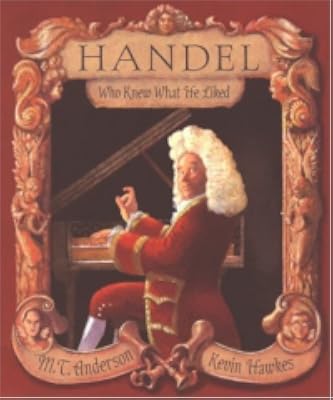
Following the story of George Frideric Handel from the time when he was a small boy - a boy who 'knew what he liked,' and was determined to learn music, despite the disapproval of his father - M.T. Anderson and Kevin Hawkes' picture-book biography is a wonderful introduction to the life and work of the great composer, with immense narrative and illustrative appeal. The major events of Handel's life - his father's disapproval of his career choice, his dramatic duel with fellow composer, Matheson, his early devotion to Italian opera (which he introduced to England), and his move to composing oratorios in English (ah, The Messiah!) - are all set out in Handel, Who Knew What He Liked.
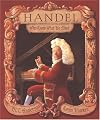
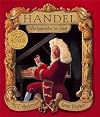
With an engaging narrative that draws the reader into its show more subject's life-story, and gorgeous acrylic illustrations - deeply colorful, and very expressive - that capture the 'feeling' of each moment depicted (I love Handel's expression, when Matheson's sword is breaking on his button!), this is picture-book biography at its best! The appendices at the rear include a time-line of Handel's life, a section on his discography, and a list of suggestions (both children's and adult titles!) for further reading. All in all, an excellent title to put into the hands of the young music enthusiast, or Handel fan. show less
With an engaging narrative that draws the reader into its show more subject's life-story, and gorgeous acrylic illustrations - deeply colorful, and very expressive - that capture the 'feeling' of each moment depicted (I love Handel's expression, when Matheson's sword is breaking on his button!), this is picture-book biography at its best! The appendices at the rear include a time-line of Handel's life, a section on his discography, and a list of suggestions (both children's and adult titles!) for further reading. All in all, an excellent title to put into the hands of the young music enthusiast, or Handel fan. show less
Part of the Candlewick Biographies series, this book begins with Handel's smuggling a harpischord into his family home so he could learn to play besides his father's protests and ends with the outstanding success of his most famous work, "The Messiah." The illustrations by Kevin Hawkes are delightful, and the author adds a touch of humor throughout, especially when it comes to Handel's wig. Vocabulary words and other explanatory notes appear at the bottom of pages--resembling a footnote. Although Handel grew up on Germany and studied there and in Italy, he spent most of his adult life in England where he became a naturalized citizen. Handel loved Italian opera and wanted to make the people of England who really didn't like it that much, show more especially when it was not in their own language, come to enjoy it. He enjoyed a measure of success for a time because the royal family enjoyed it, but that support eventually waned. He'd almost given up when "The Messiah" met with resounding success. show less
Many know Handel from his beautiful music, The Messiah, which is played predominately at holiday times. This book tells a bit about his stubbornness as a child, and I laughed when I read that he snuck a clavichord up the steps to the attic where he could play to his heart's content.
If told no, his reaction was "yes!!" His father was a physician and wanted the same for his son. But his son had his own plans. He wanted to be a musician and became one! He developed his talents when his father and he were in the company of the duke. After hearing a beautiful sound from the organ, he was told it was little Handel. The duke was then deserves credit for his musical career as he did whatever he could to further Handel's career.
Writing operates show more when he was 18, in the city of Hamburg, he and another musician by the name of Matheson worked together to produce beautiful music for operas. Handel then traveled to Italy to be study music, and to meet the best musicians of the time. He stayed with the wealthy Medici family who were also helpful in his career as a talented, musician worth of attention and accolades.
After a few years in Italy, Handel traveled to England where he played for the Queen. Handel then stayed in England and produced Italian operas. His personality was filled with a stubborn attitude all his life.
After a long spell of disappointment, Handel almost gave up his career, but as the book title indicates, he knew what he liked. Even though he was broke, sick, out of luck and wanting to return home, he persisted, and in fact wrote one of the most beautiful pieces of music ever written.
When he returned to Germany, he was driven to continue to work on The Messiah. Words flew from his hands to the pen as he took the words from the Bible. He gave the world this Oratorio to enjoy!! show less
If told no, his reaction was "yes!!" His father was a physician and wanted the same for his son. But his son had his own plans. He wanted to be a musician and became one! He developed his talents when his father and he were in the company of the duke. After hearing a beautiful sound from the organ, he was told it was little Handel. The duke was then deserves credit for his musical career as he did whatever he could to further Handel's career.
Writing operates show more when he was 18, in the city of Hamburg, he and another musician by the name of Matheson worked together to produce beautiful music for operas. Handel then traveled to Italy to be study music, and to meet the best musicians of the time. He stayed with the wealthy Medici family who were also helpful in his career as a talented, musician worth of attention and accolades.
After a few years in Italy, Handel traveled to England where he played for the Queen. Handel then stayed in England and produced Italian operas. His personality was filled with a stubborn attitude all his life.
After a long spell of disappointment, Handel almost gave up his career, but as the book title indicates, he knew what he liked. Even though he was broke, sick, out of luck and wanting to return home, he persisted, and in fact wrote one of the most beautiful pieces of music ever written.
When he returned to Germany, he was driven to continue to work on The Messiah. Words flew from his hands to the pen as he took the words from the Bible. He gave the world this Oratorio to enjoy!! show less
This book is an excellent example of a biography that is readable for small children. This book is about the life of Handel and how he persevered and decided to keep loving music no matter what his father said. This book is a great story for a unit on musicians and a great addition to any music classroom.
Subject Area: History
Genre: Biography
Critique/Summary:
This book is an excellent example of a biography because the author has clearly researched the person, Handel, about whom they are writing. The book presents accurate factual information about Handel's life, but it also reveals much about the type of person Handel was. The author reveals both the positive and negative sides of Handel's character, providing a well-rounded perspective.
(Stars for Biography)
Age: Intermediate
Genre: Biography
Critique/Summary:
This book is an excellent example of a biography because the author has clearly researched the person, Handel, about whom they are writing. The book presents accurate factual information about Handel's life, but it also reveals much about the type of person Handel was. The author reveals both the positive and negative sides of Handel's character, providing a well-rounded perspective.
(Stars for Biography)
Age: Intermediate
Genre: Biography
This is a good example of a biography first because the title indicates that it is about a specific person that lived during a specific time in history – the composer Handel. The book is not fictional in any sort of way, it starts right outwith Handel as a young boy and the different things he liked to do. It also puts certain words at the bottom of the page along with a definition just in case the readers are not sure what the words mean. There are some humorous elements to the story, but the facts are real and the characters are also real, as are the events. In the back of the book, there is a chronological listing of events that happened in Handel’s life. There are interesting bits of trivia and information about show more Handel’s background, and this is what I think makes just a regular biography about a composer seem more enthralling, which is what this book was for me.
The media that was used in this book is stated to be acrylic. You can tell as you look from page to page what kind of colors had to be mixed together or layered to create a specific look. What is also interesting is that from page to page, if one looks really closely at it, you can tell the different brushstrokes that were used to create the different characters, shadows, shapes, and effects. A lot of gold coloring was used in the book to create a rich effect, and there are many dark colors used as well as gold. The colors are not extremely vibrant but they are varied.
The main character, of course, is Handel. He does not stay a flat character as a young boy for long. He grows up to be someone that becomes far more passionate about music, and even though he knew what he wanted to do long before he grew up and pursued it, his character (and real life person) was given the opportunity. At first he started out with a passion and strong interest, and as the story goes along, the passion does not really change from one thing to another, but he does go through ups and downs and visions for what he wants for his future. The passion grows and he perseveres through various conflicts of interest from his father and his critics of his music. Sometimes the biggest antagonist and foil character in the story is himself because he wants to succeed so badly. This is the character of Handel, and he grows slowly and in different ways as the story rises up and then winds down to an end, with Handel being finally satisfied with his life. show less
This is a good example of a biography first because the title indicates that it is about a specific person that lived during a specific time in history – the composer Handel. The book is not fictional in any sort of way, it starts right outwith Handel as a young boy and the different things he liked to do. It also puts certain words at the bottom of the page along with a definition just in case the readers are not sure what the words mean. There are some humorous elements to the story, but the facts are real and the characters are also real, as are the events. In the back of the book, there is a chronological listing of events that happened in Handel’s life. There are interesting bits of trivia and information about show more Handel’s background, and this is what I think makes just a regular biography about a composer seem more enthralling, which is what this book was for me.
The media that was used in this book is stated to be acrylic. You can tell as you look from page to page what kind of colors had to be mixed together or layered to create a specific look. What is also interesting is that from page to page, if one looks really closely at it, you can tell the different brushstrokes that were used to create the different characters, shadows, shapes, and effects. A lot of gold coloring was used in the book to create a rich effect, and there are many dark colors used as well as gold. The colors are not extremely vibrant but they are varied.
The main character, of course, is Handel. He does not stay a flat character as a young boy for long. He grows up to be someone that becomes far more passionate about music, and even though he knew what he wanted to do long before he grew up and pursued it, his character (and real life person) was given the opportunity. At first he started out with a passion and strong interest, and as the story goes along, the passion does not really change from one thing to another, but he does go through ups and downs and visions for what he wants for his future. The passion grows and he perseveres through various conflicts of interest from his father and his critics of his music. Sometimes the biggest antagonist and foil character in the story is himself because he wants to succeed so badly. This is the character of Handel, and he grows slowly and in different ways as the story rises up and then winds down to an end, with Handel being finally satisfied with his life. show less
This is a decent example of biography. It talks about the most important parts of Handel's life, but also gives interesting facts that wouldn't necessarily be common knowledge. It talks about how he was as a child and his rise to fame, his fall, and his re-rise to fame before his death. However, it's not a perfect example of a biography in that I think some of it may be opinion or a little bit biased on the authoring. So, in that it doesn't seem all factual, it's only a pretty good example of biography.
The author does a really good job of describing the setting. I think it's really important in this case because without a time frame or placement, the idea of operas doesn't always make sense. The author straight out tells the reader the show more time frame (in the beginning his birth year to death year) and throughout the story says things like "In the year..." The author also describes the countries he was in and that gives meaning to why the operas were a big hit and then why they began to fail.
Age Appropriateness: Primary, Intermediate
Media: Charcoal, chalk show less
The author does a really good job of describing the setting. I think it's really important in this case because without a time frame or placement, the idea of operas doesn't always make sense. The author straight out tells the reader the show more time frame (in the beginning his birth year to death year) and throughout the story says things like "In the year..." The author also describes the countries he was in and that gives meaning to why the operas were a big hit and then why they began to fail.
Age Appropriateness: Primary, Intermediate
Media: Charcoal, chalk show less
Members
- Recently Added By
Author Information

37+ Works 16,949 Members
All Editions
Awards and Honors
Awards
Distinctions
Notable Lists
Series

Common Knowledge
- Canonical title
- Handel, Who Knew What He Liked
- Original title
- Handel, Who Knew What He Liked
- Original publication date
- 2001
- People/Characters
- George Frideric Handel
- Important places
- Halle, Saxony-Anhalt, Germany; Saxony-Anhalt, Germany; Germany; Westminster, London, England, UK; London, England, UK; England, UK
Classifications
Statistics
- Members
- 321
- Popularity
- 99,009
- Reviews
- 17
- Rating
- (4.28)
- Languages
- English
- Media
- Paper
- ISBNs
- 6
- UPCs
- 1
- ASINs
- 2