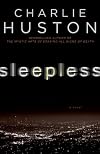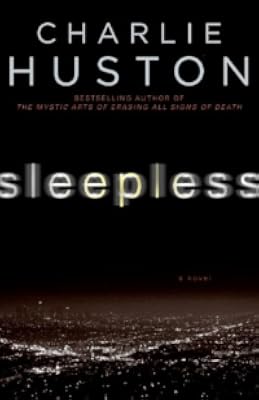
Sleepless
by Charlie Huston
On This Page
Description
Every day, more and more people have been found to have contracted the illness. It reveals itself gradually, inhibiting sleep, eating away at one's mind, birthing panic and confusion, until the final few months before death known as the suffering. The epidemic has swept the globe, and now infects one in ten people.Straight-arrow cop Parker T. Haas is working undercover as a dealer in the black-market trade of Dreamer, the only known drug that offers relief for the sleepless. The drug is in show more small supply and impossibly high demand, and in his darker moments, Park admits to himself that his interest in it goes beyond the professional. His own wife, Rose, has been sleepless for months, and they haven't yet found the courage to find out if their infant daughter is also sick. Though the stress at work and at home are weighing on him, Park presses on, feeling like he's on the cusp of learning something crucial about the disease.
. show less
Tags
Recommendations

Member Reviews
LA is under martial law. There is fuel and food shortages, rioting, suicide bombings and worst of all, a pandemic has a grip on the world, affecting about ten per cent of the population. This disorder is called SLP and it causes severe sleep deprivation and eventual death. Parker Haas is a detective in the LAPD, working undercover. He is happily married with a new baby on board. His wife has SLP. His job, is to immerse himself in the booming illegal drug trade and find a link to the black marketing of “Dreamer”, which is the only government-sanctioned drug that temporarily helps the afflicted sleep. It is a hot commodity but strictly controlled and very expensive. Park is a good honest cop and his investigation leads him into some show more very dangerous water and he is soon being pursued by an aging but ruthlessly determined mercenary. This is a fresh, tautly written story, that contains action, memorable characters, sizzling dialogue and a surprisingly effective love story. Huston is one of my favorite crime writers and this is his most mature, ambitious book to date. show less
None of his LAPD colleagues will partner up with Parker Haas and with the city being in the state it currently finds itself then he can't go out alone. His boss offers him a choice of assignments, admin duty or to go undercover looking for any signs of a black market for the only drug that offers any relief to the disease that's decimated the world. SLP, nicknamed sleepless, renders its victims unable to sleep until after months go by in this state kills them in a painful way. It would've been a boring book if he chose the former so we join up with Park's tale having established his cover as a drug dealer and infiltrating the high-end market where he's most likely to encounter Dreamer, the aforementioned drug. It's highly regulated with show more very limited supply so the value of any illegal trade would be quite significant. When Park recovers a hard drive from a murder scene of some of his new associates it could contain more information than he'd bargained for. He's also not the only one that wants what's on the drive. Jasper is what's known in the trade as a fixer. He's very good at what he does, otherwise he wouldn't have lived so long. He's been hired by a client he doesn't want to disappoint to retrieve the drive regardless of the cost. Can Park survive the inevitable encounter with Jasper while still looking after his infected wife and possibly infected infant daughter and still manage to do the right thing?
Combining elements of noir and police procedural in a post-apocalyptic setting of near modern day Los Angeles where the rich have retreated to their private residences or gated communities and the poor left to fend for themselves. It's a tautly written, often quite violent, thriller with some wonderful characters that are very well brought to life. The book uses the alternating voices of Park and Jasper as their respective stories begin to entwine until they finally come together using the styles of first and third person to readily distinguish between the two. The world-building is excellent and all too plausible. Touches of humour, mostly of the black variety, and moments of real tenderness provide relief from the rest of the bleakness. I've liked everything I've read from this author so far and this one proves no exception. show less
Combining elements of noir and police procedural in a post-apocalyptic setting of near modern day Los Angeles where the rich have retreated to their private residences or gated communities and the poor left to fend for themselves. It's a tautly written, often quite violent, thriller with some wonderful characters that are very well brought to life. The book uses the alternating voices of Park and Jasper as their respective stories begin to entwine until they finally come together using the styles of first and third person to readily distinguish between the two. The world-building is excellent and all too plausible. Touches of humour, mostly of the black variety, and moments of real tenderness provide relief from the rest of the bleakness. I've liked everything I've read from this author so far and this one proves no exception. show less
It is the present. Ten percent of the population has been rendered permanently sleepless by a contagious prion. As a result, civilization is breaking down. Wildfires rage out of control outside Los Angeles, while the city itself has become a war zone. The sleepless play video games and take drugs for relief, but only one drug can really bring peace: Dreamer, which is in short supply.
Park is an LA cop, working undercover to sniff out black market sales of Dreamer. His wife is sleepless. His infant daughter may be as well. Park himself is finding it impossible to cope with what the world is becoming. He became a cop because he wanted to dispense justice according to the rules as he understood them, but those rules don’t really apply show more anymore. Then he discovers a murder scene from which he takes a thumb drive. On that drive is a file that points to a larger conspiracy involving Dreamer and the company that manufactures it. Despite being told to drop the investigation, Park can’t help but pursue it. His black-and-white sense of justice requires him to.
On the other side of the coin is Jasper, the narrator. Unlike Park, he not only embraces the apocalypse that he watches unfold from his hillside house overlooking the city, but he thrives in it. He is an emotionless mercenary, hired to do whatever needs doing, and very good at his job. His employer has asked him to recover her stolen property, a particular thumb drive that Jaspers discovers was taken from a murder scene. And so Park’s and Jasper’s paths begin to entwine.
Sleepless is not just a noir crime story with an apocalyptic setting, although that certainly describes the plot. But in the course of telling that story, Huston examines the failings of modern society and wonders what it might transform into. The hero, Park, is unable to process the changes he witnesses. He is obsessed with returning the world to what he thinks it used to be, of making it “right” for his daughter to grow up in. In one poignant section from his journal – which is included in the narrative – he insists that his daughter has to grow up, she has to. But at the same time, he can’t admit that the world may be destroying itself for no reason, and that he can’t stop it. “It’s not too late,” he says, but when we read his words, we have a sickening sense that it probably is.
Jasper, the anti-hero, also needs for his life to have meaning. In his own way, he is also obsessed with, and he believes that the nature of his death will bring symmetry to his life and make its purpose clear. He doesn’t expect any other outcome, yet when the unexpected happens, he can adapt fluidly, unlike Park. He doesn’t want to reverse what is happening. He makes himself part of the new world emerging instead, even as it disintegrates around him. And we gradually realize that even though he is a cold-hearted killer, he is much more of a hero than Park is capable of being.
This book gave me a lot to chew on. Huston has created a dark, surreal Los Angeles and a vision of the apocalypse that thoroughly captivated me. The only faults I had with the novel were that I found it sometimes difficult to follow the twists and turns of the convoluted plot and I thought the story was a little slow to get going. Some of the overly detailed descriptions, the strings of acronyms and technical terms, made for slow reading. But Huston’s skillful development of these two opposed characters, and what he does with them at the end, more than made up for these flaws. show less
Park is an LA cop, working undercover to sniff out black market sales of Dreamer. His wife is sleepless. His infant daughter may be as well. Park himself is finding it impossible to cope with what the world is becoming. He became a cop because he wanted to dispense justice according to the rules as he understood them, but those rules don’t really apply show more anymore. Then he discovers a murder scene from which he takes a thumb drive. On that drive is a file that points to a larger conspiracy involving Dreamer and the company that manufactures it. Despite being told to drop the investigation, Park can’t help but pursue it. His black-and-white sense of justice requires him to.
On the other side of the coin is Jasper, the narrator. Unlike Park, he not only embraces the apocalypse that he watches unfold from his hillside house overlooking the city, but he thrives in it. He is an emotionless mercenary, hired to do whatever needs doing, and very good at his job. His employer has asked him to recover her stolen property, a particular thumb drive that Jaspers discovers was taken from a murder scene. And so Park’s and Jasper’s paths begin to entwine.
Sleepless is not just a noir crime story with an apocalyptic setting, although that certainly describes the plot. But in the course of telling that story, Huston examines the failings of modern society and wonders what it might transform into. The hero, Park, is unable to process the changes he witnesses. He is obsessed with returning the world to what he thinks it used to be, of making it “right” for his daughter to grow up in. In one poignant section from his journal – which is included in the narrative – he insists that his daughter has to grow up, she has to. But at the same time, he can’t admit that the world may be destroying itself for no reason, and that he can’t stop it. “It’s not too late,” he says, but when we read his words, we have a sickening sense that it probably is.
Jasper, the anti-hero, also needs for his life to have meaning. In his own way, he is also obsessed with, and he believes that the nature of his death will bring symmetry to his life and make its purpose clear. He doesn’t expect any other outcome, yet when the unexpected happens, he can adapt fluidly, unlike Park. He doesn’t want to reverse what is happening. He makes himself part of the new world emerging instead, even as it disintegrates around him. And we gradually realize that even though he is a cold-hearted killer, he is much more of a hero than Park is capable of being.
This book gave me a lot to chew on. Huston has created a dark, surreal Los Angeles and a vision of the apocalypse that thoroughly captivated me. The only faults I had with the novel were that I found it sometimes difficult to follow the twists and turns of the convoluted plot and I thought the story was a little slow to get going. Some of the overly detailed descriptions, the strings of acronyms and technical terms, made for slow reading. But Huston’s skillful development of these two opposed characters, and what he does with them at the end, more than made up for these flaws. show less
It is the very near future (northern hemisphere summer, 2010) in Los Angeles. And the world has collapsed: global financial crisis, climate change, and most worryingly of all: SLP, a mad-cow-like disease that leaves its sufferers sleepless. There is no cure, 10% of the population is infected, death is inevitable, and the only help is a rare drug called Dreamer that at least gives sufferers brief relief. In the meantime, sufferers make do with bizarre drug combinations (heroin plus Ketamine) that at least knock them unconscious for a few seconds, or spend their time shuffling about night markets, or playing endless games online.
Charlie Huston's world building is magnificent. This is a very believable future, or maybe I'm just a show more pessimist. (The nice thing about being a pessimist is you do tend to be mildly happily surprised all the time, because it's never as bad as you imagined. And when it is as bad as you imagined, well, then you get to wallow in your "I told you so" moments.) And, being a Charlie Huston novel, our protagonist Parker "Park" Hass, is a wonderful man. Trapped in the middle of all this mess, he's trying to cling to civilisation and his beliefs, trying to do the right thing, even when surrounded by chaos, insanity and greed.
I won't go into any plot details (you can read the book for that), but suffice it to say that the pages just kept on turning, as Huston twisted the plot and created small asides that added to the realism of his future.
This is not a book for the faint hearted: there is violence, swearing, drug use, and the only humour is extremely black. This is not a pleasant vision of the near-future, as it is filled with grasping evil people who would kill their own grandmother (and dance on her remains) to get ahead. Unfortunately, the world (both literary and in reality, see note above about my pessimistic nature) is short a few Parks. show less
Charlie Huston's world building is magnificent. This is a very believable future, or maybe I'm just a show more pessimist. (The nice thing about being a pessimist is you do tend to be mildly happily surprised all the time, because it's never as bad as you imagined. And when it is as bad as you imagined, well, then you get to wallow in your "I told you so" moments.) And, being a Charlie Huston novel, our protagonist Parker "Park" Hass, is a wonderful man. Trapped in the middle of all this mess, he's trying to cling to civilisation and his beliefs, trying to do the right thing, even when surrounded by chaos, insanity and greed.
I won't go into any plot details (you can read the book for that), but suffice it to say that the pages just kept on turning, as Huston twisted the plot and created small asides that added to the realism of his future.
This is not a book for the faint hearted: there is violence, swearing, drug use, and the only humour is extremely black. This is not a pleasant vision of the near-future, as it is filled with grasping evil people who would kill their own grandmother (and dance on her remains) to get ahead. Unfortunately, the world (both literary and in reality, see note above about my pessimistic nature) is short a few Parks. show less
Sleepless is a book that practically had my name on it. A chronic insomniac since childhood, I’ve watched more than one sunrise with salty tears of self-pity in my eyes. So I was intrigued by a book that promised insomnia so much worse than anything I’ve ever experienced. What better way to comfort myself on those long, long sleepless nights than to remind myself, à la Did I Ever Tell You How Lucky You Are? by that mad genius Dr. Seuss, that it could be worse, that I could have a rogue prion in my brain eating holes in it and keeping me awake until I finally die?
At first, I was a little put off by the structure, broken up as it is into three different narrative voices. In the first chapter, you get the protagonist Parker Hass in show more the third-person, then you switch to some unidentified “I” and then you get Parker in the first person. Lately, I’ve been kind of annoyed with the chapter-based trade-off in narrators in novels (something I’m coming up against in the latest Murakami, which I am just now finally getting around to reading), but Huston keeps it interesting and doesn’t let it fall into the my-turn, your-turn pattern. Not all chapters include all viewpoints and he uses them all to good effect, to tell different parts of the story that need telling.
The whole thing turns on SLP, the sleepless disease, a prion disorder like mad cow, Creutzfeld-Jacob, Kuru, etc., etc. Being an incurable science nerd, I’ve been fascinated with these weird broken prion diseases, especially Fatal Familial Insomnia, which the hypochondriac part of my brain has been insisting I have ever since I first heard about it a few years ago. (But no need for alarm. I am just a hypochondriac and my insomnia is just from my broken brain. FFI pretty much limits itself to some unfortunate families I appear not to be related to. Of course, that doesn’t stop me from worrying. Or double-checking genealogies.) Clearly, Huston has done his research, taking all these prion diseases as a jumping-off point to create his own SLP, an unbelievably terrifying disease that causes sleeplessness almost from the outset.
And there is no cure for SLP, just a chance to sleep again in the form of the drug “DR33M3R”, also known as Dreamer. In a world where one in ten people are infected with SLP, the drug is obviously in demand. But there’s not enough for everyone and that’s where the trouble starts.
Parker is a cop in LA sent undercover to find Dreamer on the other side of the law. After all, if there is such a demand, there must be a black market for the stuff. The cops, along with all municipal, state and federal services, are barely functioning: no money coming in, too many employees with SLP and a group of fundamentalist Christian terrorists hellbent on blowing up the city with car bombs and other time-honoured terrorist tactics.
And the “I” of the third narrative viewpoint? A terrifying man who has lived through some terrifying things.
The story’s good and a good story will definitely keep me reading, but what I am most in love with are some well-drawn characters. And Park with his doctorate in Philosophy and tight moral code, and Rose, his foul-mouthed feminist, SLP-afflicted wife, are certainly fleshed out to the point where they are still living in my head hours after finishing the book.
But they’re the main characters and sharing my head space with main characters is pretty standard for me. It’s the detail lavished on supporting characters like Lady Chizu that really hooked me. Huston picks out a few key character points and the rest of the character just falls out from those. Sometimes, an author can get a little over the top with describing all the little details of their beloved characters, but what really makes a character live is just that skeleton of unique details that allows the reader to hang everything else on there herself. And Huston is one of those writers who can do this. There’s a moment where you learn Park’s daughter’s name that is pretty much perfect. And all that happens is you find out her name. High fives, Charlie Huston. show less
At first, I was a little put off by the structure, broken up as it is into three different narrative voices. In the first chapter, you get the protagonist Parker Hass in show more the third-person, then you switch to some unidentified “I” and then you get Parker in the first person. Lately, I’ve been kind of annoyed with the chapter-based trade-off in narrators in novels (something I’m coming up against in the latest Murakami, which I am just now finally getting around to reading), but Huston keeps it interesting and doesn’t let it fall into the my-turn, your-turn pattern. Not all chapters include all viewpoints and he uses them all to good effect, to tell different parts of the story that need telling.
The whole thing turns on SLP, the sleepless disease, a prion disorder like mad cow, Creutzfeld-Jacob, Kuru, etc., etc. Being an incurable science nerd, I’ve been fascinated with these weird broken prion diseases, especially Fatal Familial Insomnia, which the hypochondriac part of my brain has been insisting I have ever since I first heard about it a few years ago. (But no need for alarm. I am just a hypochondriac and my insomnia is just from my broken brain. FFI pretty much limits itself to some unfortunate families I appear not to be related to. Of course, that doesn’t stop me from worrying. Or double-checking genealogies.) Clearly, Huston has done his research, taking all these prion diseases as a jumping-off point to create his own SLP, an unbelievably terrifying disease that causes sleeplessness almost from the outset.
And there is no cure for SLP, just a chance to sleep again in the form of the drug “DR33M3R”, also known as Dreamer. In a world where one in ten people are infected with SLP, the drug is obviously in demand. But there’s not enough for everyone and that’s where the trouble starts.
Parker is a cop in LA sent undercover to find Dreamer on the other side of the law. After all, if there is such a demand, there must be a black market for the stuff. The cops, along with all municipal, state and federal services, are barely functioning: no money coming in, too many employees with SLP and a group of fundamentalist Christian terrorists hellbent on blowing up the city with car bombs and other time-honoured terrorist tactics.
And the “I” of the third narrative viewpoint? A terrifying man who has lived through some terrifying things.
The story’s good and a good story will definitely keep me reading, but what I am most in love with are some well-drawn characters. And Park with his doctorate in Philosophy and tight moral code, and Rose, his foul-mouthed feminist, SLP-afflicted wife, are certainly fleshed out to the point where they are still living in my head hours after finishing the book.
But they’re the main characters and sharing my head space with main characters is pretty standard for me. It’s the detail lavished on supporting characters like Lady Chizu that really hooked me. Huston picks out a few key character points and the rest of the character just falls out from those. Sometimes, an author can get a little over the top with describing all the little details of their beloved characters, but what really makes a character live is just that skeleton of unique details that allows the reader to hang everything else on there herself. And Huston is one of those writers who can do this. There’s a moment where you learn Park’s daughter’s name that is pretty much perfect. And all that happens is you find out her name. High fives, Charlie Huston. show less
This should have been right up my alley. I really enjoy Huston's writing and story approach, and I have a fondness for end-of-the-world stories, but this was a resounding 'meh.'
Usually, Huston is skilled at piquing my interest in characters lacking in likable traits or heroic qualities. I just could not develop any concern for the main character, Parker Hass (Parker. Totally generic name), who seems like a full-on Heroic-But-Loner-Boy-Scout, which you would think would be even more likable than a slacker (Mystic Arts of Erasing All Signs of Death) or a nihilistic vampire (the Joe Pitt series). But no. He was blander than white bread toast with margarine.
The narrative is three-fold, switching between the third-person view of our hero, show more the first-person view of our hero, and the view of a Antihero-Loner-Art-Appreciating-Assassin (a more common trope in movies). Somewhere in here, I might have cared, except I didn't. I was mostly bored.
And the plague? Again, I love me a good disease, and real diseases are totally scary, so it should be easy to tap into an imaginary one, right? I mean, c'mon, zombie fan here. But the 'disease' of sleeplessness was just... sleep-inducing. Maybe Huston is such a great writer that the power of suggestion worked on me. Could be. I do know from my own episodes of sleep-deprivation or poor sleep-quality (man, do I ever dislike night shifts), that sleep-deprivation is an insidious and terrible thing. Except the horror of it rarely develops, really. It relies on Parker's infant and his sleep-deprived wife to really get at the delusions. It should be worse, it really should; perhaps Parker is so guarded from his own emotions around it, his tightly contained fear, that it's hard to believe he is scared.
I'm afraid I'm kind of soured on this book for a while, and will throw it into the pile to one day re-read. Meanwhile, it has me thinking about re-reading Huston's other works to recapture that fond feeling. show less
Usually, Huston is skilled at piquing my interest in characters lacking in likable traits or heroic qualities. I just could not develop any concern for the main character, Parker Hass (Parker. Totally generic name), who seems like a full-on Heroic-But-Loner-Boy-Scout, which you would think would be even more likable than a slacker (Mystic Arts of Erasing All Signs of Death) or a nihilistic vampire (the Joe Pitt series). But no. He was blander than white bread toast with margarine.
The narrative is three-fold, switching between the third-person view of our hero, show more the first-person view of our hero, and the view of a Antihero-Loner-Art-Appreciating-Assassin (a more common trope in movies). Somewhere in here, I might have cared, except I didn't. I was mostly bored.
And the plague? Again, I love me a good disease, and real diseases are totally scary, so it should be easy to tap into an imaginary one, right? I mean, c'mon, zombie fan here. But the 'disease' of sleeplessness was just... sleep-inducing. Maybe Huston is such a great writer that the power of suggestion worked on me. Could be. I do know from my own episodes of sleep-deprivation or poor sleep-quality (man, do I ever dislike night shifts), that sleep-deprivation is an insidious and terrible thing. Except the horror of it rarely develops, really. It relies on Parker's infant and his sleep-deprived wife to really get at the delusions. It should be worse, it really should; perhaps Parker is so guarded from his own emotions around it, his tightly contained fear, that it's hard to believe he is scared.
I'm afraid I'm kind of soured on this book for a while, and will throw it into the pile to one day re-read. Meanwhile, it has me thinking about re-reading Huston's other works to recapture that fond feeling. show less
The style of "Sleepless" reminds me of Dashiell Hammett/Raymond Chandler mixed with William Gibson, and the resulting blend of genres is mostly successful. The novel alternates between the third person, hard boiled story of undercover officer Park Haas and the first person narrative of a professional killer named Jasper. Park Haas is a former philosophy PhD student turned cop whose rigid civic moral code (think a milder Serpico) continually clashes with the status quo. His isolation makes him perfect for undercover work but alone in dealing with the effects of societal breakdown. In contrast, Jasper is solitary by choice and temperment. He observes the decay and mayhem around him -- some of which he causes -- with detachment, the scenes show more prompting only self-involved ruminations on existential questions of death and destiny.
The backdrop for these two characters is present day LA in the throes of an apocalyptic epidemic of fatal brain disease, the primary symptom of which is sleeplessness. Park, while investigating the black market for the only drug that has a palliative effect on the dying sleepless, penetrates the alternate-reality and gaming subculture of LA. Murders related to the drug Dreamer have taken place in this world that will cause the paths of Park and Jasper to intersect. Meanwhile, Park's home life is a mirror of the despair taking place in society at large: His wife is sleepless and their new baby also may have the disease.
The novel's apocalyptic milieu is rich in direct allusion to America's current socioeconomic concerns: the rich have retreated to their gated communities with private armies; asset bubbles and financial ruin have added to the instability of social frameworks; law enforcement has devolved into Katrina-New Orleans PD arbitrariness; the sleepless have been forsaken as lost causes (not unlike how the unemployed are treated now); and federal and local government appear ineffectual at protecting the common good, yet they reveal themselves willing and able to play handmaiden to the predatory powerful few.
The ultimate question explored in this novel is what combination of of the "I" and "we" ensures survival of both the individual and civilization? Amid the bleakness Huston's answer leaves the novel on a hopeful note.
FYI, the fictional cause of the novel's epidemic is more simple and plausible than one might think: see "Bacteria in the Gut May Influence Brain Development"
http://www.sciencedaily.com/releases/2011/02/110201083928.htm show less
The backdrop for these two characters is present day LA in the throes of an apocalyptic epidemic of fatal brain disease, the primary symptom of which is sleeplessness. Park, while investigating the black market for the only drug that has a palliative effect on the dying sleepless, penetrates the alternate-reality and gaming subculture of LA. Murders related to the drug Dreamer have taken place in this world that will cause the paths of Park and Jasper to intersect. Meanwhile, Park's home life is a mirror of the despair taking place in society at large: His wife is sleepless and their new baby also may have the disease.
The novel's apocalyptic milieu is rich in direct allusion to America's current socioeconomic concerns: the rich have retreated to their gated communities with private armies; asset bubbles and financial ruin have added to the instability of social frameworks; law enforcement has devolved into Katrina-New Orleans PD arbitrariness; the sleepless have been forsaken as lost causes (not unlike how the unemployed are treated now); and federal and local government appear ineffectual at protecting the common good, yet they reveal themselves willing and able to play handmaiden to the predatory powerful few.
The ultimate question explored in this novel is what combination of of the "I" and "we" ensures survival of both the individual and civilization? Amid the bleakness Huston's answer leaves the novel on a hopeful note.
FYI, the fictional cause of the novel's epidemic is more simple and plausible than one might think: see "Bacteria in the Gut May Influence Brain Development"
http://www.sciencedaily.com/releases/2011/02/110201083928.htm show less
Members
- Recently Added By
Published Reviews
ThingScore 100
Why stop at adapting genre conventions when you can re-invent the whole genre? That seems to be Charlie Huston’s modus operandi in Sleepless, a traditional police procedural neatly tucked into a stunningly original work of speculative fiction.
added by Shortride
In Huston's impressive, challenging thriller set in a postapocalyptic Los Angeles, a devastating illness renders the afflicted unable to sleep. In about a year, those with SLP (as the sleepless illness is known) deteriorate and die. Amid the city's rampant violence and lawlessness, LAPD cop Parker Park Haas tries to persuade himself that a future exists for his newborn daughter. As the outside show more world becomes increasingly dangerous, Park pursues an undercover investigation that takes him deep into the milieu of an online game called Chasm Tide, into which many people have retreated. As in the author's Joe Pitt vampire series (My Dead Body, etc.), this book has at its heart a love story: Park's wife is dying from SLP, and Park begins to fear he may be getting it, too. Can the mysterious mercenary known only as Jasper help? Some fans of Huston's crime fiction may not be comfortable with a novel that itself resembles a role-playing game, but it will gain him a whole new readership. show less
added by cmwilson101
Lists

Dystopian and Apocalyptic Literature
350 works; 74 members

Books Set in California
112 works; 15 members

Reading List: Books for Insomniacs
17 works; 4 members
Best Noir Fiction
160 works; 14 members

BingoDOG - Genre Benders
74 works; 14 members
Books Set in Los Angeles
40 works; 8 members

Stories Featuring Games or Contests
28 works; 9 members

Post-Apocalyptic Fiction
57 works; 3 members

Books Read in 2010
631 works; 11 members
Author Information

52+ Works 8,404 Members
Awards and Honors
Awards
Distinctions
Common Knowledge
- Canonical title
- Sleepless
- Original publication date
- 2010-01-12
- People/Characters
- Park Hass; Rose Hass; Jasper
- Important places
- Los Angeles, California, USA
- Dedication
- My Darling Clementine
a better world - First words
- Park watched the homeless man weave in and out of the gridlocked midnight traffic on La Cienega, his eyes fixed on the bright orange AM/FM receiver dangling from the man's neck on a black nylon lanyard. The same shade orange... (show all) the SL response teams wore when they cleared a house. He closed his eyes, remembering the time an SLRT showed up on his street at the brown and green house three doors down. The sound of the saw coming from the garage, the pitch rising when it hit bone.
- Quotations
- Movies themselves had not stopped shooting. Certainly production had been scaled back, and more than one studio had gone under or, more accurately, been consumed whole by somewhat heartier competitors, but even as energy cost... (show all)s spiked, even as all cities, most suburbs, and many rural areas, experienced outbreaks of organized violence, even as the standing army was deployed with obvious permanence to the oil fields in Alaska, Iraq, Iran, Venezuela, and Brazil, even as the draft was reinstated and the gears of the economy audibly snapped their teeth and ground to a squealing halt, even as the drought extended and crops withered, even as the ice caps melted and coastal waters rose, people still liked a good picture.
- Blurbers
- Eisler, Barry
Classifications
Statistics
- Members
- 521
- Popularity
- 57,395
- Reviews
- 28
- Rating
- (3.75)
- Languages
- English, German, Italian, Russian
- Media
- Paper, Audiobook, Ebook
- ISBNs
- 18
- ASINs
- 6