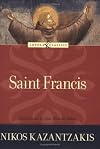
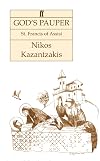
God's Pauper: St. Francis of Assisi
by Níkos Kazantzákis
On This Page
Description
Nikos Kazantzakis was born in 1883 in Herakleion on the island of Crete. During the Cretan revolt of 1897 his family was sent to the island of Naxos, where he attended the French School of the Holy Cross. From 1902 to 1906 he studied law at Athens University. He worked first as a journalist and throughout a long career wrote several plays, travel journals and translations. His remarkable travels began in 1907 and there were few countries in Europe or Asia that he didn't visit. He studied show more Buddhism in Vienna and later belonged to a group of radical intellectuals in Berlin, where he began his great epic The Odyssey, which he completed in 1938. He didn't start writing novels until he was almost 60 and completed his most famous work, Zorba the Greek, in 1946. Other novels include Freedom and Death (1953) and The Last Temptation (1954), which the Vatican placed on the Index. Return to Greco, an autobiographical novel, was published in 1961.Nikos Kazantzakis finally settled in Antibes with his second wife, and died there from leukaemia in October 1957. He is buried at Herakleion, where the epitaph on his tomb reads: 'I hope for nothing. I fear nothing. I am free'. show lessTags
Recommendations
















Member Reviews
BOOK : God's Pauper
Author : Nikos Kazantzakis
A flawless masterpiece about the devotion of a true devotee.....that is the story of God's Pauper written by Nikos Kazantzakis. The epic story of the life of one of the greatest Saints in the world is narrated in a lucid & yet heart wrenching fashion that makes the reader one with the pain & passion of the man behind the Saint.
Being a passionate believer & student of the Franciscan way of life, I find this book quite in keeping with not only history but also with the current ideas religious personalities have about the pain behind the total annihilation of the ego (flesh in the case of Saint Francs of Assisi). Kazantzakis in a simple way reveals to the reader not only the life of Saint show more Francis. The writer does us a favour for which I shall be ever grateful to him as a reader.....he makes the life of this pauper very REAL ! We generally find the lives of most of the Christian saints highly above our normal dealings & therefore most of the time ignore their life histories as well as their writings which seem rather dogmatic....not in keeping with our practical mind-set. Kazantzakis is aware of this failing & therefore, brings out the true side of Saint Francis of Assisi.....the struggling man to become one with his creator. It is not the lofty saint that we encounter in this classic work but, the lowly man trapped by his love for God & the desires of his flesh which he wishes to overcome. The person that we witness in this narrative is the human being that signifies ALL of us with all our faults, yet wishing to love God in perfection sans faults & sinful ways.
This is not merely a religious document, but a mirror into the heart & mind of one of the greatest mystics of the Medieval Age in Europe. In fact, I would not be wrong if I stated that this novel is the life story of a revolutionary. Saint Francis of Assisi indeed was a revolutionary not only where his thinking was concerned but also his ideals on the way his society was progressing. Kazantzakis brings to us that revolutionary.
The story is narrated by St. Francis’ close comrade & fellow friar Brother Leo who although not all that divinely in tune with God (unlike his friend St. Francis) yet loves St. Francis to such an extent that he goes through the worst of situations to prove his loyalty & devotion. Brother Leo in this novel undergoes the hardships of whipping, self-torture, weather changes, sickness, hunger, thirst, mental turmoil etc., all because of his loyalty toward the person he considers to be quite sure about everything heavenly. More than just the narrator however, Brother Leo in this novel signifies…all our doubts…the scepticism that we are born with & in more than one way does he bring out his doubts. Through him, it is we who are questioning the authenticity of God & the divine call of St. Francis. Just like Brother Leo, we do not question because we think we are more than human….we question because WE ARE HUMAN & can a mere human become a saint? Can a human give up the longings of the flesh? Can a mere human overcome the impossible? These are questions posed to us & by us throughout the book.
The characters in this story may have been moulded in a different way by the author so as not to break the rhythm of the narrative….but they all did exist, this is history, and this is fact. Not only was there the ever loyal but doubtful Brother Leo but there was also the loving Saint Clara who followed in St. Francis’ footsteps ; not only was there a devoted Lady Pica the mother of St. Francis but also the crafty Brother Elias who twists the rule of St. Francis to his own liking & for his own self glory. These were REAL people like you & me who lived during troubled times & yet were asking the same questions about God & humanity that we are asking today.
The author himself has stated in the novel that he has added many stories from his own imagination at times so as to link together certain intricate parts of the legend of this peculiar medieval saint. He does so to merge the myth with the truth to bring out the essence of St. Francis’ teachings.
The extraordinary part of the book is that, the wild passion of the human soul is dramatised to perfection that even if an atheist were to read this book, he would be pulled in with this tide of emotional outbursts. The maniacal side of the Saint is seen by us & also accepted by us maybe because we realize that he is one of us. His passion was for God whereas currently our passion may be for many other concerns like Democracy, elimination of corruption, feminism, Global warming , communalism……it could be anything, but we all have our own goals & our own personal barometers to assess whether we have achieved our goal. The fanatic following of the revolutionary ideals of perfect poverty, perfect chastity & perfect obedience by St. Francis reminds us of our own fanaticism to our own ideals. His extraordinary way of living…..his stigmata….his fasts……..his bleeding body……..his hunger…..his yearning for Saint Clara…….his semi blindness all shows a level of extreme that was revolutionary for its time & age. It was not accepted readily of course & he resented it much, but did not complain. His job was to show the passion of his devotion to the world, which he did……which we daydream about too…….to show our ‘different’ ideas to the world which wants us to conform with its own set rules. St. Francis in the novel & in real life never followed the bandwagon but was always standing apart & therefore went the distance.
The novel finally is a revelation into our own hearts & minds……..what is our real mission in life? To conform to something that is not right or to change the rules….even if it takes us to the brink of insanity…..or sainthood! show less
Author : Nikos Kazantzakis
A flawless masterpiece about the devotion of a true devotee.....that is the story of God's Pauper written by Nikos Kazantzakis. The epic story of the life of one of the greatest Saints in the world is narrated in a lucid & yet heart wrenching fashion that makes the reader one with the pain & passion of the man behind the Saint.
Being a passionate believer & student of the Franciscan way of life, I find this book quite in keeping with not only history but also with the current ideas religious personalities have about the pain behind the total annihilation of the ego (flesh in the case of Saint Francs of Assisi). Kazantzakis in a simple way reveals to the reader not only the life of Saint show more Francis. The writer does us a favour for which I shall be ever grateful to him as a reader.....he makes the life of this pauper very REAL ! We generally find the lives of most of the Christian saints highly above our normal dealings & therefore most of the time ignore their life histories as well as their writings which seem rather dogmatic....not in keeping with our practical mind-set. Kazantzakis is aware of this failing & therefore, brings out the true side of Saint Francis of Assisi.....the struggling man to become one with his creator. It is not the lofty saint that we encounter in this classic work but, the lowly man trapped by his love for God & the desires of his flesh which he wishes to overcome. The person that we witness in this narrative is the human being that signifies ALL of us with all our faults, yet wishing to love God in perfection sans faults & sinful ways.
This is not merely a religious document, but a mirror into the heart & mind of one of the greatest mystics of the Medieval Age in Europe. In fact, I would not be wrong if I stated that this novel is the life story of a revolutionary. Saint Francis of Assisi indeed was a revolutionary not only where his thinking was concerned but also his ideals on the way his society was progressing. Kazantzakis brings to us that revolutionary.
The story is narrated by St. Francis’ close comrade & fellow friar Brother Leo who although not all that divinely in tune with God (unlike his friend St. Francis) yet loves St. Francis to such an extent that he goes through the worst of situations to prove his loyalty & devotion. Brother Leo in this novel undergoes the hardships of whipping, self-torture, weather changes, sickness, hunger, thirst, mental turmoil etc., all because of his loyalty toward the person he considers to be quite sure about everything heavenly. More than just the narrator however, Brother Leo in this novel signifies…all our doubts…the scepticism that we are born with & in more than one way does he bring out his doubts. Through him, it is we who are questioning the authenticity of God & the divine call of St. Francis. Just like Brother Leo, we do not question because we think we are more than human….we question because WE ARE HUMAN & can a mere human become a saint? Can a human give up the longings of the flesh? Can a mere human overcome the impossible? These are questions posed to us & by us throughout the book.
The characters in this story may have been moulded in a different way by the author so as not to break the rhythm of the narrative….but they all did exist, this is history, and this is fact. Not only was there the ever loyal but doubtful Brother Leo but there was also the loving Saint Clara who followed in St. Francis’ footsteps ; not only was there a devoted Lady Pica the mother of St. Francis but also the crafty Brother Elias who twists the rule of St. Francis to his own liking & for his own self glory. These were REAL people like you & me who lived during troubled times & yet were asking the same questions about God & humanity that we are asking today.
The author himself has stated in the novel that he has added many stories from his own imagination at times so as to link together certain intricate parts of the legend of this peculiar medieval saint. He does so to merge the myth with the truth to bring out the essence of St. Francis’ teachings.
The extraordinary part of the book is that, the wild passion of the human soul is dramatised to perfection that even if an atheist were to read this book, he would be pulled in with this tide of emotional outbursts. The maniacal side of the Saint is seen by us & also accepted by us maybe because we realize that he is one of us. His passion was for God whereas currently our passion may be for many other concerns like Democracy, elimination of corruption, feminism, Global warming , communalism……it could be anything, but we all have our own goals & our own personal barometers to assess whether we have achieved our goal. The fanatic following of the revolutionary ideals of perfect poverty, perfect chastity & perfect obedience by St. Francis reminds us of our own fanaticism to our own ideals. His extraordinary way of living…..his stigmata….his fasts……..his bleeding body……..his hunger…..his yearning for Saint Clara…….his semi blindness all shows a level of extreme that was revolutionary for its time & age. It was not accepted readily of course & he resented it much, but did not complain. His job was to show the passion of his devotion to the world, which he did……which we daydream about too…….to show our ‘different’ ideas to the world which wants us to conform with its own set rules. St. Francis in the novel & in real life never followed the bandwagon but was always standing apart & therefore went the distance.
The novel finally is a revelation into our own hearts & minds……..what is our real mission in life? To conform to something that is not right or to change the rules….even if it takes us to the brink of insanity…..or sainthood! show less
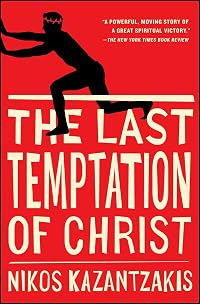
Like The Last Temptation of Christ, Saint Francis is a fictionalized biography of a widely venerated Christian figure: Francis of Assisi, whose renunciation of his young man’s life of leisure and founding of a religious order dedicated to living in poverty and sharing the Gospels with all living things profoundly influence the ways in which Christians the world over worship and give service to their god even today. Recounted in Nikos Kazantzakis’s striking prose through the eyes of the saint’s brother, Leo, the life of Saint Francis shines in these pages as a heroic example of inspirational leadership and boundless love for God and all His creatures.
Fictionalized retelling of the life of St. Francis. A good alternative look at religious history. Not as astonishing as the semi-gnostic views seen in The Last Temptation of Christ, but still very interesting to consider, especially in the consideration of how much history and myth are distorted over time.
Fascinating and moving. Francis has that curious characteristic of being both perfectly clear, and nearly impossible to understand.
Saint Francis is obviously a book about the odd saint most closely identified with being surrounded by animals. Since the book was written by Kazantzkis, the dude who brought you "The Last Temptation of Christ", I expected some strange, uncoventional takes on religion and theology. While a little bit of that is present in the first part of the book, with Francis' diatribes concerning fallen angels, for the most part the book comes off as a fairly boring retelling of his life (all though fictionalized). We see Francis' transformation from spoiled rich kid roaming around town to woo ladies with his guitar, to a man struggling with being called by God, to founding his own monastery, to complete isolation on a mountain...all fine and good, show more but doesn't make for a very compelling read and instead one finds themselves thinking "die already." show less
A good fictional treatment of St Francis but not the most entertaining book from Kazantzakis.
An appropriate read for Holy Week. The life of Saint Francis of Assisi. I don't know if I can ever aspire to life of his. But it is worth contemplating.
Members
- Recently Added By
Lists

Tammen Keltainen kirjasto
81 works; 1 member

The Essential Western Mystics
66 works; 4 members
Talk Discussions
Past Discussions
The lead-off article to start the discussion in The Arresting Life & Writings Of Nikos Kazantzakis (December 2012)
Author Information

147+ Works 12,397 Members
This distinguished novelist, poet, and translator was born in Crete and educated in Athens, Germany, Italy, and Paris, where he studied philosophy. He found time to write some 30 novels, plays, and books on philosophy, to serve his government, and to travel widely. He ran the Greek ministry of welfare from 1919 to 1921 and was minister of state show more briefly in 1945. A political activist, he spent his last years in France and died in Germany. Kazantzakis's character Zorba has been called "one of the great characters of modern fiction," in a novel that "reflects Greek exhilaration at its best" (TLS). A film version of 1965, starring Anthony Quinn, made Kazantzakis widely known in the West. Intensely religious, he imbued his novels with the passion of his own restless spirit, "torn between the active and the contemplative, between the sensual and the aesthetic, between nihilism and commitment" (Columbia Encyclopedia). Judas, the hero of The Last Temptation of Christ (1951) is asked by Christ to betray him so that he can fulfill his mission through the crucifixion. For this book Kazantzakis was excommunicated from the Greek Orthodox Church. The Fratricides, Kazantzakis's last novel, portrays yet another religious hero, a priest caught between Communists and Royalists in the Greek Civil War. (Bowker Author Biography) show less
Some Editions
Series
Belongs to Publisher Series
Common Knowledge
- Canonical title
- God's Pauper: St. Francis of Assisi
- Original title
- Ο Φτωχούλης του Θεού
- Original publication date
- 1954; 1962 (English) (English)
- People/Characters
- Francis of Assisi; Baldwin IV, King of Jerusalem
- Important places*
- Assise, Italie
- Dedication
- Dedicated to
the Saint Francis of out era,
Dr. Albert Schweitzer
N.K - First words
- Father Francis, I who take up my pen today to write your life and times, unworthy that I am: when you first met me, remember, I was a humble begger, ugly, my face and head covered with hair.
- Last words
- (Click to show. Warning: May contain spoilers.)And it was you, Father Francis; it was you, dressed as a tiny sparrow.
- Original language
- Greek
*Some information comes from Common Knowledge in other languages. Click "Edit" for more information.
Classifications
- Genres
- Fiction and Literature, General Fiction, Historical Fiction
- DDC/MDS
- 889.332 — Literature & rhetoric Classical & modern Greek literatures Modern Greek literature Fiction 20th century 1941-1944
- LCC
- PZ3 .S — Language and Literature Fiction and juvenile belles lettres Fiction and juvenile belles lettres Fiction in English
- BISAC
Statistics
- Members
- 671
- Popularity
- 43,085
- Reviews
- 15
- Rating
- (3.81)
- Languages
- 16 — Czech, Dutch, English, Finnish, French, German, Greek, Hungarian, Italian, Lithuanian, Norwegian (Bokmål), Norwegian, Portuguese, Romanian, Spanish, Turkish
- Media
- Paper, Audiobook, Ebook
- ISBNs
- 33
- ASINs
- 17