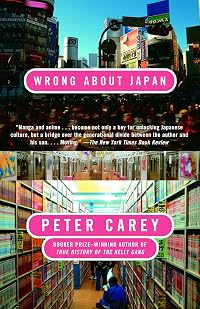
Wrong About Japan
by Peter Carey
On This Page
Description
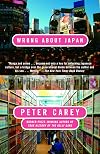
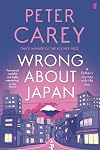
The Booker Prize-winning author of Oscar and Lucinda describes how his shy young son's fascination with Japanese manga and anime led father and son on an intriguing odyssey to Tokyo, where they discover the intricacies of modern-day Japanese culture, from shitamachi and the Internet to kabuki and the samurai. The recipient of two Booker Prizes, Peter Carey expands his extraordinary achievement with each new novel and now gives us something entirely different. When famously shy Charley show more becomes obsessed with Japanese manga and anime, Peter is not only delighted for his son but also entranced himself. Thus begins a journey, with a father sharing his twelve-year-old's exotic comic books, that ultimately leads them to Tokyo, where a strange Japanese boy will become both their guide and judge. Quickly the visitors plunge deep into the lanes of Shitimachi into the weird stuff of modern Japan meeting manga artists and anime directors; painstaking impersonators called visualists, who adopt a remarkable variety of personae; and solitary otakus, whose existence is thoroughly computerized. What emerges from these encounters is a far-ranging study of history and of culture both high and low from samurai to salaryman, from Kabuki theater to the postwar robot craze. Peter Carey's observations are always provocative, even when his hosts point out, politely, that he is once again wrong about Japan. And his adventures with Charley are at once comic, surprising, and deeply moving, as father and son cope with and learn from each other in a strange place far from home. This is, in the end, a remarkable portrait of a culture whether Japan or adolescence that looks eerily familiar but remains tantalizingly closed to outsiders. show lessTags
Recommendations









Member Reviews
Wrong About Japan is a sort of docu-book about this dude, Peter Carey, and his son, Charlie (or something).
The father is from Australia, and now they all live in New York. Charlie becomes interested in anime and manga. That's it, just ANIME and MANGA. (He also rents Kikujiro a few billion times, but it's a kick ass movie, so you can't blame him) So what does the father do? Like any good, white father he tries to see what his son is inerested in. (if you noticed that white there, i'm too chicken to take it out) So because the guy is an Australian, maybe, he's like, "Wanna go to Japan?" (THAT QUICK?!) and the kid is like "Yeah, whatever".
Rich people. Anyway.
They go to Japan, and even though he's been there before, the dad totally ruins show more the trip for his kid. The kid, ironically, begs his dad not to see "Real Japan", that is, Kabuki shows and torii shrines and probably well-endowed tanuki sculptures but that last one isn't mentioned. Charlie would rather go to play video games and make Gundam models and stuff. But noooooo. After telling the reader that Japan is a closed society and that gaijin will never understand, he is determined to be the "gaijin who got it." worst of all, he wants to "get it" through anime and manga.
So he gets to go to all these interviews with famous anime and manga artists. He also goes to see a swordsmith and a cross-dressing "visualist otaku". They all insist to him that manga was just developed trying to sell candy, and anime is to sell toys, or from manga. And he's still like, "but to the Japanese, aren't there parts of the anime, to which other societies are oblivious?"
"um... no. Just to sell robot toy."
"but why the obsession with robots? When the kids are in the robot, is it like they're in a robot 'womb' so they feel safe from all the 'other' kids" (in other words, do the nihonjin want a big robot mommy so they can be protected from the ignorant, evil, gaijin?
"Um... it's a toy."
So by the time they get to Kazu or Kayu or whatever the hell his name was, I'm convinced that there is actually an "it" that the nihonjin are conditioned to keep secret from all gaijin. Perhaps it is a small stillborn child floating in some sort of bluish green liquid that was frozen in the snowy snowiness of Hokkaido. Maybe not. But Carey is certain that something like this exists, so he has to go around doing interviews and keeping his poor kid from his penpal Takashi. He is annoying. Annoying to the intervewees, annoying to Charley, annoying to his connections, annoying to Takashi, and annoying to ME.
But then, Carey does something so wonderful and completely unexpected. He is really funny. REALLY funny. There were some moments that made me chuckle before but wow. When they are trying to visit Takashi (with whom I am in love) one last time, they go to the Mister Donut where he works. But the store is closed, and you read this:
But Mister Donut was closed. Impossible. We both got out of the car and stood with our noses pressed against the glass doors. It had been open before, so how could it be closed now? I took the parcel from my son and laid it on the step.
Charley retrieved his gift and then, from deep in a pocket of his baggy jeans, pulled out the map Takashi had drawn when he invited us to his grandmother's apartment.
"Oh no," I thought, "no, please, no."
But what was I to do? My only choice was to hand the driver our map. "We go," I said in perfect English.
This is very funny--I don't care what you think. It's my review.
In conclusion!!! This was a very good book writing-wise. But I'll tell you, this Carey guy got on my LAST NERVE. You were Wrong About Japan. You lose. But the last part was great, and not because it was the last part. But because it was funny... very cinematic. Good Job.
Stay tuned for my next review: Howl's Moving Castle by Dianna Wynne Jones. Let's see how interesting the people are when they aren't dubbed from the nihongo. show less
The father is from Australia, and now they all live in New York. Charlie becomes interested in anime and manga. That's it, just ANIME and MANGA. (He also rents Kikujiro a few billion times, but it's a kick ass movie, so you can't blame him) So what does the father do? Like any good, white father he tries to see what his son is inerested in. (if you noticed that white there, i'm too chicken to take it out) So because the guy is an Australian, maybe, he's like, "Wanna go to Japan?" (THAT QUICK?!) and the kid is like "Yeah, whatever".
Rich people. Anyway.
They go to Japan, and even though he's been there before, the dad totally ruins show more the trip for his kid. The kid, ironically, begs his dad not to see "Real Japan", that is, Kabuki shows and torii shrines and probably well-endowed tanuki sculptures but that last one isn't mentioned. Charlie would rather go to play video games and make Gundam models and stuff. But noooooo. After telling the reader that Japan is a closed society and that gaijin will never understand, he is determined to be the "gaijin who got it." worst of all, he wants to "get it" through anime and manga.
So he gets to go to all these interviews with famous anime and manga artists. He also goes to see a swordsmith and a cross-dressing "visualist otaku". They all insist to him that manga was just developed trying to sell candy, and anime is to sell toys, or from manga. And he's still like, "but to the Japanese, aren't there parts of the anime, to which other societies are oblivious?"
"um... no. Just to sell robot toy."
"but why the obsession with robots? When the kids are in the robot, is it like they're in a robot 'womb' so they feel safe from all the 'other' kids" (in other words, do the nihonjin want a big robot mommy so they can be protected from the ignorant, evil, gaijin?
"Um... it's a toy."
So by the time they get to Kazu or Kayu or whatever the hell his name was, I'm convinced that there is actually an "it" that the nihonjin are conditioned to keep secret from all gaijin. Perhaps it is a small stillborn child floating in some sort of bluish green liquid that was frozen in the snowy snowiness of Hokkaido. Maybe not. But Carey is certain that something like this exists, so he has to go around doing interviews and keeping his poor kid from his penpal Takashi. He is annoying. Annoying to the intervewees, annoying to Charley, annoying to his connections, annoying to Takashi, and annoying to ME.
But then, Carey does something so wonderful and completely unexpected. He is really funny. REALLY funny. There were some moments that made me chuckle before but wow. When they are trying to visit Takashi (with whom I am in love) one last time, they go to the Mister Donut where he works. But the store is closed, and you read this:
But Mister Donut was closed. Impossible. We both got out of the car and stood with our noses pressed against the glass doors. It had been open before, so how could it be closed now? I took the parcel from my son and laid it on the step.
Charley retrieved his gift and then, from deep in a pocket of his baggy jeans, pulled out the map Takashi had drawn when he invited us to his grandmother's apartment.
"Oh no," I thought, "no, please, no."
But what was I to do? My only choice was to hand the driver our map. "We go," I said in perfect English.
This is very funny--I don't care what you think. It's my review.
In conclusion!!! This was a very good book writing-wise. But I'll tell you, this Carey guy got on my LAST NERVE. You were Wrong About Japan. You lose. But the last part was great, and not because it was the last part. But because it was funny... very cinematic. Good Job.
Stay tuned for my next review: Howl's Moving Castle by Dianna Wynne Jones. Let's see how interesting the people are when they aren't dubbed from the nihongo. show less
I picked this up on a whim because I've been into travel essays recently and because I have a mild interest, love-hate relationship with anime and manga. I want to love anime but I have a really hard time getting past the cultural differences, so much so that the process becomes too much like work and not enjoyment, which I know it's supposed to be.
Peter Carey's trip to Japan with his son to find out a little more about the history of anime and manga was exactly the kind of introduction I was looking for on the subject. A Wide eyed foreigner’s perspective. Like Carey I've had many misconceptions about the content of the stories and the influences thereof. From Hayao Miyazaki's studio to the creator of the Gundam wing franchise Carey show more visits and talks with these artists to try and get a grasp on the whos and whys of the genre, and at almost every turn is either surprised or proven wrong about his research.
My only complaint is that it's a very short book and has only made me want to find out more, but once again I have no idea where to start. show less
Peter Carey's trip to Japan with his son to find out a little more about the history of anime and manga was exactly the kind of introduction I was looking for on the subject. A Wide eyed foreigner’s perspective. Like Carey I've had many misconceptions about the content of the stories and the influences thereof. From Hayao Miyazaki's studio to the creator of the Gundam wing franchise Carey show more visits and talks with these artists to try and get a grasp on the whos and whys of the genre, and at almost every turn is either surprised or proven wrong about his research.
My only complaint is that it's a very short book and has only made me want to find out more, but once again I have no idea where to start. show less
I picked up this book for a laugh. Also to be "edutained", but it turned out to be more entertaining than educating as a travel book. "Wrong About Japan" proves Noel Coward right when he said about tourism: "Why do the wrong people travel, when the right people stay at home?".
And of course, what makes the book compelling is the stubbornness of Peter Carey in his attempts to understand the meaning of Anime and Manga, through visits to creators and producers of such artforms. He always misunderstands the main purpose these creators and producers had in mind.
The shocking truth behind the origins of Gundam Wing as something designed to sell toy robots is hard for Peter Carey to stomach, but as a veteran cartoon show watcher, having seen show more what Transformers was as a franchise, it's not that impossible to imagine that this was the truth with Gundam Wing.
Yet Peter Carey never gives up in his mistaken belief he understands Anime and Manga, and therefore Japan itself. The futility of his attempts at piecing together an accurate understanding of Japan through these art forms is as much unspeakably funny as it is painful to read what Carey does next, digging himself into a hole that he buries himself in with the shovel of his own ignorance, prospecting for meaning but finding only bitter disappointment.
The premise of the travel book is that Peter Carey takes his son along to Japan because Charley wants to find out more about Manga and Anime. Simple enough a premise, but not a good foundation for a book about "understanding Japanese culture". The resulting, light reading tome is fun and is a page turner, but you will cringe as Carey refuses to admit defeat and his constant assumption that there is something about Japan that he believes, paranoid to the end, that the natives will not tell gaijins.
The answer to Carey's dilemma is that he approached the way he asked his questions the wrong way. Even if you don't live in Japan, assuming you know the answer all the time when you ask a question will not help you win friends. Carey gets what he deserves in this book, and he was lucky enough to escape the country without being thrown out by force. show less
And of course, what makes the book compelling is the stubbornness of Peter Carey in his attempts to understand the meaning of Anime and Manga, through visits to creators and producers of such artforms. He always misunderstands the main purpose these creators and producers had in mind.
The shocking truth behind the origins of Gundam Wing as something designed to sell toy robots is hard for Peter Carey to stomach, but as a veteran cartoon show watcher, having seen show more what Transformers was as a franchise, it's not that impossible to imagine that this was the truth with Gundam Wing.
Yet Peter Carey never gives up in his mistaken belief he understands Anime and Manga, and therefore Japan itself. The futility of his attempts at piecing together an accurate understanding of Japan through these art forms is as much unspeakably funny as it is painful to read what Carey does next, digging himself into a hole that he buries himself in with the shovel of his own ignorance, prospecting for meaning but finding only bitter disappointment.
The premise of the travel book is that Peter Carey takes his son along to Japan because Charley wants to find out more about Manga and Anime. Simple enough a premise, but not a good foundation for a book about "understanding Japanese culture". The resulting, light reading tome is fun and is a page turner, but you will cringe as Carey refuses to admit defeat and his constant assumption that there is something about Japan that he believes, paranoid to the end, that the natives will not tell gaijins.
The answer to Carey's dilemma is that he approached the way he asked his questions the wrong way. Even if you don't live in Japan, assuming you know the answer all the time when you ask a question will not help you win friends. Carey gets what he deserves in this book, and he was lucky enough to escape the country without being thrown out by force. show less
I really enjoyed this book and literally romped through it. I guess that might have been because I am slightly familiar with Japan through family and several visits. I have also read some of Peter Carey's novels. In some ways it is a book about the relationship between a father and his son, rather than a book about Japan, but Japan provides the backdrop. Sometimes I guess we have to remove ourselves from our usual environment in order to see and understand the nature of things.
When son Charley is offered a trip to Japan he says on p.10 '" Not if I have to see the Real Japan."' The challenge of Peter Carey's book is: what is the 'real Japan' for each reader. Certainly that was the challenge for me. When I think of my son-in-law's family show more making mochi rice on their farm, that is surely the 'real Japan'. It is real because our family has experienced that. Whereas Charley might have regarded that as the 'Real Japan' he didn't want to see.
Japan is made up of a host of realities, of real Japans and each person will have their own experience of those, or glimpse into them. Perhaps the book is about created reality with the boy Takashi being an example of a creation which for him is real and which is probably echoed by many other young people in the world and perhaps more obviously in Japan. Takashi's other realities are working at Mister Donut and conforming to business norms and practices, and on the other hand having a family - well a grandmother whom Charley and his father meet very briefly at the end of the book. Had they accepted Takashi's invitation, they would have seen another Real Japan. Well in a way on p.158 I think Charley recognised another reality from the one he had wanted to see.
On p.16 there is mention of 'old Japan, kimonos, fish and rice for breakfast'. Maybe there is an 'old Real Japan' and a 'new Real Japan.' In the new Real japan one would commonly have a salad for breakfast!.
On one trip to Tokyo I attended a performance of a Noh play - which reality was that? Or was it unreal but pointing to reality? Perhaps Peter Carey and his son had a comparable experience when they went to kabuki.
This book also highlights the fact that we pick and choose things when we go to a different culture, and sometimes when we experience something not chosen that is the reality.
Peter Carey does underline for me that there is a loud, brash and slightly scary angle to entertainment in Japan, and this is even evident in TV programmes for children. The beauty of his book is that he is able to underline some of the origins of that.
Really worth reading. show less
When son Charley is offered a trip to Japan he says on p.10 '" Not if I have to see the Real Japan."' The challenge of Peter Carey's book is: what is the 'real Japan' for each reader. Certainly that was the challenge for me. When I think of my son-in-law's family show more making mochi rice on their farm, that is surely the 'real Japan'. It is real because our family has experienced that. Whereas Charley might have regarded that as the 'Real Japan' he didn't want to see.
Japan is made up of a host of realities, of real Japans and each person will have their own experience of those, or glimpse into them. Perhaps the book is about created reality with the boy Takashi being an example of a creation which for him is real and which is probably echoed by many other young people in the world and perhaps more obviously in Japan. Takashi's other realities are working at Mister Donut and conforming to business norms and practices, and on the other hand having a family - well a grandmother whom Charley and his father meet very briefly at the end of the book. Had they accepted Takashi's invitation, they would have seen another Real Japan. Well in a way on p.158 I think Charley recognised another reality from the one he had wanted to see.
On p.16 there is mention of 'old Japan, kimonos, fish and rice for breakfast'. Maybe there is an 'old Real Japan' and a 'new Real Japan.' In the new Real japan one would commonly have a salad for breakfast!.
On one trip to Tokyo I attended a performance of a Noh play - which reality was that? Or was it unreal but pointing to reality? Perhaps Peter Carey and his son had a comparable experience when they went to kabuki.
This book also highlights the fact that we pick and choose things when we go to a different culture, and sometimes when we experience something not chosen that is the reality.
Peter Carey does underline for me that there is a loud, brash and slightly scary angle to entertainment in Japan, and this is even evident in TV programmes for children. The beauty of his book is that he is able to underline some of the origins of that.
Really worth reading. show less
This book caught my eye a while ago, not long after my return from Japan, because I hoped it would tell me a bit more about the country’s lively manga and anime culture. Only now have I got round to reading it, and I’ve been left feeling rather perplexed. What is it actually meant to be? Part memoir, part travelogue, part pop-culture history, part social analysis, it skips between different guises without ever really settling on one, or fulfilling any. Strangely unsatisfying, it’s perhaps best described as a father-son road movie, in which Carey and his manga-obsessed twelve-year-old son Charley fly to Japan in search of the truth behind this international art phenomenon...
For the full review, please see my blog:
show more target="_top">https://theidlewoman.net/2019/01/08/wrong-about-japan-peter-carey/ show less
For the full review, please see my blog:
show more target="_top">https://theidlewoman.net/2019/01/08/wrong-about-japan-peter-carey/ show less
The book, an account of a father-son trip to Japan, to learn about the origins and creation of manga and anime, is really a book about the mysteries of taste. The father appreciates literature and high culture and tries very hard to appreciate his son's taste for Japanese popular culture. The teen-aged son reads out of duty. not pleasure, rebels against museum attendance, and tries hard not to be embarrassed by his father'd earnestness. The parent-child divide is only exacerbated by the language divide and the cultural divide as they make their way around Tokyo. The imnplicit question is: How do you get another person to appreciate what you think is worth appreciating?
http://pixxiefishbooks.blogspot.com/2...
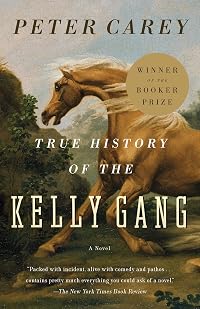
I picked this up one day from a secondhand book shop because it had an intriguing premise: Peter Carey, famous Australian author (among other things, he is the author of the novel True History of the Kelly Gang, which I really want to read someday) who is based in New York City, takes his 12-year-old son to Tokyo for a week after his son declares that he is going to live in Japan someday. Charlie is interested in Japanese manga and anime, not kabuki theatre and temple architecture. So he gets his dad to promise that they will visit the Real Japan, which they do. They meet a young Japanese boy who speaks English (I guess in Tokyo, anything is possible) who shows them some way-off-the-beaten-track show more aspects of Japanese life. There is a bit of Japanese theatre, despite Charlie's loud protests, and if I recall correctly, Carey gets away at one point by himself to visit one temple or something like that. But mostly there is anime and yakuza and comics and Mr. Donut. It's a short book, and you don't have to be a Japanophile to appreciate it. It's a fun read with a number of laugh-out-loud moments. show less
I picked this up one day from a secondhand book shop because it had an intriguing premise: Peter Carey, famous Australian author (among other things, he is the author of the novel True History of the Kelly Gang, which I really want to read someday) who is based in New York City, takes his 12-year-old son to Tokyo for a week after his son declares that he is going to live in Japan someday. Charlie is interested in Japanese manga and anime, not kabuki theatre and temple architecture. So he gets his dad to promise that they will visit the Real Japan, which they do. They meet a young Japanese boy who speaks English (I guess in Tokyo, anything is possible) who shows them some way-off-the-beaten-track show more aspects of Japanese life. There is a bit of Japanese theatre, despite Charlie's loud protests, and if I recall correctly, Carey gets away at one point by himself to visit one temple or something like that. But mostly there is anime and yakuza and comics and Mr. Donut. It's a short book, and you don't have to be a Japanophile to appreciate it. It's a fun read with a number of laugh-out-loud moments. show less
Members
- Recently Added By
Talk Discussions
Past Discussions
Peter Carey's "Wrong About Japan" in Japanese Culture (February 2010)
Author Information

42+ Works 24,726 Members
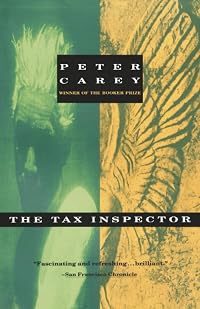
Peter Carey was born on May 7, 1943 in Bacchus Marsh, Victoria, Australia. His first two books, The Fat Man in History (1974) and War Crimes (1979), were short story collections. His first novel, Bliss, was published in 1982. At the time he was balancing his writing career with the operation of an advertising agency in Sydney, and his books were show more not generally known outside of Australia. He began to receive international attention when Illywhacker was published in 1985. He won the Booker Prize in 1988 for Oscar and Lucinda and in 2001 for True History of the Kelly Gang. His other works include The Tax Inspector, Parrot and Olivier in America, and The Chemistry of Tears. He also won the Miles Franklin Award three times. In 2015 he made the Australian Book Designers Association Award shortlist for his title Amnesia. This title also made the 2015 Prime Minister's Literary Awards shortlist. (Bowker Author Biography) show less
Awards and Honors
Notable Lists
Common Knowledge
- Important places
- Japan
- Dedication
- For both my sons, with all my love
- First words
- I was at the video shop with my twelve-year-old son when he rented Kikujiro, a tough-guy/little-boy Japanese film whose charming, twitching hoodlum is played by an actor named Beat Takeshi.
- Last words
- (Click to show. Warning: May contain spoilers.)"Found it finally," Charley said. "Let's get out of here before we learn we're wrong."
- Original language
- English
Classifications
Statistics
- Members
- 634
- Popularity
- 45,654
- Reviews
- 25
- Rating
- (3.09)
- Languages
- 6 — English, French, German, Italian, Portuguese, Spanish
- Media
- Paper, Ebook
- ISBNs
- 16
- ASINs
- 2