Ludwig Börne
by Heinrich Heine
On This Page
Description
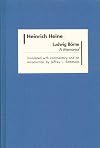
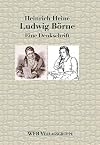
In 1840, Heinrich Heine, the major German poet of Jewish origin of the age, published a book on Ludwig Bo rne, the major German political writer of Jewish origin of the period, who had died three years before. Regarded by Heine and others as his best-written book, it was also his most disastrously conceived. Intended to recover the high ground of revolutionary principle and philosophy against the attacks mounted on him by Bo rne and his supporters, the book was instead met by a storm of show more outrage from which it seemed Heine's reputation might never recover. In the course of time, the evaluation was reversed; Heine was increasingly celebrated as a true herald of revolution. His vocabulary of Hellenism and Nazarenism, employed for the first time in 'Bo rne', was transmitted into English usage by Matthew Arnold. But 'Bo rne' itself is Heine's only major work that has never been fully translated into English. The commentary to the edition clarifies the conflict between the two most prominent German-Jewish public intellectuals of their time, corrects the misapprehensions constantly in circulation about their relationship and the book, and reveals the many peculiarities of the text. Jeffrey L. Sammons is Leavenworth Professor of German Emeritus at Yale University and the author of four books on Heine. show lessTags
Member Reviews
I'm afraid the English Wikipedia intimated correctly that this was not Heine's finest hour. For a lover of Heine's feuilleton writing and a student of Junges Deutschland (such as I) it barely serves as the intended helper into Junges Deutschland; one is better off reading the huge appendices in the latest edition of Gutzkow's Wally and, of course, just reading Börne's Paris Letters themselves. It's not all bad. Heine is, for better or worse, funny as hell. He shows a genuine love and admiration for Börne and Menzel (the latter whom I still need to read), and a willingness to make himself look like an idiot to stand up for his friends. His comments on the psychology of exile couldn't be improved today.
Nevertheless the reader finds show more oneself constantly wondering who the intended audience was for this book. To put it short, Heine spends wwaaaaaaayyyy too much time griping about his own life, organizes the five books into sometimes-incomprehensible collections of pity parties and beery recollections, and even goes out of his way about page 80 to say that in this whole book he desires not to add any critique whatever to Börne's work, but rather merely to pose the man as he remembers him. So what? Heine never answers. One gets the feeling that Heine was sick and let this thing loose to make money with a final insistence that he was a political writer worthy of note. But was he? Harzreise is political memory enough for me. Speaking of which, the moment I reopened my Harzreise, there was a quote in the very front of the thing by Börne, so Heine must feel something about his writing.
Before we learn what that was, he goes out of his way to diss Tieck (any UCSC grads in the house?? Remember Tieck??), jams paragraphs that should've been straight political analysis with his poetic goofy stuff, weighs the decisions by the "radical and authoritarian parties" to label him and his comrades as politically such and such, and generally demonstrates that he should've been happy as a poet. As a writer who himself would like to contribute to political and social thought, I found this book very cautionary.
In the end Heine makes his worst mistake, which is to put in a long citation of the Paris Letters in which Börne critiques Heine. As we read, we're reminded how much better an essayist Börne was than Heine, and we find ourselves, having survived this book, agreeing with Börne's spot-on and lyrically beautiful analogies on Heine's shortcomings.
When you read this stuff, you have to remember that this was early journalism, and free thought was made practically possible by a free press. So we're going to find all the extravagance, individual weirdness and desperate charm in this kind of writing by people who could be banned, jailed or exiled just for writing. There was a certain class with access to this technology, and we're going to get that class's perspectives. Now take that awareness and go see the rampant classism on GR!
A worthy read, but not a book for anyone near a beginner; for pros, not a great defense of Heine's writing (and character, he insists!) nor a great summary of Börne's work. Read it for the long quotes in the first two books, and hope that Börne could really talk that sexy in person. show less
Nevertheless the reader finds show more oneself constantly wondering who the intended audience was for this book. To put it short, Heine spends wwaaaaaaayyyy too much time griping about his own life, organizes the five books into sometimes-incomprehensible collections of pity parties and beery recollections, and even goes out of his way about page 80 to say that in this whole book he desires not to add any critique whatever to Börne's work, but rather merely to pose the man as he remembers him. So what? Heine never answers. One gets the feeling that Heine was sick and let this thing loose to make money with a final insistence that he was a political writer worthy of note. But was he? Harzreise is political memory enough for me. Speaking of which, the moment I reopened my Harzreise, there was a quote in the very front of the thing by Börne, so Heine must feel something about his writing.
Before we learn what that was, he goes out of his way to diss Tieck (any UCSC grads in the house?? Remember Tieck??), jams paragraphs that should've been straight political analysis with his poetic goofy stuff, weighs the decisions by the "radical and authoritarian parties" to label him and his comrades as politically such and such, and generally demonstrates that he should've been happy as a poet. As a writer who himself would like to contribute to political and social thought, I found this book very cautionary.
In the end Heine makes his worst mistake, which is to put in a long citation of the Paris Letters in which Börne critiques Heine. As we read, we're reminded how much better an essayist Börne was than Heine, and we find ourselves, having survived this book, agreeing with Börne's spot-on and lyrically beautiful analogies on Heine's shortcomings.
When you read this stuff, you have to remember that this was early journalism, and free thought was made practically possible by a free press. So we're going to find all the extravagance, individual weirdness and desperate charm in this kind of writing by people who could be banned, jailed or exiled just for writing. There was a certain class with access to this technology, and we're going to get that class's perspectives. Now take that awareness and go see the rampant classism on GR!
A worthy read, but not a book for anyone near a beginner; for pros, not a great defense of Heine's writing (and character, he insists!) nor a great summary of Börne's work. Read it for the long quotes in the first two books, and hope that Börne could really talk that sexy in person. show less
Members
- Recently Added By
Author Information

Heinrich Heine, 1797-1856 Born Christian Johann Heinrich Heine in Dusseldorf, Germany, on December 13, 1797, Heine's parents were Samson Heine, a commercial tradesman, and Elisabeth van Geldern. The eldest of four, Heine studied law at the universities of Bonn, Berlin, and Gottingen. Although Heine showed more of an interest in literature than show more law, he continued to study about the government, and earned a degree in that field in 1825. Even with his degree, Heine never practiced or held a position in government service. Eventually, Heine decided to follow his heart, and in 1821 he made his debut as a poet with the work Gedichte, translated as Poems. The release of Heine's third volume of poetry, The Town of Lucca, caused quite a stir. In this volume of poetry, Heine satirized the poet August von Platen for his attacks on Heine's Jewish origins. This act discredited Heine, and in 1831 he fled to Paris. There he became a journalist, reporting on French cultural and political affairs. He also wrote travel books and worked on German literature and philosophy, as well as poetry. Heine's best-known works include Atta Troll: A Midsummer Night's Dream, a romantic and humorous narrative poem that satirizes many targets, including German political poets; and Germany: A Winter's Tale, a fictionalized account of Heine's visit to Germany in 1843. Debilitated with a paralyzing illness since 1848, it wasn't until eight years later, on February 17, 1856, that Heine passed away. He was buried at the Montmartre Cemetery in France. (Bowker Author Biography) show less
Some Editions
Work Relationships
Is contained in
Common Knowledge
- Canonical title*
- Ludwig Börne : Eine Denkschrift
- Original title
- Ludwig Börne: Eine Denkschrift
*Some information comes from Common Knowledge in other languages. Click "Edit" for more information.
Classifications
- Genres
- Fiction and Literature, Literature Studies and Criticism
- DDC/MDS
- 838.609 — Literature & rhetoric German & related literatures German miscellaneous writings 1750–1832 : 18th century; classical period; romantic period Individual authors not limited to one specific form : description; critical appraisal; biography; collected works
- LCC
- PT2309 .B6 .S3613 — Language and Literature German, Dutch and Scandinavian literatures German literature Individual authors or works 1700-ca. 1860/70
- BISAC
Statistics
- Members
- 7
- Popularity
- 2,748,676
- Reviews
- 1
- Rating
- (3.00)
- Languages
- English, German, Spanish
- Media
- Paper, Audiobook, Ebook
- ISBNs
- 5
- ASINs
- 2