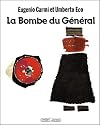
The Bomb and the General
by Umberto Eco
On This Page
Description
A bad general who wishes to start a war with atom bombs is foiled and reduced to the humiliating status of doorman, an occupation in which he can use his uniform with all the braid.Tags
Recommendations













Member Recommendations
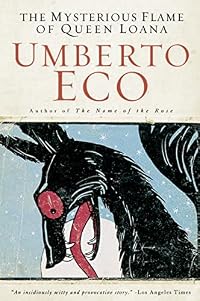
Cecrow More children's fiction by Eco
Member Reviews
An important general collects atoms and puts them into bombs that he stores in his attic in preparation for war, but the atoms prefer to live in harmony and sneak out.
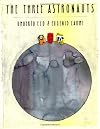
From the distinguished Italian scholar and novelist (The Name of the Rose), two fables concerning war, peace, and coexistence. In The Bomb and the General, the atoms in stockpiled bombs realize their role—to destroy the world—and rebel against it. After all, all things—moms, milk, air, fire—are composed of atoms. So the atoms escape and hide in the cellar; and when the war-monger general who has command over the bombs does declare war (necessary to his career), the populace is so surprised and grateful not to have the world blown up that they decide to give up war show more forever; the general (so as not to waste his uniform) becomes a doorman. The Three Astronauts—American, Russian, Chinese—arrive on Mars feuding bitterly, but realize their common humanity when confronted by a Martian. Then even the Martian is recognized as a fellow creature when he nurtures a bird. Carmi's illustrations, in mixed media and collage, are imaginative and striking, sometimes more suggestive than representational: the astronauts, for example, are shown as scraps of paper—yellow with a Chinese character, a bit of a Soviet newspaper in red, a gum wrapper. In spite of their heavy-handed didacticism, these are beautifully designed books that should provide valuable discussion. show less
From the distinguished Italian scholar and novelist (The Name of the Rose), two fables concerning war, peace, and coexistence. In The Bomb and the General, the atoms in stockpiled bombs realize their role—to destroy the world—and rebel against it. After all, all things—moms, milk, air, fire—are composed of atoms. So the atoms escape and hide in the cellar; and when the war-monger general who has command over the bombs does declare war (necessary to his career), the populace is so surprised and grateful not to have the world blown up that they decide to give up war show more forever; the general (so as not to waste his uniform) becomes a doorman. The Three Astronauts—American, Russian, Chinese—arrive on Mars feuding bitterly, but realize their common humanity when confronted by a Martian. Then even the Martian is recognized as a fellow creature when he nurtures a bird. Carmi's illustrations, in mixed media and collage, are imaginative and striking, sometimes more suggestive than representational: the astronauts, for example, are shown as scraps of paper—yellow with a Chinese character, a bit of a Soviet newspaper in red, a gum wrapper. In spite of their heavy-handed didacticism, these are beautifully designed books that should provide valuable discussion. show less
O senhor Eco também escreve livros infantis. E este é uma pérola de criatividade e simbolismo. Só para que saibam.
Ratings
Members
- Recently Added By
Author Information

501+ Works 115,124 Members
Umberto Eco was born in Alessandria, Italy on January 5, 1932. He received a doctorate of philosophy from the University of Turin in 1954. His first book, Il Problema Estetico in San Tommaso, was an extension of his doctoral thesis on St. Thomas Aquinas and was published in 1956. His first novel, The Name of the Rose, was published in 1980 and won show more the Premio Strega and the Premio Anghiar awards in 1981. In 1986, it was adapted into a movie starring Sean Connery. His other works include Foucault's Pendulum, The Island of the Day Before, Baudolino, The Prague Cemetery, and Numero Zero. He also wrote children's books and more than 20 nonfiction books including Serendipities: Language and Lunacy. He taught philosophy and then semiotics at the University of Bologna. He also wrote weekly columns on popular culture and politics for L'Espresso. He died from cancer on February 19, 2016 at the age of 84. (Bowker Author Biography) show less
Some Editions
Awards and Honors
Work Relationships
Is contained in
Common Knowledge
- Original title
- La bomba e il generale
Classifications
Statistics
- Members
- 73
- Popularity
- 429,861
- Reviews
- 2
- Rating
- (3.69)
- Languages
- 6 — Dutch, English, French, German, Italian, Spanish
- Media
- Paper
- ISBNs
- 6