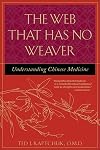
The Web That Has No Weaver : Understanding Chinese Medicine
by Ted J. Kaptchuk
On This Page
Description
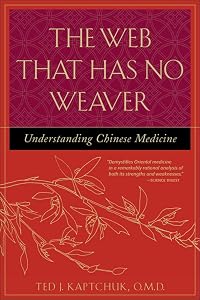
Chinese medicine is a healing art that has survived and continues to thrive in East Asia and is increasingly becoming a global resource. The Web That Has No Weaver is the classic English language introductory text that explains how medicine so rooted the archaic past can be relevant to modern health care. The book demystifies the worldview of Chinese medicine. Yin and yang, dampness and wind are easily comprehended. The Web lets the reader see, feel and discover aspects of illness that show more modern biomedicine overlooks or cannot even understand. The use of acupuncture and herbal medicine to regain harmony and balance is explained. The book is both accessible and scholarly and also incorporates the viewpoint of modern science. For students, scholars, health care providers and the general public, The Web has earned its place as the foremost authority synthesizing Western and Eastern approaches to healing. This revised second edition is the product of years of further reflection on ancient Chinese sources and active involvement in cutting-edge scientific research. show lessTags
Recommendations





Member Reviews
Kaptchuk writes a fascinating introduction to Chinese medicine. More than just a clinical analysis of acupuncture and herbal treatment, Kaptchuk describes the entirely different, more holistic, worldview of a Chinese physician.
As a patient who has received some relief for chronic migraine through herbal and acupuncture treatment, this book was totally intriguing.
As a patient who has received some relief for chronic migraine through herbal and acupuncture treatment, this book was totally intriguing.
I read this for a class on Chinese medicine. It's very good. From someone from NO background in anything like this, it was easy to understand. I enjoyed learning about Chinese medicine, it's history, tools and methods. While I don't know if I believe it all, this book gave me a solid foundation for further exploration in this subject. I would highly recommend to anyone interested in Chinese medicine, either for personal information or use.
An introduction to what is obviously an extremely complex system of thought developed through centuries of observation and practice. Makes the important point that Chinese and Western categories of illness are based on almost entirely different assumptions about how the body functions. Does note some similarities to the system of humors that prevailed in the West from Greek times to the Enlightenment. It is important to note that this is an introduction to a system of though, not a guide to self-diagnosis or self-medication. It would have been interesting if the author had noted whether there are lay guides to Chinese medicine in the way of precepts for maintaining health, simple treatments for common ailments or injuries, etc.
its a competent summary introduction with decent coverage
but kaptchuk falls short in terms of his lazy attempts at "translation", his ideological dualism, and his misunderstanding of chinese intellectual history; taken together these errors border on factual misrepresentation and orientalism
his attempts to render chinese medical notions more "comprehensible" (tho imo its debatable whether such a translation is rly necessary) are uncreative and reductive. he fails to take the channel theory seriously for what it is, instead employing an inconsistent instrumentalism to get away w his positivist worldview intact and unchallenged
he insists on a separation bw religious belief and scientific knowledge, when such a separation has never held in show more chinese medicine or chinese culture broadly
and he constantly confuses confucian values for broadly/generally chinese values. confucianism has ofc been the hegemonic philosophy in china for 2 millenia, but this does not excuse such an error, especially when non-confucian taoists were instrumental pioneers in developing many of the core theoretical components of chinese medicine
im honestly not sure who this book is intended for show less
but kaptchuk falls short in terms of his lazy attempts at "translation", his ideological dualism, and his misunderstanding of chinese intellectual history; taken together these errors border on factual misrepresentation and orientalism
his attempts to render chinese medical notions more "comprehensible" (tho imo its debatable whether such a translation is rly necessary) are uncreative and reductive. he fails to take the channel theory seriously for what it is, instead employing an inconsistent instrumentalism to get away w his positivist worldview intact and unchallenged
he insists on a separation bw religious belief and scientific knowledge, when such a separation has never held in show more chinese medicine or chinese culture broadly
and he constantly confuses confucian values for broadly/generally chinese values. confucianism has ofc been the hegemonic philosophy in china for 2 millenia, but this does not excuse such an error, especially when non-confucian taoists were instrumental pioneers in developing many of the core theoretical components of chinese medicine
im honestly not sure who this book is intended for show less
This is an amazing book that I was reminded of in a rating by GR Friend Laur💫.
I remember it being technical for me, the layman, with no background. Never-the-less, I read it at a time in my life when I was interested in reading about alternative methods for an ailment that was plaguing me at the time and I found the book illuminating on a far broader scale.
I remember it being technical for me, the layman, with no background. Never-the-less, I read it at a time in my life when I was interested in reading about alternative methods for an ailment that was plaguing me at the time and I found the book illuminating on a far broader scale.
Such a well reasoned and researched read that challenged many assumptions I had in my scientific training and perspectives on TCM. Valuable information for all.
For the first time, an American fully trained in the practice of Chinse medicine explains this non-"scientific" but often astoundingly effective system of healing.
Members
- Recently Added By
Lists

The China Project Book List
100 works; 2 members
Author Information
5 Works 807 Members
Ted J. Kaptchuk is associate director of the Center for Alternative Medicine Research and Education at Boston's Beth Israel Deaconess Medical Center, he is also an Assistant Professor of Medicine at Harvard Medical School
Awards and Honors
Notable Lists
Classifications
Statistics
- Members
- 737
- Popularity
- 38,345
- Reviews
- 8
- Rating
- (4.16)
- Languages
- 5 — Dutch, English, French, German, Italian
- Media
- Paper, Ebook
- ISBNs
- 22
- UPCs
- 1
- ASINs
- 1