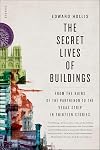
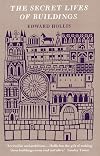
The Secret Lives of Buildings: From the Ruins of the Parthenon to the Vegas Strip in Thirteen Stories
by Edward Hollis
On This Page
Description
A highly original history of Western architecture and the cultural transformations that it represents. Little else made by human hands seems as stable as a building--yet the life of any structure is neither fixed nor timeless. Outliving their original contexts and purposes, buildings are forced to adapt to each succeeding age. To survive, they must become shape-shifters. In a refashioning of architectural history, Edward Hollis recounts more than a dozen stories of such metamorphosis, show more highlighting the way in which even the most familiar structures all change over time into "something rich and strange." The Parthenon, that epitome of a ruined temple, was for centuries a working church and then a mosque; the cathedral of Notre Dame was "restored" to a design that none of its original makers would have recognized. Altered layer by layer, buildings become eloquent chroniclers of the civilizations they've witnessed. Their stories span the gulf of history--From publisher description. show lessTags
Recommendations










Member Recommendations
Member Reviews
"I do not know what actually happened, and to answer such a question would be as useful as identifying the real Little Red Riding Hood. It is not the purpose of this book to deconstruct the stories (or the buildings) we have inherited from our forebears, but to narrate them, so that others can do the same in the future. Stories are like gifts; they must be accepted without scepticism and shared with others."
So Hollis says in his introduction and then proceeds to narrate 13 buildings from the historical idealisation of the Parthenon to the disastrous futurism of concrete tower blocks, weaving myth and history to bring our relationships with buildings to life. This is not a dry historical account but a poetic, highly stylistic telling. show more Hollis is passionate about change, not for him the architectural dream of preservation, buildings should be more than snapshots, they need to mean something and to be lived in.
He is playful in his technique: in the chapter about follies (in this case Frederick the Great's Sanssouci) myth is retold, then updated and then both replaced by hard fact, all framed by the harsh reality of future world wars. Yet with the (UK's) Gloucester cathedral the steady march of history is echoed in a wonderful rhythmic repetition as Abbott replaces Abbott and the cathedral sprouts in complexity.
Such a forceful novel may not be to everyone's taste, you may find it overdone or forced and I admit I found it uneven as some of the stories just did not work as well (take the changing meaning of the Berlin Wall). Luckily Hollis writes in an engaging, wryly humorous fashion so I was never bored but sometimes restless for the dizzy heights of better tales.
Yet as a whole it was for me a truly stunning book, something so different from the norm, grabbing and melding literary styles and genres to make an engaging, interesting and often wryly funny story. However the best thing for me was his compelling and erudite arguments which made me think about architecture in a much different light. show less
So Hollis says in his introduction and then proceeds to narrate 13 buildings from the historical idealisation of the Parthenon to the disastrous futurism of concrete tower blocks, weaving myth and history to bring our relationships with buildings to life. This is not a dry historical account but a poetic, highly stylistic telling. show more Hollis is passionate about change, not for him the architectural dream of preservation, buildings should be more than snapshots, they need to mean something and to be lived in.
He is playful in his technique: in the chapter about follies (in this case Frederick the Great's Sanssouci) myth is retold, then updated and then both replaced by hard fact, all framed by the harsh reality of future world wars. Yet with the (UK's) Gloucester cathedral the steady march of history is echoed in a wonderful rhythmic repetition as Abbott replaces Abbott and the cathedral sprouts in complexity.
Such a forceful novel may not be to everyone's taste, you may find it overdone or forced and I admit I found it uneven as some of the stories just did not work as well (take the changing meaning of the Berlin Wall). Luckily Hollis writes in an engaging, wryly humorous fashion so I was never bored but sometimes restless for the dizzy heights of better tales.
Yet as a whole it was for me a truly stunning book, something so different from the norm, grabbing and melding literary styles and genres to make an engaging, interesting and often wryly funny story. However the best thing for me was his compelling and erudite arguments which made me think about architecture in a much different light. show less
This book is definitely interesting, but it is also uneven.
A major theme throughout several--but not all--chapters is the idea of "restoration." I think if Hollis had made this an overarching theme, and left out chapters that do not reflect it, he would have had a much stronger book.
Hollis' reflections on restoration focus on the question of how to restore something that has had many forms. Which one can be deemed "the right one"? Would it be the first one? Or the largest/most magnificent? Or should it be the original architects plan (which may never have been completed at all--or may not be known)? Or simply fixing up/preserving the final form? Of course there are no right answers, which he does discuss somewhat in the Notre Dame show more chapter, as Viollet-le-Duc was criticized strongly for his mid/late 19th century restoration of Notre Dame.
My favorite chapters: The Parthenon, The Basilica of San Marco, Ayasofya, Gloucester Cathedral, Notre Dame, The Hulme Crescents, The Berlin Wall. That's 6 out of 13. I found The Alhambra, Sans Souci, and The Venetian to be the weakest. show less
A major theme throughout several--but not all--chapters is the idea of "restoration." I think if Hollis had made this an overarching theme, and left out chapters that do not reflect it, he would have had a much stronger book.
Hollis' reflections on restoration focus on the question of how to restore something that has had many forms. Which one can be deemed "the right one"? Would it be the first one? Or the largest/most magnificent? Or should it be the original architects plan (which may never have been completed at all--or may not be known)? Or simply fixing up/preserving the final form? Of course there are no right answers, which he does discuss somewhat in the Notre Dame show more chapter, as Viollet-le-Duc was criticized strongly for his mid/late 19th century restoration of Notre Dame.
My favorite chapters: The Parthenon, The Basilica of San Marco, Ayasofya, Gloucester Cathedral, Notre Dame, The Hulme Crescents, The Berlin Wall. That's 6 out of 13. I found The Alhambra, Sans Souci, and The Venetian to be the weakest. show less
This book recounts the histories of 13 well known, in many cases iconic, buildings from across Europe, America and the Middle East. The buildings discussed are as diverse as the Parthenon, the Alhambra, the Vegas Strip, Gloucester Cathedral, Notre Dame, the Ayasofya (Hagia Sofia) and the Berlin and Wailing Walls among others.
The recurring theme of the opposition of Islam and Christianity throughout the ages is central to the evolution of the design, function and detailing of a number of the buildings discussed. It is this usurping of buildings by different religions (or groups) over time that has resulted in some of the most architecturally interesting buildings.
Hollis manages to weave together a series of vignettes on each building show more covering mythology, religion, politics and architectural history to create biographies of the buildings that are accessible and full of interesting details, not only regarding the buildings but also the men and women from history who played a role in their creation.
The only real issue I had with this book was the lack of images. Each chapter starts with one, half page, black and white image. Many of the architectural details are wonderfully described in expressive and vivid language, but these passages also cry out for an accompanying image to fully illustrate these features – particularly for readers who are not familiar with every building covered by the book. I also had a small quibble with inconsistant timelines within a couple of the biographies, which while still fun to read, made the connections between the vignettes harder to discern and made the overall history a bit harder to fully understand. show less
The recurring theme of the opposition of Islam and Christianity throughout the ages is central to the evolution of the design, function and detailing of a number of the buildings discussed. It is this usurping of buildings by different religions (or groups) over time that has resulted in some of the most architecturally interesting buildings.
Hollis manages to weave together a series of vignettes on each building show more covering mythology, religion, politics and architectural history to create biographies of the buildings that are accessible and full of interesting details, not only regarding the buildings but also the men and women from history who played a role in their creation.
The only real issue I had with this book was the lack of images. Each chapter starts with one, half page, black and white image. Many of the architectural details are wonderfully described in expressive and vivid language, but these passages also cry out for an accompanying image to fully illustrate these features – particularly for readers who are not familiar with every building covered by the book. I also had a small quibble with inconsistant timelines within a couple of the biographies, which while still fun to read, made the connections between the vignettes harder to discern and made the overall history a bit harder to fully understand. show less
Loved it! Possibly one of the most intriguing books I've read in recent years. I thought I was picking up a book on architecture, but what it was instead was a fascinating read in history through 13 buildings/ structures throughout the ages. Starting with a discussion on Thomas Cole's painting, The Architect's Dream and then going into a history of the Parthenon as told in the form of stories, The Secret Lives of Buildings had me completely drawn into the flow and cadence of the narrative. The painting and the Parthenon were used to connect the 13 structures including: the Parthenon, the Hagia Sophia (Ayasofia), the Berlin Wall, the Crescents in Hulme, England, the Alhambra, Gloucester Cathedral, Notre Dame. the Vegas strip, La show more Serenissa (Venice), the Holy House (Santa Casa di Loreto), the Western (Wailing) Wall and the temple at Rimini. Fantastic. show less
The book is a compendium of architecturally significant buildings, both ancient and modern, chosen by the author for their historical importance, destruction/restoration or repurposing. An engaging read for those interested in religion, the arts, or history.
easy read history about the architecture and culture around some of the the world's most famous structures
This could be interesting. Some reviews suggest that it's a little touchy-feely, not enough actual history - maybe flip through it to check it out.
Members
- Recently Added By
Published Reviews
ThingScore 50
Edward Hollis's "Secret Lives of Buildings" starts from the paradox that all architecture, no matter how monumental or "timeless," is shape-shifting and impermanent. Every building is literally made and remade by its users, in a never-ending process of change in which "each alteration is a 'retelling' of the building as it exists at a particular time." Hollis knows what he is talking about: He show more has been in professional practice for years retrofitting older buildings for newer clients. He brings together an iconoclastic attitude and a lively writing style to create a kind of counter-history of architecture, one that starts where the original designers left off and narrates the subsequent biography of the "wonderful and chimeric monsters" that buildings are. show less
added by bongiovi
The cases he presents are a refreshing fillip to the ideologies of contemporary preservation. Too bad he doesn't explain what they mean; if he had, that fillip could have been a knockout punch.
added by Shortride
Author Information

5 Works 410 Members
Born in London in 1970, Edward Hollis studied Architecture at the universities of Cambridge and Edinburgh before joining a practice, working first on ruins and follies in Sri Lanka and then on villas, breweries and town halls in Scotland. He teaches at Edinburgh College of Art.
Awards and Honors
Common Knowledge
- Original publication date
- 2009
Classifications
Statistics
- Members
- 296
- Popularity
- 108,451
- Reviews
- 7
- Rating
- (3.21)
- Languages
- Chinese, English, Italian, Spanish
- Media
- Paper, Ebook
- ISBNs
- 12
- ASINs
- 3