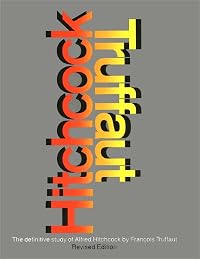
Hitchcock: A Definitive Study of Alfred Hitchcock
by François Truffaut
On This Page
Description
Iconic, groundbreaking interviews of Alfred Hitchcock by film critic François Truffaut--providing insight into the cinematic method, the history of film, and one of the greatest directors of all time. In Hitchcock, film critic François Truffaut presents fifty hours of interviews with Alfred Hitchcock about the whole of his vast directorial career, from his silent movies in Great Britain to his color films in Hollywood. The result is a portrait of one of the greatest directors the world has show more ever known, an all-round specialist who masterminded everything, from the screenplay and the photography to the editing and the soundtrack. Hitchcock discusses the inspiration behind his films and the art of creating fear and suspense, as well as giving strikingly honest assessments of his achievements and failures, his doubts and hopes. This peek into the brain of one of cinema's greats is a must-read for all film aficionados. show lessTags
Recommendations







Member Recommendations

Member Reviews
Una radiante lección de cine. 500 preguntas en casi 50 horas grabadas de una conversación mítica entre dos de los mejores cineastas de la historia: Alfred Hitchcock y François Truffaut, quien más que autor del libro, se consideraba un provocador del mismo. En primera persona, Hitchcock da una cátedra sobre los principales elementos de la cinematografía: producción, guion, fotografía, sonido, montaje y hasta promoción de películas; el mago del suspenso va desglosando su obra entera cinta por cinta, hablando de eventos personales y profesionales con los que tuvo que lidiar, además de confesar la gestación de ideas, guiones y la complejidad de la mise-en-scène. Es tal la importancia e influencia de El cine según Hitchcock, show more que directores de la talla de Martin Scorsese y Wes Anderson no sólo reconocen haberlo leído, sino que regresan a su lectura eventualmente. show less
Truffaut's book-length interview with Hitchcock, while a fascinating self-examination of the director's career, succeeds far more in its exploration of the technical details of Hitchcock's work than the underlying meaning of the works.
Hitchcock is surprisingly candid here, often telling lengthy tales with minimal provocation from Truffaut, whose questions tend to guide the discussion more than it directs them.
Truffaut's own interjections, which attempt to elucidate a deeper significance to particular shots, are often trivialized by Hitchcock, who lets the Frenchman theorize but never certainly agrees or disagrees. At moments when Truffaut gets insistent on these points, the exchange tends to feel uncomfortable, but fortunately these show more subside quickly.
The truly inspired moments are those when Hitchcock relishes in divulging details of trick-shots and complex scenes, such as the infamous shower scene from Psycho. During these sequences, Hitch's technical wizardry shines and we see that his true skills lie in the creation, not the interpretation, of what we see on screen. It's a refreshing and informative perspective.
If nothing else, the book reveals two great cinematic minds engaging each other with a depth and respect that seems unfortunately old-fashioned but is nonetheless remarkable. Certainly a must-read for Hitchcock fans and film buffs alike. show less
Hitchcock is surprisingly candid here, often telling lengthy tales with minimal provocation from Truffaut, whose questions tend to guide the discussion more than it directs them.
Truffaut's own interjections, which attempt to elucidate a deeper significance to particular shots, are often trivialized by Hitchcock, who lets the Frenchman theorize but never certainly agrees or disagrees. At moments when Truffaut gets insistent on these points, the exchange tends to feel uncomfortable, but fortunately these show more subside quickly.
The truly inspired moments are those when Hitchcock relishes in divulging details of trick-shots and complex scenes, such as the infamous shower scene from Psycho. During these sequences, Hitch's technical wizardry shines and we see that his true skills lie in the creation, not the interpretation, of what we see on screen. It's a refreshing and informative perspective.
If nothing else, the book reveals two great cinematic minds engaging each other with a depth and respect that seems unfortunately old-fashioned but is nonetheless remarkable. Certainly a must-read for Hitchcock fans and film buffs alike. show less
A book made from François Truffaut’s famous interviews with Alfred Hitchcock originally published in 1967 and comprising a review of his films and related discussions. It is interesting for occasional Hollywood type stories about celebrities, disussion of the various techniques that Hitchcock invented, Truffaut’s insight into the relationship among Hitchcock’s films and for what it reveals about H. himself. Many excellent still images from his movie sets are included. We are also reminded of the business aspect of film making. Hitchcock relates that it is more difficult for the audience to commiserate with Robert Cummings (whom I watched as a kid in “Love that Bob” episodes. [The magic of You tube reveals that it co-starred show more Dwayne Hickman!]) than with Jimmy Stewart, since there is suspense only if we feel that we know the protagonist, and he recounts several instances of a film being less than he wanted because of whom he was obligated to cast in a key role. Mention is also made of the effect of the disappearance of the star system on his career in the 60s.
You can learn a lot about movies and suspense movies in particular here, e.g. “The better the villain, the better the picture”. Truffaut is always interested and complimentary, but Hitchcock’s understated humor is sometimes difficult to enjoy on the written page. show less
You can learn a lot about movies and suspense movies in particular here, e.g. “The better the villain, the better the picture”. Truffaut is always interested and complimentary, but Hitchcock’s understated humor is sometimes difficult to enjoy on the written page. show less
I'm not really a movie buff, but this book made me want to watch every movie Hitchcock ever made. The detailed discussion of the methods Hitchcock used to convey mood and story is fascinating. And the odd bits of information! Who knew that back in silent picture days, the studio could change the dialogue titles of a cheesy, badly made drama and release it as a comedy?
Good. I think Truffaut could've gone into more detail and pulled more out, while being a little less critical about some of his concerns. It's obvious Hitchcock really didn't have much feedback on his opinions. And I also wish he would've talked more about the social and political implications of the films, as opposed to the psychology and morals. Still, it holds a great deal of practical information for film students, as well as behind-the-scenes information for movie buffs.
What surprised me most was not only Francois Truffaut's knowledge of the cinema, but his knowledge about Alfred Hitchcock movies. As a former critic and an acclaimed director by then, Truffaut was one of the most suitable for the task. Truffaut studied Hitchcock, memorized some of his favorite movies, and interviewed Hitchcock about his carer film by film.
The revised edition has an additional chapter, where Truffaut covers what happened after the original edition release in 1966, and up until Hitchcock's death. In this edition Truffaut added some commentary, letters from Hitchcock and some more interviews.
This is indeed a definitive study of Alfred Hitchcock, a master class.
The revised edition has an additional chapter, where Truffaut covers what happened after the original edition release in 1966, and up until Hitchcock's death. In this edition Truffaut added some commentary, letters from Hitchcock and some more interviews.
This is indeed a definitive study of Alfred Hitchcock, a master class.
Interesting and informative discussion sessions with Master of Suspense Alfred Hitchcock. There are a few humorous moments but I wouldn't exactly call this a fun read. It can be dry reading at times especially in the beginning and when they engage in technical talk.
The book is divided into sections covering different periods of Hitchcock's career. You get a little insight -- not a lot -- into some of Hitchcock's methods and thought processes. There are bits of information on just about all of Hitchcock's films -- certainly the better known ones -- ranging from casting choices to production anecdotes to film techniques and even Hitchcock's personal opinion as to why a particular film did or didn't work for the audience.
I particularly show more liked when the discussion went to casting choices. In many cases (mostly some of his less successful later films) Hitchcock did not get the people he wanted in major roles and he discusses why he believes some of these actors and actresses simply did fit the role. This is done in a matter of fact way, not in a gossipy or snide manner.
Truffaut as interviewer (and obvious fan) seems to want to turn everything into a pontification on symbolism and the deeper meanings of everything. That can get wearying at times.
If you're a even a casual fan of Mr. Hitchcock and his films you're almost certain to get something useful out of this book. If you are a devotee of the master I can almost guarantee you'll love it. show less
The book is divided into sections covering different periods of Hitchcock's career. You get a little insight -- not a lot -- into some of Hitchcock's methods and thought processes. There are bits of information on just about all of Hitchcock's films -- certainly the better known ones -- ranging from casting choices to production anecdotes to film techniques and even Hitchcock's personal opinion as to why a particular film did or didn't work for the audience.
I particularly show more liked when the discussion went to casting choices. In many cases (mostly some of his less successful later films) Hitchcock did not get the people he wanted in major roles and he discusses why he believes some of these actors and actresses simply did fit the role. This is done in a matter of fact way, not in a gossipy or snide manner.
Truffaut as interviewer (and obvious fan) seems to want to turn everything into a pontification on symbolism and the deeper meanings of everything. That can get wearying at times.
If you're a even a casual fan of Mr. Hitchcock and his films you're almost certain to get something useful out of this book. If you are a devotee of the master I can almost guarantee you'll love it. show less
Members
- Recently Added By
Lists

Books about Alfred Hitchcock
6 works; 1 member

Best Books on Film
46 works; 12 members

Sight and Sound's Best Film Books
34 works; 1 member

Books Read in 2015
3,299 works; 126 members

sotiris' favourites circa january 2023
43 works; 2 members

Film
114 works; 1 member
Author Information

88+ Works 3,998 Members
Francois Truffaut was one of the principal figures in the French New Wave movement of the 1950s and early 1960s. As a young critic for the avant-garde film magazine Les Cahiers du Cinema, he formulated the politique des auteurs---the idea that directors with a personal vision are the true authors of films, rather than conventional screenwriters or show more script-bound directors. An admirer of American films, Truffaut was much influenced by Alfred Hitchcock (see Vol. 1). In several of his own films, Truffaut, who had an unhappy childhood and youth, portrayed a fictionalized version of himself, a character called Antoine Doinel, to create personal cinema. The first of these films, which was also his first feature film, was The Four Hundred Blows (1959). It is still one of the most popular of his works. Other notable Truffaut films are Shoot the Piano Player (1960), the lyrical menage a trois Jules and Jim (1961), the Academy Award-winning Day for Night (1973), The Last Metro (1980), and The Woman Next Door (1981). (Bowker Author Biography) show less
All Editions
Some Editions
Awards and Honors
Notable Lists
Series
Belongs to Publisher Series
Common Knowledge
- Canonical title
- Hitchcock: A Definitive Study of Alfred Hitchcock
- Original title
- Le Cinéma selon Hitchcock
- Alternate titles*
- Samtal med Hitchcock
- Original publication date
- 1985-10-02
- People/Characters
- Alfred Hitchcock; François Truffaut
- Related movies
- Rear Window (1954 | IMDb); Woman to Woman (1923 | IMDb); Number 13 (1922 | IMDb); The Pleasure Garden (1925 | IMDb); The Mountain Eagle (1926 | IMDb); The Lodger (1932 | IMDb) (show all 46); Downhill (1927 | IMDb); Easy Virtue (1928 | IMDb); The Ring (1927/I | IMDb); The Farmer's Wife (1928 | IMDb); The Manxman (1929 | IMDb); The Man Who Knew Too Much (1934 | IMDb); The 39 Steps (1935 | IMDb); Secret Agent (1936 | IMDb); Sabotage (1936 | IMDb); The Lady Vanishes (1938 | IMDb); Jamaica Inn (1939 | IMDb); Rebecca (1940 | IMDb); Foreign Correspondent (1940 | IMDb); Mr. & Mrs. Smith (1941 | IMDb); Suspicion (1941 | IMDb); Saboteur (1942 | IMDb); Shadow of a Doubt (1943 | IMDb); Lifeboat (1944 | IMDb); Spellbound (1945 | IMDb); Notorious (1946 | IMDb); The Paradine Case (1947 | IMDb); Rope (1948 | IMDb); Under Capricorn (1949 | IMDb); Stage Fright (1950 | IMDb); Strangers on a Train (1951 | IMDb); I Confess (1953 | IMDb); Dial M for Murder (1954 | IMDb); To Catch a Thief (1955 | IMDb); The Trouble with Harry (1955 | IMDb); The Man Who Knew Too Much (1956 | IMDb); The Wrong Man (1956 | IMDb); Vertigo (1958 | IMDb); North by Northwest (1959 | IMDb); Psycho (1960 | IMDb); The Birds (1963 | IMDb); Marnie (1964 | IMDb); Torn Curtain (1966 | IMDb); Topaz (1969 | IMDb); Frenzy (1972 | IMDb); Family Plot (1976 | IMDb)
- First words
- It all began when we broke the ice. (Introduction)
FRANÇOIS TRUFFAUT. Mr. Hitchcock, you were born in London on August 13, 1899. - Last words
- (Click to show. Warning: May contain spoilers.)Hitchcock not only intensified life; he intensified cinema.
- Original language*
- Francese
*Some information comes from Common Knowledge in other languages. Click "Edit" for more information.
Classifications
- Genres
- Nonfiction, General Nonfiction, Biography & Memoir, Art & Design
- DDC/MDS
- 791.4302330924 — Arts & recreation Recreation, sports, and performing arts Public performances Motion pictures, radio, television, podcasting Motion pictures Standard subdivisions Supervision Film direction History, geographic treatment, biography Directors
- LCC
- PN1998 .A3 .H573 — Language and Literature Literature (General) Literature (General) Drama Motion pictures
- BISAC
Statistics
- Members
- 1,758
- Popularity
- 12,531
- Reviews
- 20
- Rating
- (4.45)
- Languages
- 13 — Chinese, Czech, Dutch, English, Finnish, French, German, Greek, Hungarian, Italian, Spanish, Swedish, Portuguese (Brazil)
- Media
- Paper, Ebook
- ISBNs
- 49
- ASINs
- 19