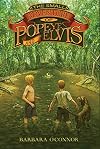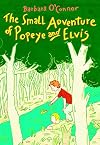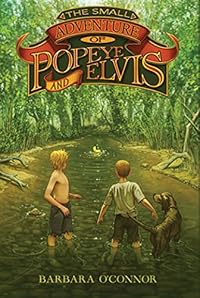
The Small Adventure of Popeye and Elvis
by Barbara O'Connor
On This Page
Description
In Fayette, South Carolina, the highlight of Popeye's summer is learning vocabulary words with his grandmother until a motor home gets stuck nearby and Elvis, the oldest boy living inside, joins Popeye in finding the source of strange boats floating down the creek.Tags
Recommendations




Member Reviews
Popeye, so nick-named when a b-b gun left it's mark on his left eye, is the kind of quiet, withdrawn kid who would hunger for an adventure if he had the gumption to do so. So when a mobile home gets stuck in the gravel road in front of Popeye's house one rainy night, Popeye's heart rate nearly increases with the possibilities. The next day five kids tumble out to explore the place where they are newly struck and - does Popeye dare to disturb the universe? - an adventure is afoot. Maybe.
A boy named Elvis, about the same age as Popeye, is among the stranded clan, a fearless, cussing, adventurer of the first degree. Popeye takes Elvis to a nearby creek and together they discover small boats made of Yoohoo drink boxes with mysterious show more messages inside. What do the messages mean? Where are they coming from? What's further up the creek? Popeye doesn't know because he's never thought to go exploring on his own, so it falls to Elvis to drive their exploration up the river to solve the mystery. If it were up to Popeye, who marvels at every turn at Elvis's brash language and free spirit, Popeye would sit in his room and stair at a stain in the ceiling listening to a clock going tick tick tick...
In Tolstoy's world, this is a "stranger comes to town" story, and Elvis is sort of a catalyst for Popeye's sort of coming out of his shell. I say sort of because at no point does Popeye articulate what he wants beyond vague longing, and he continues to tag along with Elvis like a pathetic puppy with hardly an original thought of his own. As the adults spend days trying to dislodge the motor home - and they're about as slow to get this taken care of as an elephant in a molasses pit, a bit of authorial deus ex machina if ever there was one - there is a palpable hope in the reader that Popeye is going to break out of his shell and stop being a wimp. But the open ending doesn't suggest Popeye has really changed and that this one quiet, sad little adventure may be the highpoint of his life.
Lacking a character-driven desire or conflict, The Small Adventures of Popeye and Elvis reads like an overly long short story, a meditation on life literally off the beaten path in a world with a vague nostalgic feel to it that seems all the more sad for what it lacks. Things sort of happen, with the overall effect being "Yes, and the point of it all is...?" show less
A boy named Elvis, about the same age as Popeye, is among the stranded clan, a fearless, cussing, adventurer of the first degree. Popeye takes Elvis to a nearby creek and together they discover small boats made of Yoohoo drink boxes with mysterious show more messages inside. What do the messages mean? Where are they coming from? What's further up the creek? Popeye doesn't know because he's never thought to go exploring on his own, so it falls to Elvis to drive their exploration up the river to solve the mystery. If it were up to Popeye, who marvels at every turn at Elvis's brash language and free spirit, Popeye would sit in his room and stair at a stain in the ceiling listening to a clock going tick tick tick...
In Tolstoy's world, this is a "stranger comes to town" story, and Elvis is sort of a catalyst for Popeye's sort of coming out of his shell. I say sort of because at no point does Popeye articulate what he wants beyond vague longing, and he continues to tag along with Elvis like a pathetic puppy with hardly an original thought of his own. As the adults spend days trying to dislodge the motor home - and they're about as slow to get this taken care of as an elephant in a molasses pit, a bit of authorial deus ex machina if ever there was one - there is a palpable hope in the reader that Popeye is going to break out of his shell and stop being a wimp. But the open ending doesn't suggest Popeye has really changed and that this one quiet, sad little adventure may be the highpoint of his life.
Lacking a character-driven desire or conflict, The Small Adventures of Popeye and Elvis reads like an overly long short story, a meditation on life literally off the beaten path in a world with a vague nostalgic feel to it that seems all the more sad for what it lacks. Things sort of happen, with the overall effect being "Yes, and the point of it all is...?" show less
Small-town South Carolina life is pretty routine for Popeye until he discovers the silver RV camper stuck in the ditch, and meets the family living there: Elvis and all his brothers and sisters. Popeye and Elvis seek a "small adventure" apart from the little ones and find it in the mysterious Yoo-Hoo carton boats floating down the stream. Who's making these boats, where do they come from, and what's the meaning of the strange notes attached? Barbara O'Connor brings the rural South alive on the page once again.
A charming small adventure of Popeye, a lonesome boy in South Carolina, whose world widens a bit when he and Elvis, the eldest of a lively family whose Holiday Rambler is stuck in some nearby mud, search (and break rules!) to discover the source of mysterious boats (carefully crafted of empty Yoohoo boxes) they find drifting down a nearby stream. Chapters are sometimes punctuated with the vocabulary words his grandmother teaches him as a part of her attempt to keep her mind sharp. A fine choice for Juniors.
O’Connor, Barbara. (2009). The Small Adventure of Popeye and Elvis. New York: Farrar, Straus, & Giroux/Frances Foster Books. 150 pp. ISBN 978-0-374-37055-8 (Hardcover); $16.99.
When one is a young boy in a small South Carolina town, one does not expect big adventures to come his way. If Popeye and Elvis are lucky, they will have a small adventure. They even spend hours trying to drum up a small adventure in this small southern community, filled with mud, gravel, dirt roads, and woods. Popeye received his name when his uncle Dooley shot him in the eye with a BB gun. He spends his time attempting to keep his grandmother Velma from cracking up, lest he be placed under the control of less adept relatives, such as uncle Dooley. When Elvis show more Jewell’s Holiday Rambler gets stuck in the mud, Popeye and Elvis seek adventure. Popeye is enchanted with Elvis who has an arsenal of “bug-brain booger breath” insults that Popeye, who is working on building his vocabulary would love to own. Using vocabulary words as a part of the story is not unique, but O’Connor uses this device well and it is NOT done just to please adult readers—it matches Popeye’s personality and his family (with a grandmother who runs around worried about dementia and reciting the names of the royal family and doing crosswords to keep from cracking up). The vocabulary words also serve as a measure of the loneliness and restlessness of Popeye. It is clear to the reader that Popeye will not always stay in Fayette even though this is never mentioned in the text (although he may return to Fayette after getting out into the world for an even bigger adventure). This book shows that step of learning how to reminisce and how that will eventually lead Popeye into seeking newer and bigger adventures. The language of the book feels correctly southern, which adds to its authenticity and its appeal. During an expedition along the creek, the boys discover a small adventure floating their way in the form of Yoo-hoo boats. When they finally meet wing-wearing Princess Starletta Rainey, they may not even realize that their small adventure has graduated. The voice in this book, the setting, the pacing is crisp and vivid. I would not be at all sorry or surprised to see this one receive awards this January. While this book is intended for middle school and younger, the writing is sophisticated enough for older students too. show less
When one is a young boy in a small South Carolina town, one does not expect big adventures to come his way. If Popeye and Elvis are lucky, they will have a small adventure. They even spend hours trying to drum up a small adventure in this small southern community, filled with mud, gravel, dirt roads, and woods. Popeye received his name when his uncle Dooley shot him in the eye with a BB gun. He spends his time attempting to keep his grandmother Velma from cracking up, lest he be placed under the control of less adept relatives, such as uncle Dooley. When Elvis show more Jewell’s Holiday Rambler gets stuck in the mud, Popeye and Elvis seek adventure. Popeye is enchanted with Elvis who has an arsenal of “bug-brain booger breath” insults that Popeye, who is working on building his vocabulary would love to own. Using vocabulary words as a part of the story is not unique, but O’Connor uses this device well and it is NOT done just to please adult readers—it matches Popeye’s personality and his family (with a grandmother who runs around worried about dementia and reciting the names of the royal family and doing crosswords to keep from cracking up). The vocabulary words also serve as a measure of the loneliness and restlessness of Popeye. It is clear to the reader that Popeye will not always stay in Fayette even though this is never mentioned in the text (although he may return to Fayette after getting out into the world for an even bigger adventure). This book shows that step of learning how to reminisce and how that will eventually lead Popeye into seeking newer and bigger adventures. The language of the book feels correctly southern, which adds to its authenticity and its appeal. During an expedition along the creek, the boys discover a small adventure floating their way in the form of Yoo-hoo boats. When they finally meet wing-wearing Princess Starletta Rainey, they may not even realize that their small adventure has graduated. The voice in this book, the setting, the pacing is crisp and vivid. I would not be at all sorry or surprised to see this one receive awards this January. While this book is intended for middle school and younger, the writing is sophisticated enough for older students too. show less
Popeye's summer stretches out before him, stuck in the house with his grandmother and his no-account uncle while the rain pours outside. But when the rain clears and Popeye discovers a motor home stuck in the mud outside his house, Popeye meets Elvis and they decide to have a small adventure together.
It's very well-written, made me laugh out loud in parts, and managed to pull off serious bits without veering into Depressing. The story's a quiet one and it reminded me of The Penderwicks for boys.
It's very well-written, made me laugh out loud in parts, and managed to pull off serious bits without veering into Depressing. The story's a quiet one and it reminded me of The Penderwicks for boys.
Popeye, so named because his uncle Dooley had accidently shot his eye out with a B.B gun when he was three, is bored. His life consists of staring at the heart shaped stain on his bedroom ceiling and listening to his grandma Velma recite the kings and queens of England to keep her mind sharp. He lives with her because his parents are absent from his life. Occasionally his mother pops in for a visit. Popeye sees his life as boring until the day the Holiday Rambler gets stuck in the mud near his house. That is the day that he meets Elvis and they set out to have a small adventure while they wait for the motor home to get unstuck from the mud. Setting off through the woods toward the creek they find a boat made out of a Yoo-Hoo carton. show more Their new adventure is to find out where they come from and why. This was a cute book. Growing up in the country I often found things to be boring on rainy days. Like Popeye's grandmother, my mother always wanted us within hollerin' distance. It was funny how something as simple as finding out where the boats came from could be considered an adventure. I look forward to recommending this book. show less
This was a decent book that stands out for three reasons. First, the language in the book is simple and often times repetitive. Along with this, there are also many sounds that are described through the text, which helps immerse the reader in the setting by not only providing a visual description but an auditory description as well. This is demonstrated from the first few pages. One example of a visualization through repetition is on page 9 when the dog's tail is wagging "Back... And forth. Back... And forth." An example for the auditory description through repetition is on page 1, which reads, "DRIP. Drip. Drip. Popeye opened his eye and looked up at the heart-shaped stain on the ceiling of his bedroom. Rusty water squeezed out of the show more hole in the peeling plaster and dropped onto the foot of his bed. Drip. Drip. Drip." The second reason I liked this book is the plot. There aren't any huge events that take place and this truly is a "small adventure." This is the simple story of two friends who are seeking fun over their summer break. Lastly, I liked this book because of the layout of the chapters. The chapters are all very short and this will make for good discussion points if the book is being read aloud to a class. There is also a vocabulary word that is defined explicitly in almost every chapter. The formal definition is written on the same page the word is used so the reader can learn the definition and the context of the new vocabulary word. The overall message of this story is to seek adventure and promotes friendship. show less
Members
- Recently Added By
Author Information

20 Works 7,586 Members
Awards and Honors
Awards
Distinctions
Common Knowledge
- Canonical DDC/MDS
- 813
Classifications
Statistics
- Members
- 380
- Popularity
- 82,080
- Reviews
- 26
- Rating
- (3.72)
- Languages
- English
- Media
- Paper, Audiobook, Ebook
- ISBNs
- 14
- ASINs
- 2