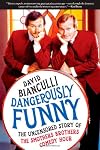
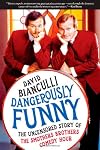
Dangerously Funny: The Uncensored Story of "The Smothers Brothers Comedy Hour"
by David Bianculli
On This Page
Description
"Dangerously Funny" presents a rollicking history of the rise and fall of the wildly influential '60s TV show, its perennial problems with the network censors, and its lasting influence on the cultural landscape.Tags
Recommendations








Member Recommendations


Member Reviews
If you grew up in the United States, and were born after 1960 or so, The Smothers Brothers Comedy Hour may be the most significant television program you’ve never heard of.
It ran for only three seasons (1967-1969), but in that time it was television’s premier showcase for up-and-coming musical acts and topical humor. It booked some of the leading musical acts of the late sixties—Donovan, Jefferson Airplane, Joan Baez, and the Who—and broke the 17-year network-television blacklist of folksinger Pete Seeger, but its impact on comedy was even greater. Guided by Tom Smothers, who produced helped to write the show as well as sharing hosting duties with his younger brother Dick, Comedy Hour joked about once-taboo subjects (sex, show more drugs, religion) and hot-button political issues such as race relations and the Vietnam War. It was something unheard of at the time (and still rare): an entertainment program with a distinct political point-of-view.
The show’s constant pushing of the envelope made battles between the creative staff and the network censors inevitable, and Tom’s combative personality, and fierce commitment to his political principles intensified them. Both the network and the nation acquired new, more conservative presidents during the show’s third and final season, making the battles even more ferocious. CBS eventually won the battle—terminating the brothers’ contract on a flimsy legal pretext—but it lost culture war. The Smothers Brothers became heroes to the young, the educated, and the politically engaged . . . and inspirations for virtually every topical-comedy program that has aired on American television since.
David Bianculi sets out, in Dangerously Funny, to recount the history of the show and make a case for its significance. Both parts work brilliantly. The narrative of the show’s three seasons is meticulously detailed, but the details are carefully chosen to make the case for the Smothers Brothers as powerful, influential voices in a turbulent time. Bianculi writes with the warmth and enthusiasm of a fan, but the discrimination and analytical bent of a cultural historian. He takes care to move beyond “Isn’t it cool that Pete Seeger appeared on the show?” and into why—at that particular moment in 1968—it was revolutionary.
Dangerously Funny is, as a result of Bianculi’s eye for detail and ear for dialogue, not just a great book about a legendary television series—it’s an important contribution to our understanding of America in the 1960s. show less
It ran for only three seasons (1967-1969), but in that time it was television’s premier showcase for up-and-coming musical acts and topical humor. It booked some of the leading musical acts of the late sixties—Donovan, Jefferson Airplane, Joan Baez, and the Who—and broke the 17-year network-television blacklist of folksinger Pete Seeger, but its impact on comedy was even greater. Guided by Tom Smothers, who produced helped to write the show as well as sharing hosting duties with his younger brother Dick, Comedy Hour joked about once-taboo subjects (sex, show more drugs, religion) and hot-button political issues such as race relations and the Vietnam War. It was something unheard of at the time (and still rare): an entertainment program with a distinct political point-of-view.
The show’s constant pushing of the envelope made battles between the creative staff and the network censors inevitable, and Tom’s combative personality, and fierce commitment to his political principles intensified them. Both the network and the nation acquired new, more conservative presidents during the show’s third and final season, making the battles even more ferocious. CBS eventually won the battle—terminating the brothers’ contract on a flimsy legal pretext—but it lost culture war. The Smothers Brothers became heroes to the young, the educated, and the politically engaged . . . and inspirations for virtually every topical-comedy program that has aired on American television since.
David Bianculi sets out, in Dangerously Funny, to recount the history of the show and make a case for its significance. Both parts work brilliantly. The narrative of the show’s three seasons is meticulously detailed, but the details are carefully chosen to make the case for the Smothers Brothers as powerful, influential voices in a turbulent time. Bianculi writes with the warmth and enthusiasm of a fan, but the discrimination and analytical bent of a cultural historian. He takes care to move beyond “Isn’t it cool that Pete Seeger appeared on the show?” and into why—at that particular moment in 1968—it was revolutionary.
Dangerously Funny is, as a result of Bianculi’s eye for detail and ear for dialogue, not just a great book about a legendary television series—it’s an important contribution to our understanding of America in the 1960s. show less
If you remember the Smothers Brothers, read this book for a tiptoe thru the tulips (I know it was on a competing show, but timeliness was the aim) buried under the neiges d'antan. If either phrase has left you scratching your wig-holder, look THAT up in your Funk and Wagnalls.
But don't read this rather dense, somewhat longwinded recap of the three-season run of the Smothers Brothers's show. It will mean little to you, and the density of the behind-the-scenes material won't fascinate. The author clearly knows his onions about TV, about the time period, and about the brothers. His style isn't sparkling, but it is very informative and it's never dry. Just thick. Like a fallen souffle, it still has the savor but the texture's just a little show more off.
I grew up on Smothers Brothers material because my sisters are both much older than I am, so were listening to their albums, and Kingston Trio albums, and Vaughn Meader albums, and Bob Newhart albums. *sigh* What a way to grow up. Then along came the Beatles, and out went everything else...except the Smothers Brothers, the eldest sister was a granola-and-granny-gowns girl to the horror of our Balenciaga-wearing mother.
So along comes the TV show the clean-cut young men put on, on Sunday night opposite "Bonanza" which neither of my parents cared diddly about (if it had been opposite "Gunsmoke" I'd've never even heard of it); the closing-in-on-50 mom and closing-in-on-40 dad tried to be gravy (joke on "groovy," slang of the times...they were as inept at modern slang as I am, and you will be, youngsters) by watching it with their teens and the caboose.
We all loved it. Pat Paulsen was so funny that my arch-conservative parents thought he was the highlght of the show with his first-time-ever-done fake run for President. My sisters loved "Share Tea with Goldie", with a flower child making in-jokes about drugs that Mama and Daddy didn't get. I was in love with Mason Williams, of "Classical Gas" fame. Still one of my very favorite pieces of pop music, up there with "In Your Eyes" and "Solsbury Hill" by Peter Gabriel.
No one used dirty words. No one was more than mildly salacious, to my father's disgruntlement. But everyone was ethically opposed to the Vietnam war, and my mother's nephew was a Navy pilot at risk, plus she'd lost "someone close" in the Ia Drang battle (never discussed in detail, quite mysterious), so we as a family were opposed to the unwinnable war (Dad's name for it).
Hard to imagine now, in this fractured entertainment landscape, but the Smothers Brothers drew 35% (THIRTY-FIVE PERCENT) of the TV-viewing audience...and got canceled! If someone drew a 35% share today, the network execs would offer their grandchildren as slaves and their houses as rewards to the people who delivered such monster ratings. Then, well...that was just ordinary. What wasn't ordinary was the men delivering the ratings were young and idealistic and ready to talk about things that were taboo (eg, religious hypocrisy, racial politics) without hesitation. The people who watched the Smothers Brothers were mostly young, mostly rich, mostly well-educated and almost always all three. What an audience!!
And they got canceled.
Even my arch-conservative parents thought that was stupid. "Can't stop people thinkin' and best not to try," said Mama. "What's the use of a Constitution if you can only agree with powerful people?" asked Dad.
Yeah. That's what I'm sayin' after reading this book. They didn't back down from any fight, and they lost the war...but damn, it's hard not to admire their spirit. Tommy, though, comes across as a self-righteous little pisher and Dickie as a self-absorbed bore. But hey, they fought a good fight and today's TV landscape looks the way it does in good part because of these guys and their irritating ways.
Someone give them a show, quick! They're still alive, but who knows for how long! show less
But don't read this rather dense, somewhat longwinded recap of the three-season run of the Smothers Brothers's show. It will mean little to you, and the density of the behind-the-scenes material won't fascinate. The author clearly knows his onions about TV, about the time period, and about the brothers. His style isn't sparkling, but it is very informative and it's never dry. Just thick. Like a fallen souffle, it still has the savor but the texture's just a little show more off.
I grew up on Smothers Brothers material because my sisters are both much older than I am, so were listening to their albums, and Kingston Trio albums, and Vaughn Meader albums, and Bob Newhart albums. *sigh* What a way to grow up. Then along came the Beatles, and out went everything else...except the Smothers Brothers, the eldest sister was a granola-and-granny-gowns girl to the horror of our Balenciaga-wearing mother.
So along comes the TV show the clean-cut young men put on, on Sunday night opposite "Bonanza" which neither of my parents cared diddly about (if it had been opposite "Gunsmoke" I'd've never even heard of it); the closing-in-on-50 mom and closing-in-on-40 dad tried to be gravy (joke on "groovy," slang of the times...they were as inept at modern slang as I am, and you will be, youngsters) by watching it with their teens and the caboose.
We all loved it. Pat Paulsen was so funny that my arch-conservative parents thought he was the highlght of the show with his first-time-ever-done fake run for President. My sisters loved "Share Tea with Goldie", with a flower child making in-jokes about drugs that Mama and Daddy didn't get. I was in love with Mason Williams, of "Classical Gas" fame. Still one of my very favorite pieces of pop music, up there with "In Your Eyes" and "Solsbury Hill" by Peter Gabriel.
No one used dirty words. No one was more than mildly salacious, to my father's disgruntlement. But everyone was ethically opposed to the Vietnam war, and my mother's nephew was a Navy pilot at risk, plus she'd lost "someone close" in the Ia Drang battle (never discussed in detail, quite mysterious), so we as a family were opposed to the unwinnable war (Dad's name for it).
Hard to imagine now, in this fractured entertainment landscape, but the Smothers Brothers drew 35% (THIRTY-FIVE PERCENT) of the TV-viewing audience...and got canceled! If someone drew a 35% share today, the network execs would offer their grandchildren as slaves and their houses as rewards to the people who delivered such monster ratings. Then, well...that was just ordinary. What wasn't ordinary was the men delivering the ratings were young and idealistic and ready to talk about things that were taboo (eg, religious hypocrisy, racial politics) without hesitation. The people who watched the Smothers Brothers were mostly young, mostly rich, mostly well-educated and almost always all three. What an audience!!
And they got canceled.
Even my arch-conservative parents thought that was stupid. "Can't stop people thinkin' and best not to try," said Mama. "What's the use of a Constitution if you can only agree with powerful people?" asked Dad.
Yeah. That's what I'm sayin' after reading this book. They didn't back down from any fight, and they lost the war...but damn, it's hard not to admire their spirit. Tommy, though, comes across as a self-righteous little pisher and Dickie as a self-absorbed bore. But hey, they fought a good fight and today's TV landscape looks the way it does in good part because of these guys and their irritating ways.
Someone give them a show, quick! They're still alive, but who knows for how long! show less
When I was young I discovered records by The Smothers Brothers in my family records collections and became a fan of their witty interpretations of folk music classics. I even went to see them perform live one time and was sorely disappointed by what felt like a phoned-in performance. The show was days after The Gulf War began in 1991 and since I knew the Smothers Brothers' tv show was notoriously anti-war during the Vietnam era and expected some commentary on the contemporary situation but there was none to be had.
Well, I can't explain that bad show but after reading Bianculli's book I've learned much about their great show that aired for three seasons on CBS in the the late 1960s. The first thing I learned is that the Smothers Brothers show more are unlike their onstage personas. Tommy Smothers, the dumb brat in the act is actually the brains behind it all. Bianculli depicts Tom as a keen talent scout giving young musicians tv exposure before they had mainstream appeal and hiring great comedians and writers (many of the musicians, comedians, and writers would go on to greater fame). It was also Tommy who would lead the fight against network censors to who tried to squelch political and anti-war speech in the show. While the network censorship battles are detailed with all the gory details and seem unfair (and often absurd due to how tame the Smother Brothers show seems in retrospect), Bianculli also show that Tom Smother over-earnest desire to fight fanned the flames of the show's demise.
Each episode is described in detail with Bianculli emphasizing the innovation, stand-out performances, and counter-cultural undertones of the shows. The backstage story is also rollicking with humorous anecdotes of multiple generations of entertainers working on the show. The show didn't last long but its legacy remains. Bianculli credits the Smothers Brothers with laying the groundwork for innovative shows of the 1970s from Saturday Night Live to M*A*S*H to the comedies of Norman Lear. I need to find the DVDs and catch up. show less
Well, I can't explain that bad show but after reading Bianculli's book I've learned much about their great show that aired for three seasons on CBS in the the late 1960s. The first thing I learned is that the Smothers Brothers show more are unlike their onstage personas. Tommy Smothers, the dumb brat in the act is actually the brains behind it all. Bianculli depicts Tom as a keen talent scout giving young musicians tv exposure before they had mainstream appeal and hiring great comedians and writers (many of the musicians, comedians, and writers would go on to greater fame). It was also Tommy who would lead the fight against network censors to who tried to squelch political and anti-war speech in the show. While the network censorship battles are detailed with all the gory details and seem unfair (and often absurd due to how tame the Smother Brothers show seems in retrospect), Bianculli also show that Tom Smother over-earnest desire to fight fanned the flames of the show's demise.
Each episode is described in detail with Bianculli emphasizing the innovation, stand-out performances, and counter-cultural undertones of the shows. The backstage story is also rollicking with humorous anecdotes of multiple generations of entertainers working on the show. The show didn't last long but its legacy remains. Bianculli credits the Smothers Brothers with laying the groundwork for innovative shows of the 1970s from Saturday Night Live to M*A*S*H to the comedies of Norman Lear. I need to find the DVDs and catch up. show less
Great book! I was born in the 70's, so reading about the politics and morals of the 60's was fun. I learned some history, too, but don't tell anyone. ;-) The author details many sketches in the book, which could have made it dry and annoying, but because the sketches were hilarious in the first place, it only served to lighten up the oppressive mood brought on when CBS was mentioned. To find out that CBS "fired -not cancelled" The Smothers Brothers for being too edgy, then just a few months later made it a point to find shows that also walked a fine line, is pretty frustrating. Like most things, it all came down to politics and money. If you don't believe that the government controls what we see, you may not want to read this book. I'd show more hate to see you disillusioned. show less
David Bianculli's DANGEROUSLY FUNNY was a recent gift from my daughter up on learning of the death of Tom Smothers at 86. It's not strictly a biography, as the subtitle indicates. I wish it was, because I found the early chapters very interesting. I hadn't known, for example, that the brothers' father was a career army officer who survived the Bataan Death March only to die as a POW. Or that their mother was an alcoholic who remarried multiple times. Or that they had a sister. Or that Tom was an undiagnosed dyslexic. Or that they were farmed out to be raised by various relatives, and even went to military schools as children. And I enjoyed reading of their earliest days as entertainers at the height of the folk music era when the show more Kingston Trio reigned supreme. But after these early chapters, when the author began dissecting their act and the instant success of their TV show, their fights with the censors, network and each other, it began to wear thin and soon became tedious. Because I was a fan of their show, and loved watching it on Sunday nights in the late sixties. Yes, they were against the Vietnam War. I'd already done my time in the service and I was anti-war too. Still am. I guess I didn't need Bianculli explaining that whole era to me. Because I lived through it. I felt sad that both brothers' marriages fell victim to their quick success. And I'm sad that Tommy is gone. But I guess I'm glad I know more about their early lives, and that they came out okay on the other side of their firing and subsequent lawsuits. Thanks for all those hilarious and sometimes outrageous Sunday nights, guys. Now I know about all the joy and pain behind it all. And RIP, Tom. As my old sergeant used to say, "You boys done good."
- Tim Bazzett, author of the memoir, BOOKLOVER show less
- Tim Bazzett, author of the memoir, BOOKLOVER show less
My first encounters with the Smothers Brothers were their records in the 60s. It feels like I played the albums until one side bled into the other, and I can still quote some of the routines verbatim (and I still can’t listen to Hava Nagila without thinking it is a Venezuelan rain dance.) I remember the horrible situation comedy they starred in where Tommy was an Angel (and I still remember the theme song which I will not bore you with at this time.) So, when they got their own variety show, I was right there in front of the screen. I remember very specific scenes, as diverse as George Burns and Jack Benny playing Tom and Dick, and Buffalo Springfield singing “For What It’s Worth”. I also remember wondering why they moved so far show more astray from that funny material I remembered. Yes, I was just a touch too young to realize what they were achieving. Not to say that it didn’t have an affect, but it wasn’t as immediate for me as it was for many other people.
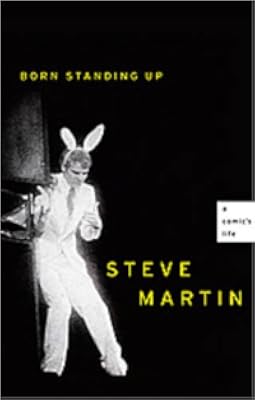
All this is background to provide context for the comment that this book does an excellent job of bringing back all stages of that memory. The first chapter provides the obligatory background of how the brothers grew up, there are then a couple of chapters on how their stage act developed, and then the story of how they got their own variety show. The Smothers Brothers fan in me would have really liked to have seen more about how those original stage personae developed (much like the biographies/autobiographies of Steve Martin and George Carlin.) But there is a bigger story to tell here than just how a comedy duo developed. And so, the major portion of this book is about that variety show (even so far as to dissect individual episodes) and the battles that Tom fought with the network and the censors. This detail almost beats the dead horse, but it really is an important part of telling this important story.
The final three chapters (of 28 – see what I mean about the majority being about the show) wrap up the story and talk about their legacy. In fact, that last chapter about their legacy may be the weakest – far too much rehashing and “what everybody thought”. But that is a small quibble. This is probably a more important book than most would realize. Throughout, while describing censored portions of the show, the author reminds us that these seem tame by today’s standards. And he is right. But he also makes another interesting point. He states that there was nothing like it on television at the time. Then he reminds us that there is nothing like it on network television today. Yes, these two paved the way for Saturday Night Live, John Stewart, and Steven Colbert – but (shy of SNL which has been relegated to late night) those who challenge the status quo are relegated to Cable. It is important that these types of show are now on the air. But it is also important to note that the networks still don’t want to play that game.
If this book did nothing but tell the story of two comedians, it would be good. If it did nothing but remind us the way things used to be, it would be good. The fact that it (subtly) reminds us we may not have come as far as we thought is what makes it so much better. show less
All this is background to provide context for the comment that this book does an excellent job of bringing back all stages of that memory. The first chapter provides the obligatory background of how the brothers grew up, there are then a couple of chapters on how their stage act developed, and then the story of how they got their own variety show. The Smothers Brothers fan in me would have really liked to have seen more about how those original stage personae developed (much like the biographies/autobiographies of Steve Martin and George Carlin.) But there is a bigger story to tell here than just how a comedy duo developed. And so, the major portion of this book is about that variety show (even so far as to dissect individual episodes) and the battles that Tom fought with the network and the censors. This detail almost beats the dead horse, but it really is an important part of telling this important story.
The final three chapters (of 28 – see what I mean about the majority being about the show) wrap up the story and talk about their legacy. In fact, that last chapter about their legacy may be the weakest – far too much rehashing and “what everybody thought”. But that is a small quibble. This is probably a more important book than most would realize. Throughout, while describing censored portions of the show, the author reminds us that these seem tame by today’s standards. And he is right. But he also makes another interesting point. He states that there was nothing like it on television at the time. Then he reminds us that there is nothing like it on network television today. Yes, these two paved the way for Saturday Night Live, John Stewart, and Steven Colbert – but (shy of SNL which has been relegated to late night) those who challenge the status quo are relegated to Cable. It is important that these types of show are now on the air. But it is also important to note that the networks still don’t want to play that game.
If this book did nothing but tell the story of two comedians, it would be good. If it did nothing but remind us the way things used to be, it would be good. The fact that it (subtly) reminds us we may not have come as far as we thought is what makes it so much better. show less
I watched the Smothers Brothers avidly as a boy with my family, and can still remember the excitement, novelty and pleasure in what we saw. For us, these were cultural heroes who uniquely echoed our attitudes. This book is competent enough but seemed to me pedestrian - ploddingly recounting interactions with narrow-minded establishment figures, and the comedians' influence on their peers in the industry, but missing much of the impact and novelty for viewers and wider culture.
Members
- Recently Added By
Published Reviews
ThingScore 75
Most of “Dangerously Funny” is easygoing and informative, with Bianculli serving as a friendly but authoritative guide. He does not set your brain on fire with his perceptions or his prose, but he makes apt comparisons, and he has good taste. As the book should be reaching its climax, however, his narrative plods along, as if he had grown weary of tracking all the interoffice memos show more flying back and forth between his subjects and the CBS bosses who fired them when they were still bringing in good numbers. show less
added by Shortride
Author Information
5 Works 474 Members
All Editions
Some Editions
Common Knowledge
- People/Characters
- Tom Smothers; Dick Smothers
- Dedication
- To Tom and Dick Smothers, for their trust, their cooperation, and especially their patience
- Blurbers
- Burns, Ken; Williams, Mason; Steinberg, David
Classifications
- Genres
- Nonfiction, General Nonfiction, Biography & Memoir, History, Music
- DDC/MDS
- 791.4572 — Arts & recreation Recreation, sports, and performing arts Public performances Motion pictures, radio, television, podcasting Television Programs; television plays Single programs
- LCC
- PN1992.77 .S63 .B33 — Language and Literature Literature (General) Literature (General) Drama Broadcasting Television broadcasts
- BISAC
Statistics
- Members
- 303
- Popularity
- 106,013
- Reviews
- 23
- Rating
- (3.93)
- Languages
- English
- Media
- Paper, Audiobook, Ebook
- ISBNs
- 11
- ASINs
- 5