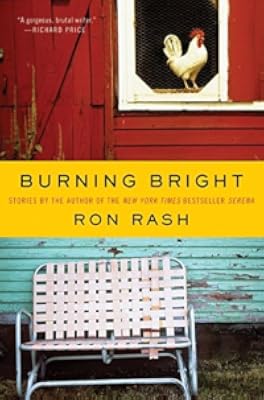
Burning Bright: Stories
by Ron Rash
On This Page
Description
Captures the eerie beauty, stark violence, and rugged character of Appalachia in a collection of stories that spans the Civil War to the present day.Tags
Recommendations


Member Reviews
So I had just finished a read that was painful and went on forever. I needed something to get me back in balance. A book of short stories would be the thing. Something that I knew would be good. I grabbed Burning Bright by Ron Rash. I had never read anything by Ron Rash before but I had read enough about his ability to write a good short story that I was confident it would be the answer I needed. I read it in three days. Could have read it in one. It was depressing. It was sad. It was more sad. And I loved almost every bit of it. A few of the stories seemed to have a message that felt a bit too much like a sledgehammer upside the head, but otherwise the stories were simply where I wanted to be. The writing was simple. The characters show more were brilliantly drawn. Falling Star and Waiting for the End of the World were two of my favorites, but there were others. I find myself fully recovered. Ready to read another day. show less
This is the best collection of short stories I have ever read. Each one is a mini-novel, fully fleshed out, raw and bruising and intimate. Rash uses the first person in each of the stories, and that sense of listening to a person tell their own story is captivating. It is like sitting across the table from someone and having them say, “I will tell you something that happened to me, and you will wish you didn’t, but you will believe it.”
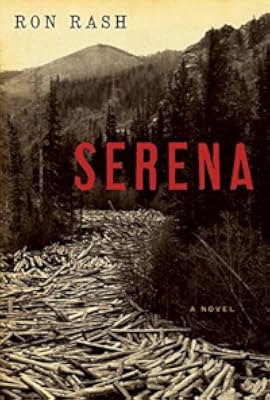
I have consciously avoided reading Ron Rash over the past four years. I read his novel, [b:Serena|2815590|Serena|Ron Rash|https://i.gr-assets.com/images/S/compressed.photo.goodreads.com/books/1347430224l/2815590._SX50_.jpg|2841515], in 2016 and I disliked it more in retrospect than I even did when I show more had first finished it. I thought Rash a good writer, but I also thought he would likely not write anything that would have real appeal for me, since I had been assured by more than one person that [b:Serena|2815590|Serena|Ron Rash|https://i.gr-assets.com/images/S/compressed.photo.goodreads.com/books/1347430224l/2815590._SX50_.jpg|2841515] was his best, his finest, and his defined style. I had another of his books sitting on my physical bookshelf and I put it, unread, in the giveaways when I moved. I am now wishing I had held on to it and given Rash another try.
Moving away from my mistakes and back to this powerful collection, I must say that Rash views the human condition from the underbelly a lot of the time. His characters are frequently already beaten down by life and social position, or they find themselves in situations that the reader realises are sure to go bad at any moment. There is a kind of tension that permeates the stories, keeping you on the edge of your seat waiting for the axe to fall, and sometimes you become so involved that you feel when it does it will fall on you and not on the fictional person at all.
Rash is also not afraid to draw on his store of literary knowledge and life experience to add reality to his stories. In the story, Free Bird, the Lynyrd Skynyrd song plays a major role and we are treated to a reference to Flem Snopes. These references made the story, and the protagonist, come alive for me. His descriptions of The Last Chance bar and its occupants were so vivid that I felt I had stumbled into the dive joint and could smell the vomit and alcohol.
The range of people and situations is wide here. Not one story mimics or recalls another. They are set in different places and different centuries, but each and every one of them works. And, the final test of a great short story for me, not one of them feels unfinished or truncated. Rash knows exactly when to get out. Taking a hint for that last line, I believe it is time I “got out” as well. Read this! show less
I have consciously avoided reading Ron Rash over the past four years. I read his novel, [b:Serena|2815590|Serena|Ron Rash|https://i.gr-assets.com/images/S/compressed.photo.goodreads.com/books/1347430224l/2815590._SX50_.jpg|2841515], in 2016 and I disliked it more in retrospect than I even did when I show more had first finished it. I thought Rash a good writer, but I also thought he would likely not write anything that would have real appeal for me, since I had been assured by more than one person that [b:Serena|2815590|Serena|Ron Rash|https://i.gr-assets.com/images/S/compressed.photo.goodreads.com/books/1347430224l/2815590._SX50_.jpg|2841515] was his best, his finest, and his defined style. I had another of his books sitting on my physical bookshelf and I put it, unread, in the giveaways when I moved. I am now wishing I had held on to it and given Rash another try.
Moving away from my mistakes and back to this powerful collection, I must say that Rash views the human condition from the underbelly a lot of the time. His characters are frequently already beaten down by life and social position, or they find themselves in situations that the reader realises are sure to go bad at any moment. There is a kind of tension that permeates the stories, keeping you on the edge of your seat waiting for the axe to fall, and sometimes you become so involved that you feel when it does it will fall on you and not on the fictional person at all.
Rash is also not afraid to draw on his store of literary knowledge and life experience to add reality to his stories. In the story, Free Bird, the Lynyrd Skynyrd song plays a major role and we are treated to a reference to Flem Snopes. These references made the story, and the protagonist, come alive for me. His descriptions of The Last Chance bar and its occupants were so vivid that I felt I had stumbled into the dive joint and could smell the vomit and alcohol.
The range of people and situations is wide here. Not one story mimics or recalls another. They are set in different places and different centuries, but each and every one of them works. And, the final test of a great short story for me, not one of them feels unfinished or truncated. Rash knows exactly when to get out. Taking a hint for that last line, I believe it is time I “got out” as well. Read this! show less
Desperate sorrow and relentless tragedy, that is what Ron Rash is dealing in with this set of stories. And I am selling my furniture so I can stand at his door with a handful of cash. I am as addicted to his sparse, unapologetic prose as his Appalachian derelicts are addicted to meth.
With only one story to mitigate the hopelessness, this volume was more difficult to get through than Nothing Gold Can Stay; even so, it only took me a couple days to finish because I couldn't put it down.
With only one story to mitigate the hopelessness, this volume was more difficult to get through than Nothing Gold Can Stay; even so, it only took me a couple days to finish because I couldn't put it down.
An excellent collection of short stories set in Rash's very own postage stamp of soil, the North Carolina hill country, at various times in history. The writing is superb, with characters that step right off the page (or in my case, screen) and inhabit my world for the span of their story. Someone is dead or dying in almost every selection, and not much pretty stuff happens, but there is little real violence here, despite portrayals of grim poverty, desperation, defeat and greed. As always with short story collections, there were a couple that didn't quite work for me, and a couple that will stick with me a long time. I give the collection 4 stars. This was my first e-read, and I think short stories will work quite well for me in this show more format.
May 2015 show less
May 2015 show less
An excellent collection of short stories by a powerful voice from Appalachia.
Ron Rash was an author new to me, but now I know that I'd like to read anything else by him as his simple, spare, and penetrating style really appeals to me.
These twelve stories open a window on life in a part of the world not too often looked at. One of my favourites - "Dead Confederates" - is about two labourers, one trying to exploit the other in a search for lucrative buried artifacts in the graves of Confederate servicemen. Here's a flavour:
'He shuts up for a moment then, because he's starting to realise how easy it all sounds, and how much money I might start figuring to be my share. He lays his big yellow front teeth out on his lower lip, worrying his show more mind to figure a way to take back some of what he just said.'
'"Course they ain't going to pay near the price I showed you on them sheets. We'll be lucky to get half of that."..."Just wait for a clear night, and a big old Harvest Moon.," Wesley says, looking up at the sky like he might be expecting one to show up any minute. "That and keep your mouth shut about it. I've not told another person about this and I want it to stay that way."'
---
'"I'll loosen the dirt and you shovel it away," Wesley gasps, veins sticking out on his neck like there's a noose around it. "We can get it out faster that way."
Funny you didn't think of that till it was your turn to dig, I'm thinking, but that dog has set loose the fear in me more than any time since we drove up. I take the shovel and we're making the dirt fly, Wesley doing more work in fifteen minutes than he's done in twelve years on the road crew.'
In "Burning Bright" an east Tennessee rancher's widow comes to the heartbreaking realisation that her quiet and hard-working second husband could be the local arsonist setting fires in the peak of a drought.
'The worst drought in a decade, the weatherman had said, showing a ten-year chart of August rainfalls. As if Marcie needed a chart when all she had to do was look at her tomatoes shrivelled on the vines, the corn shucks grey and papery as a hornet's nest. She stepped off the porch and dragged a length of hose into the garden, its rubber the sole bright green among the rows, grasping the hose just below the metal mouth, as if it were a snake that could bite her. When she finished she looked at the sky a last time and went inside. She thought of Carl, wondering if he'd be late again. She thought about the cigarette lighter he carried in his front pocket, a wedding gift she'd brought him in Gatlinburg.'
In "Waiting For the End of the World" a divorced part-time copy proofer plays guitar at a local roadhouse. His ex-wife's father is out to catch him doing something, anything, with his time that can be used against him - ("We're just getting some additional evidence as to your parental fitness.") so turns up at the gig ready to provoke a fight.
'And speaking of gene pools, I suddenly see Everette Evans, the man that, to my immense regret, is twenty-five percent of the genetic makeup of my son. He's standing in the doorway, a camcorder in his hands. Everette lingers on Hubert a few seconds, then the various casualties of the evening before finally honing in on me.'
"What are you up to, Everette?" I say.
---
"What's the problem, Devon?" Hubert says, walking over from the bar.
"This man's working for National Geographic," I tell Hubert. "They're doing a show on primitive societies, claiming people like us are the missing link between apes and humans."
"That's a lie," Everette says, his eyes on Hubert's ball bat.'
These are stories of neglect and want, war secrets and hard times and strokes of luck. Whether they are set in an 1860s Boone smallholding, or 1945 Charlotte welcoming home a returning soldier, or are about middle-class meth addicts in Smoky Mountains National Park; the places and characters that Ron Rash introduced to me will remain vivid in the memory. A very good collection. show less
Ron Rash was an author new to me, but now I know that I'd like to read anything else by him as his simple, spare, and penetrating style really appeals to me.
These twelve stories open a window on life in a part of the world not too often looked at. One of my favourites - "Dead Confederates" - is about two labourers, one trying to exploit the other in a search for lucrative buried artifacts in the graves of Confederate servicemen. Here's a flavour:
'He shuts up for a moment then, because he's starting to realise how easy it all sounds, and how much money I might start figuring to be my share. He lays his big yellow front teeth out on his lower lip, worrying his show more mind to figure a way to take back some of what he just said.'
'"Course they ain't going to pay near the price I showed you on them sheets. We'll be lucky to get half of that."..."Just wait for a clear night, and a big old Harvest Moon.," Wesley says, looking up at the sky like he might be expecting one to show up any minute. "That and keep your mouth shut about it. I've not told another person about this and I want it to stay that way."'
---
'"I'll loosen the dirt and you shovel it away," Wesley gasps, veins sticking out on his neck like there's a noose around it. "We can get it out faster that way."
Funny you didn't think of that till it was your turn to dig, I'm thinking, but that dog has set loose the fear in me more than any time since we drove up. I take the shovel and we're making the dirt fly, Wesley doing more work in fifteen minutes than he's done in twelve years on the road crew.'
In "Burning Bright" an east Tennessee rancher's widow comes to the heartbreaking realisation that her quiet and hard-working second husband could be the local arsonist setting fires in the peak of a drought.
'The worst drought in a decade, the weatherman had said, showing a ten-year chart of August rainfalls. As if Marcie needed a chart when all she had to do was look at her tomatoes shrivelled on the vines, the corn shucks grey and papery as a hornet's nest. She stepped off the porch and dragged a length of hose into the garden, its rubber the sole bright green among the rows, grasping the hose just below the metal mouth, as if it were a snake that could bite her. When she finished she looked at the sky a last time and went inside. She thought of Carl, wondering if he'd be late again. She thought about the cigarette lighter he carried in his front pocket, a wedding gift she'd brought him in Gatlinburg.'
In "Waiting For the End of the World" a divorced part-time copy proofer plays guitar at a local roadhouse. His ex-wife's father is out to catch him doing something, anything, with his time that can be used against him - ("We're just getting some additional evidence as to your parental fitness.") so turns up at the gig ready to provoke a fight.
'And speaking of gene pools, I suddenly see Everette Evans, the man that, to my immense regret, is twenty-five percent of the genetic makeup of my son. He's standing in the doorway, a camcorder in his hands. Everette lingers on Hubert a few seconds, then the various casualties of the evening before finally honing in on me.'
"What are you up to, Everette?" I say.
---
"What's the problem, Devon?" Hubert says, walking over from the bar.
"This man's working for National Geographic," I tell Hubert. "They're doing a show on primitive societies, claiming people like us are the missing link between apes and humans."
"That's a lie," Everette says, his eyes on Hubert's ball bat.'
These are stories of neglect and want, war secrets and hard times and strokes of luck. Whether they are set in an 1860s Boone smallholding, or 1945 Charlotte welcoming home a returning soldier, or are about middle-class meth addicts in Smoky Mountains National Park; the places and characters that Ron Rash introduced to me will remain vivid in the memory. A very good collection. show less
A gorgeous collection. "Hard Times," the lead story, was at first my favorite. Then I read the next one, "Back of Beyond," and it became my favorite. By the time I got to "Dead Confederates," I gave up picking. Rash isn't sentimental about the South -- he loves it and he's also pretty clear-eyed. "Back of Beyond" should be a companion reading to the [a:J.D. Vance|15109469|J.D. Vance|https://s.gr-assets.com/assets/nophoto/user/u_50x66-632230dc9882b4352d753eedf9396530.png] best-seller, [b:Hillbilly Elegy: A Memoir of a Family and Culture in Crisis|29446025|Hillbilly Elegy A Memoir of a Family and Culture in Crisis|J.D. Vance|https://d2arxad8u2l0g7.cloudfront.net/books/1471374387s/29446025.jpg|47200486]. This is the same universe, though show more transferred to Sylva, North Carolina. So many beautiful lines -- but that really doesn't do Rash's writing justice, since it's never flashy, just right. show less
Ron Rash’s recent collection of short stories is really just a pathway into a regional author’s writing process. As a precursor to this year’s almost novelette The Cove, Burning Bright serves as a the palette of color with which Rash has permeated the southern Blue Ridge. Although Rash has never been exceptionally light-hearted, this collection seems downright soul-crushing, focusing on death and grief and loss perhaps more-so than any novel in his repertoire. The best story in my opinion is “Into the Gorge,” where Jesse, the recessive local, returns to his family’s old plot of land, now gobbled up into Great Smoky Mountains National Park, to dig up ginseng. As this man both tries to pocket some extra cash and commune with show more his ancestor’s geography and haunting legends, he butts up against the modern world in a tragically hopeless manner. In the end, Jesse is doomed to repeat the past of his ancestors, although the parameters of their existence are unparalleled Other stories, such as “The Ascent” or even the prelude “Hard Times” are driven by the intersections of how youth in Appalachia navigates through poverty, drugs, and absentee parenting. Of course it would be easy to draw these children out as allegories in and of themselves, which Rash may be doing, but the intimacy and dream-like diction of the narrative suggests that Rash may be indeed “Benjamin-buttoning” us all as he ages into new material. Overall, this succinct and laconic collection, although disastrous and forlorn, is a brilliant set of tragedies that reflects the troubled transition of the Blue Ridge into a privately sequestered opulent playground.
PHENOMENAL-9.3
http://chisholmstream.wordpress.com/2013/02/28/a-quick-tour-of-modern-appalachia... show less
PHENOMENAL-9.3
http://chisholmstream.wordpress.com/2013/02/28/a-quick-tour-of-modern-appalachia... show less
Members
- Recently Added By
Author Information

28+ Works 6,853 Members
Some Editions
Awards and Honors
Work Relationships
Common Knowledge
- Canonical title
- Burning Bright: Stories
- Original title
- Burning Bright: Stories
- Original publication date
- 2010 (1e édition originale américaine, Ecco, New-York) (1e édition originale américaine, Ecco, New-York); 2015-04-09 (1e traduction et édition française, Cadre vert, Seuil) (1e traduction et édition française, Cadre vert, Seuil); 2016-04-14 (Réédition française, Points, Seuil) (Réédition française, Points, Seuil)
- Epigraph*
- /
- Dedication
- For Sue Holder Rash
- First words
- Jacob stood in the barn mouth and watched Edna leave the henhouse.
- Last words
- (Click to show. Warning: May contain spoilers.)She could get it done by noon, especially after a soaking rain, then rest a while before doing her inside chores, maybe even have time to plant some tomato and squash before supper.
- Publisher's editor*
- Aubert, Marie-Caroline (Editrice, Seuil)
- Blurbers
- Nadine O'Regan
- Original language*
- Anglais (Etats-Unis) (Etats-Unis)
- Disambiguation notice*
- Burning bright Comprend :
- Hard times ;
- Back of beyond ;
- Dead confederates ;
- Ascent ;
- Woman who believed in jaguars ;
- Burning bright ;
- Return ;
- Into the gorge ;
- Falling star ... (show all);
- Corpse bird ;
- Waiting for the end of the world ;
- Lincolnites.
*Some information comes from Common Knowledge in other languages. Click "Edit" for more information.
Classifications
Statistics
- Members
- 478
- Popularity
- 63,496
- Reviews
- 22
- Rating
- (4.08)
- Languages
- English, French
- Media
- Paper, Ebook
- ISBNs
- 12
- ASINs
- 7