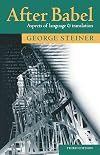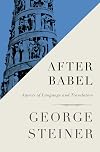
After Babel: Aspects of Language and Translation
by George Steiner
On This Page
Description
George Steiner's essential tome on linguistics, hailed by the New York Times as a "dazzling inquiry into the possibility of translation"In his classic work, literary critic and scholar George Steiner tackles what he considers the Babel "problem": Why, over the course of history, have humans developed thousands of different languages when the social, material, and economic advantages of a single tongue are obvious? Steiner argues that different cultures' desires for privacy and exclusivity show more led to each developing its own language. Translation, he believes, is at the very heart of human communica show lessTags
Recommendations



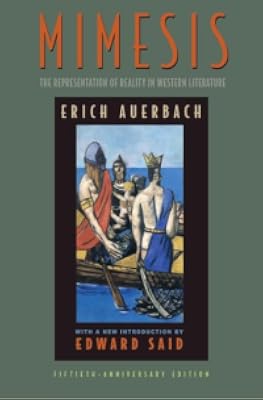
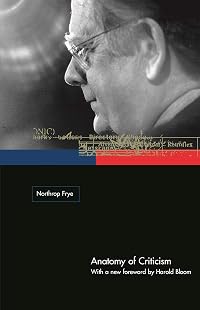
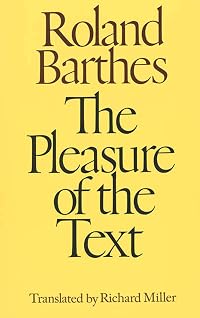
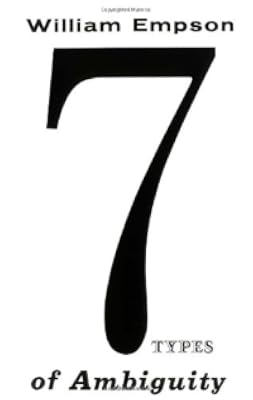


















Member Recommendations

vpfluke Exquisite use and understanding of language.
Member Reviews
George Steiner's classic study of the peculiar nature of translation as a literary and linguistic process, which drags you through some fairly knotty thickets of the philosophy of language before opening up in the last couple of chapters into a string of brilliant case-studies.
We get to think about why there are different languages in the first place, and about how — since the meaning of words shifts between contexts, times and individuals — any reading of a text anywhere is going to involve some kind of translation. And we get to confront the paradox that whilst an "exact" 1:1 translation between different languages, even of the most trivial phrase, is clearly impossible, we still use translations every day and find them helpful. show more Even the most complex and baffling literary texts have been translated in ways that seem to serve a useful purpose for readers and scholars.
This is something of a literary steeple-chase, where we are expected to cope with references from a broad range of literature, linguistics, philosophy and other disciplines (in numerous different languages). At one point we leap straight from a detailed discussion of prophecy in the Old Testament to a (non-trivial) excursion into statistical thermodynamics and the Second Law. So you will need that parachute. But it is fun, and when we get to the case-studies of how literary translation is actually done it is also very useful. show less
We get to think about why there are different languages in the first place, and about how — since the meaning of words shifts between contexts, times and individuals — any reading of a text anywhere is going to involve some kind of translation. And we get to confront the paradox that whilst an "exact" 1:1 translation between different languages, even of the most trivial phrase, is clearly impossible, we still use translations every day and find them helpful. show more Even the most complex and baffling literary texts have been translated in ways that seem to serve a useful purpose for readers and scholars.
This is something of a literary steeple-chase, where we are expected to cope with references from a broad range of literature, linguistics, philosophy and other disciplines (in numerous different languages). At one point we leap straight from a detailed discussion of prophecy in the Old Testament to a (non-trivial) excursion into statistical thermodynamics and the Second Law. So you will need that parachute. But it is fun, and when we get to the case-studies of how literary translation is actually done it is also very useful. show less
All speech is an act of translation. We need to transmit the ideas in our head to another person, and so must translate the thought into words. This act of translation forms the fundamental basis for how people interrelate. But what if the two people do not speak the same language? The translation has to be translated again in order to get the recipient to understand. It is these two translations that interest George Steiner in After Babel.
This book is not for the timid. He looks at the history of translation, the fundamental basic of language, and how and why translations succeed or fail. He incorporates Chomskyan linguistics and an in-depth interpretation of the Sapir-Whorf Hypothesis (that the structure of a language affects the way show more the language-speaker conceptualizes the world). Since he sees translation as inherently artistic, he does not spend a lot of time trying to break down its mechanics. The language in this book is a bit stilted, but Steiner gets his points across. If you’re not a student of linguistics, some of his assertions can be challenging (at least I thought it was). I wish I had more to say, but all in all, I thought he did an excellent job of encapsulating the field. A dense but informative book. show less
This book is not for the timid. He looks at the history of translation, the fundamental basic of language, and how and why translations succeed or fail. He incorporates Chomskyan linguistics and an in-depth interpretation of the Sapir-Whorf Hypothesis (that the structure of a language affects the way show more the language-speaker conceptualizes the world). Since he sees translation as inherently artistic, he does not spend a lot of time trying to break down its mechanics. The language in this book is a bit stilted, but Steiner gets his points across. If you’re not a student of linguistics, some of his assertions can be challenging (at least I thought it was). I wish I had more to say, but all in all, I thought he did an excellent job of encapsulating the field. A dense but informative book. show less
For those who do Translation Studies, are translators, or are doing anything comparative in their post-secondary education, this book is a must-read. It gives a detailed, comprehensive history of the practice of translation, beginning with its roots in biblical studies. Steiner never quite looses sight of the spiritual aspects of translation, in the religious and post-Hegelian sense of the word. He writes an especially adept analysis of Walter Benjamin's "The Task of the Translator" that clarifies Benjamin's somewhat murky text, making it accessible and, moreover, *useful* for the translator-scholar.
I recommend getting the most recent edition, and not buying a used copy of an older addition, as the introductions to the new editions show more generally amend and add information to the original text which was written in the '70s, I believe.
All in all, this book should be on the shelf of anyone interested in "world literature"--i.e. literature in translation--because it is essential that we question the efficacy of translation, its necessity, its drawbacks, and the ways it enriches our understanding of language, society and art. show less
I recommend getting the most recent edition, and not buying a used copy of an older addition, as the introductions to the new editions show more generally amend and add information to the original text which was written in the '70s, I believe.
All in all, this book should be on the shelf of anyone interested in "world literature"--i.e. literature in translation--because it is essential that we question the efficacy of translation, its necessity, its drawbacks, and the ways it enriches our understanding of language, society and art. show less
For those who do Translation Studies, are translators, or are doing anything comparative in their post-secondary education, this book is a must-read. It gives a detailed, comprehensive history of the practice of translation, beginning with its roots in biblical studies. Steiner never quite looses sight of the spiritual aspects of translation, in the religious and post-Hegelian sense of the word. He writes an especially adept analysis of Walter Benjamin's "The Task of the Translator" that clarifies Benjamin's somewhat murky text, making it accessible and, moreover, *useful* for the translator-scholar.
I recommend getting the most recent edition, and not buying a used copy of an older addition, as the introductions to the new editions show more generally amend and add information to the original text which was written in the '70s, I believe.
All in all, this book should be on the shelf of anyone interested in "world literature"--i.e. literature in translation--because it is essential that we question the efficacy of translation, its necessity, its drawbacks, and the ways it enriches our understanding of language, society and art. show less
I recommend getting the most recent edition, and not buying a used copy of an older addition, as the introductions to the new editions show more generally amend and add information to the original text which was written in the '70s, I believe.
All in all, this book should be on the shelf of anyone interested in "world literature"--i.e. literature in translation--because it is essential that we question the efficacy of translation, its necessity, its drawbacks, and the ways it enriches our understanding of language, society and art. show less
Weakest when discussing actual translations, which might be a fatal flaw, but really this was quite interesting.
Why is this SO poorly written? I don't get it...
Another one that I gave up on at a fairly early stage.
Members
- Recently Added By
Lists

Books in the bibliography of Godel, Escher, Bach by Douglas Hofstadter
97 works; 3 members

Mustich's 1000 Books to Read Before You Die: A Life Changing List
1,001 works; 20 members
Author Information

82+ Works 7,411 Members
George Steiner was born in 1929 in Paris, but also lived in Vienna and New York. Steiner was a critic, novelist, philosopher, translator, and educator. Currently, he is a professor at Cambridge University and the University of Geneva. He has written for the New Yorker for over thirty years and has published the books No Passion Spent, Errata: An show more Examined Life, and Martin Heidegger: With a New Introduction. George Steiner died in Cambridge, England on February 3, 2020, at the age of 90. (Bowker Author Biography) show less
Awards and Honors
Series
Belongs to Publisher Series
Common Knowledge
Classifications
- Genres
- Nonfiction, Literature Studies and Criticism, Philosophy
- DDC/MDS
- 418.02 — Language Linguistics Applied linguistics modified standard subdivisions and translating Translating
- LCC
- P306 .S66 — Language and Literature Philology. Linguistics Language. Linguistic theory. Comparative grammar Translating and interpreting
- BISAC
Statistics
- Members
- 795
- Popularity
- 35,155
- Reviews
- 10
- Rating
- (3.88)
- Languages
- 7 — English, French, German, Italian, Polish, Portuguese, Spanish
- Media
- Paper, Ebook
- ISBNs
- 30
- ASINs
- 13