
After Virtue: A Study in Moral Theory
by Alasdair MacIntyre
On This Page
Description
When After Virtue first appeared in 1981, it was recognized as a significant and potentially controversial critique of contemporary moral philosophy. Since that time, the book has been translated into more than fifteen foreign languages and has sold over one hundred thousand copies. Now, twenty-five years later, the University of Notre Dame Press is pleased to release the third edition of After Virtue, which includes a new prologue: "After Virtue after a Quarter of a Century."In this classic show more work, Alasdair MacIntyre examines the historical and conceptual roots of the idea of virtue, diagnoses the reasons for its absence in personal and public life, and offers a tentative proposal for its recovery. While the individual chapters are wide-ranging, once pieced together they comprise a penetrating and focused argument about the price of modernity. In the third edition's prologue, MacIntyre revisits the central theses of the book and concludes that, although he has learned a great deal and has supplemented and refined his theses and arguments in other works, he has "as yet found no reason for abandoning the major contentions" of this book. While he recognizes that his conception of human beings as virtuous or vicious needed not only a metaphysical but also a biological grounding, ultimately he remains "committed to the thesis that it is only from the standpoint of a very different tradition, one whose beliefs and presuppositions were articulated in their classical form by Aristotle, that we can understand both the genesis and the predicament of moral modernity.". show lessTags
Recommendations




















Member Recommendations


by anonymous user

x_hoxha Sobering treatment of bureaucratic-managerial ethos.
Member Reviews
Imagine that science as a discipline had been nearly erased from human memory. Now imagine that after a great deal of time, a new discipline arises, calling itself science and using surviving scraps of the old tradition. The new tradition, however, has utterly lost the context that gave those scraps meaning. What now passes for science bears little resemblance to our empirical study of repeatable, observable phenomena; and more resemblance to dogma completely untethered both from its source or from any intelligible reason or purpose.
This startling analogy is the condition in which MacIntyre finds our modern, Western society with regard to morality. The moral framework in which this society operates borrows mightily from its predecessor: show more the classical morality of Aristotle as synthesized with and modified by the European Christian tradition. In MacIntyre's view, the philosophers of the Enlightenment tried to do the impossible: to justify a moral code derived from their ancestors in the entirely new and alien terms of Enlightenment individualism. The inevitable failure of that project spawned the emotivist Western world we know today, a world in which we use inherited virtue words (e.g., "justice," "integrity," "loyalty") which bear no intrinsic meaning in our brave new world.
Where all our individualistic moral codes are laws unto themselves, there is nothing left to the moral marketplace but the brute application of the will to power. For in this post-Enlightenment kaleidoscope of equally irrational and equally sovereign moralities governed by nothing other than the feelings of their proponents, the ability of the individual will to assert its dominance is the only true morality left beneath the shared, polite fiction that a transcendent morality of any other kind exists.
MacIntyre's diagnosis of Western moral malaise is, in my opinion, unassailable. I have questions about his proposed solution; namely, to rehabilitate and reinterpret a Thomistic Aristotelian tradition of a teleological morality (i.e., a morality governed by specific end goals) where virtue is found in the balancing of the internal goods springing from acts conducive to the good of a whole human life against the multiply embedded narratives in which we live our historical lives. I'm not sure he escapes his own critiques of arbitrary morality, although he himself would identify the Aristotelian tradition merely as the best moral framework we’ve discovered so far. Questions about solutions aside, though, I can't imagine a better critique of our cultural moment; and highly recommend this work for that reason alone. show less
This startling analogy is the condition in which MacIntyre finds our modern, Western society with regard to morality. The moral framework in which this society operates borrows mightily from its predecessor: show more the classical morality of Aristotle as synthesized with and modified by the European Christian tradition. In MacIntyre's view, the philosophers of the Enlightenment tried to do the impossible: to justify a moral code derived from their ancestors in the entirely new and alien terms of Enlightenment individualism. The inevitable failure of that project spawned the emotivist Western world we know today, a world in which we use inherited virtue words (e.g., "justice," "integrity," "loyalty") which bear no intrinsic meaning in our brave new world.
Where all our individualistic moral codes are laws unto themselves, there is nothing left to the moral marketplace but the brute application of the will to power. For in this post-Enlightenment kaleidoscope of equally irrational and equally sovereign moralities governed by nothing other than the feelings of their proponents, the ability of the individual will to assert its dominance is the only true morality left beneath the shared, polite fiction that a transcendent morality of any other kind exists.
MacIntyre's diagnosis of Western moral malaise is, in my opinion, unassailable. I have questions about his proposed solution; namely, to rehabilitate and reinterpret a Thomistic Aristotelian tradition of a teleological morality (i.e., a morality governed by specific end goals) where virtue is found in the balancing of the internal goods springing from acts conducive to the good of a whole human life against the multiply embedded narratives in which we live our historical lives. I'm not sure he escapes his own critiques of arbitrary morality, although he himself would identify the Aristotelian tradition merely as the best moral framework we’ve discovered so far. Questions about solutions aside, though, I can't imagine a better critique of our cultural moment; and highly recommend this work for that reason alone. show less
Is there anything left to be said about After Virtue? With this book, Alasdair MacIntyre brought Aristotelian-style virtue ethics back into the modern conversation. It is a true classic, still quoted and built upon today, almost forty years after its original publication date.
After Virtue falls into two parts. The first half of the book is deconstructive. MacIntyre carefully explains how the ethical problems of our time cannot be answered from within our post-Enlightenment framework. The ethical landscape today resembles the ruins of a once great culture. We have bits and pieces of ethical material from the past, but no historical context with which to apply them. Without context there can be no ethical progress beyond the emotivism of show more the day.
"[M]oral judgments are linguistic survivals from the practices of classical theism which have lost the context provided by these practices" (60).
The second half of After Virtue is constructive. Now that the problem is diagnosed, MacIntyre prescribes Aristotelian medicine. Humans are social creatures, narrative construed toward a telos or goal. It is through the practice of virtues within a community that humans mature and become the sort of people who are able to encounter the moral quandaries of the day.
It is difficult to overstate the value of this book. After Virtue is one carefully argued perspective in which each of the 286 pages adds value. It is multidisciplinary, combining philosophical argument with sociological and historical context. Despite its age, I found myself continually reflecting on current political and social events through MacIntyre's lens.
This is not a Christian book per se, but it has serious implications for the church. This is the foundation on which Stanley Hauerwas has based his ethical perspective. Pastors who wish to understand the moral makeup of the world and the church would do well to revisit this venerable volume. show less
After Virtue falls into two parts. The first half of the book is deconstructive. MacIntyre carefully explains how the ethical problems of our time cannot be answered from within our post-Enlightenment framework. The ethical landscape today resembles the ruins of a once great culture. We have bits and pieces of ethical material from the past, but no historical context with which to apply them. Without context there can be no ethical progress beyond the emotivism of show more the day.
"[M]oral judgments are linguistic survivals from the practices of classical theism which have lost the context provided by these practices" (60).
The second half of After Virtue is constructive. Now that the problem is diagnosed, MacIntyre prescribes Aristotelian medicine. Humans are social creatures, narrative construed toward a telos or goal. It is through the practice of virtues within a community that humans mature and become the sort of people who are able to encounter the moral quandaries of the day.
It is difficult to overstate the value of this book. After Virtue is one carefully argued perspective in which each of the 286 pages adds value. It is multidisciplinary, combining philosophical argument with sociological and historical context. Despite its age, I found myself continually reflecting on current political and social events through MacIntyre's lens.
This is not a Christian book per se, but it has serious implications for the church. This is the foundation on which Stanley Hauerwas has based his ethical perspective. Pastors who wish to understand the moral makeup of the world and the church would do well to revisit this venerable volume. show less
An exploration of moral philosophy in the Western tradition.
The author's main premise, if I have understood it properly, is to commend the Aristotelian tradition and many aspects of its framework in order to have a coherent, rational discussion of virtue and morality, declaring all modern attempts to formulate a rational secular basis for morality and virtue to have failed.
The author begins with this failure, and here he is at his best, demonstrating the reduction of morality/virtue into a sort of emotivism: what is right is right because it feels right. He traces this from Kant and Hume and Kierkegaard to utilitarianism and Marxism, pointing out the flaws in each argument, and demonstrating that the project is all doomed to failure show more because of emphasis on the individual and the denial of any sort of telos in moral discussion, leading to a default Stoicism. He also does well at critiquing the elevation of law as enforcing virtue or defining virtue and the problems manifest in such a shift.
To the author modern moral discourse is a hodgepodge of various artifacts from previous ages which cannot be coherently molded together; he credits Nietzsche for identifying the failures of Enlightenment moralism but shows how his project suffers from the same individualistic failings.
The author explores how virtue has been understood in the Western tradition; I found his point regarding how the Greeks attempted to reconcile their understanding of the heroes and virtue outside of the heroic age to be compelling, and appreciated his exploration into the difficulties of both Plato and Aristotle in not imagining how there could be a contrast in rival goods, something acutely understood by Sophocles and the tragedians. He explores the variations in what is seen as the virtues throughout time but attempts to show how there is a coherent framework which is bequeathed by Aristotle and improved upon by the New Testament, Aquinas, and others.
His goal is not to commend any given tradition, instead suggesting that each conception of the virtues and morality tends to reflect the context in which they develop or are maintained. Instead, he seeks to find a tradition which has the tools available to reckon with other conceptions of virtue and morality and can incorporate what is good and commendable and thus proves adaptable, and he finds this in Aristotle's framework above all others.
His critique of how justice is understood is insightful, explaining well how different groups of people can focus on certain elements of what seems just while neglecting others, and thus finding it difficult to communicate effectively in an individualist, emotivist age.
In the postscript the author engages with some of his early critics and proves willing to learn from the critique and express how the work is not complete but an invitation to further exploration of the theme.
I am somewhat familiar with ancient philosophy but only have a surface level understanding regarding many of the modern philosophers described. I am strongly tempted to agree with the author and desire a more pre-modern framework but cannot competently fully adjudicate his claims. Nevertheless, a compelling and challenging read. show less
The author's main premise, if I have understood it properly, is to commend the Aristotelian tradition and many aspects of its framework in order to have a coherent, rational discussion of virtue and morality, declaring all modern attempts to formulate a rational secular basis for morality and virtue to have failed.
The author begins with this failure, and here he is at his best, demonstrating the reduction of morality/virtue into a sort of emotivism: what is right is right because it feels right. He traces this from Kant and Hume and Kierkegaard to utilitarianism and Marxism, pointing out the flaws in each argument, and demonstrating that the project is all doomed to failure show more because of emphasis on the individual and the denial of any sort of telos in moral discussion, leading to a default Stoicism. He also does well at critiquing the elevation of law as enforcing virtue or defining virtue and the problems manifest in such a shift.
To the author modern moral discourse is a hodgepodge of various artifacts from previous ages which cannot be coherently molded together; he credits Nietzsche for identifying the failures of Enlightenment moralism but shows how his project suffers from the same individualistic failings.
The author explores how virtue has been understood in the Western tradition; I found his point regarding how the Greeks attempted to reconcile their understanding of the heroes and virtue outside of the heroic age to be compelling, and appreciated his exploration into the difficulties of both Plato and Aristotle in not imagining how there could be a contrast in rival goods, something acutely understood by Sophocles and the tragedians. He explores the variations in what is seen as the virtues throughout time but attempts to show how there is a coherent framework which is bequeathed by Aristotle and improved upon by the New Testament, Aquinas, and others.
His goal is not to commend any given tradition, instead suggesting that each conception of the virtues and morality tends to reflect the context in which they develop or are maintained. Instead, he seeks to find a tradition which has the tools available to reckon with other conceptions of virtue and morality and can incorporate what is good and commendable and thus proves adaptable, and he finds this in Aristotle's framework above all others.
His critique of how justice is understood is insightful, explaining well how different groups of people can focus on certain elements of what seems just while neglecting others, and thus finding it difficult to communicate effectively in an individualist, emotivist age.
In the postscript the author engages with some of his early critics and proves willing to learn from the critique and express how the work is not complete but an invitation to further exploration of the theme.
I am somewhat familiar with ancient philosophy but only have a surface level understanding regarding many of the modern philosophers described. I am strongly tempted to agree with the author and desire a more pre-modern framework but cannot competently fully adjudicate his claims. Nevertheless, a compelling and challenging read. show less
I'm not sure I entirely agree with MacIntyre's thesis that we have necessarily descended into a subjective, emotivist morality due to our loss of a sense of duty to a larger, communal whole, but its interesting to contemplate in light of other non-philosophical works like "Bowling Alone" documenting a similar decline in civic engagement. I wouldn't say this was a light read but it was accessible to me as a lay reader with basic familiarity with Western philosophy (although I'm sure more familiarity with the other philosophers mentioned would have enriched my experience considerably).
This is a sweeping book that covers moral theory from Aristotle up to today. MacIntyre provides a bleak view of the state of modern moral discourse, regarding it as failing to be rational, and failing to admit to being irrational. He claims that older forms of moral discourse were in better shape, particularly singling out Aristotle's moral philosophy as an exemplar. After Virtue is among the most important texts in the recent revival of virtue ethics.
MacIntyre's argument is not just about the collapse of communities, it’s also about the transformation in how we think about the moral life that has purged the language of virtue from our speech and from our sensibility. After Virtue ends by posing the question 'Nietzsche or Aristotle?', show more although MacIntyre acknowledges that the book does not give sufficient grounds for a definitive answer that it is Aristotle, not Nietzsche, who points to the best solution for the problems that the book has diagnosed. Those grounds are set out in MacIntyre's subsequent works, in which he elaborates a sophisticated revision of the philosophical tradition of Aristotelianism.
In this work he is an advocate of the community over the individual and it is a sad story, but told no better than here. show less
MacIntyre's argument is not just about the collapse of communities, it’s also about the transformation in how we think about the moral life that has purged the language of virtue from our speech and from our sensibility. After Virtue ends by posing the question 'Nietzsche or Aristotle?', show more although MacIntyre acknowledges that the book does not give sufficient grounds for a definitive answer that it is Aristotle, not Nietzsche, who points to the best solution for the problems that the book has diagnosed. Those grounds are set out in MacIntyre's subsequent works, in which he elaborates a sophisticated revision of the philosophical tradition of Aristotelianism.
In this work he is an advocate of the community over the individual and it is a sad story, but told no better than here. show less
Nostalgic or pace setting?
MacIntyre traces through the failure of the Englightenment project, as it pertains the study of ethics, then offers an interesting alternative.
For MacIntyre the Enlightenment set out to find that central point from which reason could work. Unfortunately that point was never found, and each attempt to determine the "truth" ended in failure. The real task of philosophical ethics, according to MacIntyre, is not to find ethical truths, but to deal with teaching virtures, a la Aristotle and Aquinas.
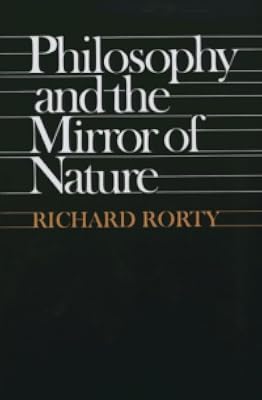
He makes a compelling argument, and this book, along with Richard Rorty Philosophy and the Mirror of Nature, probably affected my philosophical development more than any other books I have read.
MacIntyre traces through the failure of the Englightenment project, as it pertains the study of ethics, then offers an interesting alternative.
For MacIntyre the Enlightenment set out to find that central point from which reason could work. Unfortunately that point was never found, and each attempt to determine the "truth" ended in failure. The real task of philosophical ethics, according to MacIntyre, is not to find ethical truths, but to deal with teaching virtures, a la Aristotle and Aquinas.
He makes a compelling argument, and this book, along with Richard Rorty Philosophy and the Mirror of Nature, probably affected my philosophical development more than any other books I have read.
MacIntyre resurrected a virtue-based ethics and tied it to politics and society in an interesting way -- through narrative -- in order to connect Catholic thought, progressive politics, and democracy. His vision of community is interesting, but not, I think, altogether complete.
Members
- Recently Added By
Lists

Church Times 100 Best Christian Books
106 works; 26 members

Filosofía - Clásicos
217 works; 1 member

Art of Reading
188 works; 5 members

The Art of Manliness' 100+ Books Every Man Should Read
108 works; 2 members

Recommendations by Tim Keller
50 works; 2 members

What is morality?
12 works; 1 member
Author Information

49+ Works 6,649 Members
Although he is most widely known for his book "After Virtue" (1981), with its critique of reason and ethics, Alasdair MacIntyre writes in other areas of philosophy as well, including philosophical psychology, political theory, and philosophy of religion. Born in Scotland, he was educated at Manchester, London, and Oxford universities. In 1969, he show more went to the United States where he has taught at Brandeis, Boston, and Vanderbilt universities. Since 1988, when he also delivered the Gifford lectures, MacIntyre has taught at the University of Notre Dame. "After Virtue" is one of the most widely discussed of all recent books on moral philosophy. It is the culmination of MacIntyre's deep engagement with the history of ethics. In it he argues that modern ethical theory, as it has developed since the seventeenth century, has been exposed by Friedrich Nietzsche as conceptually bankrupt. To find an alternative, he looks to ancient Greece and especially to Aristotle's concept of virtue. Although his critics consider this alternative to be something of an impossible dream, MacIntyre argues that it is central to a recovery of ethics. (Bowker Author Biography) show less
Awards and Honors
Series
Belongs to Publisher Series
Work Relationships
Is abridged in
Inspired
Common Knowledge
Classifications
Statistics
- Members
- 2,884
- Popularity
- 6,282
- Reviews
- 16
- Rating
- (4.10)
- Languages
- 13 — Czech, Dutch, English, Finnish, French, German, Hungarian, Italian, Japanese, Romanian, Spanish, Turkish, Portuguese (Portugal)
- Media
- Paper, Audiobook, Ebook
- ISBNs
- 45
- ASINs
- 12