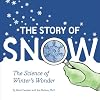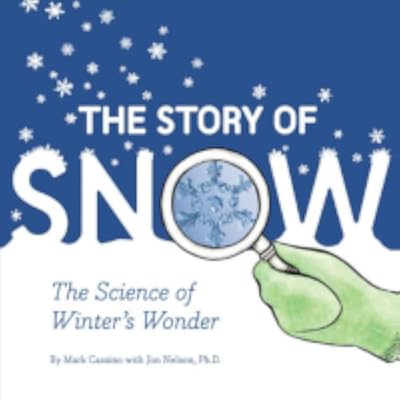
The Story of Snow: The Science of Winter's Wonder
by Mark Cassino, Jon Nelson
On This Page
Description
This book about the science of snow features photos of snow crystals in their beautiful diversity and includes how snow crystals are formed into different shapes and snow-crystal-catching instructions in the back of the book.Tags
Recommendations




Member Reviews
Photographer Marc Cassino explores his passion for snow in this debut picture-book, written together with physicist Jon Nelson. From the origin of snow crystals in tiny specks - of dust, ash, even pollen - around which are built ever more complex structures of ice, through a discussion of the different types of crystal possible - star-shaped dendrites, plate crystals, column crystals - The Story of Snow has everything a budding young scientist needs to know about this cold white stuff! The book even includes an afterword providing instructions on catching snowflakes, in order to examine them.
Informative, engaging, and very, very beautiful - I loved Mark Cassino's up-close photographs of snow crystals! - this is the kind of science book show more that even those readers resistant to science will enjoy! I was particularly struck by the fact that snow crystals owe their existence - like pearls - to the introduction of tiny particles into otherwise "pristine" environments, demonstrating (for me, anyway) yet again that imperfection leads to great beauty. Highly recommended to all snow lovers, and to all young readers with an interest in science! show less
Informative, engaging, and very, very beautiful - I loved Mark Cassino's up-close photographs of snow crystals! - this is the kind of science book show more that even those readers resistant to science will enjoy! I was particularly struck by the fact that snow crystals owe their existence - like pearls - to the introduction of tiny particles into otherwise "pristine" environments, demonstrating (for me, anyway) yet again that imperfection leads to great beauty. Highly recommended to all snow lovers, and to all young readers with an interest in science! show less
I am a science nerd, though not a very well educated one. So, this book thrilled me. All throughout the book there are photographs of actual snow crystals (magnified of course.)
The book tells in detail how snow crystals form, and I found the information fascinating. At the end, there’s a project about how to catch your own snow crystals, which could make for a fun and educational activity.
I also highly recommend the book Snowflake Bentley. Reading the two books at about the same time would allow each one to enhance the experience of the other.
The book tells in detail how snow crystals form, and I found the information fascinating. At the end, there’s a project about how to catch your own snow crystals, which could make for a fun and educational activity.
I also highly recommend the book Snowflake Bentley. Reading the two books at about the same time would allow each one to enhance the experience of the other.
I really enjoyed this book. It does a good job going through the process of a snowflake forming with great visuals. There are drawings of the phases, pictures of real snowflakes and eye catching fonts. On each page is a largely printed sentence that gives the main idea, then underneath is a few more sentences with detail. At the end of the book it also has instructions how to catch and look closely at a snowflake. To use it in a classroom I would have my students draw the process of a snowflake. Then the final step have them spend time drawing a detailed snowflake with geometric shapes.
This book tells how snow is made. It details the journey of how those delicate, microscopic snow flakes fall to the ground. I really enjoyed reading this book because it taught me a lot of things that I never knew before. I loved the illustrations! They enlarged pictures of the snow flakes and made them look as if we were seeing them through the microscopes ourselves. It made me realize just how beautiful snowflakes really are.
Genre: Informational
Summary: In an engaging and informative book, readers can learn all about snow crystals- how they are formed, the different types, and how they combine to create snowflakes.
Review: I love this book! The pictures are beautiful and descriptive. The words are are clear and understandable, yet not basic. It covers a lot of detail, and can serve as an excellent resource in the classroom.
Summary: In an engaging and informative book, readers can learn all about snow crystals- how they are formed, the different types, and how they combine to create snowflakes.
Review: I love this book! The pictures are beautiful and descriptive. The words are are clear and understandable, yet not basic. It covers a lot of detail, and can serve as an excellent resource in the classroom.
In thirteen simple sentences,
"This is the story of snow.
Snow begins with a speck. ... ,"
The Story of Snow explains the science behind the snowflake. But there is more to this book - smaller print on each page offers a more detailed explanation of the simpler text,
"Clouds are mostly made of air and water, but there are also bits of other things, like tiny particles of dirt, ash and salt...A snow crystal needs one of these "specks" to start growing."
Accompanying this short (32-page) "story," are diagrams, watercolor backdrops, and striking photographs of snowflakes. Directions for catching snow crystals wrap up the book.
The Story of Snow: The Science of Winter's Wonder follows a trend that I've seen a lot lately in children's show more non-fiction. The book is almost as multi-faceted as the snowflakes it describes - picture book, science book, story book, activity book. The simpler text may be read as a story to young listeners. Older children will benefit from the more detailed explanation. Everyone will enjoy the stunning photography. Teachers should like this one! show less
"This is the story of snow.
Snow begins with a speck. ... ,"
The Story of Snow explains the science behind the snowflake. But there is more to this book - smaller print on each page offers a more detailed explanation of the simpler text,
"Clouds are mostly made of air and water, but there are also bits of other things, like tiny particles of dirt, ash and salt...A snow crystal needs one of these "specks" to start growing."
Accompanying this short (32-page) "story," are diagrams, watercolor backdrops, and striking photographs of snowflakes. Directions for catching snow crystals wrap up the book.
The Story of Snow: The Science of Winter's Wonder follows a trend that I've seen a lot lately in children's show more non-fiction. The book is almost as multi-faceted as the snowflakes it describes - picture book, science book, story book, activity book. The simpler text may be read as a story to young listeners. Older children will benefit from the more detailed explanation. Everyone will enjoy the stunning photography. Teachers should like this one! show less
This informational book is about the "life" of snow. It contains very detailed, beautiful pictures that really help the reader understand how snow is formed and all the different ways they can look.
I would definitely recommend this book to children of elementary age and even middle school age. It was very well written in a way young people can understand and really learn cool things about snow that one most likely does not know. It also has pictures that are really helpful and beautiful and eye-catching. It also gave an idea for a project at the end that would be really neat for a child to do to see, first hand, what snow flakes look like and how intricate they really are.
I would definitely recommend this book to children of elementary age and even middle school age. It was very well written in a way young people can understand and really learn cool things about snow that one most likely does not know. It also has pictures that are really helpful and beautiful and eye-catching. It also gave an idea for a project at the end that would be really neat for a child to do to see, first hand, what snow flakes look like and how intricate they really are.
Members
- Recently Added By
Lists

Children's Books About Science and Math
461 works; 12 members

The Playful Pioneers
166 works; 1 member

Youth: Earth Science
205 works; 1 member
Author Information
1 Work 932 Members

2 Works 943 Members
Awards and Honors
Awards
Classifications
Statistics
- Members
- 932
- Popularity
- 28,687
- Reviews
- 44
- Rating
- (4.08)
- Languages
- Chinese, English
- Media
- Paper, Ebook
- ISBNs
- 9
- ASINs
- 1