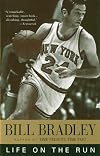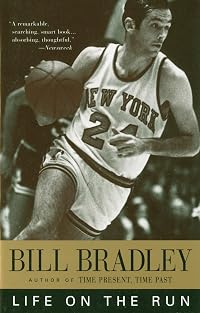
Life on the Run
by Bill Bradley
On This Page
Description
Almost two decades after its original publication and more than fifteen years after its author retired from the New York Knicks to become a United States senator, Bill Bradley's account of twenty days in a pro basketball season remains a classic in the literature of sports, unparalleled in its candor and intelligence. Bradley takes readers from the court to the locker room, from the seamless teamwork of a winning game to the loneliness of a motel in a strange city. We see Bradley and his show more fellow Knicks as they withstand the abuse of the press and the smothering adoration of their fans, along with the shameless appeals of those who want to parlay their celebrity into a fast buck. We watch in horror as Earl Monroe is beaten outside Madison Square Garden barely an hour after twenty thousand people cheered him. And we come to understand the euphoria and exhaustion, the icy concentration and intense pressure, that are felt only by those who play basketball for keeps. show lessTags
Recommendations


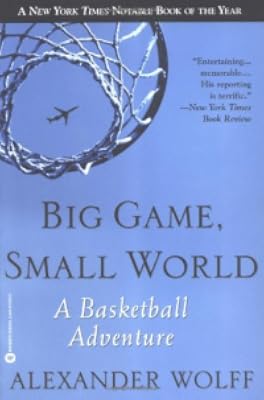

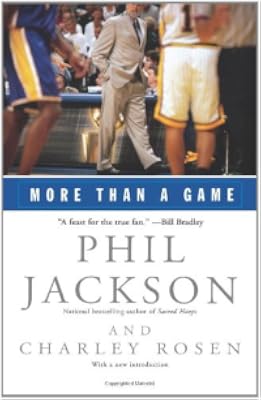


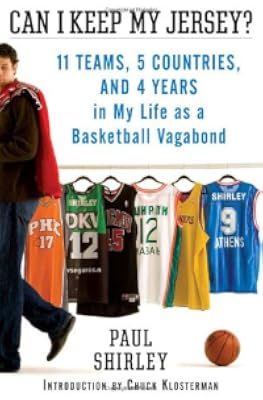
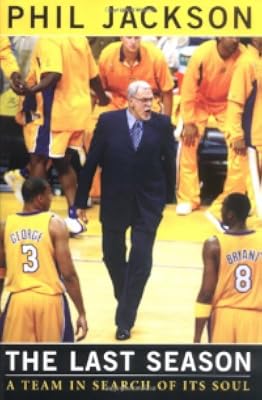





Member Reviews
Extremely smoothly written, it reads like a long New Yorker article. Lots of good details. I was a little disappointed by Bradley's complaints about money and his insufficient acknowledgement of his luck and privilege, particularly when he encourages poor students to dream of becoming professional basketball players. (How is this a positive message?)
> An elaborate structure of fines punishes tardiness: a five dollar fine for arriving from ten seconds to five minutes late, a ten dollar fine for being up to ten minutes late, and five dollars for each additional minute over ten. Holzman established the fine system with approval from the team. The money collected goes into a pot that is used for a team party at the end of the year. show more Therefore, it is to everyone’s advantage for Holzman to fine.
> In those moments on a basketball court I feel as a child and know as an adult. Experience rushes through my pores as if sucked by a strong vacuum. I feel the power of imagination that creates a sense of mystery and wonder I last accepted in childhood, before the mind hardened. When a friend tells me that his son cries when I miss a last-second shot, I know how he feels. I cry a little, too. That’s why ultimately when I play for anyone outside the team, I play for children. With them the communication of joy or sorrow rings true and through the playing that allows me to continue feeling as a child I sense a child’s innocent yearning and love. show less
> An elaborate structure of fines punishes tardiness: a five dollar fine for arriving from ten seconds to five minutes late, a ten dollar fine for being up to ten minutes late, and five dollars for each additional minute over ten. Holzman established the fine system with approval from the team. The money collected goes into a pot that is used for a team party at the end of the year. show more Therefore, it is to everyone’s advantage for Holzman to fine.
> In those moments on a basketball court I feel as a child and know as an adult. Experience rushes through my pores as if sucked by a strong vacuum. I feel the power of imagination that creates a sense of mystery and wonder I last accepted in childhood, before the mind hardened. When a friend tells me that his son cries when I miss a last-second shot, I know how he feels. I cry a little, too. That’s why ultimately when I play for anyone outside the team, I play for children. With them the communication of joy or sorrow rings true and through the playing that allows me to continue feeling as a child I sense a child’s innocent yearning and love. show less
Bill Bradley is a former Olympic gold medalist, Rhodes Scholar, three-term United States Senator, and starting forward for two New York Knick NBA championship teams. Just your average guy come to the Big Apple from Missouri to play hoops every day with Hall-of-Famers Walt “Clyde” Frazier, Willis Reed, and Earl (the Pearl) Monroe.
In his book Life on the Run, in which he writes about a season with the Knicks, we read the following:
I find a message at the hotel to call a Chicago friend. When I reach him, he says that he has arranged a little party in my honor…the evening quickly turns into an interrogation.
[Fast forwarding past the interrogation, he then continues . . .]
Finally, one of the members of the group says, “Do you show more really like to play basketball?”
“Yeah, more than anything else I could be doing now,” I reply.
“That’s great. You know, I once played the trumpet. I think I know what you feel. I played in a little band. We were good…In my last year we had an offer to tour and make records. Everyone wanted to, except me.”
“Why didn’t you?”
“My father didn’t think it was secure enough.”
“What about you?”
“Well…I guess I agreed…So I went to law school and quit playing the trumpet, except for every once in a while…”
“Do you like law?”
“It’s okay, but nothing like playing the trumpet.”
Even if you haven’t anywhere on the horizon gold medals, studies at Princeton and Oxford, legislative prominence, or professional sports crowns, the best message you can take from Bradley’s book may be just this: Find your own personal “trumpet” and play that sucker. show less
In his book Life on the Run, in which he writes about a season with the Knicks, we read the following:
I find a message at the hotel to call a Chicago friend. When I reach him, he says that he has arranged a little party in my honor…the evening quickly turns into an interrogation.
[Fast forwarding past the interrogation, he then continues . . .]
Finally, one of the members of the group says, “Do you show more really like to play basketball?”
“Yeah, more than anything else I could be doing now,” I reply.
“That’s great. You know, I once played the trumpet. I think I know what you feel. I played in a little band. We were good…In my last year we had an offer to tour and make records. Everyone wanted to, except me.”
“Why didn’t you?”
“My father didn’t think it was secure enough.”
“What about you?”
“Well…I guess I agreed…So I went to law school and quit playing the trumpet, except for every once in a while…”
“Do you like law?”
“It’s okay, but nothing like playing the trumpet.”
Even if you haven’t anywhere on the horizon gold medals, studies at Princeton and Oxford, legislative prominence, or professional sports crowns, the best message you can take from Bradley’s book may be just this: Find your own personal “trumpet” and play that sucker. show less
Ratings
Members
- Recently Added By
Published Reviews
ThingScore 100
Among basketball players, and maybe in fact among professional athletes of every stripe, Bill Bradley excites our curiosity the most. He's the square peg; he doesn't belong. And he's the most private and enigmatic figure in a public and straightforward occupation. He shuns publicity where every word and picture is convertible to cash. He's the only New York Knick and the only athlete who show more stubbornly refuses to capitalize on his celebrity, even when he can make as much as $30,000 for a day's work endorsing commercial products. "Taking money for hocking products," he writes, "demeaned my experience of the game." . . . show less
added by PLReader
Lists

Sports Illustrated's The Top 100 Sports Books of All Time
51 works; 7 members
Author Information

10+ Works 676 Members
Bill Bradley served as United States senator from New Jersey from 1979 to 1997.
Awards and Honors
Distinctions
Classifications
- Genres
- Sports and Leisure, Biography & Memoir, Nonfiction, General Nonfiction, History, Teen
- DDC/MDS
- 796.323 — Arts & recreation Recreation, sports, and performing arts Athletic and outdoor sports and games Ball sports Ball and net sports Basketball
- LCC
- GV884 .B7 .A34 — Geography, Anthropology and Recreation Recreation. Leisure Recreation. Leisure Sports Ball games: Baseball, football, golf, etc.
- BISAC
Statistics
- Members
- 113
- Popularity
- 287,573
- Reviews
- 2
- Rating
- (3.93)
- Languages
- English
- Media
- Paper, Ebook
- ISBNs
- 8
- ASINs
- 1