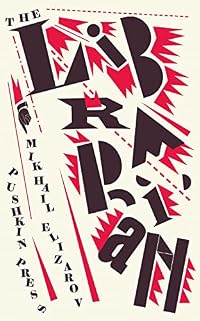
The Librarian
by Mikhail Elizarov
On This Page
Description
A collection of books, written by unpopular Soviet-era novelist Gromov, have incredible mystical powers. When Alexei inherits these as part of an uncle's estate, he has no idea of the power they hold and what a group of readers will do to possess them.Tags
Recommendations













Member Reviews
According to the back cover, ‘The Librarian’ won the Russian Booker Prize. I can see why, it is a beautifully written and memorable piece of writing. It could be termed literary fantasy, or perhaps magical realism. The story centres on a series of patriotic novels written by a very minor Soviet-era author. They have little in the way of literary merit, but convey temporary mystical powers upon those who read them all the way through with sufficient concentration. Different novels have different effects - there is a Book of Memory, one of Fury, one of Power, and one of Endurance, for example. People who’ve discovered such ‘books of power’ have formed a cult-like subculture around them, using the terminology of libraries. The show more novel’s narrator is Alexei, who falls into this strange subculture when his uncle dies.
What I found most powerful and shocking was the frequency and intensity of violence throughout. The groups maneuvering to add more books of power to their libraries do not hesitate to murder each other. Indeed, there are careful procedures set up to enable wars between ‘reading rooms’. The quaint terminology conceals a blithe acceptance of horrific violence, which Alexei becomes inured to surprisingly quickly. I was fascinated by the possible subtexts here, although without very much knowledge of Russian history and culture felt like I was missing a lot. The books of power are propaganda on several levels - literally, that’s what they were written for, yet they also have these mystical secondary effects. The battles over books could be interpreted as an allegory for post-Soviet Russian kleptocracy, when ideological certainty evaporated leaving an atomised struggle for resources and power. The dedication of the reading rooms to their books appears religious or ideological; reading the books sometimes seems addictive in the manner of a drug. I don’t think there is a single allegory at work, though, as the writing has such nuance. Moreover, I kept feeling that I was missing some subtext related to the narrator being from Ukraine.
I also enjoyed the vivid imagery, for example this description of improvised armour:
In keeping with the rest of the novel, the ending is unsettling and mysterious, with political undercurrents that I’m unsure how to interpret. I rather wish that the translated edition included an afterword more fully expounding its subtexts to ignorant Britons like me, but without that it is still an excellent read. The brutality of the violence sometimes seems excessive, which may be making a point about Russia’s blood-soaked history and current demographic decline. There isn’t a great deal in the way of characterisation, everything is driven by the conflict over books. It adds up to a powerful, weird, and unforgettable novel. show less
What I found most powerful and shocking was the frequency and intensity of violence throughout. The groups maneuvering to add more books of power to their libraries do not hesitate to murder each other. Indeed, there are careful procedures set up to enable wars between ‘reading rooms’. The quaint terminology conceals a blithe acceptance of horrific violence, which Alexei becomes inured to surprisingly quickly. I was fascinated by the possible subtexts here, although without very much knowledge of Russian history and culture felt like I was missing a lot. The books of power are propaganda on several levels - literally, that’s what they were written for, yet they also have these mystical secondary effects. The battles over books could be interpreted as an allegory for post-Soviet Russian kleptocracy, when ideological certainty evaporated leaving an atomised struggle for resources and power. The dedication of the reading rooms to their books appears religious or ideological; reading the books sometimes seems addictive in the manner of a drug. I don’t think there is a single allegory at work, though, as the writing has such nuance. Moreover, I kept feeling that I was missing some subtext related to the narrator being from Ukraine.
I also enjoyed the vivid imagery, for example this description of improvised armour:
Lutsis had made small pockets in all his clothes and stuffed metal plates into them. The Vozglyakovs had steel strips inserted into the padding of their quilted trousers and work jackets. Igor Valeryevich donned a genuine cuirass, which made him look like a samovar. Vyrin’s leather jacket was covered with Soviet roubles, like fish scales - there must have been at least five hundred coins. Spotting my interested glance, Grisha explained, “I’d been saving up for a motorbike since I was ten, but then the Union fell apart and the money became worthless, so now at least I get some kind of value out of it…”
In keeping with the rest of the novel, the ending is unsettling and mysterious, with political undercurrents that I’m unsure how to interpret. I rather wish that the translated edition included an afterword more fully expounding its subtexts to ignorant Britons like me, but without that it is still an excellent read. The brutality of the violence sometimes seems excessive, which may be making a point about Russia’s blood-soaked history and current demographic decline. There isn’t a great deal in the way of characterisation, everything is driven by the conflict over books. It adds up to a powerful, weird, and unforgettable novel. show less
The books by Gromov, obscure and forgotten propaganda author from the Soviet era, have gained a bit of cult following. However this is not your normal fandom and his book are unlike anything you will ever read. These books have the ability to magically transform anyone; make the weak strong, the cowardly brave. Small groups have formed to protect these supernatural book with their leader given the title The Librarian. War breaks out between these libraries in desperate attempts to seize any copies of Gromov’s books they may have. The Librarian tells the story of Alexei, a loser who unexpectedly stumbles across one of Gromov’s books that changes his life forever.
This dystopian world created by Mikhail Elizarov is an obvious allegory show more for the Soviet Union, however it is something to be expected in post-Soviet literature. However Elizarov explores some interesting themes as well, in particular an idea of ‘blind faith’ in politics. The Librarian looks at the way people will thoughtlessly adopt a political system in which they are forced to inhabit. The author has a lot to say on the Soviet system and, like other Russian authors (in Soviet and post-Soviet literature), he adopts a satirical method to explore these ideas.
Alternatively, you could look at The Librarian from the perspective of the power of books. The entire novel is about people reading these books and gaining power, knowledge, and so on. This is the true power of books; as readers, we educate ourselves and learn empathy, and also get different political, historical or cultural points of view. While we might not gain the same amount of power as the people in this novel, we do gain power.
I found this book extremely interesting and I was engrossed the entire way through it. It is violent and could be a little too hard for some to handle but there is something worth exploring here. The Librarian won the Russian Booker Prize in 2008; this is very similar to the Man Booker Prize but for Russian novels. I had not heard too much about the Russian Booker Prize previously but I am now very interested. As a fan of Russian lit, I will keep an eye out for books translated into English so I can continue to explore more post-Soviet literature.
This book originally appeared on my blog; http://www.knowledgelost.org/book-reviews/genre/magical-realism/the-librarian-by... show less
This dystopian world created by Mikhail Elizarov is an obvious allegory show more for the Soviet Union, however it is something to be expected in post-Soviet literature. However Elizarov explores some interesting themes as well, in particular an idea of ‘blind faith’ in politics. The Librarian looks at the way people will thoughtlessly adopt a political system in which they are forced to inhabit. The author has a lot to say on the Soviet system and, like other Russian authors (in Soviet and post-Soviet literature), he adopts a satirical method to explore these ideas.
Alternatively, you could look at The Librarian from the perspective of the power of books. The entire novel is about people reading these books and gaining power, knowledge, and so on. This is the true power of books; as readers, we educate ourselves and learn empathy, and also get different political, historical or cultural points of view. While we might not gain the same amount of power as the people in this novel, we do gain power.
I found this book extremely interesting and I was engrossed the entire way through it. It is violent and could be a little too hard for some to handle but there is something worth exploring here. The Librarian won the Russian Booker Prize in 2008; this is very similar to the Man Booker Prize but for Russian novels. I had not heard too much about the Russian Booker Prize previously but I am now very interested. As a fan of Russian lit, I will keep an eye out for books translated into English so I can continue to explore more post-Soviet literature.
This book originally appeared on my blog; http://www.knowledgelost.org/book-reviews/genre/magical-realism/the-librarian-by... show less
I enjoyed The Librarian but may be predisposed to like a novel about clans of readers who fight to the death over books that aren't good fiction but have drug-like effects. The Librarian seems to be a love-it-or-hate-it book: the violence, the weirdness, and the references to the past seem to put many readers off, but I thought they made for an interesting picture of a parallel world. I wrote about the book here on my blog.
It's very Russian: inescapable sense of fatalism, normalized violence and lots of it, and a cast of characters with multiple names that bleed together. I will say that the idea of a secret cult/cabal of readers, reading rooms, librarians, and libraries mystically powered by an author's work is intriguing.
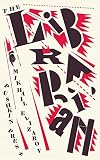
Popsugar Reading Challenge 2015 | Task 24: Read a book based entirely on its cover
Popsugar Reading Challenge 2015 | Task 24: Read a book based entirely on its cover
A quarter way through I had to DNF. Perhaps it would have been a much smoother read in Russian. In English it was very dense and more descriptive than personal. I found it very hard to read and it was easy to lose interest. A shame. I am always glad when Russian fantasy authors get into foreign reader market, but this translation did not work for me.
A fabulous, rare 5 star read - we need more of this writer's work translated!!!
My review here:
http://shinynewbooks.co.uk/fiction-issue-5/the-librarian-by-mikhail-elizarov/
My review here:
http://shinynewbooks.co.uk/fiction-issue-5/the-librarian-by-mikhail-elizarov/
C'est exceptionnel, je trouve presque toujours un intérêt à une lecture, parfois en me forçant beaucoup... Et bien, là, rien. C'est mauvais, foutraque et confus. La littérature, même la mauvaise, n'est pas n'importe quoi.
Dec 8, 2015French
Members
- Recently Added By
Author Information
Some Editions
Awards and Honors
Common Knowledge
- Original title
- Библиотекарь
- Original publication date
- 2015 (English Translation) (English Translation); 2007
- People/Characters
- Dmitry Alexandrovich Gromov
- Epigraph
- The working man should have the firm understanding that you can make as many buckets and locomotives as you like, but a song and a thrill cannot be made. A song is more precious than things…
ANDREI PLATONOV
Classifications
- Genres
- General Fiction, Fiction and Literature, Fantasy
- DDC/MDS
- 891.735 — Literature & rhetoric Asian Literature East Indo-European and Celtic literatures Russian and East Slavic languages Russian fiction 1991–
- LCC
- PG3479.7 .L528 — Language and Literature Slavic languages and literatures. Baltic languages. Albanian language Slavic. Baltic. Albanian Russian literature Individual authors and works 1961-2000
- BISAC
Statistics
- Members
- 172
- Popularity
- 189,810
- Reviews
- 8
- Rating
- (3.43)
- Languages
- English, French, Italian, Russian
- Media
- Paper, Ebook
- ISBNs
- 7
- ASINs
- 3