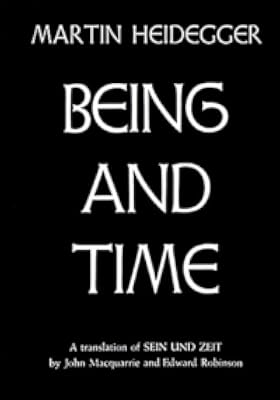
Being and Time
by Martin Heidegger
On This Page
Description
In his lucid introduction to this recording, Professor Taylor Carman declares unequivocally that Being and Time by Martin Heidegger (1889-1976) is 'one of the great masterpieces of 20th century philosophy.' And that is despite the fact that it is unquestionably a challenging listen. But by placing it in its historical context - the key work on existentialism between Søren Kierkegaard (1813-1855) and Jean-Paul Sartre (1905-1980) - it becomes much easier to approach. As Professor Carman show more explains, 'Being and Time addresses a seemingly simple question: What does it mean to be?' As far as we know, human beings are the only existing things 'with an understanding of what it is for something to exist' and, furthermore, are aware of their own existence. Heidegger chose the German word Dasein - existence: literally 'being there' - instead of more common expressions such as man, human being, soul, consciousness, etc. And he embarks upon his investigation, considering 'being there in-the-world, in time (past, present, future); discussing 'authentic' and 'inauthentic' living and dying; and the acceptance of impermanence. 'Dasein's existence is pervaded by a primordial kind of anxiety (Angst)', Carman remarks, but points out that the concept of care is central to Heidegger's view: 'to be a human being is to care about something'. Being and Time was published in 1927 during the Weimar period in Germany, a time of political, social and economic turmoil. Heidegger himself did not escape the pressures, and his nationalism and undeniable anti-Semitism in the following decades cast a shadow over the man, but not the work. Being and Time is not coloured by expressions of his later views (unlike other writings) and remains an outstanding document. This recording opens with Professor Carman reading his introduction. Being and Time is read by Martyn Swain. Translation: John Macquarrie and Edward Robinson. show lessTags
Recommendations
















Member Recommendations
Member Reviews
Books Not To Leave To Read Until One Week Before The Essay's Due In, Part One: Sein und Zeit
Being and Time, opus of rampant Nazi and all-round right-wing bastard Martin Heidegger, will cause the most voracious and determined student a sharp intake of breath when its five hundred densely-written pages (plus abundant appendices) lands in their reading-list, causing audible squeaks from the books beneath it.
Heidegger's themes are in an incredible number of ways similar to Nietzsche's. Your brain will therefore, finding that Nietzsche said roughly equivalent things in more interesting and memorable ways, find gripping onto what Heidegger actually said rather like wrestling a single, specific greased eel in a pit of identical greased eels. show more But at the time he wrote Sein und Zeit he didn't think much of Nietzsche, so getting them mixed up is a Bad Idea. Similarly, the existentialists, feminists and various other twentieth-century schools of Continental philosophy adapted his terminology with profligate glee, and so unless you've ignored everything coming out of that tradition you'll find yourself mixing up Heidegger's concept of the Other with what de Beauvoir means by the term, and so on.
Speaking of which, old Martin was of the opinion that conceptual thought needed to be destroyed in order to reattain authenticity in one's relation to oneself and the world, and his vocabulary-building shenanigans are a somewhat less pleasant way of achieving this than a pickaxe to the back of the head. Much labour must be spent sorting out the distinctions between ontic and onological, and gaping at words like 'ownmost' that result from Heidegger's over-the-top love of the tendency, shared by both Germans and philosophers, to create a completely new term, nuanced and difficult to grasp, by violently shoving words up each others' arses.
Add to this the fact that he's generally translated by people who believe the only thing anybody could be interested in when reading Heidegger is the translation itself. You're assumed to have a working knowledge of German to really understand why the hell 'existential' and 'existentiell' are being used for different things, and the (not infrequent) Latin and Greek you're assumed to be able to deal with yourself, without the aid of footnotes. (There are appendices, supplied by Heidegger himself, but these just point you to the relevant Latin or Greek work). While doing all this, you have to work very hard to keep control of your general feeling of being creeped out by the Jew-denouncing revolutionary-conservatism underlying everything.
Don't get me wrong - there are excellent, valuable, important ideas in here. But they're very carefully obscured, so as to protect them from non-philosophers.
The good news: it's only about 40% of what the bastard was originally planning to publish. show less
Being and Time, opus of rampant Nazi and all-round right-wing bastard Martin Heidegger, will cause the most voracious and determined student a sharp intake of breath when its five hundred densely-written pages (plus abundant appendices) lands in their reading-list, causing audible squeaks from the books beneath it.
Heidegger's themes are in an incredible number of ways similar to Nietzsche's. Your brain will therefore, finding that Nietzsche said roughly equivalent things in more interesting and memorable ways, find gripping onto what Heidegger actually said rather like wrestling a single, specific greased eel in a pit of identical greased eels. show more But at the time he wrote Sein und Zeit he didn't think much of Nietzsche, so getting them mixed up is a Bad Idea. Similarly, the existentialists, feminists and various other twentieth-century schools of Continental philosophy adapted his terminology with profligate glee, and so unless you've ignored everything coming out of that tradition you'll find yourself mixing up Heidegger's concept of the Other with what de Beauvoir means by the term, and so on.
Speaking of which, old Martin was of the opinion that conceptual thought needed to be destroyed in order to reattain authenticity in one's relation to oneself and the world, and his vocabulary-building shenanigans are a somewhat less pleasant way of achieving this than a pickaxe to the back of the head. Much labour must be spent sorting out the distinctions between ontic and onological, and gaping at words like 'ownmost' that result from Heidegger's over-the-top love of the tendency, shared by both Germans and philosophers, to create a completely new term, nuanced and difficult to grasp, by violently shoving words up each others' arses.
Add to this the fact that he's generally translated by people who believe the only thing anybody could be interested in when reading Heidegger is the translation itself. You're assumed to have a working knowledge of German to really understand why the hell 'existential' and 'existentiell' are being used for different things, and the (not infrequent) Latin and Greek you're assumed to be able to deal with yourself, without the aid of footnotes. (There are appendices, supplied by Heidegger himself, but these just point you to the relevant Latin or Greek work). While doing all this, you have to work very hard to keep control of your general feeling of being creeped out by the Jew-denouncing revolutionary-conservatism underlying everything.
Don't get me wrong - there are excellent, valuable, important ideas in here. But they're very carefully obscured, so as to protect them from non-philosophers.
The good news: it's only about 40% of what the bastard was originally planning to publish. show less
There exists a dichotomy when it comes to Heidegger. People either loathe him or adore him as a thinker (as person, I think there a few that can admire him, thinking of his Nazi past). I definitely belong to those that celebrate his thinking. Reading Sein und Zeit has opened reality in an entirely different way to me.
What Heideggers tries to do, is creating an ontology of our Dasein within a phenomenological approach. The strenght of this is approach is that it does not make pre-assumptions about reality, but tries to view what is real in the way it reveals itself to us. Sein und Zeit is a taxonomy of our Being, revealing how we try to escape our loneliness and fear of death by fleeing into culture and others. As a (semi-)Buddhist I show more can relate to this.
Since Heidegger does not use external arguments for his theory, I can imagine scientists will have trouble accepting the things he does. Rationality, logics, etc. are not of primary value in his research. Heidegger reveals the structures of being primarily by finding the right words to describe our way of being-in-the-world. This makes certain paragraphs almost a sort of poetry, which I think was exactly Heideggers intention.
The result of this, is a very personal, existential approach to reality. His theory has to resonate, you have to be able to find yourself in his taxonomy, otherwise there is nothing that can convince you of its truth. But if you do, if you often find yourself thrown back on your own, if you have trouble accepting an external reality as more 'real' than the way the things appear to you, then Sein und Zeit is a book that will give you a new way in which you can think. show less
What Heideggers tries to do, is creating an ontology of our Dasein within a phenomenological approach. The strenght of this is approach is that it does not make pre-assumptions about reality, but tries to view what is real in the way it reveals itself to us. Sein und Zeit is a taxonomy of our Being, revealing how we try to escape our loneliness and fear of death by fleeing into culture and others. As a (semi-)Buddhist I show more can relate to this.
Since Heidegger does not use external arguments for his theory, I can imagine scientists will have trouble accepting the things he does. Rationality, logics, etc. are not of primary value in his research. Heidegger reveals the structures of being primarily by finding the right words to describe our way of being-in-the-world. This makes certain paragraphs almost a sort of poetry, which I think was exactly Heideggers intention.
The result of this, is a very personal, existential approach to reality. His theory has to resonate, you have to be able to find yourself in his taxonomy, otherwise there is nothing that can convince you of its truth. But if you do, if you often find yourself thrown back on your own, if you have trouble accepting an external reality as more 'real' than the way the things appear to you, then Sein und Zeit is a book that will give you a new way in which you can think. show less
Famous for being hard to understand, most of the challenge came from the fact that Heidegger liked to play Lewis Carroll and invent words and turns of phrase. A lot of them don't translate well into English from German, so the translators had to go and put in numerous footnotes that explain what it is he is talking about.
Since the problem of Being is very elemental it felt like he was doing a lot of Eastern Zen Buddhism stuff. Before you can appreciate the spoon, you must realize its essential "spooniness." It also felt like someone trying to rigorously prove an addition problem in arithmetic. First, you need Peano Axioms and then you have to understand Set Theory and all of this preliminary preparation. So a great portion of this book show more is spent explaining what is meant by Being. It was interesting, but I lost some patience with it when it kept going to Greek or Latin and not telling me what it was saying. It didn't even have footnotes to explain the Greek. It was in the index of the book telling you where it was from, but I have not read Heraclitus or the other items mentioned.
Don't get me wrong, I know that it is monumental and historical, but I just can't enjoy the book when I constantly need to refer to the previous pages or a dictionary. At least Heidegger uses the word "Dasein" so much that I remembered it. Perhaps I will come back to this one. show less
Since the problem of Being is very elemental it felt like he was doing a lot of Eastern Zen Buddhism stuff. Before you can appreciate the spoon, you must realize its essential "spooniness." It also felt like someone trying to rigorously prove an addition problem in arithmetic. First, you need Peano Axioms and then you have to understand Set Theory and all of this preliminary preparation. So a great portion of this book show more is spent explaining what is meant by Being. It was interesting, but I lost some patience with it when it kept going to Greek or Latin and not telling me what it was saying. It didn't even have footnotes to explain the Greek. It was in the index of the book telling you where it was from, but I have not read Heraclitus or the other items mentioned.
Don't get me wrong, I know that it is monumental and historical, but I just can't enjoy the book when I constantly need to refer to the previous pages or a dictionary. At least Heidegger uses the word "Dasein" so much that I remembered it. Perhaps I will come back to this one. show less
Being and Time was Heidegger’s magnum opus. This was one of the most challenging books that I’ve ever come across, prolly because Heidegger's own use of German words and his coining of new terms and phrases were difficult for both German- and English-speaking readers (albeit excellent work in translation)
I don’t think this should be your first Heidegger book, you should be familiar with his writing before picking this one, because there’re so many new items of specialist Heideggerian terms introduced here, you’ll find it hard to keep up.
The book is part 1 of a 2 part work. Sadly, the part 2 never appeared/published (some says it exist somewhere)
It is frequently asserted that Heidegger (and in particular this book) is almost show more completely impossible to understand. This may well be true for those readers that attempt to 'dip in' to his works; or who speed read. There are no 'quick insights' to be gained from Heidegger. This requires substantial patience and concentration to read. You must be extraordinarily careful with Heidegger's definitions, as he invents much of his own terminology and uses familiar terms in unusual ways. Beyond that, the style of the book is extraordinarily dense.
I know this is sounding more and more like a warning than a review. Honestly I find it hard to review this, there are many good reviews here, and many great works done outside on this book that I recommend everyone to read for better understanding of this phenomenal masterpiece.
Someone here said it very well, that it was like losing my philosophical virginity. show less
I don’t think this should be your first Heidegger book, you should be familiar with his writing before picking this one, because there’re so many new items of specialist Heideggerian terms introduced here, you’ll find it hard to keep up.
The book is part 1 of a 2 part work. Sadly, the part 2 never appeared/published (some says it exist somewhere)
It is frequently asserted that Heidegger (and in particular this book) is almost show more completely impossible to understand. This may well be true for those readers that attempt to 'dip in' to his works; or who speed read. There are no 'quick insights' to be gained from Heidegger. This requires substantial patience and concentration to read. You must be extraordinarily careful with Heidegger's definitions, as he invents much of his own terminology and uses familiar terms in unusual ways. Beyond that, the style of the book is extraordinarily dense.
I know this is sounding more and more like a warning than a review. Honestly I find it hard to review this, there are many good reviews here, and many great works done outside on this book that I recommend everyone to read for better understanding of this phenomenal masterpiece.
Someone here said it very well, that it was like losing my philosophical virginity. show less
An obvious work of genius and I think Bourdieu is more than right to describe it as polyvocal in being able to be read both in the context of Heidegger’s Nazism and in spite of/abstracted from it. I’ve gotta say though that I only comprehended about a third of it (if that) and the temporality stuff from the second half has really got me in a bind. Another book to be read for the rest of my life though and it is one of the bigguns in the field.
One shouldn’t forget that Pythagorean cryptic utterance: “Do not cut in two what is on the road.”
Philosophy indeed, it seems, is a road. The utterance means then: choose that philosophy and that road to wisdom in which you will not ‘cut in two’, in which you will propound, not contradictions, but firm and unchanging truths. Yet with the introduction of that scission dividing the ontic and the ontological, we find ourselves sitting at the very road cut in two we swore would be untouched. As the philosopher too concerned with the psychophysical, we begin and end with the wrong tools and placements of anything through which one cannot work out of. When Heidegger begins to enter ‘in-the-world’ we begin to see this as a show more precedent to ramble upon the endless infinite variations that prompt themselves to the physical—a Pollock painting of verbs serving no philosophical use. Through the obvious obfuscation only evident in the confused and the obscuring of Daoist origins do we finally understand the relevance of the entire deviation of authenticities and inauthenticities that permeates a portion of this book. That play of words that becomes the archonic instrument breathing dualisms finds itself losing its charm after every verb is a proverbial transmitting, charioteering, boomeranging (and so on) into new fractal amorphous verbs. The modalities are endless for all and Heidegger gets lost in the complexity while ultimately not doing metaphysics, but rather displacing common orderings of semantics. The case of the phenomenologist who identifies with his phenomenology. Though one may disagree with the book in its entirety, partially nod along or frown with foul intent, one must admire the beautific simplicity of Dasein, the self-reflexive meta-fictionalized Reader whose thoughts are splain in real-time and whose splaying is thought of in itself—though these “places” may not be of use. It’s format certainly is. The book ends with an unfinished question mark. Or rather, a concretized question mark with no discernible answer since the Aletheia of such inquiry would result in absolute blissful theurgy.
That demiurgic intellect placed in the crux of the theurgic One. I solemnly weep, won’t you respond? I am you. Be. show less
Philosophy indeed, it seems, is a road. The utterance means then: choose that philosophy and that road to wisdom in which you will not ‘cut in two’, in which you will propound, not contradictions, but firm and unchanging truths. Yet with the introduction of that scission dividing the ontic and the ontological, we find ourselves sitting at the very road cut in two we swore would be untouched. As the philosopher too concerned with the psychophysical, we begin and end with the wrong tools and placements of anything through which one cannot work out of. When Heidegger begins to enter ‘in-the-world’ we begin to see this as a show more precedent to ramble upon the endless infinite variations that prompt themselves to the physical—a Pollock painting of verbs serving no philosophical use. Through the obvious obfuscation only evident in the confused and the obscuring of Daoist origins do we finally understand the relevance of the entire deviation of authenticities and inauthenticities that permeates a portion of this book. That play of words that becomes the archonic instrument breathing dualisms finds itself losing its charm after every verb is a proverbial transmitting, charioteering, boomeranging (and so on) into new fractal amorphous verbs. The modalities are endless for all and Heidegger gets lost in the complexity while ultimately not doing metaphysics, but rather displacing common orderings of semantics. The case of the phenomenologist who identifies with his phenomenology. Though one may disagree with the book in its entirety, partially nod along or frown with foul intent, one must admire the beautific simplicity of Dasein, the self-reflexive meta-fictionalized Reader whose thoughts are splain in real-time and whose splaying is thought of in itself—though these “places” may not be of use. It’s format certainly is. The book ends with an unfinished question mark. Or rather, a concretized question mark with no discernible answer since the Aletheia of such inquiry would result in absolute blissful theurgy.
That demiurgic intellect placed in the crux of the theurgic One. I solemnly weep, won’t you respond? I am you. Be. show less
This is one of the most rigorous and methodically constructed treatises you will find anywhere in philosophy. Heidegger is known for his difficulty, but this book holds an added challenge due to its cumulative dependence. What I mean is, you cannot possibly come to fully grasp the later sections of the book without grasping earlier sections. Every bit of the author's impressive terminology (whether it be a common term imbued with new meaning or a clever neologism) is systematically chosen, introduced, questioned, and developed as the text moves along. If you have never read Heidegger before, expect to reread certain paragraphs at least twice before their meaning begins to dawn on you. If you are persistent, the meaning of his precisely show more formulated sentences will cause you to perceive the world in entirely new ways. I recommend - at least at first - taking this book in small doses. If you feel your mind wandering at all just stop and go back to it later. If you are looking to scan this book for tidbits of wisdom you will likely be disappointed. Alternately, I would plan on a commitment of at least a few months if you want to glean anything at all from the text.
For those who have read Heidegger before: this book is definitely his magnum opus. Within it he establishes a point of departure for all of his later thought and works. It is also the most engaging and enlightening read you will encounter in his repertoire. Compared to Heidegger's post-kehre writings, you will find the material and style in Being and Time to be far more precise and clear [a very difficult feat indeed considering the elusive nature of the subject matter]. Also, reading this book more than once is a must! Do not be surprised if after the first read you feel as though you are missing something - you probably are. show less
For those who have read Heidegger before: this book is definitely his magnum opus. Within it he establishes a point of departure for all of his later thought and works. It is also the most engaging and enlightening read you will encounter in his repertoire. Compared to Heidegger's post-kehre writings, you will find the material and style in Being and Time to be far more precise and clear [a very difficult feat indeed considering the elusive nature of the subject matter]. Also, reading this book more than once is a must! Do not be surprised if after the first read you feel as though you are missing something - you probably are. show less
Members
- Recently Added By
Published Reviews
Hva er det å være? Værensspørsmålet er ifølge Martin Heidegger det sentrale spørsmålet i all filosofi. I sitt hovedverk Væren og tid (1927) undersøker han væren i dens grunnleggende form, og ønsker å si noe om det faktiske livet menneskene lever. Martin Heidegger definerte sitt filosofiske prosjekt som fenomenologi – en metode for å få fenomenene til å vise seg selv slik de show more frem¬trer i vår bevissthet gjennom å sjalte ut ubegrunnede oppfatninger om dem. Heidegger viste i sine fenomenologiske analyser hvordan verden ikke er totali¬teten av alt som eksisterer, men en forståelseshorisont eller livsverden som ligger til grunn for hvordan de enkelte tingene fremtrer for oss. Helt sentralt i denne forståelses-horisonten står tiden. Språklig beveget Heidegger seg langt utenfor det etablerte. Han innførte stadig nye begreper – «tidslighet», «væren-i-verden», «tilhåndenhet» – og han gjorde lite for å forklare disse begrepene for leseren. Med filosofen Lars Holm-Hansens oversettelse og innledende essay bringes Heideggers hovedverk nå et godt stykke nærmere norske lesere. show less
added by kirstenlund
Lists

Filosofía - Clásicos
217 works; 1 member

Existentialism
90 works; 11 members

Art of Reading
188 works; 5 members

1920s
141 works; 6 members

My List
302 works; 1 member

philosophy
28 works; 2 members

Philosophy
9 works; 1 member

el
1,139 works; 1 member

In Our Time books
4,934 works; 2 members
Author Information

462+ Works 23,595 Members
Martin Heidegger was born in Messkirch, Baden, Germany on September 22, 1889. He studied Roman Catholic theology and philosophy at the University of Frieburg before joining the faculty at Frieburg as a teacher in 1915. Eight years later Heidegger took a teaching position at Marburg. He taught there until 1928 and then went back to Frieburg as a show more professor of philosophy. As a philosopher, Heidegger developed existential phenomenology. He is still widely regarded as one of the most original philosophers of the 20th century. Influenced by other philosophers of his time, Heidegger wrote the book, Being in Time, in 1927. In this work, which is considered one of the most important philosophical works of our time, Heidegger asks and answers the question "What is it, to be?" Other books written by Heidegger include Basic Writings, a collection of Heidegger's most popular writings; Nietzsche, an inquiry into the central issues of Friedrich Nietzsche's philosophy; On the Way to Language, Heidegger's central ideas on the origin, nature and significance of language; and What is Called Thinking, a systematic presentation of Heidegger's later philosophy. Since the 1960s, Heidegger's influence has spread beyond continental Europe and into a number of English-speaking countries. Heidegger died in Messkirch on May 26, 1976. (Bowker Author Biography) show less
Some Editions
Awards and Honors
Distinctions
Notable Lists
Series
Belongs to Publisher Series
Work Relationships
Is contained in
Is abridged in
Has as a reference guide/companion
Has as a study
Has as a commentary on the text
Common Knowledge
- Canonical title*
- Oleminen ja aika
- Original title
- Sein und Zeit
- Original publication date
- 1927
- People/Characters
- Martin Heidegger
- Dedication*
- Edmund Husserl in Verehrung und Freundschaft zugeeignet )Todtnauberg i. Bad. Schwarzwald zum 8. April 1926
- Original language
- German
- Canonical LCC
- B3279.H42S51 1962
*Some information comes from Common Knowledge in other languages. Click "Edit" for more information.
Classifications
Statistics
- Members
- 5,126
- Popularity
- 2,703
- Reviews
- 39
- Rating
- (4.07)
- Languages
- 20 — Czech, Danish, Dutch, English, Finnish, French, German, Greek, Hungarian, Italian, Japanese, Norwegian (Bokmål), Norwegian, Polish, Romanian, Russian, Spanish, Swedish, Turkish, Portuguese (Portugal)
- Media
- Paper, Audiobook, Ebook
- ISBNs
- 93
- ASINs
- 38