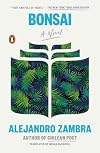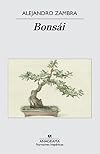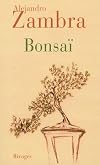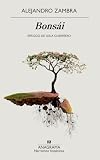
Bonsai
by Alejandro Zambra
On This Page
Description
"Bonsai is the story of Julio and Emilia, two young Chilean students who, seeking truth in great literature, find each other instead. Like all young couples, they lie to each other, revise themselves, and try new identities on for size, observing and analyzing their love story as if it's one of the great novels they both pretend to have read. As they shadow each other throughout their young adulthoods, falling together and drifting apart, Zambra spins a formally innovative, metafictional show more tale that brilliantly explores the relationship among love, art, and memory"-- show lessTags
Recommendations



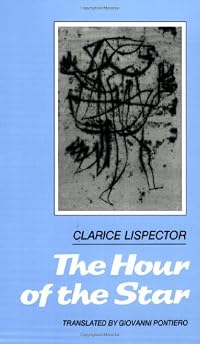

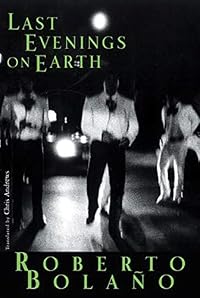
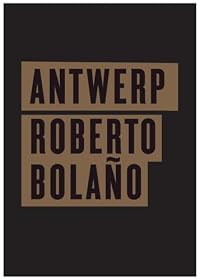








Member Recommendations

Member Reviews
What I enjoyed about Bonsai was ability to encapsulate a period of time between two people but in a way that was concise, tactile and thoughtful without slipping into being too whimsical. The self-aware prose doesn't try to do anything lofty, it is quite blunt about aspects of the traditional narrative, and it's self-contained, just like a bonsai. A fun novella and the Melville edition is sexy as all get out.
Esta es una historia de amor y literatura. Se nos cuenta el pequeño romance que mantuvieron Julio y Emilia. La trama está contada muy sucintamente, casi como si fuese un haiku. A Julio y Emilia les gusta acostarse juntos, pero antes les gusta más cierto preámbulo que es leerse en voz alta, 'Madame Bovary', 'En busca del tiempo perdido'..., hasta que un día leen un cuento que transformará su relación en adelante.
Lo que más me ha gustado ha sido la relación que mantienen con los libros, así como la manera de narrar de Alejandro Zambra, tan directa y fresca y, porque no, honrada.
Lo que más me ha gustado ha sido la relación que mantienen con los libros, así como la manera de narrar de Alejandro Zambra, tan directa y fresca y, porque no, honrada.
A novella with an almost dreamlike mood. Form is foregrounded over story and given the brevity, there just isn't enough time to develop psychologically rich characterizations. It has good moments where it evokes teenage love and getting lost in literature and sexuality. It is also a self-reflexive book, commenting on itself in often playful ways.
Alejandro Zambra: Bonsai
This a novella and the first I have read in a series published by Melville House. A novella does not have the scope of an intricate and lengthy novel full of complex themes and characters; rather, its appeal lies in the skill of the author to sketch life and emotions and relationships with light brushstrokes, leaving it to the imagination of the reader, not to fill-in blanks, because there are no “right” answers, but to flesh out his/her own thinking and perceptions and to muse about the endless variations and vagaries of life. Zambra provides this experience in this tale.
Zambra is Chilean and sets his tale in Chile and Madrid. It circles, loosely, around two young people, Emilia and Julio who meet in show more university, plus Emilia’s friend Anita and her husband Andres. Anita and Andres split up but remain cordial with two daughters. Emilia and Julio live together and in love (they think) for sometime and then they split; Emilia moves to Madrid where her life follows a downward spiral to drugs and death; Anita visits Madrid, to her dismay when she sees Emilia; Julio stays in Chile, lives with another woman, Maria, for awhile; Maria is in Madrid and even in the subway station when Emilia commits suicide but that is as close as their life-paths cross; Julio ends up working for a publishing firm in a “poorly paid yet simple job” that seems enough for him.
So much for the bare bones of the story. The first three pages introduce the reader to the themes of friendship, relationships, love, sex; relations can turn around sex, emotions, and even literature: Julio and Emilia get into reading to each other as foreplay for sex, and interestingly, it is pertaining to literature that they lie to each other about having read Proust, neither wanting to admit that he/she has not done so. Interesting too, that Julio lies to Maria when he tells her that he is translating a well-known author’s new novel from Spanish to English when in fact he didn’t get the job; Julio works on a novel every morning and then translates in the afternoon so he can show Maria his work; he says the novel is called Bonsai and herein lies the key to the main theme of the story.
A bonsai is, by definition, a living thing, but something shaped through cutting and use of wires to conform, to grow in prescribed ways towards a preconceived pattern; it is controlled through every moment of its life to achieve the perfection of the original vision; its future is known and preordained. Against this, Zambra gives us a picture of life and relationships in all their glorious uncertainty and unpredictability with their uncontrolled, uncontrollable, and unforeseeable futures; life controlled not by planning but by happenstance and, if you are lucky, serendipity. Julio studies the art and grows a bonsai; it is satisfying in itself, but as he has found, there are precious few guiding wires in life.
An interesting story and an interesting writer. Including how Zambra now and then speaks directly to the reader: “I want to end Julio’s story, but Julio’s story doesn’t end, that’s the problem. Julio’s story doesn’t end, or rather it ends like this…” . The only real ending is death, but even then the story of a life remains with others and even continues to live through changes wrought by others through the vagaries of memory and forgetting. show less
This a novella and the first I have read in a series published by Melville House. A novella does not have the scope of an intricate and lengthy novel full of complex themes and characters; rather, its appeal lies in the skill of the author to sketch life and emotions and relationships with light brushstrokes, leaving it to the imagination of the reader, not to fill-in blanks, because there are no “right” answers, but to flesh out his/her own thinking and perceptions and to muse about the endless variations and vagaries of life. Zambra provides this experience in this tale.
Zambra is Chilean and sets his tale in Chile and Madrid. It circles, loosely, around two young people, Emilia and Julio who meet in show more university, plus Emilia’s friend Anita and her husband Andres. Anita and Andres split up but remain cordial with two daughters. Emilia and Julio live together and in love (they think) for sometime and then they split; Emilia moves to Madrid where her life follows a downward spiral to drugs and death; Anita visits Madrid, to her dismay when she sees Emilia; Julio stays in Chile, lives with another woman, Maria, for awhile; Maria is in Madrid and even in the subway station when Emilia commits suicide but that is as close as their life-paths cross; Julio ends up working for a publishing firm in a “poorly paid yet simple job” that seems enough for him.
So much for the bare bones of the story. The first three pages introduce the reader to the themes of friendship, relationships, love, sex; relations can turn around sex, emotions, and even literature: Julio and Emilia get into reading to each other as foreplay for sex, and interestingly, it is pertaining to literature that they lie to each other about having read Proust, neither wanting to admit that he/she has not done so. Interesting too, that Julio lies to Maria when he tells her that he is translating a well-known author’s new novel from Spanish to English when in fact he didn’t get the job; Julio works on a novel every morning and then translates in the afternoon so he can show Maria his work; he says the novel is called Bonsai and herein lies the key to the main theme of the story.
A bonsai is, by definition, a living thing, but something shaped through cutting and use of wires to conform, to grow in prescribed ways towards a preconceived pattern; it is controlled through every moment of its life to achieve the perfection of the original vision; its future is known and preordained. Against this, Zambra gives us a picture of life and relationships in all their glorious uncertainty and unpredictability with their uncontrolled, uncontrollable, and unforeseeable futures; life controlled not by planning but by happenstance and, if you are lucky, serendipity. Julio studies the art and grows a bonsai; it is satisfying in itself, but as he has found, there are precious few guiding wires in life.
An interesting story and an interesting writer. Including how Zambra now and then speaks directly to the reader: “I want to end Julio’s story, but Julio’s story doesn’t end, that’s the problem. Julio’s story doesn’t end, or rather it ends like this…” . The only real ending is death, but even then the story of a life remains with others and even continues to live through changes wrought by others through the vagaries of memory and forgetting. show less
I first discovered Alejandro Zambra back in 2013 when his short story, Thank You, appeared in the online magazine Vice. A breezy, jazzy, gritty tale of a taxicab ride from hell that takes place in Mexico City. After reading I hungered for more.
Since I have read Chilean Poet and My Documents and now Bonsai. I now consider Zambra as one the more entertaining novelists around.
His novella, Bonsai, fits the bill. Short, fast moving, its title a metaphor for relationships: delicate plants that require care and an artistic touch to survive. The tale involves two teenage lovers, Julio and Emilia, who enjoy sex yet lie to one another - both claiming they had read Proust's, In Search of Lost Time.
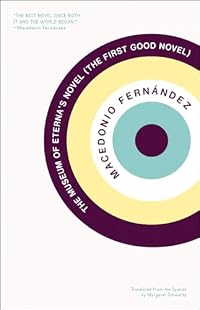
Avid readers they read to one another as foreplay show more searching the texts for titillating passages. Yet when they read a story, Tantalia, by Macedonio Fernandez, their "love was doomed."
Emilia's best friend and roommate complains about Julio, that he is changing her. Emilia's quick response: "would you want to be with someone if they didn't change your life?"
This is a fast-moving tale, easily digested in one fulfilling sitting.
I recommend all of Zimbra's work; funny, bright, literate, charming, etc. show less
Since I have read Chilean Poet and My Documents and now Bonsai. I now consider Zambra as one the more entertaining novelists around.
His novella, Bonsai, fits the bill. Short, fast moving, its title a metaphor for relationships: delicate plants that require care and an artistic touch to survive. The tale involves two teenage lovers, Julio and Emilia, who enjoy sex yet lie to one another - both claiming they had read Proust's, In Search of Lost Time.
Avid readers they read to one another as foreplay show more searching the texts for titillating passages. Yet when they read a story, Tantalia, by Macedonio Fernandez, their "love was doomed."
Emilia's best friend and roommate complains about Julio, that he is changing her. Emilia's quick response: "would you want to be with someone if they didn't change your life?"
This is a fast-moving tale, easily digested in one fulfilling sitting.
I recommend all of Zimbra's work; funny, bright, literate, charming, etc. show less
Perfecto. Una página más y se habría arruinado. La simplicidad es la mejor forma de sofisticación. Para que sea una reseña digna de "Bonsái", —una reseña-bonsái— tiene que acabarse aquí.
"In Bonsai almost nothing happens, the plot could be told in two paragraphs, a story that perhaps is not good."
How does one even describe this book... it's meta. It's self-reflexive. It's more modern art than lit. It reads like literary experimentation. Somehow, it's about nothing, yet at the same time, it's about everything.
It's experimental film quality stuff.
I need to come back to this later.
How does one even describe this book... it's meta. It's self-reflexive. It's more modern art than lit. It reads like literary experimentation. Somehow, it's about nothing, yet at the same time, it's about everything.
It's experimental film quality stuff.
I need to come back to this later.
Members
- Recently Added By
Lists

Authors from Chile
5 works; 1 member

Novels featuring language professionals
98 works; 12 members

contemporary literary fiction list to check out
47 works; 1 member
Author Information

19+ Works 2,808 Members
Some Editions
Awards and Honors
Awards
Series
Belongs to Publisher Series
Work Relationships
Common Knowledge
- Canonical title
- Bonsai
- Original title
- Bonsái
- Original publication date
- 2006
- People/Characters
- Emilia; Julio; Anita; Gazmuri; Maria
- Important places
- Chile; Madrid, Spain
- Related movies
- Bonsái (2011)
- Epigraph
- Years passed, and the only person who didn't change was the young woman in the book.
Yasunari Kawabata
Pain is measured and detailed.
Gonzalo Millan - First words
- In the end she dies and he remains alone, although in reality he was alone some years before the death of her, of Emilia.
- Quotations
- That same night Emilia lied to Julio for the first time, and the lie was, also, that she had read Marcel Proust.
Julio confided in Emilia about matters that only Julio's psychologist should have known about, and Emilia, in her turn, turned Julio into a kind of retroactive accomplice for each decision she had taken in the course of her l... (show all)ife.
Julio and Emilia's peculiarities weren't only sexual (they did have them), nor emotional (these abounded), but also, so to speak, literary. - Last words
- (Click to show. Warning: May contain spoilers.)He doesn't hear him.
Classifications
- Genres
- Fiction and Literature, General Fiction, Romance
- DDC/MDS
- 863.7 — Literature & rhetoric Spanish, Portuguese, Galician literatures Spanish fiction 21st Century
- LCC
- PQ8098.36 .A43 .B6513 — Language and Literature French, Italian, Spanish and Portuguese literatures Spanish literature Provincial, local, colonial, etc. Spanish America
- BISAC
Statistics
- Members
- 484
- Popularity
- 62,282
- Reviews
- 28
- Rating
- (3.55)
- Languages
- 10 — Danish, Dutch, English, French, German, Italian, Portuguese, Spanish, Swedish, Turkish
- Media
- Paper, Audiobook, Ebook
- ISBNs
- 35
- ASINs
- 7