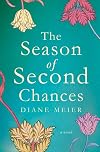
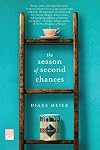
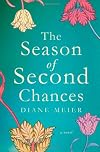
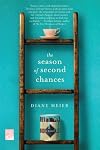
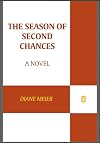
The Season of Second Chances
by Diane Meier
On This Page
Description
A world of possibilities opens up for Joy Harkness when she sets out on a journey that's going to show her the importance of friendship, love, and what makes a house a home, in this story that illustrates how coming-of-age can happen at any age.Tags
Recommendations





























Member Reviews
Everything about the blurb for this book screamed "read me" to me. And who am I to ignore such strident and impassioned hollering? I would have missed out on a delightful and fantastic book if I had turned a deaf ear. Sadly, I think I am not as persuasive though since I highly recommended this one to my WNBA group (the book association, not the basketball organization) last month at our annual summer reads meeting. When I tried to describe a novel about a college professor who has been closed off to people and life moving from the anonymity of New York City to a small New England town, getting involved in the lives of the people there, and buying an old Victorian to bring back to life, one of the other members asked if there was a hunky show more handyman involved. I had to say yes. Then I fumbled around to try and explain that this book was not as cliched as her laughing question implied. As a matter of fact, this novel is not that book at all. Yes, there is an attractive handyman who plays a major role in the story but this is about so much more than a relationship between a man and a woman, with all its attendant ups and downs. It is a novel about one woman's relationship to life, overcoming her fear of attachment, and embracing that second chance.
Joy Harkness is a college English professor who jumps at the chance to move from New York City to the smallish town in Massachusetts that is home to Amherst. She is taking advantage of an offer to work with a renowned educator who has ideas on ways to shake up and improve 100-fold the way in which we teach, an all-encompassing and inter-departmental plan. As the project starts rolling, Joy herself learns to engage and integrate, losing her aloofness, grudgingly at first but more and more openly and appreciatively as time goes on. She is taken under the wing of one of her colleagues, develops a friendship with her realtor, and really comes out of her shell.
When she moved to Amherst, Joy impulsively bought an old Victorian that most people would have considered a tear-down. But something about the bones and lines of the old house enchanted her, giving her a sense of possibility and so mindful of all the renovation needed, Joy couldn't walk away from the house. Everyone in town told her that Teddy was the person she wanted to work on the house and despite the fact that he strikes her as rather eccentric and child-like, she hires him. Soon they slide into a relationship, with Teddy painstakingly re-awakening the house to its former glory just as Joy herself is undergoing a remarkable transformation.
The house serves as a metaphor throughout the book for the changes and improvements in Joy's life. The bones and important bits were always there waiting to be uncovered and highlighted. But this is not a book where a good man comes along and the female main character is suddenly happy and fulfilled. Joy's burgeoning relationships with Josie and Donna and her inclusion and involvement with the close-knit community are a major reason for her blooming as well. And that's really what the book is about: relationships of all kinds, the nurturing and care that goes into maintaining them, and the importance of having connections in your life. Teddy, as a character, in many ways highlights Joy's character flaws. Ironically, while having great insight into what makes her tick and the protective measures she's erected to stay aloof from life, Teddy has no clarity about his own life and situation.
Joy did start off as rather cold and dismissive. She snipes at the homey atmosphere in Josie's office. She is snarky about the single men who each in turn take her out. She rebuffs students and colleagues when they come to her home. But Meier, in drawing such a character, has managed to keep a kernel of likability in her so that when Joy starts her slow metamorphosis, it is completely believable and the reader applauds, coming to have more and more sympathy with Joy as the pages turn. The secondary characters of Josie and Donna are well drawn and individual. Teddy is by turns adult and childish and his willful blindness can be incredibly aggravating but this doesn't detract from the "realness" of his character. The writing here is smooth and the story is engaging and I will continue to recommend it to friends, even if there is a cute handyman who renovates the house because it is so much more than that. show less
Joy Harkness is a college English professor who jumps at the chance to move from New York City to the smallish town in Massachusetts that is home to Amherst. She is taking advantage of an offer to work with a renowned educator who has ideas on ways to shake up and improve 100-fold the way in which we teach, an all-encompassing and inter-departmental plan. As the project starts rolling, Joy herself learns to engage and integrate, losing her aloofness, grudgingly at first but more and more openly and appreciatively as time goes on. She is taken under the wing of one of her colleagues, develops a friendship with her realtor, and really comes out of her shell.
When she moved to Amherst, Joy impulsively bought an old Victorian that most people would have considered a tear-down. But something about the bones and lines of the old house enchanted her, giving her a sense of possibility and so mindful of all the renovation needed, Joy couldn't walk away from the house. Everyone in town told her that Teddy was the person she wanted to work on the house and despite the fact that he strikes her as rather eccentric and child-like, she hires him. Soon they slide into a relationship, with Teddy painstakingly re-awakening the house to its former glory just as Joy herself is undergoing a remarkable transformation.
The house serves as a metaphor throughout the book for the changes and improvements in Joy's life. The bones and important bits were always there waiting to be uncovered and highlighted. But this is not a book where a good man comes along and the female main character is suddenly happy and fulfilled. Joy's burgeoning relationships with Josie and Donna and her inclusion and involvement with the close-knit community are a major reason for her blooming as well. And that's really what the book is about: relationships of all kinds, the nurturing and care that goes into maintaining them, and the importance of having connections in your life. Teddy, as a character, in many ways highlights Joy's character flaws. Ironically, while having great insight into what makes her tick and the protective measures she's erected to stay aloof from life, Teddy has no clarity about his own life and situation.
Joy did start off as rather cold and dismissive. She snipes at the homey atmosphere in Josie's office. She is snarky about the single men who each in turn take her out. She rebuffs students and colleagues when they come to her home. But Meier, in drawing such a character, has managed to keep a kernel of likability in her so that when Joy starts her slow metamorphosis, it is completely believable and the reader applauds, coming to have more and more sympathy with Joy as the pages turn. The secondary characters of Josie and Donna are well drawn and individual. Teddy is by turns adult and childish and his willful blindness can be incredibly aggravating but this doesn't detract from the "realness" of his character. The writing here is smooth and the story is engaging and I will continue to recommend it to friends, even if there is a cute handyman who renovates the house because it is so much more than that. show less
Joy Harkness is sick of her life in New York as a professor at Columbia University. She wants a change, and serendipitously the opportunity opens up when a well-known feminist author invites her to Amherst to join a new educational group to discover a new philosophy of learning. She moves there, finds a new home, and begins to recreate her life: her ‘second chance’. She falls into a wonderful new community of interesting individuals, all living fulfilled lives, and not only gets to enjoy her new teaching position but also remodel a unique Victorian home. In the end, she discovers that her previous life was narrow and unfulfilled, and her new life allows her to expand and enjoy the world to the full.
It’s a love letter to academia. show more The novel is easily readable and fast paced, and there’s no lack of descriptions for the details of her transformation. It might appeal to many readers as an imaginary escape from their own lives, to be read with a Restoration Hardware catalog and a fan of paint swatches at hand. It is a very pretty book…I loved the font and the block printing styles.
That said, I hated the book on so many levels. First, it would appear that the ‘second chance’ she needed was meant to be: her NY house sold in four days, far over the asking price, and she found her new home instantly. Her new job paid far more than she imagined. The first contractor to come along was not only a savant-like expert on all things Victorian, but his price was under her budget, and the remodel was a quick and smooth production. Do you see where I am going with this? Realism is not to be found.
Joy’s new friends are all wealthy academics who pride themselves on their tolerant love of others, community, and family. They accept her unhesitatingly, and it appears the entire community wants to assist in her transformation. Evenings of gourmet suppers with perfect food and wines, stimulating conversation, and constant supportive murmurings fill Joy’s new days. Her new job is also perfect: coworkers who gladly share duties without complaining, well-behaved students, and gourmet lunches made by a professor (in her spare time) and brought in for the staff. The only nod to their academic work is rearranging book shelves and deciding where the fresh flowers should be placed, with some occasional paper-grading over wine.
I kept waiting for one of the enlightened community to be an ax murderer, just to liven up the cloying sweetness of it all.
The biggest problem, of so many, was the treatment of the academic community towards the talented craftsman who remodels her home back to its original splendor. They recognize his talent, but are quick to suggest a course of study that will allow him to teach and join their ranks. He’s simply not living up to his potential in their eyes and they are troubled by his lack of ambition. He’s just not good enough. In fact, every character in the novel that leads a productive life is an academic; the only ones who aren’t are the craftsman (who lives with his mom and is emotionally stunted), a wife-beater, and a vindictive old woman. In other words, the flawed people are uneducated. It’s as if Lassie saves the family from the fire, saves Timmy from the well, and yet is put to sleep because she’s not purebred. The elitist agenda is obvious and awkward.
The house Joy remodels, with Teddy’s assistance, is an obvious metaphor for Joy’s life. It starts out decrepit and run down, but eventually is restored to beauty and luxury. It’s no coincidence that towards the end, when she discovers Armani couture and is counseled to live life to the full, the clothing she purchases reflect the colors used in the home. Even her new lipsticks (oh yeah, we get to hear about lipstick colors, wallpaper samples, and the benefits of skillful makeup) seem to coordinate. It all falls into place, with never a concern about money issues, family problems, misunderstandings with friends, or illness. The lack of any credible conflict dilutes it into more of a fashion article than an interesting novel. Sure, some bad things happen, to other people, on the periphery. These serve only to emphasize the wonderful nature of the academic village. Amid this she sprinkles Feminist anecdotes, Henry James references, and treatises on private education that leave you snoring. As I said, though, the font is lovely. show less
It’s a love letter to academia. show more The novel is easily readable and fast paced, and there’s no lack of descriptions for the details of her transformation. It might appeal to many readers as an imaginary escape from their own lives, to be read with a Restoration Hardware catalog and a fan of paint swatches at hand. It is a very pretty book…I loved the font and the block printing styles.
That said, I hated the book on so many levels. First, it would appear that the ‘second chance’ she needed was meant to be: her NY house sold in four days, far over the asking price, and she found her new home instantly. Her new job paid far more than she imagined. The first contractor to come along was not only a savant-like expert on all things Victorian, but his price was under her budget, and the remodel was a quick and smooth production. Do you see where I am going with this? Realism is not to be found.
Joy’s new friends are all wealthy academics who pride themselves on their tolerant love of others, community, and family. They accept her unhesitatingly, and it appears the entire community wants to assist in her transformation. Evenings of gourmet suppers with perfect food and wines, stimulating conversation, and constant supportive murmurings fill Joy’s new days. Her new job is also perfect: coworkers who gladly share duties without complaining, well-behaved students, and gourmet lunches made by a professor (in her spare time) and brought in for the staff. The only nod to their academic work is rearranging book shelves and deciding where the fresh flowers should be placed, with some occasional paper-grading over wine.
I kept waiting for one of the enlightened community to be an ax murderer, just to liven up the cloying sweetness of it all.
The biggest problem, of so many, was the treatment of the academic community towards the talented craftsman who remodels her home back to its original splendor. They recognize his talent, but are quick to suggest a course of study that will allow him to teach and join their ranks. He’s simply not living up to his potential in their eyes and they are troubled by his lack of ambition. He’s just not good enough. In fact, every character in the novel that leads a productive life is an academic; the only ones who aren’t are the craftsman (who lives with his mom and is emotionally stunted), a wife-beater, and a vindictive old woman. In other words, the flawed people are uneducated. It’s as if Lassie saves the family from the fire, saves Timmy from the well, and yet is put to sleep because she’s not purebred. The elitist agenda is obvious and awkward.
The house Joy remodels, with Teddy’s assistance, is an obvious metaphor for Joy’s life. It starts out decrepit and run down, but eventually is restored to beauty and luxury. It’s no coincidence that towards the end, when she discovers Armani couture and is counseled to live life to the full, the clothing she purchases reflect the colors used in the home. Even her new lipsticks (oh yeah, we get to hear about lipstick colors, wallpaper samples, and the benefits of skillful makeup) seem to coordinate. It all falls into place, with never a concern about money issues, family problems, misunderstandings with friends, or illness. The lack of any credible conflict dilutes it into more of a fashion article than an interesting novel. Sure, some bad things happen, to other people, on the periphery. These serve only to emphasize the wonderful nature of the academic village. Amid this she sprinkles Feminist anecdotes, Henry James references, and treatises on private education that leave you snoring. As I said, though, the font is lovely. show less
Since plot summaries already abound here, I’ll skip adding another.
I got off on the wrong foot from the very first sentence of this novel: “It takes a keen eye to tell a false start from a dead end.” That may sound pithy, but it doesn’t make much sense. A dead end is really nothing at like a false start – few would confuse the two.
At any rate, our cold, negative, bitter, self-absorbed narrator (named Joy), is an Ivy-League professor of Comparative Literature and yet, over and over, she inappropriately uses the word “literally” just like a high school freshman: "My apartment was literally on the market for...." “Watching her tell us was, literally, heart wrenching.” “I mean, we carry around these bodies that we think show more we’re using for protection or warmth, and it turns out they’re just literally dead weight.” “He looked, actually, literally, humanly depressed…..” This valley girl babysitter speech just doesn’t cut it coming from the mouth of an expert in English.
Besides the altogether wrong tone of the narrator, Teddy is likewise implausibly drawn. How many (straight) carpenters/handymen do you know who troll thrift stores for framed vintage prints and Marimekko throw pillows? Apparently part Martha Stewart part Bob Vila, Teddy appreciates William Morris wallpaper and Rockingham pottery and recites poetry by heart, but we’re supposed to believe him to be a somewhat simple-minded backwoods stoner with little understanding of history and literature. He just doesn’t add up in a way that would allow a reader to suspend disbelief and forge ahead.
And Joy's (and her cronies') desire to "improve" Teddy was so distasteful in its overt classism, that it made the already unlikable character of Joy seem even more shallow and "icky'.
This book would have greatly benefited from the fictionalization of the names of Columbia University, Amherst College, The Lord Jeffrey Inn, etc – a la “Runway Magazine” for "Vogue" in The Devil Wears Prada. Joy’s repeated nasty, biting criticisms of Columbia and its faculty were so distracting I was left wondering just what Columbia had ever done to the author.
Sprinkled mentions of Henry James, Néstor Almendros, Richard Wilbur, and Pascal don’t “an intelligent novel” make. Basically this is a not-all-that-well-crafted Chick Lit beach book -replete with lots and lots of Cosmo Quiz style italicizing- set in a college town. If that’s your thing, give it a shot. show less
I got off on the wrong foot from the very first sentence of this novel: “It takes a keen eye to tell a false start from a dead end.” That may sound pithy, but it doesn’t make much sense. A dead end is really nothing at like a false start – few would confuse the two.
At any rate, our cold, negative, bitter, self-absorbed narrator (named Joy), is an Ivy-League professor of Comparative Literature and yet, over and over, she inappropriately uses the word “literally” just like a high school freshman: "My apartment was literally on the market for...." “Watching her tell us was, literally, heart wrenching.” “I mean, we carry around these bodies that we think show more we’re using for protection or warmth, and it turns out they’re just literally dead weight.” “He looked, actually, literally, humanly depressed…..” This valley girl babysitter speech just doesn’t cut it coming from the mouth of an expert in English.
Besides the altogether wrong tone of the narrator, Teddy is likewise implausibly drawn. How many (straight) carpenters/handymen do you know who troll thrift stores for framed vintage prints and Marimekko throw pillows? Apparently part Martha Stewart part Bob Vila, Teddy appreciates William Morris wallpaper and Rockingham pottery and recites poetry by heart, but we’re supposed to believe him to be a somewhat simple-minded backwoods stoner with little understanding of history and literature. He just doesn’t add up in a way that would allow a reader to suspend disbelief and forge ahead.
And Joy's (and her cronies') desire to "improve" Teddy was so distasteful in its overt classism, that it made the already unlikable character of Joy seem even more shallow and "icky'.
This book would have greatly benefited from the fictionalization of the names of Columbia University, Amherst College, The Lord Jeffrey Inn, etc – a la “Runway Magazine” for "Vogue" in The Devil Wears Prada. Joy’s repeated nasty, biting criticisms of Columbia and its faculty were so distracting I was left wondering just what Columbia had ever done to the author.
Sprinkled mentions of Henry James, Néstor Almendros, Richard Wilbur, and Pascal don’t “an intelligent novel” make. Basically this is a not-all-that-well-crafted Chick Lit beach book -replete with lots and lots of Cosmo Quiz style italicizing- set in a college town. If that’s your thing, give it a shot. show less
This book was more than I expected. From reading a synopsis, I expected it to be about one person's life changes. In the story, there are at least four characters who have second chances and each responds differently. The core story is about a college professor who moves from NY to MA to work on a cutting-edge project. Not only does that put her in a different environment, but that one change leads to many others. As the story unfolds, so does the main character's life. She builds relationships and creates a community. Some of the persons she knows (new friends and old) have second chances as well. While the story is told from Joy's POV, she is not the only one with a chance to change. The backdrop of the story is the dilapidated house show more she buys and its gradual rehab and emergence at the hands and vision of a brilliantly talented artist. This is a beautifully written and well-told story show less
Joy Harkness is a college professor working at Columbia in New York City. She lives in her own little bubble of academia and builds walls around herself so as not to be put out by friendships and personal obligations. And she is miserable. So when she gets the chance to “run from New York and Columbia, like a hound at the drop of a hare,” she takes it. She travels to the small town of Amherst, Massachusetts and goes to work for Bernadette Lowell, dean of graduate studies at Amherst College. Handpicked to be part of a team to develop a new curriculum, Joy at first sees the move as quick and easy. But, soon she finds the job of packing up her life and finding a new home to be a daunting affair.
Joy ends up buying a monstrous Victorian show more home that needs work at every turn. When the ceiling collapses from a water leak on the day she moves in, Joy realizes that she could use a little help. Enter Teddy Hennnessy, a self-made contractor and handyman with an eye for design. Teddy’s laid back attitude and brilliant understanding of exactly what Joy’s house needs to become a home, draw Joy in – and she soon discovers that beneath his gentle exterior is a man who is captive to his overbearing mother.
There are other wonderful characters in Diane Meier’s funny and sensitive novel The Season of Second Chances. Joy is befriended, in spite of herself, by a group of women who I adored. Josie, smart and in charge, is probably my favorite character. Married and with two children, she is a nonstop ball of energy with a heart of gold.
The Season of Second Chances is a novel about women’s friendships, the ups and downs of life, and the idea that one is never too old to change. Joy begins as a forty-eight year old hardline feminist, fiercely guarded, and negative…and evolves into a character I grew to love. She makes a lot of mistakes. She lacks insight into her own flaws. But, all these things make her very human, and someone who the reader wants to see succeed in her personal growth. When Joy discovers that friendship, although hard work at times, can be the balm to her sadness, the reader wants to congratulate her. And perhaps this is the heart of the story – that we do not go through this life alone. Despite our fears, despite the protective urge to keep ourselves from hurt, what really opens our worlds is allowing other people in. In The Season of Second Chances, it is the women’s friendships that sparkle.
Meier writes with humor, something I always appreciate in a novel. By the end of the second chapter, I found myself laughing and sharing passages with my husband. Sardonic and insightful, Meier’s prose resonates as real life. The characters in Meier’s novel are lovingly wrought – flaws and all. If you can’t tell by now, I loved this book. I blew through it in just a couple of days, and was sad to say good-bye to the characters I had grown to adore.
Readers who love women’s fiction and terrific characterization (not to mention humor), will enjoy The Season of Second Chances.
Highly recommended. show less
Joy ends up buying a monstrous Victorian show more home that needs work at every turn. When the ceiling collapses from a water leak on the day she moves in, Joy realizes that she could use a little help. Enter Teddy Hennnessy, a self-made contractor and handyman with an eye for design. Teddy’s laid back attitude and brilliant understanding of exactly what Joy’s house needs to become a home, draw Joy in – and she soon discovers that beneath his gentle exterior is a man who is captive to his overbearing mother.
There are other wonderful characters in Diane Meier’s funny and sensitive novel The Season of Second Chances. Joy is befriended, in spite of herself, by a group of women who I adored. Josie, smart and in charge, is probably my favorite character. Married and with two children, she is a nonstop ball of energy with a heart of gold.
The Season of Second Chances is a novel about women’s friendships, the ups and downs of life, and the idea that one is never too old to change. Joy begins as a forty-eight year old hardline feminist, fiercely guarded, and negative…and evolves into a character I grew to love. She makes a lot of mistakes. She lacks insight into her own flaws. But, all these things make her very human, and someone who the reader wants to see succeed in her personal growth. When Joy discovers that friendship, although hard work at times, can be the balm to her sadness, the reader wants to congratulate her. And perhaps this is the heart of the story – that we do not go through this life alone. Despite our fears, despite the protective urge to keep ourselves from hurt, what really opens our worlds is allowing other people in. In The Season of Second Chances, it is the women’s friendships that sparkle.
Meier writes with humor, something I always appreciate in a novel. By the end of the second chapter, I found myself laughing and sharing passages with my husband. Sardonic and insightful, Meier’s prose resonates as real life. The characters in Meier’s novel are lovingly wrought – flaws and all. If you can’t tell by now, I loved this book. I blew through it in just a couple of days, and was sad to say good-bye to the characters I had grown to adore.
Readers who love women’s fiction and terrific characterization (not to mention humor), will enjoy The Season of Second Chances.
Highly recommended. show less
Joy Harkness is an unhappy, unfulfilled and disconnected college professor who suddenly decides to jump ship at Columbia to work at Amherst College. She's going to join with a well-known professor in a model group of professors beginning a new project at Amherst, using interdisciplinary techniques to teach their students. Upon making the move, she buys a house in need of not just a renovation but some major work. Everyone tells her Teddy Hennessy is the man for the job, but Joy's not so sure when he shows up dressed down and fairly uncommunicative, if not surly. She's even less sure that she wants to build friendships with him, her officemates, or anyone else, for that matter.
The premise has a lot of promise in giving details about show more renovations, living in a college town, or even just coming of age. What I couldn't handle was Joy. Despite her name, she is at best uninteresting and at worst grating and bitter. I just did not connect with her at all, and every page of her first-person internal monologue was painful to read. Because of this disconnect, I started noticing all the things that would have merely niggled had I enjoyed the story, such as Joy's complete disregard for how much work the new house needed before the upstairs bathroom flooded the first time the movers used it (did she not get an inspection? Seriously?). At another point, she complains about a family celebration of sort of-Thanksgiving three weeks before the holiday, yet admits later that she herself only bought takeout for the past ten Thanksgivings. I know other readers don't mind reading about characters they dislike, but I'm not one of them. Sorry. show less
The premise has a lot of promise in giving details about show more renovations, living in a college town, or even just coming of age. What I couldn't handle was Joy. Despite her name, she is at best uninteresting and at worst grating and bitter. I just did not connect with her at all, and every page of her first-person internal monologue was painful to read. Because of this disconnect, I started noticing all the things that would have merely niggled had I enjoyed the story, such as Joy's complete disregard for how much work the new house needed before the upstairs bathroom flooded the first time the movers used it (did she not get an inspection? Seriously?). At another point, she complains about a family celebration of sort of-Thanksgiving three weeks before the holiday, yet admits later that she herself only bought takeout for the past ten Thanksgivings. I know other readers don't mind reading about characters they dislike, but I'm not one of them. Sorry. show less
 This review was written for LibraryThing Early Reviewers.
The Season of Second Chances by Diane Meier tells the story of Joy Harkness and the new chapter she faces in her life. Leaving behind her relatively solitary existence in New York City as a professor at Columbia, Joy heads north and takes a position at a Massachusetts university. The novel chronicles Joy's transition to her new life and the self discovery that accompanies the transition.
Without acknowledging that she wanted or needed to, Joy leaves behind her NYC existence and is suddenly confronted with all kinds of complications to her previously straightforward life. Despite her best efforts to remain aloof, she is embraced by a group of friends and the rhythm of their reliance on each other. To many, this instant community would be show more welcome but to Joy it feels claustrophobic and she struggles to feel comfortable at weeknight dinners and daily lunches with her new friends. Joy reflects on the difference between her life in NY and her life in Amherst:
My time in New York hadn't exposed me to people who let you see their most intimate or ardent inner lives. I do remember thinking that life at Columbia was devoid of people of goodwill and benevolence. And I remember thinking that they must have had their kind and sweet human emotions removed before they took their jobs, or perhaps the pressures of their academic bred it out of them. Here in Amherst, in contrast, every day seemed to bring another heart onto another sleeve.
Along with new friends, romance also enters Joy's life. Actually, as opposed to the friends who she seems to feel have thrust themselves upon her, romance is welcomed in by Joy. She makes, in my opinion, some unwise choices in the romance department and these choices result in additional complications. Teddy, one of the men with which Joy becomes involved, is enmeshed with his overbearing mother and this limits his ability to fully be in a relationship with Joy. For all his emotional immaturity, Teddy also sees through Joy's aloof exterior to her fears and weaknesses and their relationship brings even more self revelation for Joy.
My assessment:
This book is excellent - it is smart and well written and the characters are complex and interesting. As much as Joy may not seem to always be the most likeable character, I think there is a lot readers can relate to in Joy's struggle to make changes to her life and the discomfort she feels with the changes. The book certainly gave me much to consider.
http://booksnyc.blogspot.com show less
Without acknowledging that she wanted or needed to, Joy leaves behind her NYC existence and is suddenly confronted with all kinds of complications to her previously straightforward life. Despite her best efforts to remain aloof, she is embraced by a group of friends and the rhythm of their reliance on each other. To many, this instant community would be show more welcome but to Joy it feels claustrophobic and she struggles to feel comfortable at weeknight dinners and daily lunches with her new friends. Joy reflects on the difference between her life in NY and her life in Amherst:
My time in New York hadn't exposed me to people who let you see their most intimate or ardent inner lives. I do remember thinking that life at Columbia was devoid of people of goodwill and benevolence. And I remember thinking that they must have had their kind and sweet human emotions removed before they took their jobs, or perhaps the pressures of their academic bred it out of them. Here in Amherst, in contrast, every day seemed to bring another heart onto another sleeve.
Along with new friends, romance also enters Joy's life. Actually, as opposed to the friends who she seems to feel have thrust themselves upon her, romance is welcomed in by Joy. She makes, in my opinion, some unwise choices in the romance department and these choices result in additional complications. Teddy, one of the men with which Joy becomes involved, is enmeshed with his overbearing mother and this limits his ability to fully be in a relationship with Joy. For all his emotional immaturity, Teddy also sees through Joy's aloof exterior to her fears and weaknesses and their relationship brings even more self revelation for Joy.
My assessment:
This book is excellent - it is smart and well written and the characters are complex and interesting. As much as Joy may not seem to always be the most likeable character, I think there is a lot readers can relate to in Joy's struggle to make changes to her life and the discomfort she feels with the changes. The book certainly gave me much to consider.
http://booksnyc.blogspot.com show less
This review was written for LibraryThing Early Reviewers.Members
- Recently Added By
Author Information
3 Works 222 Members
Common Knowledge
- Canonical title
- The Season of Second Chances
- Original publication date
- 2010-04
- People/Characters
- Joy Harkness; Teddy Hennessy; Maureen Hennessy; Donna Fortunata; Josie O'Sullivan; Dan O'Sullivan (show all 9); Adele Grant; Laura Grant; Will
- Important places
- Amherst, Massachusetts, USA; New York, New York, USA
- Dedication
- For Sara-Gwen and Frank
- First words
- It takes a keen eye to tell a false start from a dead end.
- Last words
- (Click to show. Warning: May contain spoilers.)As I ruffled Henry's soft neck, I saw the winking, broken taillight at the back of the Subaru turn at the corner and head toward the center of town.
Classifications
Statistics
- Members
- 211
- Popularity
- 154,226
- Reviews
- 38
- Rating
- (3.22)
- Languages
- English
- Media
- Paper, Ebook
- ISBNs
- 2
- ASINs
- 5