On This Page
Description
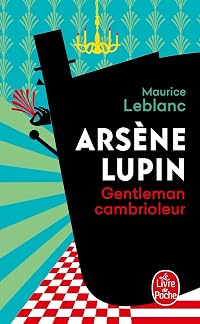
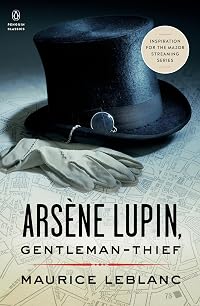
Known as the French counterpart to Sherlock Holmes, Arsene Lupin is a dashing master criminal who has his own strong code of ethics when it comes to plying his trade. In this story, adapted from a Lupin tale penned for the stage, Lupin finds himself at the center of an unusual romance..
Tags
Recommendations

































Member Reviews
I picked this up while travelling in Porto, looking for something that would be engaging and not too demanding, in a compact portable format. It was perfect.
The stories are relatively short, but long enough to develop a complex plot and raise questions about the morality of thieves and gentlemen. The language in this original translation is in the dated formal style of the past century, like Conan Doyle, which fits the text.
Set in the bourgeois society of late 19th century France, the stories involve clever mysteries like a Sherlock Holmes story, with the twist of being told from the point of view of the master criminal. Like Holmes, they frequently point to the ineptness of the police forces, but Leblanc adds the issues involving show more people of wealth, power and class. Leblanc makes a point of parody with “Holmlock Shears,” especially in the story “Holmlock Shears Arrives Too Late.”
What’s interesting in these stories is not so much the mystery, but the social circumstances they reveal. Lupin’s motivation seems to arise from the suggestion that he is the son of a mistreated woman and uses theft in order to humiliate the rich who caused his mother’s downfall. He often identifies with the working classes, while taking advantage of his privilege as a wealthy bourgeois. He enjoys showing up the patronizing police. And he shows a strong sense of justice in wanting to help or protect other bourgeois who have been robbed or threatened. While a sense of justice is featured in the Conan Doyle’s Holmes stories, Holmes more often treats his cases as an intellectual puzzle, and, in my recollection, seems to have little awareness for London’s working class.
Arsène Lupin is a dedicated and principled vigilante, especially in defending the honour of women. Leblanc shows him as a human with a nervous heart in the presence of the woman he has fallen for, a curious twist of the psychology of the master thief. In one story, he gives back the items that he has stolen in order that the woman will not think he is a thief. Did Sherlock Holmes ever show affection toward women, aside perhaps from his landlady and the more modern stories that try to correct an evident misogyny?
Lupin toys with a complex moral balance. In one story, he sets a trap for a murderer, which results in Lupin keeping a gem that the murderer stole, executing a tricky moral trade to his benefit. He is a thief, but he steals from people who are worse than he is.
Lupin also uses a distinctive strategy to increase his fame and add to the embarrassment of his victims – he advertises! While Holmes has his Dr Watson, and there seems to be a knowledgeable narrator in Lupin’s stories, Lupin takes the initiative of buying newspaper notices to draw attention to his capers and his victims. Since he’s not looking for a clientele like Holmes, this can only be to show off his superiority and his accomplishments – and occasionally to misdirect attention. As a self-made man, he puts considerable time and effort into creating himself and building his public persona and fame. This desire for attention perhaps also comes from his sense of overcoming an unjust life and challenging the bourgeois morality that surrounds him.
It’s some time since I’ve read Conan Doyle and I certainly have not read all of his stories, so I hope I’m not mischaracterizing his hero. I enjoy reading the Holmes stories, but Leblanc’s “gentleman-thief” stories add some additional layers that make them a bit more satisfying. Overall, this was excellent holiday reading – engaging, convenient and thoughtful. show less
The stories are relatively short, but long enough to develop a complex plot and raise questions about the morality of thieves and gentlemen. The language in this original translation is in the dated formal style of the past century, like Conan Doyle, which fits the text.
Set in the bourgeois society of late 19th century France, the stories involve clever mysteries like a Sherlock Holmes story, with the twist of being told from the point of view of the master criminal. Like Holmes, they frequently point to the ineptness of the police forces, but Leblanc adds the issues involving show more people of wealth, power and class. Leblanc makes a point of parody with “Holmlock Shears,” especially in the story “Holmlock Shears Arrives Too Late.”
What’s interesting in these stories is not so much the mystery, but the social circumstances they reveal. Lupin’s motivation seems to arise from the suggestion that he is the son of a mistreated woman and uses theft in order to humiliate the rich who caused his mother’s downfall. He often identifies with the working classes, while taking advantage of his privilege as a wealthy bourgeois. He enjoys showing up the patronizing police. And he shows a strong sense of justice in wanting to help or protect other bourgeois who have been robbed or threatened. While a sense of justice is featured in the Conan Doyle’s Holmes stories, Holmes more often treats his cases as an intellectual puzzle, and, in my recollection, seems to have little awareness for London’s working class.
Arsène Lupin is a dedicated and principled vigilante, especially in defending the honour of women. Leblanc shows him as a human with a nervous heart in the presence of the woman he has fallen for, a curious twist of the psychology of the master thief. In one story, he gives back the items that he has stolen in order that the woman will not think he is a thief. Did Sherlock Holmes ever show affection toward women, aside perhaps from his landlady and the more modern stories that try to correct an evident misogyny?
Lupin toys with a complex moral balance. In one story, he sets a trap for a murderer, which results in Lupin keeping a gem that the murderer stole, executing a tricky moral trade to his benefit. He is a thief, but he steals from people who are worse than he is.
Lupin also uses a distinctive strategy to increase his fame and add to the embarrassment of his victims – he advertises! While Holmes has his Dr Watson, and there seems to be a knowledgeable narrator in Lupin’s stories, Lupin takes the initiative of buying newspaper notices to draw attention to his capers and his victims. Since he’s not looking for a clientele like Holmes, this can only be to show off his superiority and his accomplishments – and occasionally to misdirect attention. As a self-made man, he puts considerable time and effort into creating himself and building his public persona and fame. This desire for attention perhaps also comes from his sense of overcoming an unjust life and challenging the bourgeois morality that surrounds him.
It’s some time since I’ve read Conan Doyle and I certainly have not read all of his stories, so I hope I’m not mischaracterizing his hero. I enjoy reading the Holmes stories, but Leblanc’s “gentleman-thief” stories add some additional layers that make them a bit more satisfying. Overall, this was excellent holiday reading – engaging, convenient and thoughtful. show less
I can see the charm, but I think a brief taste is all that I really needed here before deciding to move on. Lupin is clearly inspired by the stories of Sherlock Holmes, simply flipped to show the expertise going into committing a crime rather than solving one. Lupin is a fun character to read about with his blend of playful and clever antics and I can definitely see why the series garnered such a fanbase.
Though while it was fun, I can still say Sherlock Holmes is the far more enduring of the two works. There’s a novelty in seeing the Holmesian playbook turned around to committing crimes but it also feels unsatisfying at times with the mix of grandiose ruses and subtle misdirection never feeling quite as natural as Holmes’ analysis show more of a weird but largely grounded crime. The hand of the author is much more visible, lining up the police to fall for the ruse exactly as Lupin intended and, while that's a feature of all stories to some extent, it's much harder to hide when Lupin’s actions are meant to predict rather than explain.
Further, the shift in how the stories approach Lupin’s character also hurts the overall feel of the narrative. I understand this is to be expected to some extent with an anthology work but Lupin’s shift from criminal to independent sleuth, while perhaps bringing him more in line with the Holmesian structure, feels like it weakened the unique characteristics that made Lupin stand out in the first place and were probably the weakest aspect of the collection.
Ultimately I had a fun time reading this and while it was nice to see firsthand another branch of the mystery genre I don’t think it's one I care much to go down any further. show less
Though while it was fun, I can still say Sherlock Holmes is the far more enduring of the two works. There’s a novelty in seeing the Holmesian playbook turned around to committing crimes but it also feels unsatisfying at times with the mix of grandiose ruses and subtle misdirection never feeling quite as natural as Holmes’ analysis show more of a weird but largely grounded crime. The hand of the author is much more visible, lining up the police to fall for the ruse exactly as Lupin intended and, while that's a feature of all stories to some extent, it's much harder to hide when Lupin’s actions are meant to predict rather than explain.
Further, the shift in how the stories approach Lupin’s character also hurts the overall feel of the narrative. I understand this is to be expected to some extent with an anthology work but Lupin’s shift from criminal to independent sleuth, while perhaps bringing him more in line with the Holmesian structure, feels like it weakened the unique characteristics that made Lupin stand out in the first place and were probably the weakest aspect of the collection.
Ultimately I had a fun time reading this and while it was nice to see firsthand another branch of the mystery genre I don’t think it's one I care much to go down any further. show less
A much loved childhood series. My parents apparently did not quite approve of the "gentleman thief." While they lined my bookshelf with the many adventures of Sherlock Holmes, I never received a single volume of Arsene Lupin. To get my fix, I had to have to live off the kindness of classmates, wolfing down chapters during recess and lunch periods. On occasions, I'd smuggle the illicit material home; reading under the threat of discovery made the experience all the more thrilling.
My fixation may well have been spurred in resistance to parental control, but to my nine-year old eyes, Lupin was infinitely more suave and charming than the eccentric and not always likable Holmes. All the more pity it was then, to re-encounter the stories show more years later, post-college. Leblanc lacked Doyle's gift with constructing clever logic puzzles and making keen observations. Lupin's theatrics therefore came across as merely superficial, and the plot felt more contrived.
Still. First love dies hard. So, 4 stars for old time's sake. show less
My fixation may well have been spurred in resistance to parental control, but to my nine-year old eyes, Lupin was infinitely more suave and charming than the eccentric and not always likable Holmes. All the more pity it was then, to re-encounter the stories show more years later, post-college. Leblanc lacked Doyle's gift with constructing clever logic puzzles and making keen observations. Lupin's theatrics therefore came across as merely superficial, and the plot felt more contrived.
Still. First love dies hard. So, 4 stars for old time's sake. show less
4.5/5
“Arsene Lupin, the man of a thousand disguises: in turn a chauffeur, a tenor, a bookmaker, a young boy; a teen, an old man, a commercial traveler, a Russian physician, a Spanish bullfighter….”
Admittedly, the first time I heard of Arsene Lupin was when the character and his adventures were referenced in the Netflix show Lupin. This collection covers nine interrelated stories (though they are just as good as standalone) revolving around the “gentleman thief” and his exploits and is a perfect introduction for new readers like me. Originally written in 1907, by author Maurice Leblanc, these are straightforward mysteries/adventures with intriguing plots, loads of humor and a very interesting main character. As Lupin’s show more “historiographer”(who also serves as narrator for some of the stories) states,
“His portrait? How could I describe him? Twenty times I have seen Arsene Lupin, and twenty times a different person has appeared to me …or rather, the same person from which twenty mirrors would have returned as many distorted images, each one having its own particular look, its own unique shape, its own gesture, its own silhouette and character.”
I had so much fun reading about Lupin and his numerous disguises, his creative methods of committing crimes and his besting the shrewd Detective Ganimard at every opportunity he gets. It is difficult to individually describe these stories without giving too much away but the narrative follows Lupin as he is arrested, escapes from prison and proceeds to con multiple victims (and is also duped by one of his marks in one rare instance) all the while evading capture by the authorities . I enjoyed most of the stories and my personal favorites were ”The Escape of Arsene Lupin”, “The Seven of Hearts” and “Madam Imbert’s Safe”. In addition to these stories, I must mention the final story in this collection in which we see our "gentleman thief" pitted against a ‘great English detective’!
Arsene Lupin, Gentleman Thief by Maurice Leblanc (edited by Mike Kennedy) is truly an enjoyable read! The illustrations (both black-and-white and full-color) by Vincent Mallié are absolutely wonderful and perfectly complement the narrative which flows smoothly.(The illustrations reminded me of Herge's Tintin books which I still love to read!) Fans of Sherlock Holmes would definitely enjoy these stories.
Many thanks to NetGalley and Diamond Book Distributors for the digital review copy. All opinions expressed in this review are my own. show less
“Arsene Lupin, the man of a thousand disguises: in turn a chauffeur, a tenor, a bookmaker, a young boy; a teen, an old man, a commercial traveler, a Russian physician, a Spanish bullfighter….”
Admittedly, the first time I heard of Arsene Lupin was when the character and his adventures were referenced in the Netflix show Lupin. This collection covers nine interrelated stories (though they are just as good as standalone) revolving around the “gentleman thief” and his exploits and is a perfect introduction for new readers like me. Originally written in 1907, by author Maurice Leblanc, these are straightforward mysteries/adventures with intriguing plots, loads of humor and a very interesting main character. As Lupin’s show more “historiographer”(who also serves as narrator for some of the stories) states,
“His portrait? How could I describe him? Twenty times I have seen Arsene Lupin, and twenty times a different person has appeared to me …or rather, the same person from which twenty mirrors would have returned as many distorted images, each one having its own particular look, its own unique shape, its own gesture, its own silhouette and character.”
I had so much fun reading about Lupin and his numerous disguises, his creative methods of committing crimes and his besting the shrewd Detective Ganimard at every opportunity he gets. It is difficult to individually describe these stories without giving too much away but the narrative follows Lupin as he is arrested, escapes from prison and proceeds to con multiple victims (and is also duped by one of his marks in one rare instance) all the while evading capture by the authorities . I enjoyed most of the stories and my personal favorites were ”The Escape of Arsene Lupin”, “The Seven of Hearts” and “Madam Imbert’s Safe”. In addition to these stories, I must mention the final story in this collection in which we see our "gentleman thief" pitted against a ‘great English detective’!
Arsene Lupin, Gentleman Thief by Maurice Leblanc (edited by Mike Kennedy) is truly an enjoyable read! The illustrations (both black-and-white and full-color) by Vincent Mallié are absolutely wonderful and perfectly complement the narrative which flows smoothly.(The illustrations reminded me of Herge's Tintin books which I still love to read!) Fans of Sherlock Holmes would definitely enjoy these stories.
Many thanks to NetGalley and Diamond Book Distributors for the digital review copy. All opinions expressed in this review are my own. show less
This supposed gentlemen thief is very much like the evil version of Sherlock Holmes. These stories like the Holmes ones are about the puzzle not about the character.
A suspiciously high number of these stories try to make Lupin look like a hero but he's still not as likable as his british equivalent Raffles. That's because he is so overpowered, it seems as if he robs simply because he likes too without even any financial motive. Raffles is drawn as a much meaner character but still comes across as more likable because his motives are easier to understand.
The two things which make this book good are the structure and method. We get some of Lupin's earlier exploits later in the book and this non-chronological story structure works very show more well. The best element though is the method used by Lupin in his robberies, which often rely heavily on psychology, and its this exploitation of human behavior which is the most interesting thing in the book. In fact calling Lupin a burglar seems inappropriate he's far more of a con-man. show less
A suspiciously high number of these stories try to make Lupin look like a hero but he's still not as likable as his british equivalent Raffles. That's because he is so overpowered, it seems as if he robs simply because he likes too without even any financial motive. Raffles is drawn as a much meaner character but still comes across as more likable because his motives are easier to understand.
The two things which make this book good are the structure and method. We get some of Lupin's earlier exploits later in the book and this non-chronological story structure works very show more well. The best element though is the method used by Lupin in his robberies, which often rely heavily on psychology, and its this exploitation of human behavior which is the most interesting thing in the book. In fact calling Lupin a burglar seems inappropriate he's far more of a con-man. show less
This is the Project Gutenberg edition. The stories are pretty entertaining - absolutely zero character writing outside of some very mild stuff for Lupin himself, but it works. Not a literary classic but a fun quick easy read where the stories are exactly the right length. A couple of the stories are very predictable but it's still satisfying to see them through. There are a few pretty funny moments too. It's fun seeing stuff from the perspective of the guy pulling off the perfect crime. Also it's cool that Lupin is constantly stealing from rich people. Not enough substance to make it super recommendable but fun while it lasts
I had heard of Maurice Leblanc’s Arsene Lupin novels but, for some reason, I had never read one so when I saw this book available on Edelweiss+, I jumped at the chance to remedy that oversight. I am so glad I did. Arsene Lupin, Gentleman Thief gathers together the first novellas in the series and what a fun read it is. Lupin is an extremely charming and likeable character, a thief with principles and the tales were full of twists and turns and red herrings enough to fill an ocean. And added bonus - the gorgeous.illustrations by Vincent Mallie, both black and white and coloured complemented the stories beautifully. Loved it!
Members
- Recently Added By
Lists

Read the book and saw the movie
1,170 works; 195 members

Haycraft Queen Cornerstones
181 works; 3 members

Books mentioned in Julian Symons’ Bloody Murder
438 works; 6 members

Favorite Childhood Books
1,651 works; 515 members
Works Referenced in The League of Extraordinary Gentlemen
122 works; 6 members
The League of Extraordinary Gentlemen
87 works; 4 members

Schwob Nederland
207 works; 2 members

Books Read in 2022
5,226 works; 115 members

Books Read in 2023
5,638 works; 147 members
Author Information

268+ Works 7,283 Members
Maurice Leblanc was a prolific French writer of novels and short stories, many of which became films. He passed away in 1941.
Some Editions
Awards and Honors
Notable Lists
Series

Belongs to Publisher Series
Gallimard, Folio (6969)
Work Relationships
Is contained in
Contains
Has the adaptation
Common Knowledge
- Canonical title
- Arsène Lupin, Gentleman-Burglar; Arsène Lupin, Gentleman-Thief
- Original title
- Arsène Lupin, gentleman cambrioleur
- Alternate titles
- The Extraordinary Adventures of Arsene Lupin, Gentleman-Burglar; The Exploits of Arsene Lupin
- Original publication date
- 1907; 2007-03-27
- People/Characters
- Arsène Lupin; Inspector Ganimard; Sherlock Holmes (Herlock Sholmes); Miss Nellie Underdown; M. Dudouis; Countess of Dreux-Soubise (show all 13); Count of Dreux-Soubise; Louis Lacombe; Henriette d'Andrésy; Baron Cahorn; Alfred Varin; Etienne Varin; Georges Andermatt
- Important places
- France; Fauborg Saint-Germain; 102 Boulevard Maillot, Neuilly-Sur-Seine; Rue de Berry; Boulevard Berthier; Porte Maillot (show all 11); Avenue de la Grande Armée; Avenue Hoche; Rue Oberkampf; Rue Lepic; Parc Monceau, Paris, France
- Important events
- Affair of the Diamond Necklace
- Related movies*
- Lupin (2021 | IMDb); Arsène Lupin (1971 | IMDb)
- Dedication
- To Pierre Lafitte.
My Dear Friend:
You have thrust me upon a route where I never believed that I would venture, and in which I have found so much pleasure and literary allurement that it seems but just to inscribe y... (show all)our name at the head of this volume, and thereby prove to you my sentiments of affectionate and faithful gratitude.
M. L. - First words
- The strangest of journeys! And yet it had begun so well! (de Mattos translation)
The strangest of journeys! - Last words
- (Click to show. Warning: May contain spoilers.)". . . And I have an idea, mark you, that Arsène Lupin and Holmlock Shears will meet again some day. . . . Yes, the world is too small for them not to meet. . . . And, when they do! . . ." (de Mattos translation)
(Click to show. Warning: May contain spoilers.)But she was like a charmed bird, incapable of any movement of revolt; and at the eighth stroke she fell upon his breast and offered him her lips.... - Blurbers
- Claretie, Jules
- Original language
- French
- Disambiguation notice
- This is the original collection of nine short stories gathered under the title Arsène Lupin, Gentleman-Burglar." Please distinguish this work from:
- the similarly titled Penguin anthology, which contains sto... (show all)ries from several of the first books;
- other collections having different contents; and
Arsene Lupin by Edgar Jepson which is a novelisation of a play.
*Some information comes from Common Knowledge in other languages. Click "Edit" for more information.
Classifications
Statistics
- Members
- 1,734
- Popularity
- 12,761
- Reviews
- 60
- Rating
- (3.71)
- Languages
- 21 — Catalan, Danish, Dutch, English, Estonian, Finnish, French, German, Hungarian, Italian, Japanese, Korean, Malay, Norwegian (Bokmål), Polish, Russian, Spanish, Swedish, Turkish, Portuguese (Portugal), Portuguese (Brazil)
- Media
- Paper, Audiobook, Ebook
- ISBNs
- 305
- ASINs
- 130