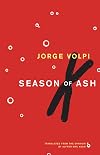
Season of Ash
by Jorge Volpi
On This Page
Description
Jorge Volpi's international bestseller Season of Ash puts a human face on the earth-shaking events of the late twentieth century: the Chernobyl disaster, the fall of the Berlin Wall, the end of Soviet communism and the rise of the Russian oligarchs, the cascading collapse of developing economies, and the near-miraculous scientific advances of the Human Genome Project. Told through the intertwined lives of three women--Inna, a Soviet biologist; Eva, a Hungarian computer scientist; and show more Jennifer, an American economist--this novel-of-ideas is part detective novel, part scientific investigation, and part journalistic expose, with a dark, destructive love story at its center. show lessTags
Recommendations












Member Recommendations
Member Reviews
Jorge Volpe takes on the major international themes of the past several decades that include the disaster of Chernobyl, the fall of the Berlin wall, the collapse of the Soviet Union, the trials and failures of the IMF in Africa and Mexico, the Seattle WTO protests and the Human Genome project. This is a tremendous amount of material to cover even in 405 pages much less successfully integrate into a coherent story. But Volpe succeeds in an extraordinary fashion.
He employs the story of three remarkable female characters and their families. Much of the story centered on Russia but a major aspect also takes place in the U.S. with the IMF professional banker Jennifer Wells. Her sister Allison, a radical activist, takes the story to show more Palestine, Seattle and Arizona. In addition there are many real life characters such as Boris Yeltsin (always presented with the phrase "of strong arms" and President Clinton ("imperial seducer"). You will need the appendix that lists dozens of real and fictional characters.
The book raises issues as to how these great political and international themes affect global patterns and also individual life path. These events resonate simultaneously at the macro and micro levels and Volpe integrates them with an unmatched narrative skill. show less
He employs the story of three remarkable female characters and their families. Much of the story centered on Russia but a major aspect also takes place in the U.S. with the IMF professional banker Jennifer Wells. Her sister Allison, a radical activist, takes the story to show more Palestine, Seattle and Arizona. In addition there are many real life characters such as Boris Yeltsin (always presented with the phrase "of strong arms" and President Clinton ("imperial seducer"). You will need the appendix that lists dozens of real and fictional characters.
The book raises issues as to how these great political and international themes affect global patterns and also individual life path. These events resonate simultaneously at the macro and micro levels and Volpe integrates them with an unmatched narrative skill. show less
 This review was written for LibraryThing Early Reviewers.
An exceptionally interesting novel. Volpi manages to portray all the competing influences during the fall of the Soviet Union through the interactions of his characters - from the pure, but ultimately soulless banker, to the ruthless capitalist, to the brilliant but disillusioned scientists, to the misguided affection of the wayward hippie, to the reporter that is overwhelmed by the emotion of it all, none escape the vortex of the collapse of the regime and the resulting scramble for wealth and power that ensues.
Interestingly enough, the beginning of the book is draped with human drama with the death of one of the main characters. This causes the reader to become invested in the characters early on, even as additional characters are show more introduced. At first it is difficult to keep all of the names straight, but the author has kindly provided a character index at the back of the book.
From these microcosm beginnings, the author then gradually increases the scope of his lens to examine the political and financial dealings taking place during the fall of the Soviet Union. Finally, during Act III, the lens again narrows as it focuses on the interpersonal relationships between the characters directly involved in the mapping of the human genome. The passions and struggles of the characters in this final act are detached and animalistic, and a fatalistic sense permeates the end of the book.
This book is an interesting read if you like historical fiction; it is exceptionally well-written and appears to be well-translated. show less
Interestingly enough, the beginning of the book is draped with human drama with the death of one of the main characters. This causes the reader to become invested in the characters early on, even as additional characters are show more introduced. At first it is difficult to keep all of the names straight, but the author has kindly provided a character index at the back of the book.
From these microcosm beginnings, the author then gradually increases the scope of his lens to examine the political and financial dealings taking place during the fall of the Soviet Union. Finally, during Act III, the lens again narrows as it focuses on the interpersonal relationships between the characters directly involved in the mapping of the human genome. The passions and struggles of the characters in this final act are detached and animalistic, and a fatalistic sense permeates the end of the book.
This book is an interesting read if you like historical fiction; it is exceptionally well-written and appears to be well-translated. show less
This review was written for LibraryThing Early Reviewers.This novel concerns the lives of three women: Irina, a Russian biologist working in Moscow, Jennifer, the privileged daughter of a U.S. senator, who is a high-ranking economist with the IMF, and Eva, an amoral Hungarian emigrant, who is a computer specialist. The stories of these women are narrated over the course of most of the 20th century, from 1929 until 2000. Their lives frequently intersect with major historical events and characters: the market crash of 1929, the Gulag, the death of Stalin, the human genome project, various human rights movements, and so forth. Jennifer tends to be the IMF's representative in countries in which capitalism is nascent.
For much of the book we are puzzled by what connects the three women and their show more families and friends. However, as the events of the 20th century inexorably progress, their stories approach, intersect, and encircle each other.
This novel is jam-packed, and sometimes feels like Volpi has bitten off more than he can chew. However, the New York Times describes him as the first Russian novelist who is not Russian, which I think is meant as a compliment. I'm not quite sure why Volpi has chosen to write of matters that are so far removed from his own background. While the novel is not fully successful, it is a fascinating read. show less
For much of the book we are puzzled by what connects the three women and their show more families and friends. However, as the events of the 20th century inexorably progress, their stories approach, intersect, and encircle each other.
This novel is jam-packed, and sometimes feels like Volpi has bitten off more than he can chew. However, the New York Times describes him as the first Russian novelist who is not Russian, which I think is meant as a compliment. I'm not quite sure why Volpi has chosen to write of matters that are so far removed from his own background. While the novel is not fully successful, it is a fascinating read. show less
Jorge Volpi (1968-) is one of the leading voices in contemporary Mexican literature, having written several novels that have received critical acclaim within and outside of Mexico. His most famous novel is In Search of Klingsor (En busca de Klingsor), the winner of two major international literary awards, which "explores the nexus between science and human nature and how they shaped the world in the aftermath of World War II." He is one of the founders of the 'Crack' literary movement in Mexico, whose members seek to revisit the roots of the Latin American literary boom of the 1960s, and go beyond magical realism and other standard forms which have characterized much of the literature from the region in recent years.
Season of Ash (No show more será la tierra) was originally published in Spanish in 2006. It was translated into English by Alfred Mac Adam and published by Open Letter Books in 2009.
The novel, which is separated into three acts, begins at the nuclear plant in Chernobyl in 1986, on the day of the disastrous accident. The first act follows this prelude, and we are introduced to the three main characters: Irina, a Soviet biologist; Eva, a Hungarian computer scientist; and Jennifer, an American economist. Each mourn the death of someone dear to them on the next to last day of 2000. The narrator then introduces himself, and tells us that these apparently disparate stories and characters are linked through him, and that one of them will reach a tragic end.
Volpi describes the lives of the main characters and those close to them, through historical fictional accounts of the Soviet Union and Russia from Stalin to Yeltsin, the 1929 stock market crash, financial crises in Zaire, Mexico and Russia, human rights movements in the US and abroad, and other topics. Their stories are told separately but chronologically, in a manner that was very readable, unique and interesting to me.
In the final act, Volpi links the lives of the characters through the narrator, and the novel is transformed into a detective story and a murder mystery. Unfortunately this was where [Season of Ash ]became a major disappointment to me, as the fusion was not a successful one, and the novel ended abruptly and incompletely. show less
Season of Ash (No show more será la tierra) was originally published in Spanish in 2006. It was translated into English by Alfred Mac Adam and published by Open Letter Books in 2009.
The novel, which is separated into three acts, begins at the nuclear plant in Chernobyl in 1986, on the day of the disastrous accident. The first act follows this prelude, and we are introduced to the three main characters: Irina, a Soviet biologist; Eva, a Hungarian computer scientist; and Jennifer, an American economist. Each mourn the death of someone dear to them on the next to last day of 2000. The narrator then introduces himself, and tells us that these apparently disparate stories and characters are linked through him, and that one of them will reach a tragic end.
Volpi describes the lives of the main characters and those close to them, through historical fictional accounts of the Soviet Union and Russia from Stalin to Yeltsin, the 1929 stock market crash, financial crises in Zaire, Mexico and Russia, human rights movements in the US and abroad, and other topics. Their stories are told separately but chronologically, in a manner that was very readable, unique and interesting to me.
In the final act, Volpi links the lives of the characters through the narrator, and the novel is transformed into a detective story and a murder mystery. Unfortunately this was where [Season of Ash ]became a major disappointment to me, as the fusion was not a successful one, and the novel ended abruptly and incompletely. show less
Jorge Volpi's "Season of Ash" is a difficult book to review. While reading, I kept trying to push it into any of a number of simply shaped categories. For long stretches, the novel feels strongly like straight historical fiction. It follows the paths of three women, spread across the globe, through many of the major events of the 20th century. The book then flips into murder mystery; although "mystery" is too strong a word as from the earliest chapters we know both victim and culprit; perhaps murder procedural would be a more apt term. Finally, all these events are couched in a not too clear metafictional universe where the murderer, and sometimes narrator, authors a book titled "Season of Ash" that also recounts many of the events of show more the book. Which leaves the reader to ask: just how much of Jorge Volpi's "Season of Ash" is really the narrator-murderer's "Season of Ash."
Although this book is composed of several styles it uses a well established story telling method as its core structural device. I am not sure if there is a name for the genre but one name for the tradition might be "Epic Historical Fiction." In this genre the writer places a small group of characters lives head long the paths of a number of either true historical events of near simulacra. Upton Sinclair's "Oil" is the more recent entry in this genre I recall reading. In the case of "Season of Ash" Volpi has chosen to place his characters in later two thirds of the 20th century.
The story is contains three major plot lines, following the lives of Jennifer Moore financial wizard of the International Monetary Fund, Irina Nikolayevna Sudayeva Russian biologist, and Eva Halasz Hungarian child prodigy turned computer scientist. Each woman, or a close relation, plays a role or is directly impacted by many of the major events of the 20th century: from the market crash in October of 1929 to the fall of the berlin wall to the mapping of the human genome. I found when the novel focused on recounting these historical event the writing was at its clearest. The many varied events are recounted with extensive details that create a vivid easily accessible picture. Sometimes Volpi shares the events details through direct recounting of sequences of events and sometimes through fictionalized eyewitness encounters. As a historical primer the book is successful; it leaves the reader intrigued and wanting to learn more about the source material of these striking events.
Where the book fails, for me, is as murder "mystery." I didn't find myself compelled by the murder story. The interlacing of the murder story with the historical story felt was more distracting then engaging. One interesting aspect of this secondary story was that while the narrator-murderer is physically responsible for the death of one woman he also had a strong connection with two other women who die and plays a role in the ruin of the only two men he is shown to meet. The reader can't help but wonder if Volpi wants you to see a greater connection between the destruction of these lives and the underlying character of the murderer. The murderer is a poet, historian, and political activist all wrapped around a not too hidden roiling temper and all who encounter it end up dead or ruined.
The relationship of the narrator to the rest of the story is further confused because, as we are told early on, the narrator's sole remaining purpose is to compose a memoir titled "Season of Ash." We are told that this novel recounts his version of the events leading to the murder. We discover much later in the book that this book is also composed of notes the murderer received from the daughter of Irina Sudayeva. We also know that the narrator-murderer wrote in an earlier book a character whose life closely resembled that of Irina's Husband. Addtionally, the narrator-murderer shows up as a character in the life of Allison Moore, sister to the above mentioned Jennifer Moore, and interacted with Jennifer Moore's husband. Finally, there is poor Eva, the victim, who had many encounters with the narrator-murderer. All this suggests that our narrator-murderer had sufficient information and ties to other actors that he might better be called the narrator-murderer-author.
This metafictional aspect of the story is by far the most intriguing part of the read. Unfortunately, I have yet to parse Volpi's intentions in having a character who is the author of his book. Incorporating the metafictional dimension seems a strange a choice in a book which is principally a retelling of historical events. Most of the time while reading the book it feel like a simple recounting of interesting historical events; but then the narrator's voice starts to pour in and cover the story with a film of distrust. Perhaps the author is saying something about contemporary desires to relive the near past and the destructive nature of too much self-reflection. Perhaps he is saying something about the long standing of problem of history being told by the victors. Perhaps it was just a creative way to tell a story. Whatever the purpose I found it added an intriguing layer to an already enjoyable book that will leave the careful reader questioning exactly whose words she is encountering. show less
Although this book is composed of several styles it uses a well established story telling method as its core structural device. I am not sure if there is a name for the genre but one name for the tradition might be "Epic Historical Fiction." In this genre the writer places a small group of characters lives head long the paths of a number of either true historical events of near simulacra. Upton Sinclair's "Oil" is the more recent entry in this genre I recall reading. In the case of "Season of Ash" Volpi has chosen to place his characters in later two thirds of the 20th century.
The story is contains three major plot lines, following the lives of Jennifer Moore financial wizard of the International Monetary Fund, Irina Nikolayevna Sudayeva Russian biologist, and Eva Halasz Hungarian child prodigy turned computer scientist. Each woman, or a close relation, plays a role or is directly impacted by many of the major events of the 20th century: from the market crash in October of 1929 to the fall of the berlin wall to the mapping of the human genome. I found when the novel focused on recounting these historical event the writing was at its clearest. The many varied events are recounted with extensive details that create a vivid easily accessible picture. Sometimes Volpi shares the events details through direct recounting of sequences of events and sometimes through fictionalized eyewitness encounters. As a historical primer the book is successful; it leaves the reader intrigued and wanting to learn more about the source material of these striking events.
Where the book fails, for me, is as murder "mystery." I didn't find myself compelled by the murder story. The interlacing of the murder story with the historical story felt was more distracting then engaging. One interesting aspect of this secondary story was that while the narrator-murderer is physically responsible for the death of one woman he also had a strong connection with two other women who die and plays a role in the ruin of the only two men he is shown to meet. The reader can't help but wonder if Volpi wants you to see a greater connection between the destruction of these lives and the underlying character of the murderer. The murderer is a poet, historian, and political activist all wrapped around a not too hidden roiling temper and all who encounter it end up dead or ruined.
The relationship of the narrator to the rest of the story is further confused because, as we are told early on, the narrator's sole remaining purpose is to compose a memoir titled "Season of Ash." We are told that this novel recounts his version of the events leading to the murder. We discover much later in the book that this book is also composed of notes the murderer received from the daughter of Irina Sudayeva. We also know that the narrator-murderer wrote in an earlier book a character whose life closely resembled that of Irina's Husband. Addtionally, the narrator-murderer shows up as a character in the life of Allison Moore, sister to the above mentioned Jennifer Moore, and interacted with Jennifer Moore's husband. Finally, there is poor Eva, the victim, who had many encounters with the narrator-murderer. All this suggests that our narrator-murderer had sufficient information and ties to other actors that he might better be called the narrator-murderer-author.
This metafictional aspect of the story is by far the most intriguing part of the read. Unfortunately, I have yet to parse Volpi's intentions in having a character who is the author of his book. Incorporating the metafictional dimension seems a strange a choice in a book which is principally a retelling of historical events. Most of the time while reading the book it feel like a simple recounting of interesting historical events; but then the narrator's voice starts to pour in and cover the story with a film of distrust. Perhaps the author is saying something about contemporary desires to relive the near past and the destructive nature of too much self-reflection. Perhaps he is saying something about the long standing of problem of history being told by the victors. Perhaps it was just a creative way to tell a story. Whatever the purpose I found it added an intriguing layer to an already enjoyable book that will leave the careful reader questioning exactly whose words she is encountering. show less
This review was written for LibraryThing Early Reviewers.WOW--where to start. First, please ready this commentary through as I am bitching first and praising last. This is the first translation from Spanish to English for me and the inherent errors of such didn't factor into my review. But the ones that could have been avoided by some editing did. There is no need for the reader to be reminded that the author considers Moscow as the city of wide avenues and Yelstin to be of strong arms every freaking time they get metioned, which is a helluva lot. Ok, so I exaggerated, but if this had been edited more concisely at least 20 pages could have been knocked off the total. Add to that that this is a Russian based story, and that obviously every Russian suffers from the Walton's three name syndome show more and that these three names are always a line and a half long and they flit back and forth between using the full three to the common two to the point you need a key to keep up. I knocked a half star off just for these issues. The other half was that the author could have condensed this down a bit without hurting the story, in my opinion. Maybe knocked another 30 to 50 pages off as well. Translations are never perfect.
Now on to the better stuff. I will admit that while reading the first two pages I was thinking there is no way will I finish this. I don't want to have to work at reading something, I'm too lazy. But I requested it (what was I thinking??) and so I'll do my best. But by the end of the prelude I was hooked. Seriously, I don't want to give anything to do with the story away, because it's a good one. If the prelude gets you thinking OMG, what if ??? then stick with it.
This reads like a history lesson in sections and commercial fiction in others, but there is enough accuracy in the historical and enough possibility in the fiction to make them both work. I've never wanted to take a trip down memory lane and look at the fall of the Berlin wall and the demise of the USSR, but Volpi takes you there in a very interesting, behind the scenes manner while dipping slightly into the world of US politics and big business in a very ugly way. Think of what's happened since this story's timeline and you'll be really wondering about some of today's happenings.
The story picks up speed as it goes, both in the reading and the ease of reading. Kind of like a train picking up speed after leaving the station. If you hang in there and get halfway though, I'll bet you find yourself re-reading the second paragraph on page 213 a couple of times. Pretty profound stuff -- nothing lost in the translation there and just that one paragraph made the book worthwhile. show less
Now on to the better stuff. I will admit that while reading the first two pages I was thinking there is no way will I finish this. I don't want to have to work at reading something, I'm too lazy. But I requested it (what was I thinking??) and so I'll do my best. But by the end of the prelude I was hooked. Seriously, I don't want to give anything to do with the story away, because it's a good one. If the prelude gets you thinking OMG, what if ??? then stick with it.
This reads like a history lesson in sections and commercial fiction in others, but there is enough accuracy in the historical and enough possibility in the fiction to make them both work. I've never wanted to take a trip down memory lane and look at the fall of the Berlin wall and the demise of the USSR, but Volpi takes you there in a very interesting, behind the scenes manner while dipping slightly into the world of US politics and big business in a very ugly way. Think of what's happened since this story's timeline and you'll be really wondering about some of today's happenings.
The story picks up speed as it goes, both in the reading and the ease of reading. Kind of like a train picking up speed after leaving the station. If you hang in there and get halfway though, I'll bet you find yourself re-reading the second paragraph on page 213 a couple of times. Pretty profound stuff -- nothing lost in the translation there and just that one paragraph made the book worthwhile. show less
This review was written for LibraryThing Early Reviewers.Boasting such promise, Season of Ash crashed inert, leaving nary a sound in my frustrated forest. It is admitted that I wanted to kick a tree or simply throw this novel out into the street. I didn't. I do have values. These standards are routinely tested by violation. Don't worry, there's always remorse. The novel links Chernobyl, the IMF and astrophysics in a mediocre tapestry fraught with every suspense cliche availible this side of Breaking Bad.
I dare say avoid this.
I dare say avoid this.
Members
- Recently Added By
Published Reviews
ThingScore 69
This, in broad outline, is the world of Season of Ash, published in Spanish in 2006 as the final installment of the historical trilogy that began with In Search of Klingsor, and just released here in a translation by Alfred Mac Adam for the generally excellent press Open Letter. The failure of communism, the collapse of the Soviet Union--and with it that strange and stubborn ghost, show more ideology--is apparently so crucial to Volpi that it must be marked repeatedly. The novel begins with a brief dramatization of the Chernobyl disaster, the USSR's first symbolic death. The giant concrete sarcophagus in which the nuclear plant's reactor is eventually sealed off, Volpi writes, is the "final legacy of communism." But it lives on to die again three years later, when the last Russian soldier retreats from Afghanistan, and again in 1990, when the first McDonald's opens in Moscow and one character announces to his wife, "We are witnessing the end of the planned economy and therefore of the Soviet Union itself!" Then one last time on New Year's Eve 1991, just after the Supreme Soviet really has dissolved itself, the couple's brooding daughter writes a letter to Anna Akhmatova: "Today is the last day of the Union of Socialist Soviet Republics, the last day of Communism, the last day of our era." A few pages later, in case the corpse wasn't dead enough, Volpi incinerates it. His narrator opines that--like Latin American literature--"The worst thing about the Soviet Union is that it had never existed." show less
added by kidzdoc
“Season of Ash” is about nearly everything that has happened over the last 50 years: Chernobyl, the collapse of Communism, the rise of biogenetics and environmental terrorism. Other, equally significant events make their way into the narrative as well. Hello, Challenger explosion. Greetings, AIDS. Salaam, Soviet war in Afghanistan. Wassup, W.T.O. riots. Volpi is a leading member of the show more so-called Crack group, an upstart literary movement of Mexican writers understandably bored by the devices and expectations of magical realism. Until one actually reads it, “Season of Ash” looks poised to become a foundational repudiation of everything one has come to expect from the literature of the Spanish-speaking Americas. From his novel’s first sentence (“Enough rot, howled Anatoly Diatlov”), Volpi attempts to be the first great Russian novelist who is not actually Russian. Instead, he has written “Billy Joel’s ‘We Didn’t Start the Fire’: A Novel.” show less
added by kidzdoc
For too long, the word nerd has been misused to describe the videogame-playing and Buffy-obsessed men and women of this world. That's geek culture. For a proper definition, look no further than Jorge Volpi's Season of Ash, which, in its depth (it spans the years 1929 to 2000), breadth (it crisscrosses from Zaire to Berlin and Pittsburgh to Siberia) and bookish preoccupations (scientific show more advancements in genetic research, artificial life and biochemistry), is unapologetically nerdy. But it's quality airplane reading, too.
Volpi's sweeping story, about three brilliant women and the way their lives connect to the sociological chaos of the 20th century, is told from the perspective of a man who, it's revealed early on, has murdered one of them. Volpi is the author of the internationally best-selling In Search of Klingsor, and he writes like a young Michael Crichton, but with twice the IQ and a historical perspective. Nerd. show less
Volpi's sweeping story, about three brilliant women and the way their lives connect to the sociological chaos of the 20th century, is told from the perspective of a man who, it's revealed early on, has murdered one of them. Volpi is the author of the internationally best-selling In Search of Klingsor, and he writes like a young Michael Crichton, but with twice the IQ and a historical perspective. Nerd. show less
added by kidzdoc
Author Information

35+ Works 1,181 Members
An author, scholar, and diplomat, Jorge Volpi won the Biblioteca Breve Prize in 1999 (previous winners include Carlos Fuentes and Mario Vargas Llosa). He is the author of nine novels and collections, a judge for the Dublin-IMPAC Prize, and the director of the Mexican Cultural Center in Paris
Awards and Honors
Awards
Notable Lists
Common Knowledge
- Canonical title
- Season of Ash
- Original title
- Tiempo de cenizas
- Original publication date
- 2009 (English translation) (English translation)
- People/Characters*
- Irina Nikolaïevna Granina née Soudaïeva; Arkadi Ivanovitch Granine; Jennifer Moore; Jack Wells; Jacob Moore; Iouri Mikhailovitch Tchernichevski (show all 9); Éva Halàsz; Oksana Granina Gorenko; Alison Moore
- Important places*
- Moscou, URSS; New York, New York, États-Unis
- Important events*
- Chute du mur de Berlin (1989-11-09)
- Epigraph
- For them I have woven this vast shroud
Out of the sad words I heard from them.
—Anna Akhmatova, Requiem
There are women born in a moist earth.
Each of their steps is a sonorous sob,
and their ... (show all)vocation is to accompany the dead
and to be the first to greet those who come back to life.
—Osip Mandelstam, Voronzeh Notebooks - Dedication
- For my ornithologist.
- First words
- Enough rot, howled Anatoly Diatlov.
- Last words
- (Click to show. Warning: May contain spoilers.)Eva, if I've told this story, it's been so that I can hold your hand for another second.
- Original language
- Spanish
*Some information comes from Common Knowledge in other languages. Click "Edit" for more information.
Classifications
- Genres
- Fiction and Literature, General Fiction
- DDC/MDS
- 863.64 — Literature & rhetoric Spanish Literature Spanish fiction 20th Century 1945-2000
- LCC
- PQ7298.32 .O47 .N613 — Language and Literature French, Italian, Spanish and Portuguese literatures Spanish literature Provincial, local, colonial, etc. Spanish America
- BISAC
Statistics
- Members
- 122
- Popularity
- 266,534
- Reviews
- 12
- Rating
- (3.57)
- Languages
- English, French, German, Spanish
- Media
- Paper, Ebook
- ISBNs
- 6
- ASINs
- 1