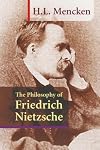
The Philosophy of Friedrich Nietzsche
by H. L. Mencken
On This Page
Description
The first book on Nietzsche ever to appear in English, this examination by legendary journalist H. L. Mencken is still one of the most enlightening. Mencken wrote this book while still in his 20's, but his penchant for thoroughness was evident even at that young age-in preparation for writing this book, he read Nietzsche's works in their entirety, mostly in the original German. A brief biographical sketch is followed by clear and thorough explanations of Nietzsche's basic concepts and show more attitudes. Analyzed are Nietzsche's much-misunderstood concept of the superman, his concept of eternal show lessTags
Recommendations























Member Recommendations

Member Reviews
Not good. Not recommended unless you're just a compleat ubernerd for Nietzsche. Mencken reads social Darwinism into his works (it's not there), describes Eternal Recurrence in its simplest form as reasonable (it isn't), and uncritically accepts Nietzsche's sister's writing about him (nowadays scholars don't). Just bad.
Ratings
Members
- Recently Added By
Author Information

182+ Works 7,450 Members
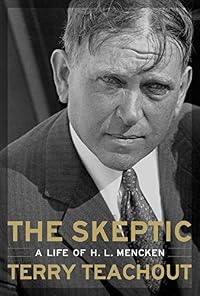
H. L. Mencken 1880-1956 H. L. (Henry Louis) Mencken was born in Baltimore, Maryland, on September 12, 1880. He considered Maryland to be his home despite his many years in New York. As a child he attended Professor Friedrich Knapp's Institute, a private school for children of German descent. He completed his secondary education at Baltimore show more Polytechnic Institute, from which he graduated at the age of 16. Mencken wanted to be a writer but was obligated to work in his father's cigar factory. When his father died suddenly in 1899, Mencken immediately sought a job at the Baltimore Herald. Through he began with no experience in journalism, he quickly learned every job at the newspaper and at age 25 became its editor. Mencken went on to build himself a reputation as one of America's most brilliant writers and literary critics. His basic approach was to question everything and to accept no limits on personal freedom. He attacked organized religion, American cultural and literary standards, and every aspect of American life that he found shallow, ignorant, or false - which was almost everything. From the 1920's until his death, Mencken's sharp wit and penetrating social commentary made him one of the most highly regarded - and fiercely hated - of American social critics. He was later memorialized in the dramatic portrait of the cynical journalist in the play and film Inherit the Wind. Shortly after World War I, Mencken began a project that was to fascinate him for the rest of his life: a study of American language and how it had evolved from British English. In 1919 he published The American Language: A Preliminary Inquiry into the Development of English in the United States. To this and his publisher's surprise, the book sold out quickly; its wit and nonscholarly approach attracted many readers who would not normally buy a book on such a subject. In 1936, a revised and enlarged edition was published, and in 1945 and 1948, supplements were added. The work shows not only how American English differs from British English but how the 300 year American experience shaped American dialect. Thus the book, still considered a classic in its field, is both a linguistic and social history of the United States. Mencken died in his sleep on January 29, 1956. He was interred in Baltimore's Loudon Park Cemetery. (Bowker Author Biography) show less
Work Relationships
Is contained in
Common Knowledge
- Original publication date
- 1908
- People/Characters
- Nietzsche, Friedrich Wilhelm, 1844-1900
- First words
- Friedrich Nietzsche was a preacher's son, brought up in the fear of the Lord. It is the ideal training for sham-smashers and freethinkers.
- Quotations
- It is apparent, on brief reflection, that the negro, no matter how much he is educated, must remain, as a race, in a condition of subservience; that he must remain the inferior of the stronger and more intelligent white man s... (show all)o long as he retains racial differentiation. Therefore, the effort to educate him has awakened in his mind ambitions and aspirations which, in the very nature of things, must go unrealized, and so, while gaining nothing whatever materially, he has lost all his old contentment, peace of mind and happiness. Indeed, it is a commonplace of observation in the United States that the educated and refined negro is invariably a hopeless, melancholy, embittered and despairing man.
There is nothing essentially evil in woman's effort to combat and control man's will by constantly suggesting the sexual idea to him, because it is necessary, for the permanence of the race, that this idea be presented frequ... (show all)ently and powerfully. Therefore, the conflict between masculine and feminine ideals is to be regarded, not as a lamentable battle, in which one side is right and the other wrong, but a convenient means of providing that stimulation-by-opposition without which all function, and in consequence, all progress, would cease.
Disregarding the element of sheer good luck – which is necessarily a small factor – it is evident that the man who, in the struggle for wealth and power, seizes a million dollars for himself, is appreciably more intellige... (show all)nt than the man who starves. That this achievement, which is admittedly difficult, requires more intelligence again, than the achievement of mastering the Latin language, which presents so few difficulties that it is possible to any healthy human being with sufficient leisure and patience, is also evident. In a word, the illiterate contractor, who says “I seen” and “I done” and yet manages to build great bridges and to acquire a great fortune, is immeasurably more vigorous intellectually, and immeasurably more efficient and respectable, as a man, than the college professor who laughs at him and presumes to look down upon him.
The worth of a thing often lies, not in what one attains b by it, but in the difficulty one experiences in getting it. The struggle for political liberty, for example, has done more than any other one thing to develop streng... (show all)th, courage and resourcefulness in the human race, and yet liberty itself, as we know it today, is nothing more or less than organized morality, as as such, is necessarily degrading and degenerating.
For one thing, there is the business of keeping the lower castes in health. They themselves are too ignorant and lazy to manage it, and therefore it must be managed by their betters. When we appropriate money from the publi... (show all)c funds to pay for vaccinating a horde of negroes, we do not do it because we have any sympathy for them or because we crave their blessings, but simply because we don't want them to be falling ill of smallpox in our kitchens and stables, to the peril of our own health and the neglect of our necessary drudgery.
Classifications
Statistics
- Members
- 186
- Popularity
- 173,310
- Reviews
- 1
- Rating
- (3.83)
- Languages
- English
- Media
- Paper, Ebook
- ISBNs
- 19
- ASINs
- 7