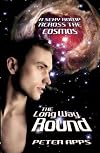
Long Way Around
by Peter Apps
On This Page
Description
Space heroes are usually macho and clever enough to discover an alien's weak point before zapping him into oblivion. Stuart, on the other hand, is a school dropout destined to spend the rest of his life laying carpets. Until, that is, he stumbles across Brian and suddenly finds himself with a new job - exploring a distant galaxy! But will his adventures saving an alien race give him the courage he needs to overcome his inhibitions? And will he ever be able to tell Brian how he really feels show more about him? show lessTags
Member Reviews
BOOK BLURB:
Space heroes are usually macho and clever enough to discover an alien’s weak point before zapping him into oblivion. Stuart, on the other hand, is a school dropout destined to spend the rest of his life laying carpets. Until, that is, he stumbles across Brian and suddenly finds himself with a new job ~ exploring a distant galaxy. But will his adventures saving an alien race give him the courage he needs to overcome his inhibitions? And will he ever be able to tell Brian how he really feels about him?
BOOK REVIEW:
Take a foundation of old-school "Doctor Who," add some Douglas Adams, a dash of E.M. Forster's "Maurice," a generous sprinkle of "Star Trek" optimism, and stir ~ Peter Apps first novel reads a little like the show more old-fashioned British sci-fi I used to devour from the library as a teen, except I don't remember any of those having two gay leads.
Maybe old-fashioned isn't the right description, given the queer protagonists and some of the science, but it's a lot more science based than the character-driven sci-fi I tend to read these days. It took me a few chapters to settle into the very masculine, logical style, and it's striking how little dialogue there is. Despite that, the story is engaging, and the main focus follows Brian and Stuart between 'real' life on Earth, and the alien planets they discover.
The alien worlds is really where the "Star Trek" and "Doctor Who" vibes came to the fore, as the book focuses on two basically-humanoid planets with opposing planet-wide histories that deliver a clear lesson about where humans might be heading if we don't get a grip on global violence and power plays. The author's evident belief in human potential sits a little oddly, particularly with many of the decisions Brian makes. The reclusive self-taught genius who brings the science to the story, has strongly negative experiences of the mainstream scientific community, and convinces everyone else involved that if politicians or the military were to find out about his inventions, they would be used only for ill. It's not that I think Brian's wrong about that ~ it's just that other parts of the book are so determinedly optimistic they were working against each other at times.
The story isn't particularly character driven, but Apps does a solid job of juggling the changing relationship dynamics between Brian and Stuart, between Brian and the village locals, between Stuart and his father, and Stuart and his friends.
It's good to find sci-fi where the main character's orientation matters but isn't the sole driver of the plot, and the sexual tension is nicely handled. When Stuart stumbles ~ literally ~ into Brian's experiments and is recruited as Brian's assistant it makes perfect sense that he'd be cautious about revealing his crush on his boss, whilst Brian ~ quite reasonably ~ worries about taking advantage of his position, and about what Stuart might think if he were to proposition his attractive young assistant. All together it makes for a much more convincing 'we both like each other but can never tell each other' situation than many romances where that's the whole of the plot, and the resolution is similarly soundly handled.
Overall, it's a little patchy, and the distancing style keeps it from fully living up to it's humorous, action-packed blurbs, but this is a thoughtful and interesting read.
(Originally reviewed for Rainbow Reviews : http://www.rainbow-reviews.com/?p=6186) show less
Space heroes are usually macho and clever enough to discover an alien’s weak point before zapping him into oblivion. Stuart, on the other hand, is a school dropout destined to spend the rest of his life laying carpets. Until, that is, he stumbles across Brian and suddenly finds himself with a new job ~ exploring a distant galaxy. But will his adventures saving an alien race give him the courage he needs to overcome his inhibitions? And will he ever be able to tell Brian how he really feels about him?
BOOK REVIEW:
Take a foundation of old-school "Doctor Who," add some Douglas Adams, a dash of E.M. Forster's "Maurice," a generous sprinkle of "Star Trek" optimism, and stir ~ Peter Apps first novel reads a little like the show more old-fashioned British sci-fi I used to devour from the library as a teen, except I don't remember any of those having two gay leads.
Maybe old-fashioned isn't the right description, given the queer protagonists and some of the science, but it's a lot more science based than the character-driven sci-fi I tend to read these days. It took me a few chapters to settle into the very masculine, logical style, and it's striking how little dialogue there is. Despite that, the story is engaging, and the main focus follows Brian and Stuart between 'real' life on Earth, and the alien planets they discover.
The alien worlds is really where the "Star Trek" and "Doctor Who" vibes came to the fore, as the book focuses on two basically-humanoid planets with opposing planet-wide histories that deliver a clear lesson about where humans might be heading if we don't get a grip on global violence and power plays. The author's evident belief in human potential sits a little oddly, particularly with many of the decisions Brian makes. The reclusive self-taught genius who brings the science to the story, has strongly negative experiences of the mainstream scientific community, and convinces everyone else involved that if politicians or the military were to find out about his inventions, they would be used only for ill. It's not that I think Brian's wrong about that ~ it's just that other parts of the book are so determinedly optimistic they were working against each other at times.
The story isn't particularly character driven, but Apps does a solid job of juggling the changing relationship dynamics between Brian and Stuart, between Brian and the village locals, between Stuart and his father, and Stuart and his friends.
It's good to find sci-fi where the main character's orientation matters but isn't the sole driver of the plot, and the sexual tension is nicely handled. When Stuart stumbles ~ literally ~ into Brian's experiments and is recruited as Brian's assistant it makes perfect sense that he'd be cautious about revealing his crush on his boss, whilst Brian ~ quite reasonably ~ worries about taking advantage of his position, and about what Stuart might think if he were to proposition his attractive young assistant. All together it makes for a much more convincing 'we both like each other but can never tell each other' situation than many romances where that's the whole of the plot, and the resolution is similarly soundly handled.
Overall, it's a little patchy, and the distancing style keeps it from fully living up to it's humorous, action-packed blurbs, but this is a thoughtful and interesting read.
(Originally reviewed for Rainbow Reviews : http://www.rainbow-reviews.com/?p=6186) show less
Such is our insatiable wonderment at the ever more extraordinary possibilities that science fiction can offer us that we forget that, if extra-terrestrial life exists, it may be not too dissimilar to our own. After all, if we are talking about other carbon-based life forms, it is not such a great leap to imagine that alien beings have developed along paths recognisable to humans, both physically and in terms of thought processes.
These are the sorts of beings that Peter Apps describes in his first novel, The Long Way Round. In the two alien worlds that his protagonists visit, the inhabitants, while very different from humans, share the same range of needs, motivations, fears, reasoning processes, shortcomings and strong points as their show more Earthling guests. In contrast to many intergalactic forays, these encounters involve mutual understanding, exchanging knowledge with one another, acceptance, respect and assistance.
For more details about the book, visit site http://www.thelongwayround.info/ show less
These are the sorts of beings that Peter Apps describes in his first novel, The Long Way Round. In the two alien worlds that his protagonists visit, the inhabitants, while very different from humans, share the same range of needs, motivations, fears, reasoning processes, shortcomings and strong points as their show more Earthling guests. In contrast to many intergalactic forays, these encounters involve mutual understanding, exchanging knowledge with one another, acceptance, respect and assistance.
For more details about the book, visit site http://www.thelongwayround.info/ show less
Members
- Recently Added By
Author Information
13 Works 210 Members
Peter Apps, wildlife author and awardwinning scientist, obtained a bachelor's degree from the University of Oxford and an M.Sc. and Ph.D. from the University of Pretoria. His scientific interests range from animal behaviour to chemistry Richard Du Toit holds a B.Sc. Honours degree in Zoology and Entomology, but his keen interest in wildlife show more photography developed into a professional career. He now works as a freelance wildlife and nature photographer and travels widely in southem Africa. Richard has won numerous awards for his wildlife photographs, and his images have been published in calendars, books and magazines in South Africa and abroad show less
Classifications
Statistics
- Members
- 5
- Popularity
- 3,440,421
- Reviews
- 2
- Rating
- (3.50)
- Languages
- English
- Media
- Paper
- ISBNs
- 1