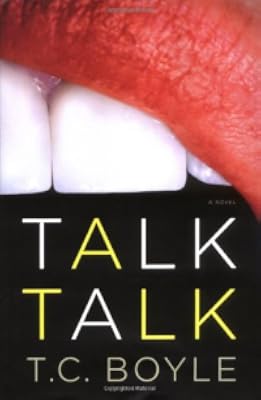
Talk Talk
by T. Coraghessan Boyle
On This Page
Description
Deaf Dana Halter is falsley arrested for assault with a deadly weapon, auto theft, and passing bad checks, while William Wilson has been living a blameless life of criminal excess at her expense. Dana and her boyfriend Bridger set out to track him down.Tags
Recommendations














Member Reviews
Like him or not, you can’t call T. Coraghessan Boyle lazy. Talk Talk, his 2006 novel about Dana Halter, a deaf woman who’s had her identity stolen and the resultant single-minded attempt to confront the man who did it, was his 11th novel since 1982’s Water Music. Coupled with the eight collections of short stories he had out at the time, that’s a lot of pages. For most of those pages, Boyle has shown himself to be a consummate wordsmith whose plots are always conveyed with an artisan’s sense of shade and nuance and a prankster’s sense of the ridiculous.
Talk Talk starts out like it had been shot out of a cannon, and Boyle adeptly conveys Halter’s headlong crash into the brick wall of a jaded and overworked judicial system. show more From the time she leaves the house, Halter is behind the eight ball, and we are barely hanging on, along for the ride: She was running late, always running late, a failing of hers, she knew it, but then she couldn’t find her purse and once she did manage to locate it (underneath her blue corduroy jacket on the coat tree in the front hall), she couldn’t find her keys.
We quickly learn what Halter is made of—she still worked harder than anyone she knew, driving herself with an internal whip that kept all her childhood wounds open and grieving in the flesh—when she is thrown in jail after a traffic stop reveals a veritable litany of bad behavior. None of it, of course, has anything to do with her. The real her.
Up until this point, the book is a horrifying trip through a Kafkaesque nightmare of identity theft, incarceration, and the painful aftermath of both. Boyle shows how tenuous our grip on the information we rely on to define ourselves can be in the modern, data-driven era. Boyle further plays with the concept of identity by giving Halter’s nemesis everything that she has worked for her whole life. Deep down, she has always only ever wanted to belong.
The other Dana Halter, a sociopath who started out as William Wilson, is accepted by the well-heeled Marin County society with whom he rubs elbows. Whether shopping with his Russian immigrant girlfriend, cooking up gourmet dinners in his Sausalito condo overlooking the bay, or going out to the best restaurants his attitude is—they knew him here—everybody knew him—and if there was a line of tourists or whoever, they always seated him the minute he walked in the door. Which was the way it should be. His money was good, he tipped large … and his girlfriend was a knockout—they should have paid him just to sit at the bar.
Halter soon sleuths Wilson out and enlists her somewhat immature boyfriend Bridger Martin into a half-baked scheme to find and confront the guy. Martin is not the vigilante type—all his life he’d cruised along … living a video existence, easy in everything and never happier than when he was sunk into the couch wit a DVD or spooned into a plush seat in the theater with the opening credits rolling—but he rises to the occasion, putting his job as a digital effects jockey and, ultimately, his life on the line.
Wilson, however, is more like Halter than either would ever care to admit. Both of them have a chip on their shoulder the size of a stolen BMW Z4, and both are tenacious as hell—Wilson puts as much sheer determination and willpower into maintaining his farcical life as Halter, or anyone, puts into their real ones. Boyle often enjoys giving his anti-heroes the choicest parts, the most glamorous lives; in Talk Talk, he seems to enjoy tossing even that convention on its head. Wilson’s living the good life, but he doesn’t seem to be enjoying it any more than Halter enjoyed mixing with the drunks and prostitutes in the county lockup. The two have finally found, in each other, the perfect foils to blame for their insecurities and frustrations and Martin and Wilson’s girlfriend Natalia get dragged into the maelstrom.
After a cross-country chase that places the two principals back at the mercy of their respective mothers, Boyle seems to falter and becomes unwilling to bring the hunt to a suitable conclusion. At first I thought, that after embracing the thriller genre, he got nervous about being perceived as a hack and decided to end his book not with a bang but a whimper. Was it the right move for integrity’s sake? Perhaps. Does it deliver the much-needed payoff? No, not all. In fact it points out the glaring plot hole of “what did Halter expect to accomplish by chasing this guy across the continent?” Then I read somewhere that Boyle’s Ur-moment, when he knew that he had to write fiction, was after reading Robert Coover’s Pricksongs & Descants.
Coover’s stories are all about the unexpected, the set-up without the payoff we’ve come to anticipate—or all of them at once. Boyle simply left us a trail of breadcrumbs to follow into the forest, and while we were there, we got to think about the nature of identity and look at the pretty trees. It’s not his fault if we weren’t tossed into an oven by some crazy bitch. Sometimes, shit doesn’t happen. And, that’s OK. show less
Talk Talk starts out like it had been shot out of a cannon, and Boyle adeptly conveys Halter’s headlong crash into the brick wall of a jaded and overworked judicial system. show more From the time she leaves the house, Halter is behind the eight ball, and we are barely hanging on, along for the ride: She was running late, always running late, a failing of hers, she knew it, but then she couldn’t find her purse and once she did manage to locate it (underneath her blue corduroy jacket on the coat tree in the front hall), she couldn’t find her keys.
We quickly learn what Halter is made of—she still worked harder than anyone she knew, driving herself with an internal whip that kept all her childhood wounds open and grieving in the flesh—when she is thrown in jail after a traffic stop reveals a veritable litany of bad behavior. None of it, of course, has anything to do with her. The real her.
Up until this point, the book is a horrifying trip through a Kafkaesque nightmare of identity theft, incarceration, and the painful aftermath of both. Boyle shows how tenuous our grip on the information we rely on to define ourselves can be in the modern, data-driven era. Boyle further plays with the concept of identity by giving Halter’s nemesis everything that she has worked for her whole life. Deep down, she has always only ever wanted to belong.
The other Dana Halter, a sociopath who started out as William Wilson, is accepted by the well-heeled Marin County society with whom he rubs elbows. Whether shopping with his Russian immigrant girlfriend, cooking up gourmet dinners in his Sausalito condo overlooking the bay, or going out to the best restaurants his attitude is—they knew him here—everybody knew him—and if there was a line of tourists or whoever, they always seated him the minute he walked in the door. Which was the way it should be. His money was good, he tipped large … and his girlfriend was a knockout—they should have paid him just to sit at the bar.
Halter soon sleuths Wilson out and enlists her somewhat immature boyfriend Bridger Martin into a half-baked scheme to find and confront the guy. Martin is not the vigilante type—all his life he’d cruised along … living a video existence, easy in everything and never happier than when he was sunk into the couch wit a DVD or spooned into a plush seat in the theater with the opening credits rolling—but he rises to the occasion, putting his job as a digital effects jockey and, ultimately, his life on the line.
Wilson, however, is more like Halter than either would ever care to admit. Both of them have a chip on their shoulder the size of a stolen BMW Z4, and both are tenacious as hell—Wilson puts as much sheer determination and willpower into maintaining his farcical life as Halter, or anyone, puts into their real ones. Boyle often enjoys giving his anti-heroes the choicest parts, the most glamorous lives; in Talk Talk, he seems to enjoy tossing even that convention on its head. Wilson’s living the good life, but he doesn’t seem to be enjoying it any more than Halter enjoyed mixing with the drunks and prostitutes in the county lockup. The two have finally found, in each other, the perfect foils to blame for their insecurities and frustrations and Martin and Wilson’s girlfriend Natalia get dragged into the maelstrom.
After a cross-country chase that places the two principals back at the mercy of their respective mothers, Boyle seems to falter and becomes unwilling to bring the hunt to a suitable conclusion. At first I thought, that after embracing the thriller genre, he got nervous about being perceived as a hack and decided to end his book not with a bang but a whimper. Was it the right move for integrity’s sake? Perhaps. Does it deliver the much-needed payoff? No, not all. In fact it points out the glaring plot hole of “what did Halter expect to accomplish by chasing this guy across the continent?” Then I read somewhere that Boyle’s Ur-moment, when he knew that he had to write fiction, was after reading Robert Coover’s Pricksongs & Descants.
Coover’s stories are all about the unexpected, the set-up without the payoff we’ve come to anticipate—or all of them at once. Boyle simply left us a trail of breadcrumbs to follow into the forest, and while we were there, we got to think about the nature of identity and look at the pretty trees. It’s not his fault if we weren’t tossed into an oven by some crazy bitch. Sometimes, shit doesn’t happen. And, that’s OK. show less
This was a good story of a deaf woman and her boyfriend dealing with identify theft. As is common in books like this, the criminal is the most interesting character, but Boyle does a good job of fleshing out the woman and her boyfriend as well. I listened to this in the audio book version, which is greatly enhanced by Boyle's own performance of the story. Calling it "reading" would be to do him an injustice. He could make a living reading other people's books if he had to!
A compelling enough read but one that never really transcends the genre in the way you can feel the author trying to. The protagonists are frustrating in ways that I imagine were meant to feel realistic, but instead seemed jarring. The idea of exploring the ways in which deaf people experience the world within a thriller was a promising one, but in the end Boyle falls a bit short on both counts. A shame, because it has the kernel of something wonderful in it.
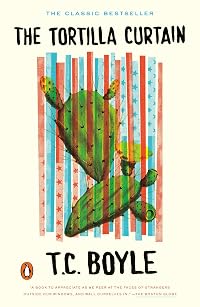
The first book by T. C. Boyle that I ever read was The Tortilla Curtain. Living as I do in Canada, and barely ever having a chance to travel to the United States--I have been there exactly six times in my whole life--I always wonder what life is really like there. I can watch TV drama and the news, but these do not give me enough to go on for evidence of how people actually live. It is while reading books like those of T. C. Boyle that I imagine that I am getting close to seeing what life is really like in that country that I hear so much about.
Especially the polarity between the innocent person who is so often the victim of a crime perpetrated by a scumbag with absolutely no moral scruples. This is how it would be portrayed in some show more other media. However, when you find out that the perpetrator was a victim himself, and that he finds it impossible to escape from his evil ways, it highlights just how much all of us struggle between good and evil in our own lives.
I have ended up collecting and reading about 90% of the total output of T. C. Boyle and I plan on never giving up these books, if I can avoid it, as I would like to read these again over whatever period of years I have left in my life. He is definitely a good friend reading-wise. After Talk Talk, I read Drop City, which I will also try to review later. show less
Especially the polarity between the innocent person who is so often the victim of a crime perpetrated by a scumbag with absolutely no moral scruples. This is how it would be portrayed in some show more other media. However, when you find out that the perpetrator was a victim himself, and that he finds it impossible to escape from his evil ways, it highlights just how much all of us struggle between good and evil in our own lives.
I have ended up collecting and reading about 90% of the total output of T. C. Boyle and I plan on never giving up these books, if I can avoid it, as I would like to read these again over whatever period of years I have left in my life. He is definitely a good friend reading-wise. After Talk Talk, I read Drop City, which I will also try to review later. show less
This was the first Boyle with a plot for me and it was also the weakest. I don’t think he knows what to do when there is a goal to accomplish. He got sidetracked by trying to build characters (all of whom had anger issues) and then when he remembered about plot, it felt tacked-on and not very well thought-out. The cord of the story is supposed to be taut, but it gets too much slack in its line and tension and angst fall. The situation is frightening and the attitude of Peck is so appalling that Boyle should have had an easy time of keeping the reader fully engaged, but he loses us and that makes the terrible ending somehow easier to bear. We were cheated out of payback, but somehow we knew all along we wouldn’t get it.
There were show more some interesting insights into being deaf, though. The difference going deaf after learning language skills makes. How and when to play the deaf card. How it is sometimes not so hard to ‘pass’ and how at other times it is impossible. How little difference it made to Bridger.
And the aspect of total identity theft was frightening as well. I’m sure my base identifiers have been compromised a ton of times in my life as others’ have as well. It’s a wonder there isn’t a lot more of this kind of thing. There is insurance for it though, so maybe it is. Very scary though and Boyle did a good job of reflecting the anger and helplessness that comes with being a victim of this kind of crime. Dana had some remarkably unsympathetic people in her life though; I can’t believe that real people would be so hard and heap on insult after injury. But I suppose that’s what makes it a novel. show less
There were show more some interesting insights into being deaf, though. The difference going deaf after learning language skills makes. How and when to play the deaf card. How it is sometimes not so hard to ‘pass’ and how at other times it is impossible. How little difference it made to Bridger.
And the aspect of total identity theft was frightening as well. I’m sure my base identifiers have been compromised a ton of times in my life as others’ have as well. It’s a wonder there isn’t a lot more of this kind of thing. There is insurance for it though, so maybe it is. Very scary though and Boyle did a good job of reflecting the anger and helplessness that comes with being a victim of this kind of crime. Dana had some remarkably unsympathetic people in her life though; I can’t believe that real people would be so hard and heap on insult after injury. But I suppose that’s what makes it a novel. show less
I had to chuckle when I read the review below (sent to me by a friend when I was trying to decide whether to post these comments - I didn't finish - so this is not a full review). It is reassuring that I am not the only one to find TC Boyle unpredictable!
I've pondering what to do about my latest fiction read, Talk Talk by TC Boyle - My 'regular' fiction (mostly contemp novels) reading has been very sketchy lately, that is, I haven't been very engaged by most of the novels I pick up. They feel either contrived or overly detailed or I find I could care less about the protagonist - and sometimes all three at once - what this means I cannot say, although I suspect it has more to do with me than most of the books. On the other hand, this is show more an experience I've had with Boyle again and again - most of his books engage me from start to finish, and one, Drop City is in my 'top ten' novel list, but about 1/3 of them become so tedious (the Frank Lloyd Wright being the most recent case) I just have to quit. Some are in a sort of grey zone, and these I sometimes furtively quit and others I plodge on dutifully since he is an author I like and respect so much. In this story a deaf woman (pretty and smart - a Marlee Matlin, for sure) has her identity stolen and her life goes to pieces. The narrative shifts between her, her boyfriend (my favorite character, easily) and the man who has taken her identity (her first name, Dana, is gender neutral.) The thing that is interesting about Boyle is that such diverse things that grabs his interest - from the health craze of the early 20th century, to Wright, to Ted Kinsey, to an artist colony, to climate change.... however the inspiration hits him, he researches intensely and then he writes, blending the story with facts - bringing to life, in this case, how it feels to have your identity taken over by someone else. I think where I began to lose interest was with the entry of the thief - he's meant to be, I think, an equally complex character, someone you may not like, but you might come to see is a lost soul.... so that his actions make a kind of sense. Well, I just find him tedious and shallow, so I don't care. I actively don't want to read about him! So if I skip all the parts with him in it, what is the point? ( No stars since I did not finish.) show less
I've pondering what to do about my latest fiction read, Talk Talk by TC Boyle - My 'regular' fiction (mostly contemp novels) reading has been very sketchy lately, that is, I haven't been very engaged by most of the novels I pick up. They feel either contrived or overly detailed or I find I could care less about the protagonist - and sometimes all three at once - what this means I cannot say, although I suspect it has more to do with me than most of the books. On the other hand, this is show more an experience I've had with Boyle again and again - most of his books engage me from start to finish, and one, Drop City is in my 'top ten' novel list, but about 1/3 of them become so tedious (the Frank Lloyd Wright being the most recent case) I just have to quit. Some are in a sort of grey zone, and these I sometimes furtively quit and others I plodge on dutifully since he is an author I like and respect so much. In this story a deaf woman (pretty and smart - a Marlee Matlin, for sure) has her identity stolen and her life goes to pieces. The narrative shifts between her, her boyfriend (my favorite character, easily) and the man who has taken her identity (her first name, Dana, is gender neutral.) The thing that is interesting about Boyle is that such diverse things that grabs his interest - from the health craze of the early 20th century, to Wright, to Ted Kinsey, to an artist colony, to climate change.... however the inspiration hits him, he researches intensely and then he writes, blending the story with facts - bringing to life, in this case, how it feels to have your identity taken over by someone else. I think where I began to lose interest was with the entry of the thief - he's meant to be, I think, an equally complex character, someone you may not like, but you might come to see is a lost soul.... so that his actions make a kind of sense. Well, I just find him tedious and shallow, so I don't care. I actively don't want to read about him! So if I skip all the parts with him in it, what is the point? ( No stars since I did not finish.) show less
This book is a great deal about being deaf in America, the way you are treated and the helplessness you might feel when so many agencies, including the criminal justice system fail you completely. It's about the prejudices of everyone from the ignorant waitress to your hearing boyfriend's mother. It's filled with incisive tragedies that can make up someone's every day experiences, not to mention some larger dramatic ones that involve major destruction.
But this book is also about the ineptitude of our law enforcement in dealing with "white collar criminals" or people who look rich and wealthy but are really stealing the identities of others and going from one person to the next, ruining lives and for awhile without them even catching on. show more It seems so easy for the villain, Peck, to do so and get away with it and he seems to feel entitled to do just that. He can't believe the audacity of one of his victims actually seeking him out and instead of feeling guilty (especially considering he's unknowingly targeted a woman who is deaf) he feels rage.
This novel alternates between these two protagonists, Dana the woman who is deaf struggling to get to the bottom of this thief who stole her identity and became the impetus to so much in her life going absolutely wrong and the thief himself who, btw, loves Reggae. From the outsider, Dana's actions seem brave and understandable whereas the thief, Peck, seems to be insane and ignorant and one can't help but feel empathy for her and disgust for people like Peck who make his kinds of decisions...even more so because these people actually exist and the inept cops don't seem too hard pressed to track them down.
This book is also about the futility in life, too, and one can't help but feel like things are a little too unresolved and we long for more of a final feeling to the ending but this is written like real life in many ways I think...and that's all I'll say about that or I worry I'll give away too much.
Read this book if you are interested in the experience of someone with a disability because it seems realistic in its depiction of cruelty or if you are intrigued by the idea of identity theft. show less
But this book is also about the ineptitude of our law enforcement in dealing with "white collar criminals" or people who look rich and wealthy but are really stealing the identities of others and going from one person to the next, ruining lives and for awhile without them even catching on. show more It seems so easy for the villain, Peck, to do so and get away with it and he seems to feel entitled to do just that. He can't believe the audacity of one of his victims actually seeking him out and instead of feeling guilty (especially considering he's unknowingly targeted a woman who is deaf) he feels rage.
This novel alternates between these two protagonists, Dana the woman who is deaf struggling to get to the bottom of this thief who stole her identity and became the impetus to so much in her life going absolutely wrong and the thief himself who, btw, loves Reggae. From the outsider, Dana's actions seem brave and understandable whereas the thief, Peck, seems to be insane and ignorant and one can't help but feel empathy for her and disgust for people like Peck who make his kinds of decisions...even more so because these people actually exist and the inept cops don't seem too hard pressed to track them down.
This book is also about the futility in life, too, and one can't help but feel like things are a little too unresolved and we long for more of a final feeling to the ending but this is written like real life in many ways I think...and that's all I'll say about that or I worry I'll give away too much.
Read this book if you are interested in the experience of someone with a disability because it seems realistic in its depiction of cruelty or if you are intrigued by the idea of identity theft. show less
Members
- Recently Added By
Published Reviews
ThingScore 63
Mr. Boyle unfortunately bails on the reader at the last moment: either he was unable to think of a plausible — or satisfying — ending, or he was in such a rush to finish his story that he simply tacked on the first scenario that came to mind. In any case, it's a sorry and pallid conclusion to what might have been one of this gifted writer's more winning novels.
added by SqueakyChu
On the surface, this novel of identity theft delivers page-turning suspense, but it also delves deeper into the essence of identity. By the riveting climax, characters and readers alike recognize that the very concept of a fixed, static identity is a delusion.
added by Richardrobert
Author Information

103+ Works 28,039 Members
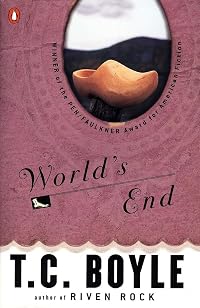
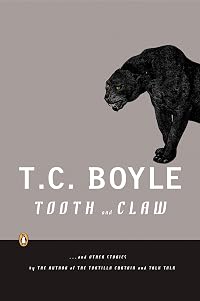
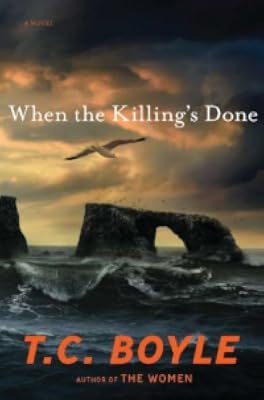
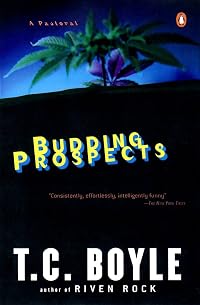
T. C. Boyle was born Thomas John Boyle in Peekskill, New York on December 2, 1948. He received a B.A. in English and history from SUNY Potsdam in 1968, a MFA from the University of Iowa Writers' Workshop in 1974, and a Ph.D. degree in nineteenth century British literature from the University of Iowa in 1977. He has been a member of the English show more department at the University of Southern California since 1978. He has written over 20 books including After the Plague, Drop City, The Inner Circle, Tooth and Claw, The Human Fly, Talk Talk, The Women, Wild Child, and When the Killing's Done. He has received numerous awards including the PEN/Faulkner Award for best novel of the year for World's End; the PEN/Malamud Prize in the short story for T. C. Boyle Stories; and the Prix Médicis Étranger for best foreign novel in France for The Tortilla Curtain. His title's Sam Miguel and The Harder They Caome made The New York Times Best Seller List. (Bowker Author Biography) T. Coraghessan Boyle is the best-selling author of "T.C. Boyle Stories," "Riven Rock," "The Tortilla Curtain," "Without a Hero," "The Road to Wellville," "East Is East," "If the River Was Whiskey," "World's End" (winner of the PEN/Faulkner Award), "Greasy Lake," "Budding Prospects," "Water Music," & "Descent of Man" (all available from Penguin). His fiction regularly appears in major American magazines, including "The New Yorker," "GQ," "The Paris Review," "Playboy," & "Esquire." He lives in Santa Barbara, California. (Publisher Provided) show less
Awards and Honors
Work Relationships
Is abridged in
Common Knowledge
- Canonical title
- Talk Talk
- Original title
- Talk Talk
- Original publication date
- 2006
- People/Characters
- Dana Halter; Bridger Martin; William "Peck" Wilson
- Important places
- San Roque, California, USA; Marin County, California, USA
- Dedication
- For Russell Timothy Miller and in memory of Jack and Geraldine
- First words
- She was running late, always running late, a failing of hers, she knew it, but then she couldn't find her purse and once she did manage to locate it (underneath her blue corduroy jacket on the coat tree in the front hall), sh... (show all)e couldn't find her keys.
- Last words*
- (Click to show. Warning: May contain spoilers.)Er blickte hinauf, überwölbt vom blauesten Himmel des Universums.
*Some information comes from Common Knowledge in other languages. Click "Edit" for more information.
Classifications
Statistics
- Members
- 1,374
- Popularity
- 17,295
- Reviews
- 40
- Rating
- (3.49)
- Languages
- 7 — Chinese, Danish, Dutch, English, French, German, Italian
- Media
- Paper, Audiobook, Ebook
- ISBNs
- 31
- ASINs
- 6