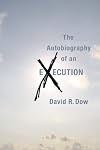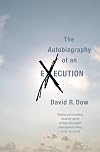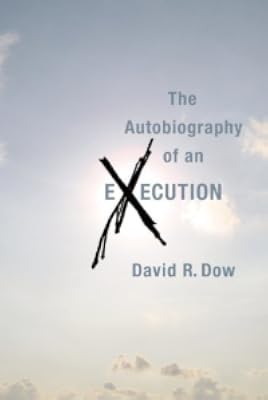
The Autobiography of an Execution
by David R. Dow
On This Page
Description
"A riveting, artfully written memoir of a lawyer's life as he races to prevent death row inmates from being executed"--Provided by the publisher.Tags
Recommendations











Member Recommendations

Member Reviews
As a death penalty defense attorney in Houston, Texas, David Dow's job is to try to prevent the state from killing people. Most of the people he tries to help are themselves killers, but this book focuses follows a peculiar case: one in which the man Dow's defending appears to be innocent. Just by the nature of the subject matter, parts of the book could pass for journalism, true crime or procedural drama. For the most part, though, it's a memoir.
There's no way in hell I could do Dow's job. It'd be bad enough dealing with murderers and watching them die, but I know for certain I'd never be able to withstand a hopeless bureaucracy that makes every act a likely failure. Dow's memoir is a reflection on how and why he perseveres in this show more work, and how the system of capital punishment affects victims, convicts, attorneys, and all their families.
Dow's wife Katya and young son Lincoln are his means of coping with his work (and the occasional cigar and glass of bourbon, straight up). I noticed some other reviewers here complained about the focus on his family and lifestyle, but it's the whole point of this book. Many of the grim crime tales of the book are revealed in flashbacks that strike him as he takes his kid to softball practice or goes to dinner with his wife. It only makes sense that the trauma of his line of work would seep into every corner of Dow's life and aspect of his being, but I found it fascinating to hear him pick it apart.
I was surprised by the beauty the prose in a book written by a defense attorney. It has a sparse, rugged poetry that reminded me of Hemingway or something. As a Texas native, the tone and details all rang true, along with the twang and sass of the supporting cast. Dow's family in particular is written with a tender, loving familiarity that's often really touching, especially early on.
I'll admit by the end of the book I was tiring of some of the details. I might have skimmed some of the later leave-it-to-beaver father/son moments. Sometimes the sentimentality is overblown. I also probably didn't need to know that one of the characters was a cyclist in college, or about a trip to get donuts. In short, sometimes it shows that Dow's not a professional memoir-writer, but that's also part of the charm.
Being memoir, the book's main characters are Dow and his conflicted self-image. I can see someone reading the book as self-aggrandizing, self-pitying or both. Sometimes Dow's a rugged, canny cowboy. Sometimes he's an overly-sentimental fop. For me, picking Dow's self-image from reality is part of the book's interest. He's a complex character with an agenda of his own, and he's figuring his story out as he goes. For the most part, I found him thoughtful and sympathetic.
Love him or hate him, though, his memoir's a page-turner I've been thinking about it since I finished it. It's a heart-rendering portrait of perseverance in the face of daily hopelessness and trauma, and a sobering counterpoint to traditional true-crime stories. show less
There's no way in hell I could do Dow's job. It'd be bad enough dealing with murderers and watching them die, but I know for certain I'd never be able to withstand a hopeless bureaucracy that makes every act a likely failure. Dow's memoir is a reflection on how and why he perseveres in this show more work, and how the system of capital punishment affects victims, convicts, attorneys, and all their families.
Dow's wife Katya and young son Lincoln are his means of coping with his work (and the occasional cigar and glass of bourbon, straight up). I noticed some other reviewers here complained about the focus on his family and lifestyle, but it's the whole point of this book. Many of the grim crime tales of the book are revealed in flashbacks that strike him as he takes his kid to softball practice or goes to dinner with his wife. It only makes sense that the trauma of his line of work would seep into every corner of Dow's life and aspect of his being, but I found it fascinating to hear him pick it apart.
I was surprised by the beauty the prose in a book written by a defense attorney. It has a sparse, rugged poetry that reminded me of Hemingway or something. As a Texas native, the tone and details all rang true, along with the twang and sass of the supporting cast. Dow's family in particular is written with a tender, loving familiarity that's often really touching, especially early on.
I'll admit by the end of the book I was tiring of some of the details. I might have skimmed some of the later leave-it-to-beaver father/son moments. Sometimes the sentimentality is overblown. I also probably didn't need to know that one of the characters was a cyclist in college, or about a trip to get donuts. In short, sometimes it shows that Dow's not a professional memoir-writer, but that's also part of the charm.
Being memoir, the book's main characters are Dow and his conflicted self-image. I can see someone reading the book as self-aggrandizing, self-pitying or both. Sometimes Dow's a rugged, canny cowboy. Sometimes he's an overly-sentimental fop. For me, picking Dow's self-image from reality is part of the book's interest. He's a complex character with an agenda of his own, and he's figuring his story out as he goes. For the most part, I found him thoughtful and sympathetic.
Love him or hate him, though, his memoir's a page-turner I've been thinking about it since I finished it. It's a heart-rendering portrait of perseverance in the face of daily hopelessness and trauma, and a sobering counterpoint to traditional true-crime stories. show less
David Dow works in the belly of the beast. He's the litigation director of the Texas Defender Service, which represents death row inmates, mostly in federal habeas corpus proceedings (or what's left of them), and provides assistance to capital trial lawyers. The TDS' mission is to "establish a fair and just criminal justice system in Texas". Yeah, well, good luck with that one. In Texas, they'd as soon send you to Death Row as look at you.
This isn't, however, a diatribe against capital punishment. It's about how this work affects someone who does it, how you balance your commitment to someone whose life is, quite literally, in your hands with your commitment to your family. He misses the Hallowe'en visit to a haunted house he promised show more his son. His family goes on vacation without him. He tries to juggle overwhelming workloads and not enough time and resources, and how that means that his office can't do anything to help a man who believes that Jesus has arranged that he will walk out of Death Row, a mentally ill man who was allowed to represent himself at trial and on appeal.
The "hook" here is the story of Henry Quaker, a man convicted of killing his wife and children, whom Dow is representing. Then he receives a letter from another inmate, telling him that Quaker is innocent, that this man had hired another to kill a woman who had been stealing from him and that he'd killed the wrong person. What happened? Hell, this is Texas. What do you think happened?
There's one thing that bothers me about this book. Dow writes about the death penalty system that "the abolitionists' single-minded focus on innocence makes them seem as indifferent to principle as the vigilantes are." And there is something to that. But it seems to me that by centering this memoir around the execution of a probably innocent man, Dow is doing the same thing. It's as if he felt that writing about representing the guilty would somehow diminish his memoir, and I don't believe it would.
Dow tells the story of a childhood friend of his wife's, a famous artist, who, inebriated, reveals herself to be "racist, anti-Semitic, homophobic, narcissistic, and altogether unlikable." Dow says that he realized that his "clients were better people than this piece of garbage, and they even killed somebody." But, you know, I take a different lesson. Katya tells him, "She's been my friend since she was eight years old, which is way before she was a terrible person. What am I supposed to do? Abandon her?" They remain friends for the same reason we ask juries not to kill our clients: we are more than the worst thing we've ever done.
(The names of people in this book have mostly been changed, some circumstances altered, in order to respect the confidences of clients. In an appendix, Meredith Duncan, a professor at the University of Houston Law Center, discusses the duty of confidentiality that lawyers have to their clients. I appreciated this very much, because it's something most people don't understand, particularly when it comes to people like the Cook County public defenders whose client confided in to them that he was responsible for a murder for which another man had been convicted. Counsel kept the secret for years, until the client, who had given them permission to reveal the confidence after his death, died. The lawyers were vilified, but they were right.) show less
This isn't, however, a diatribe against capital punishment. It's about how this work affects someone who does it, how you balance your commitment to someone whose life is, quite literally, in your hands with your commitment to your family. He misses the Hallowe'en visit to a haunted house he promised show more his son. His family goes on vacation without him. He tries to juggle overwhelming workloads and not enough time and resources, and how that means that his office can't do anything to help a man who believes that Jesus has arranged that he will walk out of Death Row, a mentally ill man who was allowed to represent himself at trial and on appeal.
The "hook" here is the story of Henry Quaker, a man convicted of killing his wife and children, whom Dow is representing. Then he receives a letter from another inmate, telling him that Quaker is innocent, that this man had hired another to kill a woman who had been stealing from him and that he'd killed the wrong person. What happened? Hell, this is Texas. What do you think happened?
There's one thing that bothers me about this book. Dow writes about the death penalty system that "the abolitionists' single-minded focus on innocence makes them seem as indifferent to principle as the vigilantes are." And there is something to that. But it seems to me that by centering this memoir around the execution of a probably innocent man, Dow is doing the same thing. It's as if he felt that writing about representing the guilty would somehow diminish his memoir, and I don't believe it would.
Dow tells the story of a childhood friend of his wife's, a famous artist, who, inebriated, reveals herself to be "racist, anti-Semitic, homophobic, narcissistic, and altogether unlikable." Dow says that he realized that his "clients were better people than this piece of garbage, and they even killed somebody." But, you know, I take a different lesson. Katya tells him, "She's been my friend since she was eight years old, which is way before she was a terrible person. What am I supposed to do? Abandon her?" They remain friends for the same reason we ask juries not to kill our clients: we are more than the worst thing we've ever done.
(The names of people in this book have mostly been changed, some circumstances altered, in order to respect the confidences of clients. In an appendix, Meredith Duncan, a professor at the University of Houston Law Center, discusses the duty of confidentiality that lawyers have to their clients. I appreciated this very much, because it's something most people don't understand, particularly when it comes to people like the Cook County public defenders whose client confided in to them that he was responsible for a murder for which another man had been convicted. Counsel kept the secret for years, until the client, who had given them permission to reveal the confidence after his death, died. The lawyers were vilified, but they were right.) show less
David Dow is a death penalty lawyer in Texas – this must be one of the hardest jobs to do, *especially* in Texas. He believes that the death penalty is always wrong and fights to save his clients’ lives, while acknowledging that the vast majority of them are guilty of their crimes. He freely admits that he doesn’t like a lot of his clients but he is compelled to do what he believes is right.
This book however, while discussing other death penalty cases, focuses mainly on the case of Henry Quaker, a man who is convicted of murdering his wife and children – and who was almost certainly innocent of the crime. In discussing the various measures that David and his team take to try and save Quaker’s life, some deeply uncomfortable show more truth about the justice system are revealed. Quaker was a poor black man with a deeply incompetent trial lawyer. Despite there being another very viable suspect, and several reasons why Quaker almost certainly did not commit the crime, the lawyer failed to disclose any of this at the trial. Indeed, the book talks about public defender lawyers who literally go to sleep in the middle of trial.
I am completely against the death penalty in any and all circumstances, so I was also predisposed to be drawn into this book (I can’t say I enjoyed it, and it’s not a book that is really meant to be enjoyed, but it needs to be read). However, whatever anyone’s views, the truths about the ‘justice’ system revealed here should make anyone feel uncomfortable about the death penalty. I felt angry and frustrated learning about how bureaucracy and red tape, the laziness of judges, the incompetence of lawyers all have more to do with someone’s fate than the evidence for or against them.
The author also talks about his home life with his wife and young son. He has a lovely family and he acknowledges this. But there is no doubt that the job he does would have an effect on anybody, and he includes snapshots of their lives to illustrate this.
I recommend this book very highly. It is not always an easy read, but it is as compelling as any novel and the lessons contained within need to be heard. show less
This book however, while discussing other death penalty cases, focuses mainly on the case of Henry Quaker, a man who is convicted of murdering his wife and children – and who was almost certainly innocent of the crime. In discussing the various measures that David and his team take to try and save Quaker’s life, some deeply uncomfortable show more truth about the justice system are revealed. Quaker was a poor black man with a deeply incompetent trial lawyer. Despite there being another very viable suspect, and several reasons why Quaker almost certainly did not commit the crime, the lawyer failed to disclose any of this at the trial. Indeed, the book talks about public defender lawyers who literally go to sleep in the middle of trial.
I am completely against the death penalty in any and all circumstances, so I was also predisposed to be drawn into this book (I can’t say I enjoyed it, and it’s not a book that is really meant to be enjoyed, but it needs to be read). However, whatever anyone’s views, the truths about the ‘justice’ system revealed here should make anyone feel uncomfortable about the death penalty. I felt angry and frustrated learning about how bureaucracy and red tape, the laziness of judges, the incompetence of lawyers all have more to do with someone’s fate than the evidence for or against them.
The author also talks about his home life with his wife and young son. He has a lovely family and he acknowledges this. But there is no doubt that the job he does would have an effect on anybody, and he includes snapshots of their lives to illustrate this.
I recommend this book very highly. It is not always an easy read, but it is as compelling as any novel and the lessons contained within need to be heard. show less
This is a brilliant memoir/creative nonfiction that has intensified my opposition to the death penalty. The author runs a legal aid clinic that handles death row inmates' appeals in Texas, a state notorious for its large number of executions. I knew the system was seriously flawed, but I didn't realize it was THIS bad. I was frankly horrified by what I read.
There are several cases in this story, but the central case involves a man convicted of murdering his wife and children, who is facing execution in a matter of weeks. His trial lawyer was really bad and basically presented no defense at all. As the attorney works on the appeal, he discovers clear and convincing evidence that his client is innocent. But can he stop the execution? To show more coin a cliché, I was on the edge of my seat wondering what would happen next.
This book qualifies as "creative nonfiction" because it's not strictly factual. The author disguised his clients and all the details of the crimes, and changed everyone's names, so that the real people involved could not be identified. He says so in the introduction to the book. There's also a useful essay in the back written by another lawyer, explaining the restrictions of attorney-client privilege and why Dow had to write the book this way.
This is a frankly stunning book. I think anyone interested in the criminal justice system and the death penalty -- on both sides of the debate -- should read it. show less
There are several cases in this story, but the central case involves a man convicted of murdering his wife and children, who is facing execution in a matter of weeks. His trial lawyer was really bad and basically presented no defense at all. As the attorney works on the appeal, he discovers clear and convincing evidence that his client is innocent. But can he stop the execution? To show more coin a cliché, I was on the edge of my seat wondering what would happen next.
This book qualifies as "creative nonfiction" because it's not strictly factual. The author disguised his clients and all the details of the crimes, and changed everyone's names, so that the real people involved could not be identified. He says so in the introduction to the book. There's also a useful essay in the back written by another lawyer, explaining the restrictions of attorney-client privilege and why Dow had to write the book this way.
This is a frankly stunning book. I think anyone interested in the criminal justice system and the death penalty -- on both sides of the debate -- should read it. show less
Somewhere out there, there might be a book out there that will convince death penalty advocates that the death penalty is an immoral, inefficient, capricious, and unnecessary punishment, but this isn't it. "The Autobiography of an Execution," whose author has the unenviable task of handling the appeals of Texas death row inmates who cannot afford their own counsel, is a curiously personal take on a social issue which reveals as much about its author as about the system he works in. The book provides parallel accounts of the execution of an inmate known as "Henry Quaker," whom the author believes to be innocent, and the author's own relationship with his wife and young son. While the reader gets an idea of the psychic strain Mr. Dow show more endures to keep these aspects of his life compartmentalized, the sections in which he describes his feelings for an interactions with his son often drift toward sentimentality. His description of his last-ditch attempts to prove Quaker's innocence and save his life fare better, offering a clear-eyed description of the execution process without becoming dry reportage. Dow has a keen eye for absurdity, perhaps developed out of sheer necessity, and he's good at describing moments in which the inmates' unpredictable, sometimes pathetic humanity butts up against a legal process that can seem simultaneously unfeeling and chaotic. Dow describes the rituals that accompany a state execution, the waiting, the last meal, the final goodbyes, with real sensitivity.
Dow is well aware of his position as one of the few people who has to get his hands dirty enforcing a social policy that most people are comfortable to support from a distance, and his book's most concrete contribution to the death penalty debate might be his decision to give his readers a glimpse of his average workday. It's difficult, after all, to get too excited about the execution of an innocent man when you've got another death row inmate's case waiting for you when you return to the office. Dow describes a legal system where his clients' lives depend on the judicial decisions, and sometimes the whims, of judges and elected officials who don't seem to appreciate the gravity of the decisions they've been tasked with and aren't required to be present at the executions they authorize. Quaker's story isn't unique; Dow claims to have represented seven clients he believes were innocent of the crimes for which they were executed. If anything, Quaker's experience is representative of a slipshod, deeply dysfunctional legal process.
How much the reader enjoys "Autobiography of an Execution" might ultimately depend on how they get along with its author. Dow paints himself as a prickly, complex character. He's a loner who's not afraid to let you know how much he depends on his family, a lawyer driven by an unshakable moral compass who doesn't mind engaging in endless, pointless legal maneuverings to save his clients' lives, a man dwarfed by the demands of the job he's taken on who doesn't mind letting you know that he thinks of himself as a damn good lawyer. Dow is also nothing if not forthcoming, transcribing in minute detail not just the emotional hardship faced by those in his chosen line of work but also his stray thoughts, daydreams, and doubts. "Autobiography" makes for an interesting read, if perhaps not a great book. show less
Dow is well aware of his position as one of the few people who has to get his hands dirty enforcing a social policy that most people are comfortable to support from a distance, and his book's most concrete contribution to the death penalty debate might be his decision to give his readers a glimpse of his average workday. It's difficult, after all, to get too excited about the execution of an innocent man when you've got another death row inmate's case waiting for you when you return to the office. Dow describes a legal system where his clients' lives depend on the judicial decisions, and sometimes the whims, of judges and elected officials who don't seem to appreciate the gravity of the decisions they've been tasked with and aren't required to be present at the executions they authorize. Quaker's story isn't unique; Dow claims to have represented seven clients he believes were innocent of the crimes for which they were executed. If anything, Quaker's experience is representative of a slipshod, deeply dysfunctional legal process.
How much the reader enjoys "Autobiography of an Execution" might ultimately depend on how they get along with its author. Dow paints himself as a prickly, complex character. He's a loner who's not afraid to let you know how much he depends on his family, a lawyer driven by an unshakable moral compass who doesn't mind engaging in endless, pointless legal maneuverings to save his clients' lives, a man dwarfed by the demands of the job he's taken on who doesn't mind letting you know that he thinks of himself as a damn good lawyer. Dow is also nothing if not forthcoming, transcribing in minute detail not just the emotional hardship faced by those in his chosen line of work but also his stray thoughts, daydreams, and doubts. "Autobiography" makes for an interesting read, if perhaps not a great book. show less
The Autobiography of an Execution actually deals in detail with three executions. One of the defendants is obviously guilty and is pretty much a despicable human being. A second defendant is put to death despite having an IQ of 53, well below the limit defining people as mentally fit. However, what makes this book such a powerful work is the third defendant who despite obviously being innocent, is trapped in judicial process that almost systematically executes anyone entering it. The author tells us of his many attempts to get these men off death row, but what becomes very clear despite what you might think or see in the movies, there are very few cases where the defendants get that last minute reprieve. Whether the criminal is a show more deplorable monster, mentally unfit, or even innocent, once a defendant enters that death row system. there's little chance of escaping it. show less
Best book I've read so far this year. Granted, it's only February, but still. It is a memoir written by a lawyer who defends death penalty cases in Texas. I can't imagine a more frustrating job. He must feel like Sisyphus.
I'm opposed to the death penalty and fascinated by death penalty law, so this book was right in my wheelhouse. But I found myself caring as much about his relationship with his wife and son as I did about his cases. It is the best kind of memoir: one written by someone with a unique life and unique perspective, who has something to say and says it well.
I almost went to law school after college, and I've always wondered what kind of lawyer I would have been. I now know I couldn't be David Dow. I don't think I'd want to show more be married to him. But I am glad he exists. show less
I'm opposed to the death penalty and fascinated by death penalty law, so this book was right in my wheelhouse. But I found myself caring as much about his relationship with his wife and son as I did about his cases. It is the best kind of memoir: one written by someone with a unique life and unique perspective, who has something to say and says it well.
I almost went to law school after college, and I've always wondered what kind of lawyer I would have been. I now know I couldn't be David Dow. I don't think I'd want to show more be married to him. But I am glad he exists. show less
Members
- Recently Added By
Published Reviews
ThingScore 75
In describing the fraught relationship between law and truth, Dow laments the fact that when it comes to the law, “the facts matter, but the story matters more.” But having created a brilliant, heart-rending book that can’t be properly fact-checked, Dow almost seems to have joined the ranks of people who will privilege emotion over detail, and narrative over precision.
added by Shortride
Author Information

9 Works 532 Members
Awards and Honors
Common Knowledge
- Canonical title
- The Autobiography of an Execution
- Alternate titles
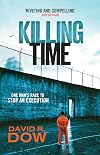
- Killing Time: One Man's Race to Stop an Execution
- Original publication date
- 2010-02-03
- Epigraph
- Qué significa persistir
en el callejón de la muerte?
—Pablo Neruda,
El libro de las preguntas, LXII
He thought that in the history of the world it might even be that there was more punishment than crime but he took small comfort from it.
—Cormac McCarthy, The Road - Dedication
- In Memory of Peter G.
- First words
- If you knew at precisely what time on exactly what day you were going to die, and that date arrived, and the hour and minute came and went, and you were not dead, would you be able to enjoy each additional second of your life... (show all), or would you be filled with dreadful anticipation that would turn relief into torture?
- Last words
- (Click to show. Warning: May contain spoilers.)But at that moment, as we walked slowly back toward where we had started, the three of us with the dog, all we talked about was what we would fix for dinner that night, and when we would come back to this spot, and about where we would go tomorrow.
- Blurbers
- Grisham, John; Cullen, Dave; Toobin, Jeffrey
Classifications
Statistics
- Members
- 287
- Popularity
- 112,258
- Reviews
- 21
- Rating
- (4.20)
- Languages
- English, French
- Media
- Paper, Audiobook, Ebook
- ISBNs
- 13
- ASINs
- 3