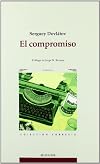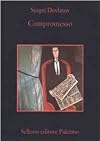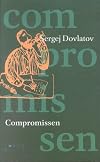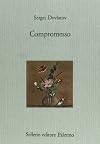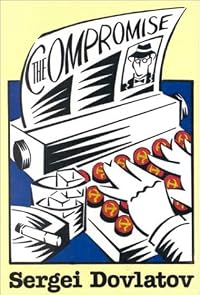
The Compromise
by Sergei Dovlatov
On This Page
Description
Follows the adventures of a Communist newspaperman who cannot accurately report events because of conflicts with party dogma or incompetence.Tags
Recommendations















Member Reviews
One of the funniest books by a Russian writer that I've ever read. This isn't to say that it's not serious, but it manages to tackle the difficult issues of censorship and finding meaning in life in Soviet Estonia with a rather lighthearted tone that's very refreshing and a lot of fun to read. "Don't drink so much. Because then you can't make sex." is just one of many important lessons taught here. I wonder how much of "The Compromise" is autobiographical, since the narrator and protagonist is based on the author, right down to the name.
А я, оказывается, потихоньку начинаю забывать, как оно было всё в Советском Союзе. Спасибо Довлатову, вспомнила, посмеялась. Всё-таки умение незло, не осуждая, смеяться над нелепостями жизни - великая вещь! Книга хороша и как очередное напоминание, что средствам массовой информации слепо верить никак нельзя. Даже самым "честным".
This is a well-written, sharp set of anecdotes which sometimes strays into trite or tired subjects in the life of an Estonian journalist. Written in the first person, the author writes about a series of 'Compromises' of various types or another that he has to make in his life, relationships, and mostly his journalistic output due to the ironic rules of the State in the USSR. Touching loosely and irreverently on topics such as alcoholism, bureaucracy, and struggle against poverty, the book is compact and readable. At times enchanting, the reader may find themselves being frustrated that a writer with this skill is writing interesting and at times irreverent anecdotes rather than a masterwork of fiction.
This is a quick read, very funny, great satire on life in the Soviet block (Estonia in this case)
Un jefe capaz de detectar burdas faltas ideológicas en el orden alfabético, un instructor que interpreta versos infantiles en clave política, una vigilia en la maternidad esperando a que nazca el ciudadano número 400.000 (presentable), bellezas proletarias sin un rublo en el bolsillo, vacas socialistas de ubres prodigiosas, un funeral de cuerpo presente con muerto equivocado... El compromiso es un volumen de historias reales, primero hilarantes y luego desoladoras, recogidas por la magistral pluma de Dovlátov, un clásico moderno de las letras rusas por descubrir en España.
May 23, 2018Spanish
Un tuffo nell’Unione sovietica brezneviana e più precisamente un tour nel giornalismo di regime, guidati da una penna realmente anticonformista, con la capacità di mettere in ridicolo un sistema nel quale il senso del ridicolo è totalmente venuto meno.
Ogni capitolo presenta una notizia (generalmente irrilevante) confezionata e propinata ai lettori, seguita dal retroscena della notizia stessa. Viene così svelato ciò che sta dietro o sotto la narrazione ufficiale e messo sotto la lente di ingrandimento il livello di mistificazione deliberatamente e sistematicamente perseguito. Certo l’ambiente, quello dell’Estonia sovietica, nonché il tasso alcolico che accompagna queste pagine, sono lontani dal nostro mondo, ma la ricerca del show more consenso è un dato familiare che si ripropone sotto ogni latitudine e in ogni tipo di regime, totalitario e non. La manipolazione dell’opinione pubblica anche in contesti liberali, avviene spesso attraverso la creazione di personaggi esemplari o l’invenzione di storie destinate a suscitare interesse o emulazione. Nell’Estonia sovietica la narrazione di regime impone figure, più o meno pateticamente inventate, come la valorosa mungitrice di quantità record di latte, o il quattrocentomillesimo nato a Tallin, di famiglia integralmente e gloriosamente sovietica e dal (finto) nome eroico. Non vedo in questo gran differenza con personaggi imposti oggi dalla televisione o promossi e accreditati da certa stampa ‘gossipara’, la cui missione principale è intrattenere gli allocchi, creando presunti ’miti’ dell’effimero destinati spesso a sparire con alla stessa velocità con la quale sono stati creati. Nel nostro caso i miti sono costruiti intorno alla gioventù, alla bellezza, al successo (di qualunque tipo esso sia), nell’Unione sovietica l’ingrediente base era la produttività e l’entusiasmo per le magnifiche realizzazioni del comunismo. show less
Ogni capitolo presenta una notizia (generalmente irrilevante) confezionata e propinata ai lettori, seguita dal retroscena della notizia stessa. Viene così svelato ciò che sta dietro o sotto la narrazione ufficiale e messo sotto la lente di ingrandimento il livello di mistificazione deliberatamente e sistematicamente perseguito. Certo l’ambiente, quello dell’Estonia sovietica, nonché il tasso alcolico che accompagna queste pagine, sono lontani dal nostro mondo, ma la ricerca del show more consenso è un dato familiare che si ripropone sotto ogni latitudine e in ogni tipo di regime, totalitario e non. La manipolazione dell’opinione pubblica anche in contesti liberali, avviene spesso attraverso la creazione di personaggi esemplari o l’invenzione di storie destinate a suscitare interesse o emulazione. Nell’Estonia sovietica la narrazione di regime impone figure, più o meno pateticamente inventate, come la valorosa mungitrice di quantità record di latte, o il quattrocentomillesimo nato a Tallin, di famiglia integralmente e gloriosamente sovietica e dal (finto) nome eroico. Non vedo in questo gran differenza con personaggi imposti oggi dalla televisione o promossi e accreditati da certa stampa ‘gossipara’, la cui missione principale è intrattenere gli allocchi, creando presunti ’miti’ dell’effimero destinati spesso a sparire con alla stessa velocità con la quale sono stati creati. Nel nostro caso i miti sono costruiti intorno alla gioventù, alla bellezza, al successo (di qualunque tipo esso sia), nell’Unione sovietica l’ingrediente base era la produttività e l’entusiasmo per le magnifiche realizzazioni del comunismo. show less
Sep 4, 2017Italian
Members
- Recently Added By
Lists

Russian Literature
184 works; 35 members

2024. Nuestro año literario (Juan Jiménez García)
16 works; 1 member
Author Information

146+ Works 1,484 Members
Dovlatov, who studied at Leningrad University, worked for a while as a journalist in Tallinn, Estonia. His fiction was unpublished in the Soviet Union, but he was active in unofficial literary life and was forced to leave in 1978 for publishing satirical fiction in Samizdat. After settling in the United States, he co-founded a Russian-language show more newspaper, worked as a broadcaster for Radio Liberty in New York City, and published both in major Russian emigre publications and in the U.S. press (he wrote short stories for The New Yorker). Among his books, known for their irreverent views of Soviet reality, are the autobiographical The Compromise (1981) and Ours (1983). When Dovlatov died, his works were being reissued and favorably received in Russia. (Bowker Author Biography) show less
Some Editions
Series
Belongs to Publisher Series
Work Relationships
Common Knowledge
- Canonical title*
- El compromiso
- Original title
- Компромисс
- Original publication date
- 1981
*Some information comes from Common Knowledge in other languages. Click "Edit" for more information.
Classifications
- Genres
- Fiction and Literature, General Fiction
- DDC/MDS
- 891.7344 — Literature & rhetoric Asian Literature East Indo-European and Celtic literatures Russian and East Slavic languages Russian fiction USSR 1917–1991 Late 20th century 1917–1991
- LCC
- PG3479.6 .O85 .K613 — Language and Literature Slavic languages and literatures. Baltic languages. Albanian language Slavic. Baltic. Albanian Russian literature Individual authors and works 1961-2000
- BISAC
Statistics
- Members
- 187
- Popularity
- 174,478
- Reviews
- 7
- Rating
- (3.97)
- Languages
- 13 — Catalan, Danish, Dutch, English, Finnish, French, German, Hungarian, Italian, Portuguese, Russian, Serbian, Spanish
- Media
- Paper, Ebook
- ISBNs
- 23
- ASINs
- 2