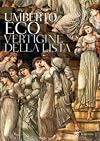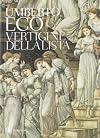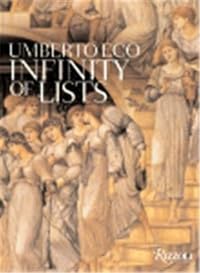
The infinity of lists: from Homer to Joyce
by Umberto Eco
On This Page
Description
Reflections on how the idea of catalogs has changed over the centuries and how, from one period to another, it has expressed the spirit of the times. Companion to the author's History of beauty and On ugliness.Tags
Recommendations



Member Reviews
The Infinity of Lists (Rizzoli, 2009) is Umberto Eco's latest volume in a series of whimsical musings (On Beauty, On Ugliness) that couple short essays by Eco with an anthology of short textual excerpts and beautifully-reproduced images which complement the texts.
Here, Eco meanders through the world of lists, defining the various types (including "practical" and "poetic"); their uses in literature, essays, history, poetry, and art; and their implications for the reader/viewer. He chronicles the sorts of lists used throughout history, and how those have changed over time (coming, he concludes, to "the Mother of all Lists, infinite by definition because it is in constant evolution, the World Wide Web, which is both web and labyrinth, not show more an ordered tree, and which of all vertigos promises us the most mystical, almost totally virtual one, and really offers us a catalogue of information that makes us feel wealthy and omnipotent, the only snag being that we don't know which of its elements refers to data from the real world and which does not, no longer with any distinction between truth and error", p. 160).
Eco's ability to cross genres and write eloquently about everything from wunderkammern to saintly relics to Italo Calvino to Miltonic verse to Arcimboldo's art to the infinite library designed by Borges becomes more and more fascinating with every book of his I read. He's a wonder, he really is. The only think I'd have liked in this book might have been longer essays by him. The rest of it is absolutely delightful, and the excellent reproductions make it an eye-pleasing browse as well.
http://philobiblos.blogspot.com/2009/12/book-review-infinity-of-lists.html show less
Here, Eco meanders through the world of lists, defining the various types (including "practical" and "poetic"); their uses in literature, essays, history, poetry, and art; and their implications for the reader/viewer. He chronicles the sorts of lists used throughout history, and how those have changed over time (coming, he concludes, to "the Mother of all Lists, infinite by definition because it is in constant evolution, the World Wide Web, which is both web and labyrinth, not show more an ordered tree, and which of all vertigos promises us the most mystical, almost totally virtual one, and really offers us a catalogue of information that makes us feel wealthy and omnipotent, the only snag being that we don't know which of its elements refers to data from the real world and which does not, no longer with any distinction between truth and error", p. 160).
Eco's ability to cross genres and write eloquently about everything from wunderkammern to saintly relics to Italo Calvino to Miltonic verse to Arcimboldo's art to the infinite library designed by Borges becomes more and more fascinating with every book of his I read. He's a wonder, he really is. The only think I'd have liked in this book might have been longer essays by him. The rest of it is absolutely delightful, and the excellent reproductions make it an eye-pleasing browse as well.
http://philobiblos.blogspot.com/2009/12/book-review-infinity-of-lists.html show less
There are people who love lists and people who claim to hate lists, but I believe those haters are narrowly focused on what Umberto Eco calls practical lists. Eco is in the camp that loves lists of a more poetic sort, and in The Infinity of Lists he presents the many subtle and not so subtle ways lists are used or implied in great literature and art.
While it is purportedly a book of lists, The Infinity of Lists calls to mind the commonplace books that began to appear in the 15th century where people gathered various bits and pieces of information they wanted to remember. A commonplace book was in effect a memory storehouse where one could put such memorabilia.
The Infinity of Lists is at first glance an art book, and Eco refers to it as show more an anthology rather than a commonplace book. It provides a highly focused tutorial demonstrating visually and through the written word, the techniques utilized by both artists and writers to convey everything from lofty notions of the ineffable to infinity. It accomplishes this through examples that demonstrate how a list is not merely a list, but is intended to be a metaphor for something greater than what is written or what is visible in a work of art.
As suggested above, Eco categorizes lists as practical or poetic. The lowly grocery list or arbitrary list of a hundred greatest novels or even a library catalogue can be considered as practical, and for the most part, such lists are not the subject of this book except insofar as they cross over into the realm of the poetic. What interests Eco — and the reader — is the vast number of ways lists or enumerations of various kinds have been used by writers from Aristotle to Borges to create dazzling literary effects, to suggest infinite numbers, to create a sense of wonder, a sense of excess, of chaos or of vertigo. In fact, this anthology contains excerpts from the works of almost seventy different writers from ancient times to the present which demonstrate various rhetorical tools, from Homer's catalogue of ships to Don Giovanni's seductees (2,065 all together), from the excesses of Rabelais to the chaos of Borges' "Celestial Emporium of Benevolent Knowledge," and ultimately to what Eco calls "the Mother of all Lists," the World Wide Web.
In addition to this literary anthology, almost two hundred full color reproductions of paintings and art objects through the ages illustrate the text. Eco has almost nothing to say about these works of art, allowing them to speak for themselves as visual exemplars of enumeration, excess, chaos, infinity and vertigo, and more. In many cases what Eco might have to say about the selected art would be very interesting indeed. But one can extrapolate from his comments on literature, and it is probable that no one will come away from the experience of this book with the same view of pictures they had going in.
I have been thumbing through this book for the past two months mostly looking at the pictures, reading the chapter headings and a paragraph here and there, and there is something magical about the effect this book has had on me. Now that I have finished reading it, I still feel that sense of elation that came over me when I first opened it up and paged through it. There is an education to be had between its covers, and this is possibly my favorite read for this year — perhaps for several years. 5 stars show less
While it is purportedly a book of lists, The Infinity of Lists calls to mind the commonplace books that began to appear in the 15th century where people gathered various bits and pieces of information they wanted to remember. A commonplace book was in effect a memory storehouse where one could put such memorabilia.
The Infinity of Lists is at first glance an art book, and Eco refers to it as show more an anthology rather than a commonplace book. It provides a highly focused tutorial demonstrating visually and through the written word, the techniques utilized by both artists and writers to convey everything from lofty notions of the ineffable to infinity. It accomplishes this through examples that demonstrate how a list is not merely a list, but is intended to be a metaphor for something greater than what is written or what is visible in a work of art.
As suggested above, Eco categorizes lists as practical or poetic. The lowly grocery list or arbitrary list of a hundred greatest novels or even a library catalogue can be considered as practical, and for the most part, such lists are not the subject of this book except insofar as they cross over into the realm of the poetic. What interests Eco — and the reader — is the vast number of ways lists or enumerations of various kinds have been used by writers from Aristotle to Borges to create dazzling literary effects, to suggest infinite numbers, to create a sense of wonder, a sense of excess, of chaos or of vertigo. In fact, this anthology contains excerpts from the works of almost seventy different writers from ancient times to the present which demonstrate various rhetorical tools, from Homer's catalogue of ships to Don Giovanni's seductees (2,065 all together), from the excesses of Rabelais to the chaos of Borges' "Celestial Emporium of Benevolent Knowledge," and ultimately to what Eco calls "the Mother of all Lists," the World Wide Web.
In addition to this literary anthology, almost two hundred full color reproductions of paintings and art objects through the ages illustrate the text. Eco has almost nothing to say about these works of art, allowing them to speak for themselves as visual exemplars of enumeration, excess, chaos, infinity and vertigo, and more. In many cases what Eco might have to say about the selected art would be very interesting indeed. But one can extrapolate from his comments on literature, and it is probable that no one will come away from the experience of this book with the same view of pictures they had going in.
I have been thumbing through this book for the past two months mostly looking at the pictures, reading the chapter headings and a paragraph here and there, and there is something magical about the effect this book has had on me. Now that I have finished reading it, I still feel that sense of elation that came over me when I first opened it up and paged through it. There is an education to be had between its covers, and this is possibly my favorite read for this year — perhaps for several years. 5 stars show less
The Infinity of Lists by Umberto Eco
Do you remember what young Jim Hawkins and his scared mother found in the sea chest of captain Billy Bones when he collapsed quiet unexpectedly? Could you list the items collected in that fascinating burgher closet in which young Chatwin discovered that piece of dinosaur skin found on the icy shores of Patagonia? Could you tell us, without cheating, what dear Leopold Bloom found when opening his drawer?
No?
That is a pity, because lists, my dear friends are our last line of defence when engulfed by that dark chaos in which we live. They are our last rampart to bring order to things.
This is true for shopping lists, to do lists, books to be read in 2010 lists, Top 10 of best Russian books and the basic show more existential reason which makes Booklovers use Librarything to turn their cosy chaos of un untended book collections into a professionally tagged, ready at hand, complete and organised Library.
Listing as a way to bring order to chaos is the topic of Umberto Eco’s “ The Infinity of lists”
There is unfortunately not much of Eco in this book. The book is in fact an anthology of lists, introduced by Eco and with some commentary added by the master to explain the numerous illustrations.
But the book is a gem. It is the kind of book you would give to a sensitive, artistic adolescent in order to push him or her a gentle towards “greatness”. This is the book you could put on the night table in the guestroom of the perfect house. You would offer mental rest together with your loving hospitality and safe comfort. This is basically the book you would hand to a sailor to comfort him when the chaos of the North – Atlantic-in – winter unleashes its chaotic terror.
This vast anthology of lists, more pictures than text hypnotizes the reader from the moment he opens the pages:
- it catalogues all the Greek ships en route to Troy as described by Homer in "The Catalogue of Ships" part of the Illiad.
- It describes in all detail the world depicted on Achilles magnificent shield made by the god Hephaestus
- A list of the all devils, all the saints
- There are Pannini depictions of art galleries
- There are depictions of Wunder – and Kunstkammers, cabinets of curiosities, rooms filled with “all the strange animals in the world”
- There is a who’s who depicted by David in his painting of The Coronation of Napoleon
- There are the Mesopotamian panels depicting battles, The Marriage of Thetis and Peleus and The Judgement of Paris and the Trojan War by Matthias Gerung, so full of figures that they really create a feeling of vertigo.
-
And so on and so on, the whole book is crammed with learned, insightful, provocative, intriguing and arcane lists who will keep you mesmerized again and again
Says Eco to an interviewer of the German “ Der Spiegel” :
The list is the origin of culture. It's part of the history of art and literature. What does culture want? To make infinity comprehensible. It also wants to create order -- not always, but often. And how, as a human being, does one face infinity? How does one attempt to grasp the incomprehensible? Through lists, through catalogs, through collections in museums and through encyclopedias and dictionaries. There is an allure to enumerating how many women Don Giovanni slept with: It was 2,063, at least according to Mozart's librettist, Lorenzo da Ponte.
'We Like Lists Because We Don't Want to Die' show less
Do you remember what young Jim Hawkins and his scared mother found in the sea chest of captain Billy Bones when he collapsed quiet unexpectedly? Could you list the items collected in that fascinating burgher closet in which young Chatwin discovered that piece of dinosaur skin found on the icy shores of Patagonia? Could you tell us, without cheating, what dear Leopold Bloom found when opening his drawer?
No?
That is a pity, because lists, my dear friends are our last line of defence when engulfed by that dark chaos in which we live. They are our last rampart to bring order to things.
This is true for shopping lists, to do lists, books to be read in 2010 lists, Top 10 of best Russian books and the basic show more existential reason which makes Booklovers use Librarything to turn their cosy chaos of un untended book collections into a professionally tagged, ready at hand, complete and organised Library.
Listing as a way to bring order to chaos is the topic of Umberto Eco’s “ The Infinity of lists”
There is unfortunately not much of Eco in this book. The book is in fact an anthology of lists, introduced by Eco and with some commentary added by the master to explain the numerous illustrations.
But the book is a gem. It is the kind of book you would give to a sensitive, artistic adolescent in order to push him or her a gentle towards “greatness”. This is the book you could put on the night table in the guestroom of the perfect house. You would offer mental rest together with your loving hospitality and safe comfort. This is basically the book you would hand to a sailor to comfort him when the chaos of the North – Atlantic-in – winter unleashes its chaotic terror.
This vast anthology of lists, more pictures than text hypnotizes the reader from the moment he opens the pages:
- it catalogues all the Greek ships en route to Troy as described by Homer in "The Catalogue of Ships" part of the Illiad.
- It describes in all detail the world depicted on Achilles magnificent shield made by the god Hephaestus
- A list of the all devils, all the saints
- There are Pannini depictions of art galleries
- There are depictions of Wunder – and Kunstkammers, cabinets of curiosities, rooms filled with “all the strange animals in the world”
- There is a who’s who depicted by David in his painting of The Coronation of Napoleon
- There are the Mesopotamian panels depicting battles, The Marriage of Thetis and Peleus and The Judgement of Paris and the Trojan War by Matthias Gerung, so full of figures that they really create a feeling of vertigo.
-
And so on and so on, the whole book is crammed with learned, insightful, provocative, intriguing and arcane lists who will keep you mesmerized again and again
Says Eco to an interviewer of the German “ Der Spiegel” :
The list is the origin of culture. It's part of the history of art and literature. What does culture want? To make infinity comprehensible. It also wants to create order -- not always, but often. And how, as a human being, does one face infinity? How does one attempt to grasp the incomprehensible? Through lists, through catalogs, through collections in museums and through encyclopedias and dictionaries. There is an allure to enumerating how many women Don Giovanni slept with: It was 2,063, at least according to Mozart's librettist, Lorenzo da Ponte.
'We Like Lists Because We Don't Want to Die' show less
This is definitely a book for Eco fans, not so much for a general reader. It tracks Eco's favorite themes and seems at least partially inspired by Borges. I enjoyed the book, but preferred the examples drawn from art. Those from literature tended to bog down in lengthy excerpts. As a result, it was hard to read every word of the supporting texts, but luckily the longest could be skimmed without losing the sense of Eco's argument.
As a whole, it's a very impressive survey that moves from the classical age through wonderkammer to the mass media and the internet.
As a whole, it's a very impressive survey that moves from the classical age through wonderkammer to the mass media and the internet.
For the purpose of this book, a list appears to be any work of visual art or literature that contains multiple items--which covers a lot of ground. The book is gorgeous, and I enjoyed looking at the pictures and reading the poetry. I found Eco's commentary rather a slog, and gave up on reading that about halfway through.
An interesting art book by Umberto Eco. It is a collection of texts and art, with explanations, all chosen or written by Eco. The chief theme is the attempt by authors and artists to express comprehensiveness, incomprehensibility, and even infinity with lists (whether verbal or artistic). Sometimes the book drags, and sometimes the extracts are just too long. Or boring. And, as always, with art, some images I find to be interesting, others, passé, others, ugly. But that's art.
Listmania: una lista per non morire. Una delle tante categorie che fanno capo alla bibliomania è la listmania . Chiunque sia visitatore abituale di siti sui quali si possono acquistare libri ed altro sa che cosa sono le liste. E' una opzione culturale e commerciale davvero utile e divertente.
Per l’acquirente che va a quel sito, con l’intenzione di fare acquisti, se digita il riferimento del suo libro e decide di aprire una lista scopre quali sono i libri o i prodotti affini, chi li ha acquistato e gli eventuali commenti. Man mano che aggiunge altri elementi, la lista si allunga. Si intrecciano i contatti fino a formare una vera e propria banca dati che può essere facilmente consultata. Libri, film e musica e quant’altro si show more possono condividere con grande piacere sia dei clienti che incontrano amici con gusti simili che del venditore il quale si vede aumentare la possibilità di vendite. E’ l’uovo di colombo: divertente e funzionale.
Non so quanto questa idea delle liste abbia spinto il nostro grande semiologo e scrittore Umberto Eco ad organizzare una mostra a Parigi al Louvre con la relativa pubblicazione di un libro in titolato “L’infinità delle liste”. A suo parere la listmania ha un posto importante nella storia della cultura. Si tratta di elencare in forma di liste le cose che i poeti, gli scrittori e gli artisti hanno elencato nelle loro opere. Fare una cosa del genere non è una operazione banale. Si tratta di trasformare l’idea di infinito in qualcosa di comprensibile creando ordine là dove l’ordine non c’è e ce n’è invece bisogno. Gli uomini si confrontano ogni giorno con l’infinito. Anzi l’aiutano a costruire non solo estendendolo ma anche rendendolo più incomprensibile. Da qui nasce allora il bisogno delle liste, dei cataloghi, delle raccolte nei musei, nelle gallerie e nelle biblioteche per mezzo di enciclopedie e dizionari.
Un esempio banale potrebbe essere quello di sapere quante donne Don Giovanni conobbe. Una lista ne accerterebbe esattamente 2063, così come ne ha scritto, lasciandone traccia, il librettista di Mozart Lorenzo da Ponte. Ci sono ovviamente innumerevoli altre liste come quelle della spesa, dei testamenti, dei menu e di tante altre manifestazioni umane. Non sono da meno la lista dei libri che sto da tempo organizzando su aNobii. Si tratta però non solo di mettere in bell’ordine i libri quanto di classificarli taggandoli, valutarli col sistema stelle, indicare l’inizio e la fine della lettura, il luogo di acquisto e la finale recensione. Fatto questo si può anche controllare chi dei membri del sito possiede quel libro ed eventualmente aprire con questi un contatto ed una discussione a due o di gruppo.
Chi crea liste del genere si trova ad essere una specie di custode che cerca di imporre un ordine in luoghi dove regna il caos. E Dio solo sa che caos c’è anche dalle parti della mia mansarda biblioeteca. Il che può voler dire mettere ordine nella cultura così come questa si crea. E’ un fatto che in tutta la storia delle culture del mondo si trovano liste: santi, eserciti, piante medicinali, francobolli, titoli di tesori, elenchi di libri. E’ vero che sono i ragionieri a fare le liste i quali con esse vivono. Ma ci sono liste anche nei libri di Omero, James Joyce e Thomas Mann. Nell’ Ulisse di Joyce, ad esempio, il protagonista Leopold Bloom apre i suoi cassetti fisici e mentali con tutte le cose che ci trova. Queste non sono altro che liste che ci parlano di Bloom. Oppure prendete Omero quando nell’Iliade cerca di descrivere la grandezza dell’esercito greco. Usa dapprima delle similitudini nella descrizione che ne fa paragonandolo a grandi foreste che si stendono su per la montagna e se ne vedono le luci delle armi brillare al sole come stelle del firmamento. Il poeta chiede aiuto alla Musa e questa gli dà l’idea di elencare i nomi dei generali e delle navi.
Liste del genere, inserite nella narrazione, sembrano danneggiare la forma poetica. Ma in effetti sono presenti in tutte le culture primitive con lo scopo di descrivere l’universo nella sua interezza. Un’idea questa predominante nel Rinascimento e nel Barocco, ma anche nel periodo cosi detto postmoderno. Ma ci si chiede: a che serve fare fare elenchi del genere se ad esempio Omero sa bene che quando comincia a fare liste non potrà mai completare l’elenco? Egli pur sapendo bene che non può farlo cerca di esprimere ciò che non può essere comunque espresso. La gente ci prova sempre a fare una cosa del genere. Gli uomini sono stati sempre affascinati dall’idea che esprime lo spazio infinito con le sue stelle e le sue galassie. Come ci sentiamo quando osserviamo il cielo? L’uomo sa bene che non potrà mai descrivere ciò che vede. Ciò nonostante tentiamo sempre di fare una descrizione del cielo. Anzi dei cieli, facendo liste di ciò che in esso vediamo. La stessa cosa fanno gli innamorati. Pur non avendo più parole per descrivere il loro amore ne inventano delle nuove ed impreviste.
C’è poi un’altra ragione per la quale gli uomini amano fare liste. Iniziarne una ci dà l’illusione di fermare la morte. Una lista per sua definizione non finisce mai perciò va oltre la fine, quale può essere, appunto, la morte. Nella mostra che Umberto Eco sta allestendo al Louvre verranno esposti anche quadri, immagini e disegni che riproducono aspetti di natura morta. Tutti i lavori esposti avranno cornici e pertanto saranno “finiti” nel loro messaggio. Questo sembra contraddire l’idea di lista. Il che non è esatto, perchè in un quadro incorniciato possiamo “aprire” la cornice, abbattere i suoi “confini” e vedere realmente le cose come sono, anche al di là di ciò che sta a destra e a sinistra, in alto o in basso. Il che significa che la lista si apre e continua all’infinito.
Queste liste sono importanti per Eco specialmente perchè esse trovano il loro ambiente naturale in un luogo quale è un museo, il museo del Louvre in particolare. Una passione come un’altra, come quella del calcio o dei francobolli. Non è facilmente spiegabile o definibile. E’ sin dai tempi di Aristotile che cerchiamo di definire le cose basandole sulla loro essenza. Il che non sempre è possibile. L’uomo, ad esempio come definirlo? Ci sono voluti 80 anni ai naturalisti per arrivare ad una definizione di un “platypus”, un animale molto difficile da definire nella sua essenza. Vive sott’acqua e sulla terra. Fa le uova eppure è un mammifero. Ma questa definizione non è altro che una lista di caratteristiche.
E’ vero che con altri tipi di animali è possibile dare delle definizioni, ma ciò renderebbe l’animale più interessante? Pensiamo ad una tigre che la scienza descrive come predatore. Ma una mamma come descriverebbe al proprio figlioletto una tigre? La tigre è grande, forte, a strisce. Soltanto un chimico definirebbe l’acqua H20. L’acqua invece è liquida e trasparente, si beve e ci possiamo lavare con essa. La lista è il segno di una società molto avanzata perchè essa ci mette di fronte a definizioni essenziali, primitive.
Sembra allora che dovremmo smettere di definire le cose in questa maniera. Il progresso dovrebbe basarsi soltanto sulla conta e sull’elenco delle cose. Il che potrebbe essere un fatto liberatorio. Il Barocco fiorì in un’epoca di liste allorquando ci si rese conto che tutte le definizioni scolastiche non erano più valide. La gente cercava di guardare al mondo da una prospettiva diversa. Galileo scoprì nuovi elementi della luna. Nell’arte si stabilirono nuove definizioni distruggendo quelle vecchie e vennero introdotti nuovi argomenti. Ad esempio i dipinti della pittura barocca olandese possono essere come elenchi di liste. Tutte quelle nature morte con tutta quella frutta ed immagini di ricchi interni non sono altro che liste di curiosità, anche anarchiche così come si presentano. Il che vuol dire che l’ordine e l’anarchia procedono insieme nell’idea di liste.
Questo fatto sembrerebbe una contraddizione ma non lo è. La domanda che scaturisce da queste considerazioni sarebbe quella di considerare Internet e Google l’idea perfetta di liste. Ma nel caso di Google le due cose convergono. Secondo quanto afferma convinto Umberto Eco è vero che Google crea delle liste, ma esse non sono mai le stesse. Il che significa che questo tipo di conoscenza può essere quanto mai pericoloso per i giovani. Non tanto per chi ha una certa età e ha ricevuto una educazione in un modo diverso. Ma per i giovani può essere una tragedia. Se una lista non è mai la stessa, viene a mancare anche la capacità di scegliere, selezionare, discriminare. L’istruzione e l’educazione dovrebbero saper tornare a quello che erano al tempo del Rinascimento. I maestri insegnavano in termini più pratici che teorici. Mostrare un oggetto da così come può apparire a come deve sembrare. Come mescolare i colori, ad esempio e così via. Allo stesso modo si dovrebbe fare con Internet. L’insegnante dovrebbe dire: scegliete un argomento, sia esso un episodio di storia o la vita delle formiche. Cercate 25 pagine web diverse, confrontatele e decidete quale di esse garantisce una migliore informazione. Se dieci pagine danno lo stesso risultato vuol dire che l’informazione offerta è corretta. Ma, attenzione, può anche essere che qualche sito ha copiato gli errori di un altro sito.
Eco dichiara che la sua biblioteca che ammonta a più di 50.000 volumi. Quando la sua segretaria gli ha chiesto se poteva catalogarla lui ha detto di no perchè i suoi interessi variano continuamente e di conseguenza i volumi aumentano di continuo. Il che testimonia dei suoi cambiamenti di gusto e di personalità. Senza una catalogazione egli è costretto a ricordare i suoi libri. E’ un piacere percorrere i circa settanta metri di parete che si formano con i suoi libri di letteratura. Essere un uomo di cultura non significa ricordare la data della morte di Napoleone bensì sapere come trovarla in due minuti. Ovviamente al giorno d’oggi con Internet le cose stanno diversamente. Ma abbiamo già visto quali sono poi i problemi. Nel suo nuovo libro Umberto Eco include anche una bella lista del filosofo francese Roland Barthes. Egli elenca le cose che ama e quelle che non ama. Ama l’insalata, il formaggio, le spezie. Non ama le donne in pantaloni lunghi, i ciclisti, i gerani le fragole e l’arpa. Alla domanda su cosa egli ama o non ama il furbo ed erudito Umberto Eco risponde che sarebbe uno sciocco a rispondere a questa domanda. A 13 anni era affascinato da Stendhal, a 15 da Thomas Mann, a 16 amava Chopin. D’allora cerca di scoprire il resto. In questo momento Chopin è in testa di nuovo nei suoi gusti. Quando si interagisce con le cose della vita tutto cambia continuamente. Se si è un idiota nulla cambia. E, lui, lo sappiamo bene, idiota non è lo è affatto. show less
Per l’acquirente che va a quel sito, con l’intenzione di fare acquisti, se digita il riferimento del suo libro e decide di aprire una lista scopre quali sono i libri o i prodotti affini, chi li ha acquistato e gli eventuali commenti. Man mano che aggiunge altri elementi, la lista si allunga. Si intrecciano i contatti fino a formare una vera e propria banca dati che può essere facilmente consultata. Libri, film e musica e quant’altro si show more possono condividere con grande piacere sia dei clienti che incontrano amici con gusti simili che del venditore il quale si vede aumentare la possibilità di vendite. E’ l’uovo di colombo: divertente e funzionale.
Non so quanto questa idea delle liste abbia spinto il nostro grande semiologo e scrittore Umberto Eco ad organizzare una mostra a Parigi al Louvre con la relativa pubblicazione di un libro in titolato “L’infinità delle liste”. A suo parere la listmania ha un posto importante nella storia della cultura. Si tratta di elencare in forma di liste le cose che i poeti, gli scrittori e gli artisti hanno elencato nelle loro opere. Fare una cosa del genere non è una operazione banale. Si tratta di trasformare l’idea di infinito in qualcosa di comprensibile creando ordine là dove l’ordine non c’è e ce n’è invece bisogno. Gli uomini si confrontano ogni giorno con l’infinito. Anzi l’aiutano a costruire non solo estendendolo ma anche rendendolo più incomprensibile. Da qui nasce allora il bisogno delle liste, dei cataloghi, delle raccolte nei musei, nelle gallerie e nelle biblioteche per mezzo di enciclopedie e dizionari.
Un esempio banale potrebbe essere quello di sapere quante donne Don Giovanni conobbe. Una lista ne accerterebbe esattamente 2063, così come ne ha scritto, lasciandone traccia, il librettista di Mozart Lorenzo da Ponte. Ci sono ovviamente innumerevoli altre liste come quelle della spesa, dei testamenti, dei menu e di tante altre manifestazioni umane. Non sono da meno la lista dei libri che sto da tempo organizzando su aNobii. Si tratta però non solo di mettere in bell’ordine i libri quanto di classificarli taggandoli, valutarli col sistema stelle, indicare l’inizio e la fine della lettura, il luogo di acquisto e la finale recensione. Fatto questo si può anche controllare chi dei membri del sito possiede quel libro ed eventualmente aprire con questi un contatto ed una discussione a due o di gruppo.
Chi crea liste del genere si trova ad essere una specie di custode che cerca di imporre un ordine in luoghi dove regna il caos. E Dio solo sa che caos c’è anche dalle parti della mia mansarda biblioeteca. Il che può voler dire mettere ordine nella cultura così come questa si crea. E’ un fatto che in tutta la storia delle culture del mondo si trovano liste: santi, eserciti, piante medicinali, francobolli, titoli di tesori, elenchi di libri. E’ vero che sono i ragionieri a fare le liste i quali con esse vivono. Ma ci sono liste anche nei libri di Omero, James Joyce e Thomas Mann. Nell’ Ulisse di Joyce, ad esempio, il protagonista Leopold Bloom apre i suoi cassetti fisici e mentali con tutte le cose che ci trova. Queste non sono altro che liste che ci parlano di Bloom. Oppure prendete Omero quando nell’Iliade cerca di descrivere la grandezza dell’esercito greco. Usa dapprima delle similitudini nella descrizione che ne fa paragonandolo a grandi foreste che si stendono su per la montagna e se ne vedono le luci delle armi brillare al sole come stelle del firmamento. Il poeta chiede aiuto alla Musa e questa gli dà l’idea di elencare i nomi dei generali e delle navi.
Liste del genere, inserite nella narrazione, sembrano danneggiare la forma poetica. Ma in effetti sono presenti in tutte le culture primitive con lo scopo di descrivere l’universo nella sua interezza. Un’idea questa predominante nel Rinascimento e nel Barocco, ma anche nel periodo cosi detto postmoderno. Ma ci si chiede: a che serve fare fare elenchi del genere se ad esempio Omero sa bene che quando comincia a fare liste non potrà mai completare l’elenco? Egli pur sapendo bene che non può farlo cerca di esprimere ciò che non può essere comunque espresso. La gente ci prova sempre a fare una cosa del genere. Gli uomini sono stati sempre affascinati dall’idea che esprime lo spazio infinito con le sue stelle e le sue galassie. Come ci sentiamo quando osserviamo il cielo? L’uomo sa bene che non potrà mai descrivere ciò che vede. Ciò nonostante tentiamo sempre di fare una descrizione del cielo. Anzi dei cieli, facendo liste di ciò che in esso vediamo. La stessa cosa fanno gli innamorati. Pur non avendo più parole per descrivere il loro amore ne inventano delle nuove ed impreviste.
C’è poi un’altra ragione per la quale gli uomini amano fare liste. Iniziarne una ci dà l’illusione di fermare la morte. Una lista per sua definizione non finisce mai perciò va oltre la fine, quale può essere, appunto, la morte. Nella mostra che Umberto Eco sta allestendo al Louvre verranno esposti anche quadri, immagini e disegni che riproducono aspetti di natura morta. Tutti i lavori esposti avranno cornici e pertanto saranno “finiti” nel loro messaggio. Questo sembra contraddire l’idea di lista. Il che non è esatto, perchè in un quadro incorniciato possiamo “aprire” la cornice, abbattere i suoi “confini” e vedere realmente le cose come sono, anche al di là di ciò che sta a destra e a sinistra, in alto o in basso. Il che significa che la lista si apre e continua all’infinito.
Queste liste sono importanti per Eco specialmente perchè esse trovano il loro ambiente naturale in un luogo quale è un museo, il museo del Louvre in particolare. Una passione come un’altra, come quella del calcio o dei francobolli. Non è facilmente spiegabile o definibile. E’ sin dai tempi di Aristotile che cerchiamo di definire le cose basandole sulla loro essenza. Il che non sempre è possibile. L’uomo, ad esempio come definirlo? Ci sono voluti 80 anni ai naturalisti per arrivare ad una definizione di un “platypus”, un animale molto difficile da definire nella sua essenza. Vive sott’acqua e sulla terra. Fa le uova eppure è un mammifero. Ma questa definizione non è altro che una lista di caratteristiche.
E’ vero che con altri tipi di animali è possibile dare delle definizioni, ma ciò renderebbe l’animale più interessante? Pensiamo ad una tigre che la scienza descrive come predatore. Ma una mamma come descriverebbe al proprio figlioletto una tigre? La tigre è grande, forte, a strisce. Soltanto un chimico definirebbe l’acqua H20. L’acqua invece è liquida e trasparente, si beve e ci possiamo lavare con essa. La lista è il segno di una società molto avanzata perchè essa ci mette di fronte a definizioni essenziali, primitive.
Sembra allora che dovremmo smettere di definire le cose in questa maniera. Il progresso dovrebbe basarsi soltanto sulla conta e sull’elenco delle cose. Il che potrebbe essere un fatto liberatorio. Il Barocco fiorì in un’epoca di liste allorquando ci si rese conto che tutte le definizioni scolastiche non erano più valide. La gente cercava di guardare al mondo da una prospettiva diversa. Galileo scoprì nuovi elementi della luna. Nell’arte si stabilirono nuove definizioni distruggendo quelle vecchie e vennero introdotti nuovi argomenti. Ad esempio i dipinti della pittura barocca olandese possono essere come elenchi di liste. Tutte quelle nature morte con tutta quella frutta ed immagini di ricchi interni non sono altro che liste di curiosità, anche anarchiche così come si presentano. Il che vuol dire che l’ordine e l’anarchia procedono insieme nell’idea di liste.
Questo fatto sembrerebbe una contraddizione ma non lo è. La domanda che scaturisce da queste considerazioni sarebbe quella di considerare Internet e Google l’idea perfetta di liste. Ma nel caso di Google le due cose convergono. Secondo quanto afferma convinto Umberto Eco è vero che Google crea delle liste, ma esse non sono mai le stesse. Il che significa che questo tipo di conoscenza può essere quanto mai pericoloso per i giovani. Non tanto per chi ha una certa età e ha ricevuto una educazione in un modo diverso. Ma per i giovani può essere una tragedia. Se una lista non è mai la stessa, viene a mancare anche la capacità di scegliere, selezionare, discriminare. L’istruzione e l’educazione dovrebbero saper tornare a quello che erano al tempo del Rinascimento. I maestri insegnavano in termini più pratici che teorici. Mostrare un oggetto da così come può apparire a come deve sembrare. Come mescolare i colori, ad esempio e così via. Allo stesso modo si dovrebbe fare con Internet. L’insegnante dovrebbe dire: scegliete un argomento, sia esso un episodio di storia o la vita delle formiche. Cercate 25 pagine web diverse, confrontatele e decidete quale di esse garantisce una migliore informazione. Se dieci pagine danno lo stesso risultato vuol dire che l’informazione offerta è corretta. Ma, attenzione, può anche essere che qualche sito ha copiato gli errori di un altro sito.
Eco dichiara che la sua biblioteca che ammonta a più di 50.000 volumi. Quando la sua segretaria gli ha chiesto se poteva catalogarla lui ha detto di no perchè i suoi interessi variano continuamente e di conseguenza i volumi aumentano di continuo. Il che testimonia dei suoi cambiamenti di gusto e di personalità. Senza una catalogazione egli è costretto a ricordare i suoi libri. E’ un piacere percorrere i circa settanta metri di parete che si formano con i suoi libri di letteratura. Essere un uomo di cultura non significa ricordare la data della morte di Napoleone bensì sapere come trovarla in due minuti. Ovviamente al giorno d’oggi con Internet le cose stanno diversamente. Ma abbiamo già visto quali sono poi i problemi. Nel suo nuovo libro Umberto Eco include anche una bella lista del filosofo francese Roland Barthes. Egli elenca le cose che ama e quelle che non ama. Ama l’insalata, il formaggio, le spezie. Non ama le donne in pantaloni lunghi, i ciclisti, i gerani le fragole e l’arpa. Alla domanda su cosa egli ama o non ama il furbo ed erudito Umberto Eco risponde che sarebbe uno sciocco a rispondere a questa domanda. A 13 anni era affascinato da Stendhal, a 15 da Thomas Mann, a 16 amava Chopin. D’allora cerca di scoprire il resto. In questo momento Chopin è in testa di nuovo nei suoi gusti. Quando si interagisce con le cose della vita tutto cambia continuamente. Se si è un idiota nulla cambia. E, lui, lo sappiamo bene, idiota non è lo è affatto. show less
Members
- Recently Added By
Published Reviews
ThingScore 75
Still, if hardly definitive, "The Infinity of Lists" is nonetheless a superb sampler, with something instructive or amusing on every page -- and plenty of examples of the charm and shock accompanying any good list.
added by tim.taylor
In compiling this roster—its own sort of metacollection—Eco ranges widely through Western civilization to include lists verbal (from Homer to Pynchon) and visual (from a fifth-century Greek shield to an installation by Christian Boltanski).
added by Shortride
Lists

Noriu perskaityti
33 works; 1 member

Books Read in 2021
5,361 works; 114 members
Author Information

501+ Works 115,160 Members
Umberto Eco was born in Alessandria, Italy on January 5, 1932. He received a doctorate of philosophy from the University of Turin in 1954. His first book, Il Problema Estetico in San Tommaso, was an extension of his doctoral thesis on St. Thomas Aquinas and was published in 1956. His first novel, The Name of the Rose, was published in 1980 and won show more the Premio Strega and the Premio Anghiar awards in 1981. In 1986, it was adapted into a movie starring Sean Connery. His other works include Foucault's Pendulum, The Island of the Day Before, Baudolino, The Prague Cemetery, and Numero Zero. He also wrote children's books and more than 20 nonfiction books including Serendipities: Language and Lunacy. He taught philosophy and then semiotics at the University of Bologna. He also wrote weekly columns on popular culture and politics for L'Espresso. He died from cancer on February 19, 2016 at the age of 84. (Bowker Author Biography) show less
Some Editions
Common Knowledge
- Canonical title
- The infinity of lists: from Homer to Joyce
- Original title
- La vertigine della lista
- Original publication date
- 2009; 2012 (English translation) (English translation)
- First words
- Introduction
When the Louvre invited me to organize a series of conferences, exhibitions, public readings, concerts, and films on a subject of my choice, I didn't hesitate and proposed the list (as well as catalogue... (show all)s and enumeration). - Last words
- (Click to show. Warning: May contain spoilers.)Pity for us who always battle on the frontiers
Of the boundless and the future. - Original language
- Italian
Classifications
Statistics
- Members
- 865
- Popularity
- 31,286
- Reviews
- 12
- Rating
- (3.87)
- Languages
- 12 — Chinese, Czech, Dutch, English, French, German, Hungarian, Italian, Latvian, Polish, Portuguese, Spanish
- Media
- Paper
- ISBNs
- 19
- ASINs
- 3