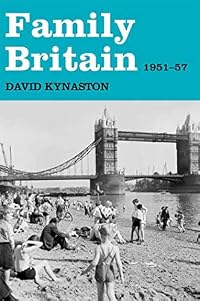
On This Page
Description
As in Austerity Britain, an astonishing array of vivid, intimate and unselfconscious voices drive the narrative. The keen-eyed Nella Last shops assiduously at Barrow Market as austerity and rationing gradually gives way to relative abundance; housewife Judy Haines, relishing the detail of suburban life, brings up her children in Chingford; the self-absorbed civil servant Henry St John perfects the art of grumbling. These and many other voices give a rich, unsentimental picture of everyday show more life in the 1950s. We also encounter well-known figures on the way, such as Doris Lessing, John Arlott, and Tiger's Roy of the Rovers. All this is part of a colourful, unfolding tapestry, in which the great national events - the Tories returning to power, the death of George VI, the Coronation of Queen Elizabeth, the Suez Crisis - jostle alongside everything that gave Britain in the 1950s its distinctive flavour- Butlin's holiday camps, Kenwood food mixers, Hancock's Half-Hour, Ekco television sets, Davy Crockett, skiffle and teddy boys. Deeply researched, David Kynaston's Family Britain offers an unrivalled take on a largely cohesive, ordered, still very hierarchical society gratefully starting to move away from the painful hardships of the 1940s towards domestic ease and affluence. show lessTags
Recommendations



















Member Reviews
A superb social history of Britain in the years of recovery after the war. Kynaston uses surveys from Mass Observation, diaries and the reminiscences of the famous and the unknown to build a picture from the smallest fragments and compulsive reading it is (as was Austerity Britain before it). You learn so much more from the diary of a housewife in an industrial northern town than from any number of speeches by politicians. There are many joys to be found here; at this distance received wisdom tells us that the Coronation was a huge event in the national consciousness - and yet Kynaston produces evidence that many were unmoved. The advent of television and especially commercial television are viewed with suspicion by politicians and show more worthies - but there is no doubt that the people want it. Gender relations, sex, the emergence of the teenager, immigration and multiculturalism, the growing power of unions, the growth of nationalised services from ideals to lumbering bureaucracies, pop music and pop culture are all handled beautifully. The only thing missing is a discussion of national service - which would seem relevant in a post war society
Overall great stuff, and am really looking forward to the next volume show less
Overall great stuff, and am really looking forward to the next volume show less
In the early 1950s Great Britain was a nation in transition. On the one hand it was still an imperial power, a workshop to much of the world, a land with a tradition-bound patriarchal society. Yet on the other it was seeing the first results of the many social and economic changes underway, with the clearing of the Victorian-era slums, the growing challenges of a multi-racial population, and the rapid proliferation of television just some of the signs pointing to the future that was to come. This transition and the people who faced it are the subjects of David Kynaston’s book, which chronicles life in Britain between the Festival of Britain in 1951 and Prime Minister Anthony Eden’s resignation six years later.
In many respects show more Kynaston’s book is less a narrative of these years than a panorama that allows the reader to take in details both large and small. Through them he depicts the emergence of what he calls a “proto-consumerist” society from years of rationing and deprivation. As Britain shook off the postwar austerity, its citizens embraced the burgeoning prosperity as their due after their years of sacrifice. As Kynaston demonstrates it was a reward enjoyed by a broader swath of society than ever before, yet as more people enjoyed the benefits of prosperity a growing number of concerns were expressed about the damage being done to society, of the breakdown of communities and the rebelliousness of youth.
Kynaston recounts these years in a sympathetic and perceptive manner. Seemingly nothing is too insignificant to escape his attention, while his ability to draw significance from these trivial facts supplies added depth his account of the events and developments of the era. Yet his narrative never bogs down in the facts, transitioning smoothly from one topic to another without ever losing his reader’s interest. The result is a magnificent work, a worthy sequel to his earlier volume, and one that leaves its readers eager for the next installment in his “Tales of a New Jerusalem” series. show less
In many respects show more Kynaston’s book is less a narrative of these years than a panorama that allows the reader to take in details both large and small. Through them he depicts the emergence of what he calls a “proto-consumerist” society from years of rationing and deprivation. As Britain shook off the postwar austerity, its citizens embraced the burgeoning prosperity as their due after their years of sacrifice. As Kynaston demonstrates it was a reward enjoyed by a broader swath of society than ever before, yet as more people enjoyed the benefits of prosperity a growing number of concerns were expressed about the damage being done to society, of the breakdown of communities and the rebelliousness of youth.
Kynaston recounts these years in a sympathetic and perceptive manner. Seemingly nothing is too insignificant to escape his attention, while his ability to draw significance from these trivial facts supplies added depth his account of the events and developments of the era. Yet his narrative never bogs down in the facts, transitioning smoothly from one topic to another without ever losing his reader’s interest. The result is a magnificent work, a worthy sequel to his earlier volume, and one that leaves its readers eager for the next installment in his “Tales of a New Jerusalem” series. show less
25 Dec 2009 - from Matthew
This was a wonderful read and automatically in my top 10 non-fiction and probably overall top 10 for 2010. Like in the first volume of his postwar history, Kynaston weaves together a net of newspaper and official reports, government records and diaries, whether of the already-famous, later-to-be-famous and giving us a thrill of recognition, or ordinary people, many of them Mass Observers, to give us practically a week-by-week exposition of the period. This gives us multiple viewpoints on the same event, and also interesting juxtapositions, as someone ignores the Suez crisis to talk about their garden, or when two or more events in different cultural areas happen on the same day or in the same week.
Such a rich, show more satisfying read, full of details about every kind of culture from football to opera, and of people's every day lives. I particularly like the use of the Mass Observation archives (and the thank you to the staff in the acknowledgements). Great illustrations, and I can't wait for the next volume to appear! show less
This was a wonderful read and automatically in my top 10 non-fiction and probably overall top 10 for 2010. Like in the first volume of his postwar history, Kynaston weaves together a net of newspaper and official reports, government records and diaries, whether of the already-famous, later-to-be-famous and giving us a thrill of recognition, or ordinary people, many of them Mass Observers, to give us practically a week-by-week exposition of the period. This gives us multiple viewpoints on the same event, and also interesting juxtapositions, as someone ignores the Suez crisis to talk about their garden, or when two or more events in different cultural areas happen on the same day or in the same week.
Such a rich, show more satisfying read, full of details about every kind of culture from football to opera, and of people's every day lives. I particularly like the use of the Mass Observation archives (and the thank you to the staff in the acknowledgements). Great illustrations, and I can't wait for the next volume to appear! show less
http://nwhyte.livejournal.com/2551939.html
This is the second volume of Tales of a New Jerusalem, a series of books pulling together the findings of Mass-Observation and various other sources to create a detailed, almost week-by-week popular history of Britain. (The first volume covers 1945-51, and the third 1957-59; Kynaston's plan is to take it up to Margaret Thatcher's election in 1979.) It's a tremendous piece of work, but I'll stipulate up front that it has limitations - although the title references "Britain", it's mainly England, with some Wales and a very small amount of Scotland; Northern Ireland is mentioned precisely once.
Having said that, I still found it very interesting, and if you are English or particularly interested in show more England it will be fascinating. Particular highlights are Kynaston's analysis of Fifties sexuality, both straight and gay (though I missed any reflection on how things might have been different during the War); his account of the political arguments around race (though here I would have liked to see some framing in terms of theory); his careful account of the major capital punishment cases (Derek Bentley and Ruth Ellis); the story, which I had not fully appreciated before, of how the Church of England's intereference in Princess Margaret's love life was a key tipping point for secularisation; the general opening up of society to new influences, with television and Elvis replacing cinema and music hall in the course of these few years; and the end of rationing and its effect on the nation's gastronomic aspirations.
I know it's not the story Kynaston is trying to tell, but I'd also have liked either more or less on the politics of the day (as well as some more theoretical reflections). Enough major figures have now left memoirs, and enough records are now public, that the contemporary newspaper accounts of what was going on in government could have been backed up quite substantially by the inside story, rather than just using the views of a few individuals. The big picture in any case is fascinating enough. show less
This is the second volume of Tales of a New Jerusalem, a series of books pulling together the findings of Mass-Observation and various other sources to create a detailed, almost week-by-week popular history of Britain. (The first volume covers 1945-51, and the third 1957-59; Kynaston's plan is to take it up to Margaret Thatcher's election in 1979.) It's a tremendous piece of work, but I'll stipulate up front that it has limitations - although the title references "Britain", it's mainly England, with some Wales and a very small amount of Scotland; Northern Ireland is mentioned precisely once.
Having said that, I still found it very interesting, and if you are English or particularly interested in show more England it will be fascinating. Particular highlights are Kynaston's analysis of Fifties sexuality, both straight and gay (though I missed any reflection on how things might have been different during the War); his account of the political arguments around race (though here I would have liked to see some framing in terms of theory); his careful account of the major capital punishment cases (Derek Bentley and Ruth Ellis); the story, which I had not fully appreciated before, of how the Church of England's intereference in Princess Margaret's love life was a key tipping point for secularisation; the general opening up of society to new influences, with television and Elvis replacing cinema and music hall in the course of these few years; and the end of rationing and its effect on the nation's gastronomic aspirations.
I know it's not the story Kynaston is trying to tell, but I'd also have liked either more or less on the politics of the day (as well as some more theoretical reflections). Enough major figures have now left memoirs, and enough records are now public, that the contemporary newspaper accounts of what was going on in government could have been backed up quite substantially by the inside story, rather than just using the views of a few individuals. The big picture in any case is fascinating enough. show less
Family Britain is a different kind of history book. Instead of giving us grand theories about the actions of the leaders of the day, David Kynaston chooses to explore the concerns and day-to-day activities of middle and working class Britons. He uses diaries, letters, newspapers, and Mass Observation reports to show what people worried about, what they listened to on the radio, where they shopped, what they thought about their houses, and where they went for holidays. The style can be a bit jarring at first but once I adjusted to the rhythm, I found it engrossing and even charming. While not every topic will be interesting to every reader (I admit to skimming all the rugby bits), the book does an excellent job of giving an overall sense show more of what it was like to live in Britain in the early '50s. And it is quite fun to run across little items about what Iris Murdoch, Alan Bennett, the future David Bowie, John Osbourne, John Lennon, and many others were doing at the time. show less
 This review was written for LibraryThing Early Reviewers.
I think the general reader will find this book long and somewhat disjointed. I enjoy reading the history of England but, felt as though I were an outsider reading this complex and detailed social history of Britain in the 1950's. While this book certainly belongs on the shelf I think perhaps it is more suited to the student of British history rather than a casual reader. People and events pop in and out of this volume that have not be introduced previously.
My hope is that because I read this series out of sequence I'll have a better understanding of this volume once I read the 1st volume.
Still, I recommend this book as it does present a history of Britain from a fresh perspective.
My hope is that because I read this series out of sequence I'll have a better understanding of this volume once I read the 1st volume.
Still, I recommend this book as it does present a history of Britain from a fresh perspective.
This review was written for LibraryThing Early Reviewers.I was a big fan of Kynaston's earlier book in the series, Austerity Britain. In my opinion, Family Britain is just as good, and maybe even a bit better. Again, the book is less of a history book and more of a snapshot, or series of snapshots, of the culture during a certain period of time (1951-1957). What makes these books so special is that instead of focusing on major events, they let us see into the everyday lives of Britons of different classes. Family Britain touches on the end of rationing, the rise of television (threatening to End Civilization As We Know It Since At Least 1951), the housing situation, labor strikes, Communism, the relationship between the sexes, the differences between the classes, race relations, vacations, show more and much much more. Kynaston goes into some depth on all of these subjects, which makes this book big and dense and a slow read - but so worth it!
Fans of Austerity Britain will be happy to see some of the diarists return, including Nella Last and Judy Haines, as well as excerpts from famous people's letters (Fowles, Amis, Larkin). Overall, I highly recommend Family Britain, but only to people who like this sort of thing and want to spend a long time learning about all different aspects of life in Britain in the 50s. show less
Fans of Austerity Britain will be happy to see some of the diarists return, including Nella Last and Judy Haines, as well as excerpts from famous people's letters (Fowles, Amis, Larkin). Overall, I highly recommend Family Britain, but only to people who like this sort of thing and want to spend a long time learning about all different aspects of life in Britain in the 50s. show less
This review was written for LibraryThing Early Reviewers.Members
- Recently Added By
Published Reviews
Like his justly acclaimed account of the Attlee years, Kynaston’s book is a deeply textured tapestry of everyday life the day before yesterday, a collage of diaries and memoirs every bit as rich and rewarding as a great Victorian novel. Even more than in his previous book, the politicians who dominated contemporary headlines are pushed offstage, making room for an eclectic collection of show more guides from obscure diarists and Mass-Observation interviewees to Ricky Tomlinson and Janet Street-Porter. Even Kynaston himself, a sensitive and often drily funny narrator, remains in the background: we feel we are immersed directly in the sights and smells of life in the Fifties, the apparently familiar but utterly different world of the Festival of Britain and the Suez Crisis, of Billy Wright and Stanley Matthews, of Kingsley Amis and Andy Pandy, of Gilbert Harding and the Goons.
One of the strengths of Kynaston’s last book was that it gently debunked the myths of the New Jerusalem, showing how most people, far from being enthused by Attlee’s social experiments, simply plodded along in their conservative and pragmatic way. show less
One of the strengths of Kynaston’s last book was that it gently debunked the myths of the New Jerusalem, showing how most people, far from being enthused by Attlee’s social experiments, simply plodded along in their conservative and pragmatic way. show less
added by John_Vaughan
Lists

Non-Fiction Worth Reading
1,015 works; 254 members
Author Information

34+ Works 2,117 Members
David Kynaston is currently a visiting professor at Kingston University.
Awards and Honors
Series

Work Relationships
Is a (non-series) sequel to
Common Knowledge
- Canonical title
- Family Britain: 1951-57
- Original publication date
- 2009
- Important places
- United Kingdom
- Dedication
- To my mother Gisela Hunt
Classifications
- Genres
- History, Nonfiction, General Nonfiction
- DDC/MDS
- 941.085 — History & geography History of Europe British Isles Historical periods of British Isles 1837- Period of Victoria and House of Windsor 1945-1999
- LCC
- DA592 .K96 — History of Europe, Asia, Africa and Oceania Great Britain History of Great Britain England History By period Modern, 1485- 20th century
- BISAC
Statistics
- Members
- 387
- Popularity
- 80,397
- Reviews
- 18
- Rating
- (4.15)
- Languages
- English
- Media
- Paper, Ebook
- ISBNs
- 6
- ASINs
- 4