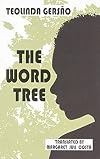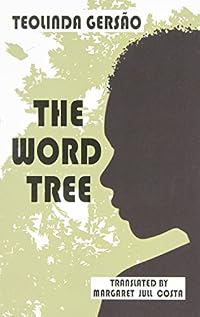
The Word Tree (Dedalus Africa)
by Teolinda Gersão
On This Page
Description
Teolinda Gersão paints an extraordinarily evocative picture of childhood in Africa and the stark contrast between warm, lush, ebullient Mozambique and the bleak, poor, priggish Portugal of Salazar.'Salazar's forty-year dictatorship in Portugal and that country's colonial wars in Africa cast their long shadow over Teolinda Gersao's The Word Tree. This is the first of Gersao's novels to be translated into English. As the Mozambican Laureano reflects,' the men crossing the sea from Lisbon show more didn't want that absurd war either'. Laureano's wife Amelia had come to the country from Portugal in search of a better life, but mentally never leaves her homeland, whereas her daughter Gita loves the country and grows up to resent the colonial presence. There are lush descriptions of the country, while the racial order is starkly spelt out: Amelia 'clings to the belief that fair-skinned people are the very top of the racial hierarchy, and that dark-skinned Portuguese people are almost at the bottom, just above the Indians and the blacks'.Adrain Tahourdin in The Times Literary SupplementMargaret Jull Costa's translation was awarded The Calouste Gulbenkian Portuguese Translation Prize for 2012. show lessTags
Recommendations


















Member Reviews
I'm sorry to see that this lovely book has only 14 copies on LT. In three very different sections, it tells the story of a young woman in Mozambique. In Part One we see her as a young child. The style of this section is lush, colourful, with a tinge of magical realism. The girl is very close to her father, who loves life in Mozambique - much less close to her mother, who spends most of her time policing young Gita's life to make sure she doesn't pick up too many habits from the 'natives'. Given that, Part Two is very unexpected - we are suddenly with the mother's story, and how she came to emigrate from Portugal to Mozambique - and so we come to understand the roots of her bitterness and resentment. In Part Three, we are back with Gita, show more now a young woman, and forced to make a difficult decision about where she belongs.
We will walk down the streets, which we know by heart. In a way, they are inside us, like lines engraved on the palms of our hands. Some are parallel, perpendicular, geometric, while others follow their own course, like the paths carved out by wind or water. The city is a living, breathing body, mine, yours, other people’s, the world’s; it’s an endless intersecting of bodies, caught in the uncountable moments of time, repeated over and over like the waves of the sea. show less
We will walk down the streets, which we know by heart. In a way, they are inside us, like lines engraved on the palms of our hands. Some are parallel, perpendicular, geometric, while others follow their own course, like the paths carved out by wind or water. The city is a living, breathing body, mine, yours, other people’s, the world’s; it’s an endless intersecting of bodies, caught in the uncountable moments of time, repeated over and over like the waves of the sea. show less
Gita grows up in colonial Mozambique with her beloved father, Laureano, and her distant mother, Amélia, who left Portugal dreaming of wealth and can't stop resenting not being part of the upper echelons of white Mozambique society. Gersão's story, told from different viewpoints, beautifully (and terribly) describes the varying ideas and ideals that exist in this world, contrasting white and black society, poor and rich, and young and old. As usual when it comes to any literature she touches, Margaret Jull Costa's translation is flawless.
Ratings
Members
- Recently Added By
Lists

Childhood: Books for or about children in different cultures around the wor
345 works; 18 members
Author Information

21+ Works 155 Members
Some Editions
Series
Belongs to Publisher Series
Common Knowledge
- Canonical title*
- A árvore das palavras
- Original title
- A árvore das palavras
*Some information comes from Common Knowledge in other languages. Click "Edit" for more information.
Classifications
- Genres
- Fiction and Literature, General Fiction, Romance
- DDC/MDS
- 869.423 — Literature & rhetoric Spanish Literature Literatures of Portuguese and Galician languages Portuguese essays
- LCC
- PQ9269 .E77 .A8713 — Language and Literature French, Italian, Spanish and Portuguese literatures Portuguese literature Individual authors, 1961-2000
- BISAC
Statistics
- Members
- 33
- Popularity
- 855,952
- Reviews
- 2
- Rating
- (3.67)
- Languages
- English, Portuguese (Portugal), Spanish
- Media
- Paper, Ebook
- ISBNs
- 7
- ASINs
- 2