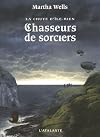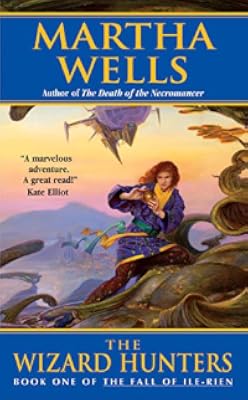
On This Page
Description
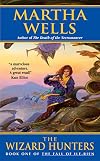
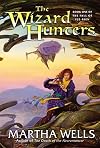
Ile-Rien is in peril. A mysterious army known only as the Gardier has surrounded the country, attacking in ominous black airships. Hope is not lost though, for a magical sphere created by Ile-Rien's greatest sorcerer may hold the key to defeating the faceless enemy. But the sphere is unpredictable and has already claimed several lives. When a magical spell goes disastrously awry, young Tremaine Valiarde and a brave band are transported to another world-a world of rough magics, evil mages, show more honorable warriors, and a secret Gardier base. show lessTags
Recommendations









Member Reviews
First book in a trilogy, The Wizard Hunter follows Tremaine, a suicidally depressed young woman living through a war that is going badly for her country, Ile-Rien. Her father was a criminal boss of some kind, but clearly much more than that, though he is missing or dead now after experimenting along with his good friend the wizard Arisilde and being blown up or sent through a portal and lost.
Tremaine is visited at her home by Gerard, a guardian of hers and a wizard himself, to retrieve a magical sphere made by Arisilde. The sphere, however, seems tied to Tremaine, and so even though she has no magical talent herself she must come along to the research center where a group is trying to find the base of their enemies ("The Gardier") show more through magical means.
Tremaine goes with a small group, using the sphere to activate a portal, and they emerge in a parallel world. Meanwhile, we are introduced to Ilias, the other POV character, a native of this more primitive parallel world, who is a sidekick to the chief wizard hunter there, Giliead. The two groups soon join forces, and action ensues at the native village, the Gardier base on an island nearby, back in Ile-Rien, and finally at the base once more.
The world building is fantastic here- Ile-Rien is a society at a roughly 1930-level of technology, with wireless communication, metal ships, and motor cars, but of course with the magical element on top of that. The more primitive society through the portal is at more like a medieval level of technology, and they see both electrical/mechanical and magical technologies as bad and worthy of destruction.
The characters are memorable- Ilias and Tremaine have not gotten together yet, but that seems inevitable- I can feel the sexual tension through the page. Tremaine is a burgeoning badass.
The war is going really badly of course, and even the good feeling at the end of this book doesn't change that fact. But there are some revelations at the end of the book, and things are looking up for the Good Guys.
Martha Wells writes the Murderbot books, which are fantastic. This is very different, but also great. Can't wait to get the next one. show less
Tremaine is visited at her home by Gerard, a guardian of hers and a wizard himself, to retrieve a magical sphere made by Arisilde. The sphere, however, seems tied to Tremaine, and so even though she has no magical talent herself she must come along to the research center where a group is trying to find the base of their enemies ("The Gardier") show more through magical means.
Tremaine goes with a small group, using the sphere to activate a portal, and they emerge in a parallel world. Meanwhile, we are introduced to Ilias, the other POV character, a native of this more primitive parallel world, who is a sidekick to the chief wizard hunter there, Giliead. The two groups soon join forces, and action ensues at the native village, the Gardier base on an island nearby, back in Ile-Rien, and finally at the base once more.
The world building is fantastic here- Ile-Rien is a society at a roughly 1930-level of technology, with wireless communication, metal ships, and motor cars, but of course with the magical element on top of that. The more primitive society through the portal is at more like a medieval level of technology, and they see both electrical/mechanical and magical technologies as bad and worthy of destruction.
The characters are memorable- Ilias and Tremaine have not gotten together yet, but that seems inevitable- I can feel the sexual tension through the page. Tremaine is a burgeoning badass.
The war is going really badly of course, and even the good feeling at the end of this book doesn't change that fact. But there are some revelations at the end of the book, and things are looking up for the Good Guys.
Martha Wells writes the Murderbot books, which are fantastic. This is very different, but also great. Can't wait to get the next one. show less
I knew this was set a generation after The Death of the Necromancer, about Nicholas Valiarde’s daughter, and that Ile-Rien was at war. But after Tremaine and some of her companions discover a portal to another world, instead of reminding me of the earlier Ile-Rien books or fiction about wartime in London, this actually felt reminiscent of Wells’ Books of the Raksura: the action-driven pace of the story; the personalities and group dynamics, and especially the imaginative worldbuilding, with a long-ago abandoned city and the culture of Ilias’ people. Lots of things Wells does so very well.
It took a few chapters but I became completely engrossed. I abandoned my plans of reading others books next in favour of immediately embarking show more upon the sequels.
“It’s like you’re two people. One of them is a flighty artist, and I like her. The other one is bloody-minded and ruthless and finds scary things funny, and I’m not sure if I like her very much; but whenever we’re about to die, she’s the one who gets all three of us through it alive.” She pressed her lips together, then asked seriously, “Which one are you? I’d really like to know.”
Tremaine [...] wasn’t happy to hear something said aloud that she herself had been mentally dancing around for far too long. She couldn’t tell Florian which one she really was when she didn’t know herself. show less
It took a few chapters but I became completely engrossed. I abandoned my plans of reading others books next in favour of immediately embarking show more upon the sequels.
“It’s like you’re two people. One of them is a flighty artist, and I like her. The other one is bloody-minded and ruthless and finds scary things funny, and I’m not sure if I like her very much; but whenever we’re about to die, she’s the one who gets all three of us through it alive.” She pressed her lips together, then asked seriously, “Which one are you? I’d really like to know.”
Tremaine [...] wasn’t happy to hear something said aloud that she herself had been mentally dancing around for far too long. She couldn’t tell Florian which one she really was when she didn’t know herself. show less
The Wizard Hunters by Martha Wells is a book I read for an online discussion group. (pre LT, remember back when AOL had online discussion groups? This is the remnant of one of those, Women in Science Fiction and Fantasy.) There is a book that precedes this, and someone who reviewed this commented that some of the same characters are in this book, so knowing what happened to them took some of the fun/suspense out of reading the first trilogy. I can see that happening.
We start out with the character of Tremaine in Ile-Rien. This starts off full of interest--I really liked the beginning. Her nation is under attack by mysterious enemies, and losing. Because of her ownership of a sphere, she is pulled into the resistance, which is trying to show more follow the enemy back into another dimension where their attack bases are located. A second frame of reference is with the natives of that world (Syrnai), two men who are wizard hunters. After really good introductions to both point of view characters, the story settles down to rather more mundane exploration of each other's cultures, us against the dual bad guys, explosions and rescues. It's the first of a trilogy, so although it ends at a certain climax, there is obviously much more to come.
What I liked: the characters of Tremaine and Ilias.
What I didn't like: rather plebian us-against-them action. It wasn't bad, but it didn't catch me up and make me not want to put the book down. In the nature of trilogies, this may change in later books.
From what I have read, The Death of the Necromancer (the pre-story) may be a stronger book. I actually thought it was going to deal with the Syrnaic backstory, which appears to be considerable, but it doesn't. It is all Ile-Rien backstory.
At this point, I would give this a lukewarm recommendation. It is at least on a par with most fantasy being published, probably better than many, but not on my A or B list. show less
We start out with the character of Tremaine in Ile-Rien. This starts off full of interest--I really liked the beginning. Her nation is under attack by mysterious enemies, and losing. Because of her ownership of a sphere, she is pulled into the resistance, which is trying to show more follow the enemy back into another dimension where their attack bases are located. A second frame of reference is with the natives of that world (Syrnai), two men who are wizard hunters. After really good introductions to both point of view characters, the story settles down to rather more mundane exploration of each other's cultures, us against the dual bad guys, explosions and rescues. It's the first of a trilogy, so although it ends at a certain climax, there is obviously much more to come.
What I liked: the characters of Tremaine and Ilias.
What I didn't like: rather plebian us-against-them action. It wasn't bad, but it didn't catch me up and make me not want to put the book down. In the nature of trilogies, this may change in later books.
From what I have read, The Death of the Necromancer (the pre-story) may be a stronger book. I actually thought it was going to deal with the Syrnaic backstory, which appears to be considerable, but it doesn't. It is all Ile-Rien backstory.
At this point, I would give this a lukewarm recommendation. It is at least on a par with most fantasy being published, probably better than many, but not on my A or B list. show less
Tremaine Valiarde is seeking death, but not just any death. It has to be the stylish sort of death that looks like the hand of fate. Having been left alone in the world, humiliated, and facing the destruction of her nation by an implacable enemy, you might also wish to pass away. Instead, Tremaine gets an adventure where she has to live up to her underworld heritage and embrace the cathartic cleansing that only assauged vengeance can give.
Though this is only the first book in a trilogy, if you've read the other stories Martha Wells has set in Ile-Rien you'll enjoy this one too.
If I have to mark it down for anything it's that the plot depends a little too much on 'deus ex machina' plot devices; though in regards to this book that is show more ironic in its own way. show less
Though this is only the first book in a trilogy, if you've read the other stories Martha Wells has set in Ile-Rien you'll enjoy this one too.
If I have to mark it down for anything it's that the plot depends a little too much on 'deus ex machina' plot devices; though in regards to this book that is show more ironic in its own way. show less
The Wizard Hunters takes place in the same setting as some of Martha Wells’s previous novels, most notably Death of the Necromancer, but is the start to a new trilogy. I didn’t find it to be among Martha Wells’s best outings, but it was still an enjoyable fantasy novel.
If Death of the Necromancer has parallels to the Victorian era, The Wizard Hunters has clear parallels to World War II. Basically, it’s taking Ile-Rien, a setting I’ve grown to love through Wells’s previous books, and literally blowing it up. For Ile-Rien is under attack from a mysterious and unknown enemy, the Gardier, who’s black airships seem to appear out of nowhere and who display no mercy.
I think The Wizard Hunters would have had a lot less of an show more impact on me if I hadn’t read Death of the Necromancer. The most emotional part of the book for me was seeing the destruction wrecked on a setting I’d loved and the dire fates of the previous book’s cast.
But The Wizard Hunters itself wasn’t that great. I wouldn’t call it bad, but it falls more in the category of mediocre. What draws me again and again to Martha Wells’s work is the imagination she displays in crafting her worlds, but both worlds of The Wizard Hunters (there’s two) felt like places I’d seen before. I really love the overall idea – mysterious invaders from another world appearing out of no where. It was sort of a fantasy take on alien invasion. However, there wasn’t much I found thrilling about the book. I was mostly tepid on how the plot played out and the new character cast, and I did have trouble remembering who some of the minor characters were.
All that said, I may give the second book in the trilogy a shot at some point, it just won’t be high up on my to read list. So far I haven’t read a novel by Martha Wells that I’ve outright disliked or even not enjoyed enough to finish. And I do have enough lingering interest in the invasion plotline to want to see how everything plays out.
Originally posted on The Illustrated Page. show less
If Death of the Necromancer has parallels to the Victorian era, The Wizard Hunters has clear parallels to World War II. Basically, it’s taking Ile-Rien, a setting I’ve grown to love through Wells’s previous books, and literally blowing it up. For Ile-Rien is under attack from a mysterious and unknown enemy, the Gardier, who’s black airships seem to appear out of nowhere and who display no mercy.
I think The Wizard Hunters would have had a lot less of an show more impact on me if I hadn’t read Death of the Necromancer. The most emotional part of the book for me was seeing the destruction wrecked on a setting I’d loved and the dire fates of the previous book’s cast.
But The Wizard Hunters itself wasn’t that great. I wouldn’t call it bad, but it falls more in the category of mediocre. What draws me again and again to Martha Wells’s work is the imagination she displays in crafting her worlds, but both worlds of The Wizard Hunters (there’s two) felt like places I’d seen before. I really love the overall idea – mysterious invaders from another world appearing out of no where. It was sort of a fantasy take on alien invasion. However, there wasn’t much I found thrilling about the book. I was mostly tepid on how the plot played out and the new character cast, and I did have trouble remembering who some of the minor characters were.
All that said, I may give the second book in the trilogy a shot at some point, it just won’t be high up on my to read list. So far I haven’t read a novel by Martha Wells that I’ve outright disliked or even not enjoyed enough to finish. And I do have enough lingering interest in the invasion plotline to want to see how everything plays out.
Originally posted on The Illustrated Page. show less
Like most of Martha Wells the Fall of Ile-Rien trilogy is a frequent reread for me.
Her language is great, her worldbuilding well rounded and detailed, and her plots are both believable and original. No stereotype fantasy clichés to be found in her writing.
Tremayne - the daughter of Nicholas Valiarde from The Death of the Necromancer - is contemplating suicide when she becomes involved in the war effort against the implacable Gardier; coming from nowhere with superior spellcraft and inexplicable motivation they have been attacking Ile-Rien and surrounding areas for the past three years, and winning. Since the army is retreating on all fronts, the only hope lies in sorcerous research to find a way to defeat the Gardier. A mecanical gizmo show more from Tremaynes uncle Arisilde (also from The Death of the Necromancer) turns out to be a teleportation vehicle, transporting her and several others to another world. Here they end up prisoners at a Gardier base, making their escape with the help of unexpected allies. Translocating back to the world of Ile-Rien, some of their party are left behind; moubting a rescue operation they fight both Gardier soldiers and fith column saboteurs.
The middle european industrial setting of Ile-Rien is wonderfully detailed and believable, a fascinating development from the medieval setting of the first Ile-Rien book - The Element of Fire, and the gas lit early industrial setting of The Death of the Necromancer. Ile-Rien is at a late Victorian style level of development where the gas lights are replaced by electricity, and automobiles are becoming more common than horsepowered vehicles. This is a world where technological and magical progress is made simultaneous. The technological development follows the same general direction as in our world, without challenging, or making the existing magic obsolete. Sorcery is a developing science, not - as so often is the case in fantasy - a stagnant, or even contracting exclusive option.
The world where the Gardier base is located is very different and equally welldescribed. In comparison with the technological level of the world of Ile-Rien it is primitive, and their take on magic very different.
The differences in society and perception is explored with a deft touch, and uses narrative shifts to demonstrate very different interpretations of events. show less
Her language is great, her worldbuilding well rounded and detailed, and her plots are both believable and original. No stereotype fantasy clichés to be found in her writing.
Tremayne - the daughter of Nicholas Valiarde from The Death of the Necromancer - is contemplating suicide when she becomes involved in the war effort against the implacable Gardier; coming from nowhere with superior spellcraft and inexplicable motivation they have been attacking Ile-Rien and surrounding areas for the past three years, and winning. Since the army is retreating on all fronts, the only hope lies in sorcerous research to find a way to defeat the Gardier. A mecanical gizmo show more from Tremaynes uncle Arisilde (also from The Death of the Necromancer) turns out to be a teleportation vehicle, transporting her and several others to another world. Here they end up prisoners at a Gardier base, making their escape with the help of unexpected allies. Translocating back to the world of Ile-Rien, some of their party are left behind; moubting a rescue operation they fight both Gardier soldiers and fith column saboteurs.
The middle european industrial setting of Ile-Rien is wonderfully detailed and believable, a fascinating development from the medieval setting of the first Ile-Rien book - The Element of Fire, and the gas lit early industrial setting of The Death of the Necromancer. Ile-Rien is at a late Victorian style level of development where the gas lights are replaced by electricity, and automobiles are becoming more common than horsepowered vehicles. This is a world where technological and magical progress is made simultaneous. The technological development follows the same general direction as in our world, without challenging, or making the existing magic obsolete. Sorcery is a developing science, not - as so often is the case in fantasy - a stagnant, or even contracting exclusive option.
The world where the Gardier base is located is very different and equally welldescribed. In comparison with the technological level of the world of Ile-Rien it is primitive, and their take on magic very different.
The differences in society and perception is explored with a deft touch, and uses narrative shifts to demonstrate very different interpretations of events. show less
This highly-imaginative fantasy story is full of wonders and adventure! The Wizard Hunters inspired me to create my own world and write my first novel.
If a sarcastic heroine, tech-integrated magic, airships, and new worlds appeal to you, then I'd definitely recommend this series.
If a sarcastic heroine, tech-integrated magic, airships, and new worlds appeal to you, then I'd definitely recommend this series.
Members
- Recently Added By
Lists

Best Fantasy Novels
821 works; 361 members

Books Read in 2018
4,360 works; 110 members

hypatian_kat to-read
429 works; 3 members
Author Information

89+ Works 48,646 Members
Martha Wells is an American author, born in 1964, based in Texas. She writes fantasy and science fiction novels, novellas, and short stories. Her first novel was, The Element of Fire, published in 1993. Her other work includes City of Bones, The Death of the Necromancer, The Fall of IIe-Rien trilogy, Books of Raksura series, The Murderbot Diaries show more series, and Stargate universe novels. She was awarded the 2017 Nebula Award for Best Novella for All Systems Red (The Murderbot Diaries). (Bowker Author Biography) show less

Martha Wells is a LibraryThing Author, an author who lists their personal library on LibraryThing.
Some Editions
Series


Belongs to Publisher Series
Common Knowledge
- Canonical title
- The Wizard Hunters
- Original publication date
- 2003
- People/Characters
- Tremaine Valiarde; Ilias; Reynard Morane; Arisilde Damal; Giliead
- Dedication
- To Liz Sharpe and Carolyn Golledge
- First words
- It was nine o'clock at night and Tremaine was trying to find a way to kill herself that would bring in a verdict of natural causes in court when someone banged on the door.
- Last words
- (Click to show. Warning: May contain spoilers.)Now we can go after the Gardier.
Classifications
Statistics
- Members
- 748
- Popularity
- 37,585
- Reviews
- 18
- Rating
- (3.96)
- Languages
- English, French, Polish
- Media
- Paper, Audiobook, Ebook
- ISBNs
- 13
- ASINs
- 4