On This Page
Description
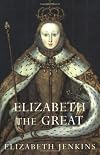
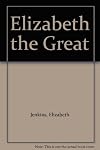
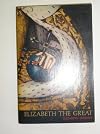
Throughout her vivid life, Elizabeth I was the centre of a complicated web of political intrigue that made up the Elizabethan constitution. Elizabeth Jenkins, in her classic biography, reveals the woman behind the skilful politician, showing her belief in personal sacrifice to secure peace for the country she loved more than any man.Tags
Recommendations
















Member Reviews
http://nwhyte.livejournal.com/1339747.html
I have to say this is one of the more interesting biographies of Elizabeth I that I have read. Jenkins makes a good argument that Elizabeth's determination to remain unmarried stemmed not just from the abuse she suffered in her teens from her stepmother, Catherine Parr, and Parr's new husband Seymour, but also from the childhood echoes of her own mother's execution - an event she could barely remember, but which was echoed in the beheading of another stepmother when she was eight. Apparently she told Leicester at one point that she had been determined never to marry since the age of eight; as Jenkins more or less puts it. join the dots.
Armed with this assumption, Jenkins has Elizabeth enjoying show more the thrills of the romantic chase but consciously or subconsciously determined never to reach the point that her male suitors desired to reach - she almost got caught out by the Duc d'Alençon, but I think she always knew that Parliament would never approve the marriage. She flaunted her body to her suitors (and indeed to others) but evaded physical contact. I found Jenkins' analysis very convincing.
Jenkins also offered further insights into a number of other Elizabethan questions. First, she is very good at analysing Mary Queen of Scots - there is an interesting study to be done comparing and contrasting how she and her grandson ended up losing their heads for rather similar reasons. Second, I now understand rather better one of the ways in which the Irish question shifted during Elizabeth's reign - once her cousin and prisoner Mary had been acknowledged as potentially legitimate by the Pope and the French and Spanish, a wholly new basis emerged for continental intervention in Irish affairs. Third, Jenkins is rather positive on English Catholics, most of whom remained loyal to Elizabeth except in extremis; the students at the English College in Rome cheered when they heard the Armada had failed in 1588.
And fourth, danciing at court masques and balls is frequently mentioned by Jenkins as an essential part of the political equation. There's lots of exciting interdisciplinary research to be done there. I'll bluntly assert that it's difficult to imagine dancing being an important factor while either of Elizabeth's siblings was on the throne. (NB that Shakespeare's Henry VIII has her father gatecrashing a dance incognito, in order to seduce her mother.) But again, I don't recall a single mention of dancing among the distractions available for government officials in Ireland in Elizabeth's day; it looks like this was an activity driven by the queen's personal preferences. (And my namesake and ancestor gets two brief mentions in the book, both fabourable!)
Anyway, this was well worth searching out. The book is fifty years old, but stands up well in comparison with more recent works on the same subject. show less
I have to say this is one of the more interesting biographies of Elizabeth I that I have read. Jenkins makes a good argument that Elizabeth's determination to remain unmarried stemmed not just from the abuse she suffered in her teens from her stepmother, Catherine Parr, and Parr's new husband Seymour, but also from the childhood echoes of her own mother's execution - an event she could barely remember, but which was echoed in the beheading of another stepmother when she was eight. Apparently she told Leicester at one point that she had been determined never to marry since the age of eight; as Jenkins more or less puts it. join the dots.
Armed with this assumption, Jenkins has Elizabeth enjoying show more the thrills of the romantic chase but consciously or subconsciously determined never to reach the point that her male suitors desired to reach - she almost got caught out by the Duc d'Alençon, but I think she always knew that Parliament would never approve the marriage. She flaunted her body to her suitors (and indeed to others) but evaded physical contact. I found Jenkins' analysis very convincing.
Jenkins also offered further insights into a number of other Elizabethan questions. First, she is very good at analysing Mary Queen of Scots - there is an interesting study to be done comparing and contrasting how she and her grandson ended up losing their heads for rather similar reasons. Second, I now understand rather better one of the ways in which the Irish question shifted during Elizabeth's reign - once her cousin and prisoner Mary had been acknowledged as potentially legitimate by the Pope and the French and Spanish, a wholly new basis emerged for continental intervention in Irish affairs. Third, Jenkins is rather positive on English Catholics, most of whom remained loyal to Elizabeth except in extremis; the students at the English College in Rome cheered when they heard the Armada had failed in 1588.
And fourth, danciing at court masques and balls is frequently mentioned by Jenkins as an essential part of the political equation. There's lots of exciting interdisciplinary research to be done there. I'll bluntly assert that it's difficult to imagine dancing being an important factor while either of Elizabeth's siblings was on the throne. (NB that Shakespeare's Henry VIII has her father gatecrashing a dance incognito, in order to seduce her mother.) But again, I don't recall a single mention of dancing among the distractions available for government officials in Ireland in Elizabeth's day; it looks like this was an activity driven by the queen's personal preferences. (And my namesake and ancestor gets two brief mentions in the book, both fabourable!)
Anyway, this was well worth searching out. The book is fifty years old, but stands up well in comparison with more recent works on the same subject. show less
While many important events are glossed over or barely mentioned in this book (it's not a book on the history of England, after all), Jenkins makes an excellent study of a fascinating and complex woman. Jenkins insightfully theorizes that Queen Elizabeth never intended to marry and used the planning of marriage as a negotiating and diplomacy tool to attain the treaties and alliances she wanted, then abandoned each suitor once she got what she wanted. Manipulative, perhaps, but given her experiences before she became Queen it's understandable. She spent her whole life in peril of being beheaded, but she proved to be a master politician. I wonder how much of this was used as research for the HBO miniseries Elizabeth I?
This book is out of show more print, but a number of cheap used copies are available on Amazon. show less
This book is out of show more print, but a number of cheap used copies are available on Amazon. show less
A good overview of the life and reign of Elizabeth I of England with an emphasis on her private life. The politics of the reign (a fascinating but complex topic) take a backseat in this biography, which is an excellent starting point of someone new to Elizabeth I. I have to stop myself from comparing this short biography with others which delve into particular aspects of Elizabeth's reign with more complexity and depth, as those works also lack the conciseness of this one. This is a great book for someone who wanted to read a quick, factual, and readable biography of Elizabeth I.
Jenkins does a very nice job of detailing Elizabeth's life. Very readable and an excellent introduction to her legacy.All of those who surround her are also part of the narrative, creating a fuller picture. Mary the Queen of Scots plays a major role in Elizabeth's decision-making and it is fascinating to see how she was able to tamp down constant threats and keep control of her kingdom. The Council and her advisors spend much effort trying to arrange a marriage for Elizabeth with no success. This interplay and Elizabeth's savvy at handling the situation is a model for political maneuvering; she certainly was skilled in diplomacy and strategy. Overall great book for those who love Tudor history.
Well-written popular life, but obviously more positive in her assessment of the queen that some professional scholars are
With the prolific outpouring of historical novels, some well researched and others pure fantasy, it is good to find a history book that is readable and well researched and will give the reader a good grounding in what is fact and what is speculation, and myths that persist with no factual basis. This is a timely reprint of the original 1958 ed brought back by Pheonix Press in 2000.
Interesting
Members
- Recently Added By
Author Information

31+ Works 2,221 Members
Some Editions
Awards and Honors
Distinctions
Series

Belongs to Publisher Series
Work Relationships
Is contained in
Is abridged in
Has as a student's study guide
Common Knowledge
- Canonical title
- Elizabeth the Great
- Original publication date
- 1958
- People/Characters
- Elizabeth I, Queen of England; Mary, Queen of Scots
- Important places
- England, UK (as England)
- Important events
- Tudor Era (1485 | 1603); Elizabethan Era (1558 | 1603); Accession of Elizabeth I (1558-11-17)
- Dedication
- TO MY FATHER
- First words
- When Henry VIII died in January 1547, the most remarkable beings left in the realm were three pale and close-lipped children.
- Last words
- (Click to show. Warning: May contain spoilers.)She was a Queen who hath so long and with so great wisdom governed her kingdom as ( to use the words of her Successor who in sincerity confessed as much ) the like hath not been read or heard of, either in our own time or since the days of the Roman Emperor Agustus.
Classifications
- Genres
- History, Nonfiction, Biography & Memoir, General Nonfiction
- DDC/MDS
- 942.05 — History & geography History of Europe England and Wales England 1485-1603, Tudors
- LCC
- DA355 .J4 — History of Europe, Asia, Africa and Oceania Great Britain History of Great Britain England History By period Modern, 1485- Tudors, 1485-1603 Elizabeth I, 1558-1603. Elizabethan age
- BISAC
Statistics
- Members
- 761
- Popularity
- 36,760
- Reviews
- 9
- Rating
- (3.95)
- Languages
- Czech, Dutch, English, Norwegian (Bokmål)
- Media
- Paper, Audiobook
- ISBNs
- 18
- ASINs
- 32