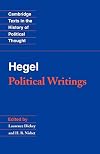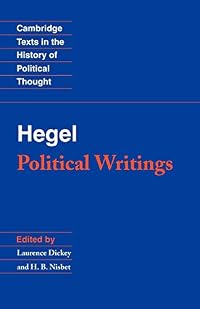
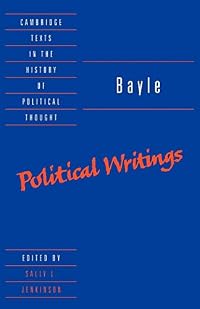
Political Writings
by Georg Wilhelm Fredrich Hegel
85 Members (3.00)
On This Page
Description
This major addition to the series of Cambridge Texts in the History of Political Thought seeks to give students with no specialist knowledge access to both the practical and the metaphysical aspects of Hegel's political thought. The ethical and metaphysical texts in this collection both illuminate and contrast with those political and historical texts in which Hegel draws important conclusions about the modern world from remarkable comparative analyses of recent developments in England, show more France and Germany. The translator of these texts, H. B. Nisbet, was responsible for the acclaimed rendition of Hegel's Philosophy of Right already published in this series, and Lawrence Dickey's lucid editorial commentary introduces this distinctive corpus of political writing by one of the very greatest thinkers in the European tradition. A full chronology, explanatory annotation, glossary and bibliography are appended to aid the student reader. show lessTags
Recommendations







Member Reviews
Members
- Recently Added By
Author Information

886+ Works 16,512 Members
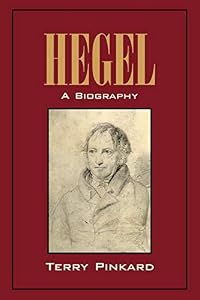
Born the son of a government clerk in Stuttgart, Germany, George Wilhelm Friedrich Hegel received his education at Tubingen in theology. Arguably the most influential philosopher of the nineteenth century, Hegel's lectures---most notably at the University of Berlin from 1818 to his death---deeply influenced not only philosophers and historians but show more generations of political activists of both the Right and Left, champions of the all-powerful nation-state on the one hand and Karl Marx on the other. His lectures at Berlin were the platform from which he set forth the system elaborated in his writings. At the heart of Hegel's philosophy is his philosophy of history. In his view, history works in a series of dialectical steps---thesis, antithesis, synthesis. His whole system is founded on the great triad---the Idea as thesis, Nature as antithesis, and the Spirit as synthesis. The Idea is God's will; Nature is the material world, including man; Spirit is man's self-consciousness of the Idea, his coming to an understanding of God's will. The formation over time of this consciousness is History. Spirit does not exist in the abstract for Hegel, but is comprehended in "peoples," cultures, or civilizations, in practice states. Hegelian Freedom is only possible in organized states, where a National Spirit can be realized. This National Spirit, a part of the World Spirit, is realized in History largely through the actions of World Historical Individuals, heroes such as Napoleon, who embody that Spirit. A profound misunderstanding of this doctrine led many German intellectuals to subvert it into a narrow, authoritarian nationalism that glorified the "state" as an end in itself. Although Hegel saw his philosophy as universal, applicable throughout the world, the focus and inspiration of his thought was European. And in his own even smaller world, he was content to support and work for the Prussian state, which he believed to be the highest development of history up to that time. (Bowker Author Biography) show less
Some Editions
Series
Belongs to Publisher Series
Common Knowledge
- Canonical title
- Political Writings
Classifications
Statistics
- Members
- 85
- Popularity
- 373,274
- Rating
- (3.00)
- Languages
- English, French, German, Spanish
- Media
- Paper, Ebook
- ISBNs
- 10
- ASINs
- 1