On This Page
Description
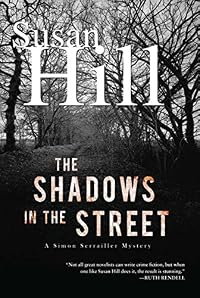
Serrailler has just wrapped up a particularly exhausting and difficult case and is on sabbatical on a far-flung Scottish island when he is called back to Lafferton by the Chief Constable. Two local prostitutes have been found strangled. When the wife of the St. Michael's Cathedral Dean goes missing and then another respectable woman is taken on her way to work, the townspeople grow angry and afraid. Serrailler is in the greatest danger of his life.Tags
Recommendations

























Member Recommendations

Member Reviews
This is the fifth book in the Simon Serrailer Detective series, an interesting conceptual deviation because Simon Serrailer doesn’t figure much at all in the books. Moreoever, these are character-oriented books; the mystery is just an excuse, it seems, to explore the lives of the individuals Hill creates. And because the hallmark of her treatment is compassion, the reader comes away with a very human face for conditions such as - in this book, prostitution, bipolar disease, and grief over a loss.
Simon’s twin sister Cat lost her husband to cancer, and she and her children are still adjusting. She is now a single mother with a demanding job and feels overwhelmed:
"Missing Chris, feeling totally bereft of him, wanting him back, sinking show more to the depths every time she remembered that he would never come back, longing for him so that she felt ill and incapable of functioning as a human being – all of it needed no prompting, like some memories that were touched by a piece of music, or a chance remark, or going into a particular building. All of it was now part of her, wrapped around her like a second skin."
"Bereavement, she had discovered, was about many things, but one of those, and the one which few people seemed to know or warn about, was a long-lasting, overwhelming physical and mental tiredness. Even now, a year after Chris’s death, she felt exhausted for much of the time, with an exhaustion that seemed to be bone-deep and to bear no relation to whatever else she might have been doing or even to how much sleep she got.”
And yet, she still has room within her to feel ruthful for the prostitutes who have started to haunt the streets:
"She looked at the girls again as they stood by a street lamp lighting cigarettes. They were probably no more than twenty, thin, hollow-eyed, their legs without tights under the short strips of skirt. Sexual disease. Drug-related illnesses. Every sort of violence. Even just exposure to the cold. Those were only a few of the risks they ran every night….The street lighting threw hard shadows, but when they turned their faces to it, they were the faces of children.”
When some prostitutes turn up strangled to death, Simon is called back from his vacation in Scotland to investigate. The police immediately focus on a lonely man who brings the prostitutes food and hot tea several nights a week: why would anyone do that for nothing, they wonder? To them, a single man who lives with his mother is a living embodiment of the serial killer profile.
The new Anglican Dean of the Cathedral tries to help, but he has his own drama: his wife has bipolar disease, and as soon as she starts to feel stable, like many bipolar patients, she stops taking her medicine. Hill’s portrait of a man trying to remain loyal to a sick spouse is masterful. Can love survive the emotional toll? And if not, how does one deal with the guilt?
Evaluation: By using the pretext of murder mysteries, Hill is able to advocate for a number of social issues that demand our compassion and understanding. Her powerful portrayals of people who suffer the everyday slings and arrows of outrageous fortune make her books compelling journeys into the human psyche. show less
Simon’s twin sister Cat lost her husband to cancer, and she and her children are still adjusting. She is now a single mother with a demanding job and feels overwhelmed:
"Missing Chris, feeling totally bereft of him, wanting him back, sinking show more to the depths every time she remembered that he would never come back, longing for him so that she felt ill and incapable of functioning as a human being – all of it needed no prompting, like some memories that were touched by a piece of music, or a chance remark, or going into a particular building. All of it was now part of her, wrapped around her like a second skin."
"Bereavement, she had discovered, was about many things, but one of those, and the one which few people seemed to know or warn about, was a long-lasting, overwhelming physical and mental tiredness. Even now, a year after Chris’s death, she felt exhausted for much of the time, with an exhaustion that seemed to be bone-deep and to bear no relation to whatever else she might have been doing or even to how much sleep she got.”
And yet, she still has room within her to feel ruthful for the prostitutes who have started to haunt the streets:
"She looked at the girls again as they stood by a street lamp lighting cigarettes. They were probably no more than twenty, thin, hollow-eyed, their legs without tights under the short strips of skirt. Sexual disease. Drug-related illnesses. Every sort of violence. Even just exposure to the cold. Those were only a few of the risks they ran every night….The street lighting threw hard shadows, but when they turned their faces to it, they were the faces of children.”
When some prostitutes turn up strangled to death, Simon is called back from his vacation in Scotland to investigate. The police immediately focus on a lonely man who brings the prostitutes food and hot tea several nights a week: why would anyone do that for nothing, they wonder? To them, a single man who lives with his mother is a living embodiment of the serial killer profile.
The new Anglican Dean of the Cathedral tries to help, but he has his own drama: his wife has bipolar disease, and as soon as she starts to feel stable, like many bipolar patients, she stops taking her medicine. Hill’s portrait of a man trying to remain loyal to a sick spouse is masterful. Can love survive the emotional toll? And if not, how does one deal with the guilt?
Evaluation: By using the pretext of murder mysteries, Hill is able to advocate for a number of social issues that demand our compassion and understanding. Her powerful portrayals of people who suffer the everyday slings and arrows of outrageous fortune make her books compelling journeys into the human psyche. show less
After a spell of reading historical books, I needed a comfort read, something familiar. A pageturner, but well-written. So I picked up this, the fifth in the Simon Serrailler detective series by Susan Hill. And I tweeted about it. Susan Hill replied with the question: “Comfort?!!”
I know what she means; a crime thriller should not be comfortable reading. I replied: “Okay, discomfort with familiar characters”.
I finished the book that same day, but sat back and considered what made me feel comfortable with this series of books. Firstly, the quality of the writing. Hill’s detective Serrailler is a literary gem, he is distinctive but believable, seems ordinary but is extraordinary. And he is surrounded by a close-knit family whose show more stories I also follow from book to book. Hill is particularly good at creating mood – a skill also used in her ghost stories – and her description of place is minimal but so effective. For example, “It was a damp, mild October night with a thin mist drifting away over the black water of the canal like a spirit departing a dead body. The air smelled green.” And there is depth to her writing, literary and cultural references there for you to delight in recognising but which don’t matter if you don’t get them.
In Lafferton, two prostitutes are murdered. Simon Serrailler is on sabbatical leave on a remote Scottish island. A librarian takes food parcels to the prostitutes, one of whom is beaten up by her boyfriend. As usual with Hill’s books, each new chapter makes you want to devour the book in one sitting as she lays out first one possibility then another. Of course nothing is as it first seems.
Read more of my book reviews at http://www.sandradanby.com/book-reviews-a-z/ show less
I know what she means; a crime thriller should not be comfortable reading. I replied: “Okay, discomfort with familiar characters”.
I finished the book that same day, but sat back and considered what made me feel comfortable with this series of books. Firstly, the quality of the writing. Hill’s detective Serrailler is a literary gem, he is distinctive but believable, seems ordinary but is extraordinary. And he is surrounded by a close-knit family whose show more stories I also follow from book to book. Hill is particularly good at creating mood – a skill also used in her ghost stories – and her description of place is minimal but so effective. For example, “It was a damp, mild October night with a thin mist drifting away over the black water of the canal like a spirit departing a dead body. The air smelled green.” And there is depth to her writing, literary and cultural references there for you to delight in recognising but which don’t matter if you don’t get them.
In Lafferton, two prostitutes are murdered. Simon Serrailler is on sabbatical leave on a remote Scottish island. A librarian takes food parcels to the prostitutes, one of whom is beaten up by her boyfriend. As usual with Hill’s books, each new chapter makes you want to devour the book in one sitting as she lays out first one possibility then another. Of course nothing is as it first seems.
Read more of my book reviews at http://www.sandradanby.com/book-reviews-a-z/ show less
This book was a bit of a chore to read. It had been strongly recommended to me, and I kept telling myself "It will get better before the end."
The writing was good, and the plot was good. I can imagine enjoying the same story told in the context of a P. D. James novel or even in America with China Bayles or Benni Harper solving it nicely. But it just didn't grab me, and I think the sole reason is my lack of connection with any of the continuing characters. Perhaps I did the author a disservice by not starting at the beginning of the series, where presumably Simon Serailler was introduced and developed as an interesting, sympathetic character. By the time of this fifth book in the series, Hill may have assumed that readers already know show more and love Simon; little personal detail or character insight were given. show less
The writing was good, and the plot was good. I can imagine enjoying the same story told in the context of a P. D. James novel or even in America with China Bayles or Benni Harper solving it nicely. But it just didn't grab me, and I think the sole reason is my lack of connection with any of the continuing characters. Perhaps I did the author a disservice by not starting at the beginning of the series, where presumably Simon Serailler was introduced and developed as an interesting, sympathetic character. By the time of this fifth book in the series, Hill may have assumed that readers already know show more and love Simon; little personal detail or character insight were given. show less
Where I got the book: audiobook on Audible.
YES! Lafferton has another serial killer! Which is a good thing really, since Simon Serrailler is now in such an exalted job that he can only deal with serial killers, so let’s keep ‘em coming.
This time the baddie is killing prostitutes, of which sleepy little Lafferton suddenly seems to have a high number. Did they build a casino or something? That’s the fun about fictional towns—you can just add in what you need, although the factories and mean streets that we now have don’t really seem to fit with the cathedral close and Midsomer-village-like atmosphere of the earlier books.
Bizarrely, the novel opens with Simon having a holiday fling with an accommodating Scottish lass, yet another show more instance of Simon Being A Shit To Women imo even though she’s obviously willing and I’ll concede that at last Hill has written him a relationship that actually works. Being Simon he’s also angsting about his job and his family while getting out alone into nature to draw stuff. His drawings sell really well, but they never seem to me to be anything more than very proficient sketches—I’d like to know exactly what it is that has London galleries all over him.
Well, fortunately the serial killer comes along and then we get into the most focused mystery plot we’ve had since the first book in the series. And with the most sympathetic victims, to my mind—I thoroughly enjoyed Abi’s story and rooted for her throughout. The resolution seemed a bit unsatisfactory to me, without enough delving into why the killer did it, but I loved the Len subplot, especially his very understandable and realistic murderous thoughts about the people in his life. We all have those thoughts, Hill’s saying—we just don’t all act on them.
I could have done without the Dean’s wife subplot, which I found a little tedious. It’s as if Hill cast around for something else dark to write about and landed on bipolar disorder.
And yay! Somebody punches Simon for Being A Shit To Women. And I laughed out loud when he tries the devastating-smile-and-pushing-back-the-floppy-blond-hair on a woman in order to get into the ICU and fails miserably. I like the guy (always imagining him as looking a bit like the highly tasty Rupert Penry-Jones) but I’d probably punch him too at some point. show less
YES! Lafferton has another serial killer! Which is a good thing really, since Simon Serrailler is now in such an exalted job that he can only deal with serial killers, so let’s keep ‘em coming.
This time the baddie is killing prostitutes, of which sleepy little Lafferton suddenly seems to have a high number. Did they build a casino or something? That’s the fun about fictional towns—you can just add in what you need, although the factories and mean streets that we now have don’t really seem to fit with the cathedral close and Midsomer-village-like atmosphere of the earlier books.
Bizarrely, the novel opens with Simon having a holiday fling with an accommodating Scottish lass, yet another show more instance of Simon Being A Shit To Women imo even though she’s obviously willing and I’ll concede that at last Hill has written him a relationship that actually works. Being Simon he’s also angsting about his job and his family while getting out alone into nature to draw stuff. His drawings sell really well, but they never seem to me to be anything more than very proficient sketches—I’d like to know exactly what it is that has London galleries all over him.
Well, fortunately the serial killer comes along and then we get into the most focused mystery plot we’ve had since the first book in the series. And with the most sympathetic victims, to my mind—I thoroughly enjoyed Abi’s story and rooted for her throughout. The resolution seemed a bit unsatisfactory to me, without enough delving into why the killer did it, but I loved the Len subplot, especially his very understandable and realistic murderous thoughts about the people in his life. We all have those thoughts, Hill’s saying—we just don’t all act on them.
I could have done without the Dean’s wife subplot, which I found a little tedious. It’s as if Hill cast around for something else dark to write about and landed on bipolar disorder.
And yay! Somebody punches Simon for Being A Shit To Women. And I laughed out loud when he tries the devastating-smile-and-pushing-back-the-floppy-blond-hair on a woman in order to get into the ICU and fails miserably. I like the guy (always imagining him as looking a bit like the highly tasty Rupert Penry-Jones) but I’d probably punch him too at some point. show less
In this, the fifth of Susan Hill's crime novels featuring DCI Simon Serrailler, someone is murdering prostitutes in the quiet town of Lafferton. The attacks are notable for their brutality, but clues are scarce and the police are stymied. As the investigation progresses the public supply plenty of tips and several viable suspects enter the frame, but no one is arrested and no charges are laid. Serrailler is feeling the pressure, but his fears go beyond concerns for his own career to encompass the young women working the streets who are at risk. Then the unthinkable happens: a young mother is murdered in the same manner, a woman who is not a prostitute. Hill excels in creating character and evoking setting. The town of Lafferton takes on show more structure and dimension. Every one of the people in this story touches the reader in some way. We also see how Simon's family life is evolving: his father's second marriage to Judith and his sister Cat's slow recovery from the death of her husband Chris, which occured in the previous novel in the series. The Shadows in the Street is more than just an engaging police procedural. It is a well-told tale and a very good novel. Thoroughly entertaining, this is popular fiction at its best. show less
The Shadows in the Street, the latest addition to Susan Hill's Simon Serrailler mystery series, showcases the author's amazing ability to balance the elements of both plot and character without sacrificing one for the other. Hill allows her characters to simmer and become full-bodied persons who walk off the page and into the reader's mind where their stories intersect and blend to reach a very satisfying conclusion.
In Shadows the cathedral town of Lafferton is a cauldron of old and new. Simon still occupies his apartment in the Close near the cathedral but when the story opens he is on holiday off the Scottish coast. His twin sister, Cat Deerborn, a physician, is still seeing patients but is struggling to adjust to life without her show more husband, Chris, who died a year earlier of a brain tumor. Their father, who remarried after their mother's death, still disapproves of his son's two professions, artist and detective with the Lafferton Police Department. However, Cat and her stepmother have become quite close, and Cat relies on her to help with the three children. But the cathedral has a new Dean who, together with his wife and long-time friend and assistant, have upset the congregation with aggressive plans for changing the way the church conducts its services and community outreach. The Lafferton Police Department also has a new member who wants to work with Simon and learn his methods. And then there's Chantelle, the newest member of Lafferton's group of girls who work in the oldest profession, plying their trade along the tow path by the canal. When Chantelle is murdered, the hunt for her killer begins, and the plot begins to thicken.
Hill builds her characters' stories in targeted short bursts that reveal their strengths and shortcomings along with their hopes and heartaches. Short chapters move the focus rapidly from character to character and scene to scene, which keeps the narrative fast and fresh. Hill never judges her characters but manages to grant them all some measure of respect and dignity despite their failings. This sensitive treatment builds a foundation of trust between the author and her audience. She then leaves us to our own judgment of the murderer.
The Shadows in the Street if the fifth entry in the Simon Serrailler series after The Various Haunts of Men, The Pure in Heart, The Risk of Darkness, and The Vows of Silence. show less
In Shadows the cathedral town of Lafferton is a cauldron of old and new. Simon still occupies his apartment in the Close near the cathedral but when the story opens he is on holiday off the Scottish coast. His twin sister, Cat Deerborn, a physician, is still seeing patients but is struggling to adjust to life without her show more husband, Chris, who died a year earlier of a brain tumor. Their father, who remarried after their mother's death, still disapproves of his son's two professions, artist and detective with the Lafferton Police Department. However, Cat and her stepmother have become quite close, and Cat relies on her to help with the three children. But the cathedral has a new Dean who, together with his wife and long-time friend and assistant, have upset the congregation with aggressive plans for changing the way the church conducts its services and community outreach. The Lafferton Police Department also has a new member who wants to work with Simon and learn his methods. And then there's Chantelle, the newest member of Lafferton's group of girls who work in the oldest profession, plying their trade along the tow path by the canal. When Chantelle is murdered, the hunt for her killer begins, and the plot begins to thicken.
Hill builds her characters' stories in targeted short bursts that reveal their strengths and shortcomings along with their hopes and heartaches. Short chapters move the focus rapidly from character to character and scene to scene, which keeps the narrative fast and fresh. Hill never judges her characters but manages to grant them all some measure of respect and dignity despite their failings. This sensitive treatment builds a foundation of trust between the author and her audience. She then leaves us to our own judgment of the murderer.
The Shadows in the Street if the fifth entry in the Simon Serrailler series after The Various Haunts of Men, The Pure in Heart, The Risk of Darkness, and The Vows of Silence. show less
Review from Badelynge Susan Hill has been writing extraordinary fiction for over four decades. She is adept at characterisation and building complex emotional landscapes for her characters to inhabit. In 2004 she turned her hand to writing in a completely new genre; the detective novel. She plays with the genre's staple ingredients and add her own flare for exploring human relationships to the mix, creating a thoroughly engrossing series. The latest installment The Shadows in the Street, continues to follow the primary characters, brother and sister, DCI Simon Serrailler and Dr. Cat Deerborn. Serrailler often takes a back seat in the narrative, most notably in the first book, The Various Haunts of Men. The crime or mystery is used show more primarily as a backdrop to explore related themes of the effects of crime, murder, loss, insanity, loneliness, paranoia and more. Hill never coddles the reader with comfort reading; there are many scenes of true heart rending sadness in all the books. It's not offered up as melodrama but rather as an attempt to show the results of tragedy that can enter any of our lives at any moment. The sixth Serrailler book, The Betrayal of Trust will be out sometime next year. I recommend them all. show less
Members
- Recently Added By
Published Reviews
Susan Hill's detective, Simon Serraillier, has now reached his fifth mystery, a complex series of prostitute murders.
added by KayCliff
Lists

Books Read in 2023
5,547 works; 145 members
Author Information

125+ Works 18,936 Members
Susan Hill was born in Scarborough, United Kingdom on February 5, 1942. She received a degree in English from King's College in London in 1963. Her first book, The Enclosure, was published during her first year at university. She worked as a freelance journalist between 1963 and 1968 and has been a monthly columnist for the Daily Telegraph since show more 1977. She founded her own publishing company, Long Barn Books, in 1996 and publishes a literary magazine called Books and Company. She has written works of fiction and non-fiction as well as children's books. She also edits short story compilations. Her works include Gentleman and Ladies, A Change for the Better, The Woman in Black, The Mist in the Mirror, and the Simon Serrailler Crime Novel series. She has won numerous awards including a Somerset Maugham Award for I'm the King of the Castle, the Whitbread Novel Award for The Bird of Night, the John Llewellyn Rhys Prize for The Albatross, and the Smarties Prize for Can It Be True? (Bowker Author Biography) show less
Series

Work Relationships
Common Knowledge
- Canonical title
- The Shadows in the Street
- Original publication date
- 2010-05-25
- People/Characters
- Simon Serrailler; Leslie Blade; Abi Righton; Cat Deerbon; Stephen Webber; Judith Serrailler (show all 7); Miles Hurley
- Dedication
- To the old familiar faces
- First words
- Leslie Blade stopped in the overhang of the college entrance to put up his umbrella.
- Last words
- (Click to show. Warning: May contain spoilers.)It was early in the morning, bright, cloudless, but there had been rain in the night and, as he drove away, the soft grey stone of the Cathedral, the roofs of the houses, the cobblestones of the lane beyond the arch gleamed.
Classifications
Statistics
- Members
- 509
- Popularity
- 58,737
- Reviews
- 22
- Rating
- (3.78)
- Languages
- English, French
- Media
- Paper, Audiobook, Ebook
- ISBNs
- 30
- ASINs
- 14