On This Page
Description
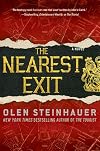
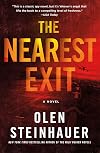
After being blackballed by the CIA, Milo Weaver finds himself compelleed to rejoin the elite network of top-secret black-ops agents called 'tourists'. But first he's required to prove his loyalty by killing an innocent teenage girl in Berlin. He has a daughter not much younger than the girl he's been tasked to abduct. As the gripping action unwinds, the brilliant, obese German espionage admininstrator searches for a traitor among the tourists..
Tags
Recommendations




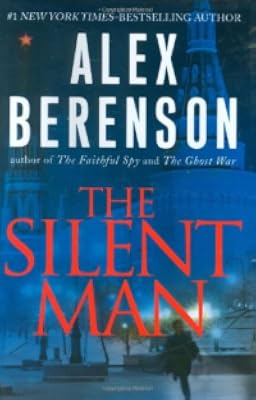


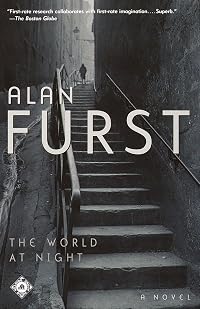
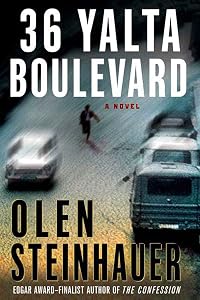
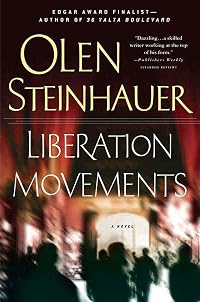









Member Reviews
Like Daniel Silva (whose thriller, The Secret Servant, I last reviewed), Olen Steinhauer writes an espionage series with a recurring character. Unlike Silva, Steinhauer doesn’t weigh his down with clunky exposition explaining what happened in previous novels. Albeit, The Nearest Exit is the second in Steinhauer’s Milo Weaver series, as opposed to six previous novels in Silva’s Gabriel Allon series.
Some similarities are that both writers show espionage as a dirty, ugly business with no moral center and too much killing. Beyond that they don’t seem to have much in common. Weaver has the kind of real family problems that anyone who is away too much for work can relate to. He also has issues with secrecy, paranoia and trust that few show more people do. He tries to quit his job, but can’t seem to get away. He’s a real person dealing with unusual problems – not a superhero.
The espionage aspect of Steinhauer’s books also seems more realistic than many others, especially in the way technology affects everyday life, from cell phone capabilities to ubiquitous security cameras in public spaces.
Overall, The Nearest Exit is a satisfying, multilayered story, an excellent continuation of the series as well as one of the better espionage novels I’ve read. show less
Some similarities are that both writers show espionage as a dirty, ugly business with no moral center and too much killing. Beyond that they don’t seem to have much in common. Weaver has the kind of real family problems that anyone who is away too much for work can relate to. He also has issues with secrecy, paranoia and trust that few show more people do. He tries to quit his job, but can’t seem to get away. He’s a real person dealing with unusual problems – not a superhero.
The espionage aspect of Steinhauer’s books also seems more realistic than many others, especially in the way technology affects everyday life, from cell phone capabilities to ubiquitous security cameras in public spaces.
Overall, The Nearest Exit is a satisfying, multilayered story, an excellent continuation of the series as well as one of the better espionage novels I’ve read. show less
In the category of spy novels, this is as good as it gets. The Nearest Exit is a sequel to Steinhauer's earlier novel, The Tourist, which focuses on Milo Weaver, an agent within the CIA's super-secret "Department of Tourism." "Tourists" are akin to those with the "OO" designation in the James Bond universe--assigned to the toughest jobs, often including assassinations. Reading The Tourist took all the romance out of the "spy business" for me, as it made evident that the one distinguishing characteristic for excelling as a spy is a extraordinary gift for lying. Lying is required for the spy's survival, of course, but as one creates as his world a "wilderness of mirrors," all hope for a genuine relationship with another person is lost. It show more took me a long time to get comfortable with The Tourist's world, which is probably why I like The Nearest Exit better: having already grown familiar with the world in which it took place, and I could get quickly get engaged with the intricacies of the plot. Since it had been some time since I had read The Tourist, I was happy Steinhauer took occasions through the story to remind me of the key things that happened in the previous book. The story was well-crafted, introducing enough elements that I wasn't sure exactly where it was heading, but they kept me turning the pages to a conclusion that brought all those elements together. show less
Compared by some to John le Carré, whose The Spy Who Came in from the Cold blew me away. Now that I've finished reading, that comparison seems a bit of a stretch (please keep in mind I've only read one of his books). The narrative kept me on my toes but, unlike [b:The Spy Who Came in from the Cold|19494|The Spy Who Came in from the Cold|John le Carré|http://photo.goodreads.com/books/1274572664s/19494.jpg|1177001], I never felt like the floor completely dropped beneath me while reading. I always had a general idea of where it was headed despite all the of twists and turns along the way. Still, a fun read! Although it's a sequel to [b:The Tourist|7576663|The Tourist|Olen show more Steinhauer|http://photo.goodreads.com/books/1275833804s/7576663.jpg|4639728], I felt comfortable reading this as a standalone novel.
"Sometimes you'll end an operation having achieved all your objectives, only to learn--maybe years later--that you failed in some unknowable way. In fact, it's more likely you'll fail as often as you succeed."
After reentering the Department of Tourism, a secret sect within the CIA, Milo Weaver is finding he no longer has the stomach for the moral ambiguity his job requires. In this world of gray, even seemingly innocuous tasks can have calamitous repercussions. He'd like nothing better than to walk away and rebuild his family. Unfortunately for Milo, disobeying orders is easier said than done.
FYI: I got this book as a Goodreads giveaway. show less
"Sometimes you'll end an operation having achieved all your objectives, only to learn--maybe years later--that you failed in some unknowable way. In fact, it's more likely you'll fail as often as you succeed."
After reentering the Department of Tourism, a secret sect within the CIA, Milo Weaver is finding he no longer has the stomach for the moral ambiguity his job requires. In this world of gray, even seemingly innocuous tasks can have calamitous repercussions. He'd like nothing better than to walk away and rebuild his family. Unfortunately for Milo, disobeying orders is easier said than done.
FYI: I got this book as a Goodreads giveaway. show less
For more reviews and bookish posts please visit: http://www.ManOfLaBook.com
The Nearest Exit by Olen Steinhauer is the second book featuring ex-CIA assassin/family man Milo Weaver. The novel involves the fictional “tourism” department of the CIA and it is the secondbook in the Milo Weaver series.
Milo Weaver is enjoying his quite life after leaving the CIA. As Milo soon finds out, his services are needed again when he is forced back into the “Tourism” Department.
To prove his loyalty to his new bosses, Milo kidnaps a young German immigrant, only to later discover she was killed. Milo, now wanted for murder, must unravel layers of bureaucracy and double crosses to solve this mystery.
If Mr. Steinhauer keeps writing this way he’s show more soon going to be in the list of my favorite writers. In The Nearest Exit by Olen Steinhauer bats the story out of the park again, with an unbelievable plot involving the CIA, Germany’s secret service as well as a guest appearances by the Ukrainians and Chinese.
As in the first book, The Tourist, the plot is complex and the narrative flows. The author keeps his excellent story line of vague political morals where the good guys and bad guys seem to be cut from the same cloths, only working under different flags.
The central theme of this book is whether or not taking the life of an innocent child could be used as a reason for the greater good. The question becomes what exactly is “the greater good”, are those that decide this point looking out for the population at larger, or for their own self-interest. In Milo Weaver’s world, full of amoral co-workers, the twists never stop and the sense of justice doesn’t even exist.
As in the first book, Mr. Steinhauer doesn’t shy away from pitting his protagonist’s job against his personal life. Weaver keeps paying a very steep price, personally, for his decision to be a moral beacon in an immoral environment.
The world built in this book is a complex maze of shadows and shifting realities. There are no bad guys, because there are no good guys for comparison, as seen from the trenches of the espionage world. show less
The Nearest Exit by Olen Steinhauer is the second book featuring ex-CIA assassin/family man Milo Weaver. The novel involves the fictional “tourism” department of the CIA and it is the secondbook in the Milo Weaver series.
Milo Weaver is enjoying his quite life after leaving the CIA. As Milo soon finds out, his services are needed again when he is forced back into the “Tourism” Department.
To prove his loyalty to his new bosses, Milo kidnaps a young German immigrant, only to later discover she was killed. Milo, now wanted for murder, must unravel layers of bureaucracy and double crosses to solve this mystery.
If Mr. Steinhauer keeps writing this way he’s show more soon going to be in the list of my favorite writers. In The Nearest Exit by Olen Steinhauer bats the story out of the park again, with an unbelievable plot involving the CIA, Germany’s secret service as well as a guest appearances by the Ukrainians and Chinese.
As in the first book, The Tourist, the plot is complex and the narrative flows. The author keeps his excellent story line of vague political morals where the good guys and bad guys seem to be cut from the same cloths, only working under different flags.
The central theme of this book is whether or not taking the life of an innocent child could be used as a reason for the greater good. The question becomes what exactly is “the greater good”, are those that decide this point looking out for the population at larger, or for their own self-interest. In Milo Weaver’s world, full of amoral co-workers, the twists never stop and the sense of justice doesn’t even exist.
As in the first book, Mr. Steinhauer doesn’t shy away from pitting his protagonist’s job against his personal life. Weaver keeps paying a very steep price, personally, for his decision to be a moral beacon in an immoral environment.
The world built in this book is a complex maze of shadows and shifting realities. There are no bad guys, because there are no good guys for comparison, as seen from the trenches of the espionage world. show less
An exciting, complex spy novel about a super-secret arm of the CIA, the Dept of Tourism, that is only a rumor even to them, although it seems to be better known outside the US. It's made up of tourists, who wander around the world doing whatever they're told, often killing people without ever knowing why.
But Milo Weaver is no ordinary spook; he has a wife and daughter, and a different outlook on life and death, so he tries to get out field work, and works behind a desk for while, until he is needed and can't refuse. Quitting is not easy, especially if your knowledge is deemed a liability - or family obligations force you to remain. In the last book, he got accused of killing an adversary and was suspected in the death of another show more tourist, a good friend. He was finally cleared, but not everyone believed he was innocent, so to get back into field work, he needed to prove himself by doing a few jobs. One was to kill a young girl, who apparently did nothing wrong, and he broke the rules by questioning the reason for it. This assignment was the main thrust of the book, and we get to know the agents that are involved. Nothing is as simple as it seems, neither for the characters nor the reader. In the end, most of the characters are shown to be human, with typical human motives, complex but understandable.
One character besides Milo was unexpectedly interesting from the beginning, and likable in her fearfulness. She was an obese German secret service administrator, who was dedicated to finding the truth even when the rest of her department wanted her to stop.
And the ending - both unexpected and expected in a way, but unusual nonetheless. show less
But Milo Weaver is no ordinary spook; he has a wife and daughter, and a different outlook on life and death, so he tries to get out field work, and works behind a desk for while, until he is needed and can't refuse. Quitting is not easy, especially if your knowledge is deemed a liability - or family obligations force you to remain. In the last book, he got accused of killing an adversary and was suspected in the death of another show more tourist, a good friend. He was finally cleared, but not everyone believed he was innocent, so to get back into field work, he needed to prove himself by doing a few jobs. One was to kill a young girl, who apparently did nothing wrong, and he broke the rules by questioning the reason for it. This assignment was the main thrust of the book, and we get to know the agents that are involved. Nothing is as simple as it seems, neither for the characters nor the reader. In the end, most of the characters are shown to be human, with typical human motives, complex but understandable.
One character besides Milo was unexpectedly interesting from the beginning, and likable in her fearfulness. She was an obese German secret service administrator, who was dedicated to finding the truth even when the rest of her department wanted her to stop.
And the ending - both unexpected and expected in a way, but unusual nonetheless. show less
This is the second book in a post-9/11 spy/thriller series that features Milo Weaver, a CIA operative who formerly served as a “tourist,” or “on-call” assassin for the agency. Milo was competent at serving as a licensed killer, but he tired of the dangerous and lethal work and wanted to settle down, so at the end of the first book, he transferred to a desk job.
In The Nearest Exit, Milo decides to go back to “tourist” work, but first is tasked with proving his worth by going to Berlin, killing a certain 15-year-old girl, and disposing of the body. Milo doesn’t have the stomach for this particular challenge, so he enlists the aid of his father, a former KGB operative who now works for the United Nations. He wants his father show more to help him stage a phony murder and hide the girl. In spite of Milo’s efforts to save her, however, the girl is found murdered, and German intelligence quickly identifies Milo and subjects him to a brutal interrogation. Milo is exonerated, but he now gets enmeshed in the search for a suspected “mole” in his own organization.
As in most good espionage novels, things are not as they appear, and Milo finds himself in a complex situation in which he doesn’t know whom to trust. Americans, Germans, Hungarians, Chinese, and (through his father) even the United Nations have operatives involved in seemingly interlocking conspiracies. Milo has to maneuver his way through a lethal and deadly game in which he doesn't even know who is on his side, and who is against him.
Evaluation: With the exception of one or two sadistic killers, most of Steinhauer’s characters are multidimensional and human, if not humane. Milo Weaver is very resourceful and competent, but he is not an invincible superhero like Lee Child’s Jack Reacher, so you can’t be sure that the author might not just kill him off. This second book is as good as the first in the series, with lots of action and suspense. There is, however, a bit of a stretch in plausibility, and some caricatured villains.
Note: This book won the 2010 Dashiell Hammett Prize for literary excellence in the field of crime writing.
(JAB) show less
In The Nearest Exit, Milo decides to go back to “tourist” work, but first is tasked with proving his worth by going to Berlin, killing a certain 15-year-old girl, and disposing of the body. Milo doesn’t have the stomach for this particular challenge, so he enlists the aid of his father, a former KGB operative who now works for the United Nations. He wants his father show more to help him stage a phony murder and hide the girl. In spite of Milo’s efforts to save her, however, the girl is found murdered, and German intelligence quickly identifies Milo and subjects him to a brutal interrogation. Milo is exonerated, but he now gets enmeshed in the search for a suspected “mole” in his own organization.
As in most good espionage novels, things are not as they appear, and Milo finds himself in a complex situation in which he doesn’t know whom to trust. Americans, Germans, Hungarians, Chinese, and (through his father) even the United Nations have operatives involved in seemingly interlocking conspiracies. Milo has to maneuver his way through a lethal and deadly game in which he doesn't even know who is on his side, and who is against him.
Evaluation: With the exception of one or two sadistic killers, most of Steinhauer’s characters are multidimensional and human, if not humane. Milo Weaver is very resourceful and competent, but he is not an invincible superhero like Lee Child’s Jack Reacher, so you can’t be sure that the author might not just kill him off. This second book is as good as the first in the series, with lots of action and suspense. There is, however, a bit of a stretch in plausibility, and some caricatured villains.
Note: This book won the 2010 Dashiell Hammett Prize for literary excellence in the field of crime writing.
(JAB) show less
This is book 2 in the Milo Weaver series and it continues on in the same vein. Picking up with our unfortunate spy Milo Weaver has ended up back in the Department of Tourism under a new managing director. After his misfortunes in book one, he feels his new director is giving him a complex series of tests to prove his loyalty. His penultimate task is to kidnap a Moldovan teenage girl and kill her. Struggling with the decision, he ultimately decides he cannot complete the task and enlists the aid of his Russian father. Things spin out of control quickly when the girl escapes and someone kills her anyway. From there the story becomes a complex, twisted story of governments doing favors for each other through secret channels and show more international revenge plots. These stories always seem to be disturbingly realistic. The last 100 pages or so are pure excitement, and it ends with a shock. Always a pleasure to read this series. I look forward to more. Thank you Netgalley for the galley. show less
Members
- Recently Added By
Lists

ALA The Reading List
490 works; 28 members
Ultimate Thriller Guide
52 works; 4 members
Author Information

23+ Works 5,517 Members
Olen Steinhauer was born in Baltimore, Maryland on June 21, 1970. He received an MFA in creative writing from Emerson College in Boston. After college, he spent a year in Romania on a Fulbright Grant. This experience helped provide the inspiration for his first five books. His works include The Bridge of Sighs, The Cairo Affair, All the Old show more Knives, and the Milo Weaver Series. In 2010, he received the Hammett Prize for best literary crime novel for The Nearest Exit. (Bowker Author Biography) show less
Awards and Honors
Awards
Distinctions
Series

Common Knowledge
- Canonical title
- The Nearest Exit
- Original title
- The nearest Exit
- Original publication date
- 2010-05-11
- People/Characters
- Milo Weaver
- First words
- When DJ Jazzy-G hit the intro to 'Just like Heaven', that Cure anthem of his youth, Henry Gray achieved a moment of complete expat euphoria.
- Last words
- (Click to show. Warning: May contain spoilers.)My son is the only thing I'm thinking of.
- Blurbers
- King, Stephen
- Original language
- English
Classifications
Statistics
- Members
- 743
- Popularity
- 37,932
- Reviews
- 28
- Rating
- (3.85)
- Languages
- 6 — English, Finnish, French, German, Italian, Norwegian (Bokmål)
- Media
- Paper, Audiobook, Ebook
- ISBNs
- 26
- ASINs
- 10