The Sentimentalists
by Johanna Skibsrud
On This Page
Description
Haunted by the vivid horrors of the Vietnam War and exhausted from years spent battling his memories, Napoleon Haskell leaves his North Dakota trailer and moves to Canada. He retreats to a small town where Henry, the father of his fallen Vietnam comrade, has a home on the shore of a man-made lake. When Napoleon's daughter arrives, fleeing troubles of her own, she finds her father in the dark twilight of his life, wrapped in the fog of alcoholism. With love and insatiable curiosity, she show more devotes herself to learning the truth about his life, discovering not just the details of his Vietnam experience but also the palimpsest that memory makes and the distance between a lived experience and our telling it.--From front inside jacket. show lessTags
Recommendations

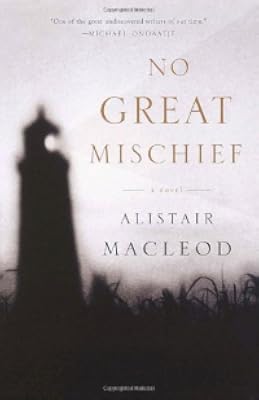

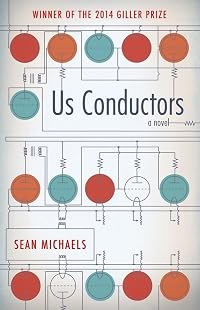
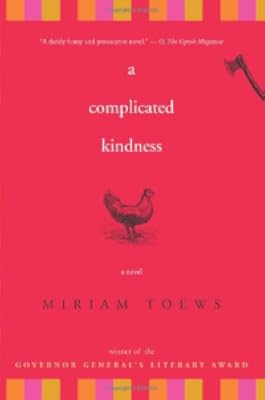
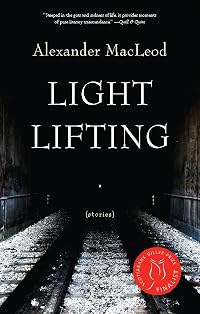

















Member Reviews
This book about war is definitely not filled with action, adventure nor even passion. It is about memory, perceptions, forgetting and loss. It is also about escape, reconciliation and ethics. This is all reflected in long and slow journey through the narrator's attempt at delving into her father's mind, understanding his past to explain his present. I loved the symbolism of Casablanca, the lost town that holds its inhabitants prisoner, the mystery surrounding the past and the projects that never finish: all symptoms of a life paralyzed by experiences and moral quandaries too painful to absorb.
This short book is definitely not an easy or quick read: one must sit down in a reflective mood to get into its intricate and complex flow.
This short book is definitely not an easy or quick read: one must sit down in a reflective mood to get into its intricate and complex flow.
There was lively discussion at the blog of the late Kevin From Canada when The Sentimentalists was nominated for the 2010 Giller Prize, much of it focussing on the difficulty of Skribsund's poetic prose and her way her layered text often demands re-reading. Undaunted, I bought it when it went on to win the Giller, and then kept hesitating over whether to read it or not.
Well, now I've read it, and I think the difficulty has not been overrated but the novel is worth it.
It's a novel about the after-effects of service in the Vietnam War, narrated by a daughter who struggles to understand her parents and herself. But in the course of caring for her father Napoleon as he slides into dementia, she learns that questing after the unknowable is a show more lesson in personal growth.
Initially, she believes that truth is never really buried:
In the aftermath of a soured relationship, the narrator recognises, however, the flaw in her quest to know:
This is so true, I think, and yet I have not come across it expressed so clearly before. People search for reasons and answers in the aftermath of all kinds of personal tragedies, in the belief that they will get 'closure'. Often we see them on TV expressing a wish that knowledge of the causes of a tragedy will prevent it from ever happening to someone else, so that the loved one has 'not died in vain'. It's a very human reaction, to try to cushion oneself against grief and pain, and to want to protect others from it too.
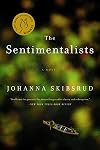
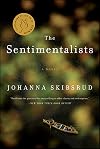
The boat featured on the front cover of my edition is an important symbol of love in the novel.
To read the rest of my review please visit https://anzlitlovers.com/2021/12/02/the-sentimentalists-by-johanna-skibsrud/ show less
Well, now I've read it, and I think the difficulty has not been overrated but the novel is worth it.
It's a novel about the after-effects of service in the Vietnam War, narrated by a daughter who struggles to understand her parents and herself. But in the course of caring for her father Napoleon as he slides into dementia, she learns that questing after the unknowable is a show more lesson in personal growth.
Initially, she believes that truth is never really buried:
...I find it difficult to believe that anything is ever buried in the way that I had once supposed. I believe instead that everything remains. At the very limit: the exact surface of things. So that in the end it is not so much what has been subtracted from a life that really matters, but the distances instead, between the things which remain. (p. 81)
In the aftermath of a soured relationship, the narrator recognises, however, the flaw in her quest to know:
Once my father said, women think that they can make sad things go away by knowing the reason that they happened. This was in dismissal of a question that I asked him once about his experiences in the war. He told me that in my curiosity I was just like my mother, and in the tone that he said it I knew at that moment it was the worst thing of all.
So I never mentioned the war to him again, until those many years later, when he told me himself.
I did believe that, I guess. That I could make sad things go away. Believed that if I knew what had happened to Henry (he had never spoken till that summer of his accident) that I could prevent an accident like that ever happening to myself, or to any of the people that I loved.
Believed, I suppose, that if there was a precise reason that I could get hold of to explain why Henry, and both of my parents ended up so very much alone, that I could prevent, for myself, an equivalent loneliness. (p.83)
This is so true, I think, and yet I have not come across it expressed so clearly before. People search for reasons and answers in the aftermath of all kinds of personal tragedies, in the belief that they will get 'closure'. Often we see them on TV expressing a wish that knowledge of the causes of a tragedy will prevent it from ever happening to someone else, so that the loved one has 'not died in vain'. It's a very human reaction, to try to cushion oneself against grief and pain, and to want to protect others from it too.
The boat featured on the front cover of my edition is an important symbol of love in the novel.
To read the rest of my review please visit https://anzlitlovers.com/2021/12/02/the-sentimentalists-by-johanna-skibsrud/ show less
A horse, long of face, its hooves clattering on the cobbles that overlay the bones of settlers long dead, of child victims of diptheria and German measles, its long face hanging from the arch of its long neck, walks into a bar.
And the bartender says, why so ineffably sad? And we all weep.
This is a joke, as told by a poet-novelist. And The Sentimentalists is a novel, as told by a poet-novelist: over-written, over long even at a mere 216 pages, and, thanks to the Giller Prize, over-praised.
It starts well. Skibsrud has an ear and an attention for the rhythm of a sentence, and the first 20 pages or so are rich and evocative. But with those 20 pages done, with the scene set and the actors introduced, one expects the novel to go somewhere, show more to do something. It does not. Instead, it drifts about, rather aimlessly, talking about itself. And the middle sags.
Those sentences soon seem too rich in commas, too wordy, too long; Skibsrud is using entirely too many words to say very little:
On those occasions, what I had feared most was only that the space I had felt in me so palpably then might remain all my life in the unbearably empty state in which it had arrived. So to find that, on the contrary, it could disappear completely -- and without a trace -- without ever having been filled; that it could be compressed so soundly within a body that inside would remain only the mechanical procedures of the lungs and the heart, was a great surprise.
Uh, what occasions were those?
At night, I lay up in Owen's old bedroom where I had slept so many nights as a child and felt nothing at all, except for the static hum of electricity from the floors below. A sad and irreversible change had occurred, it seemed, and the great and open space which I had always felt within me, that I had thought, in fact, had been me, had disappeared, so finally that I could not hope, I thought, to resurrect it, or feel again that lightness at the exact centre of my heart as I had on so many occasions before. When, in that very room, I had harboured in me an expectation of a world so vast, and of such incomparable beauty, that I could feel it loosening the muscles of my throat; a disturbance of which I could hardly endure.
Ah, yes. Those occasions. I know them well.
This ceases to be a question of style, and becomes a matter of substance, or more properly, of its lack. Reading these sentences, their vague language, their aversion to the concrete and particular, is rather like attempting to read braille through oven mitts: you're certain something's there, but you're damned if you can figure out what. And if the chief joy of this book is to be found in its language, you wonder why you need 200 pages of it; it is like listening to a symphony that consists solely of a pianist repeatedly hitting the same note.
It is not only in its lack of movement that the novel sags. It is also packed with redundancies. Things disappear both completely and without a trace. The narrator harbours in her expectations, as if there is some other place one might harbour them. The garden shed, perhaps? Where is the poet's attention to language, the economy and force of the poetic line? Adrift in the stagnant middle of this narrative, senses muffled, it begins to seem that one is reading page after page of filler. The novel takes a full 100 pages to get up and get moving.
Even 60 pages in, we know nothing of the characters. And this seems to be Skibsrud's point, that we cannot see inside of other people. But neither do we have any concrete sense of their outer lives. Nobody does anything; nobody says anything -- dialogue, through the first half of the novel, is often reported indirectly. The narrator may tell us that her father laughs, but we never understand why. We never hear the joke.
Indeed, we never hear any jokes; one thing the reader will not find herein is a laugh, or even a smile. The horse walks into the bar and we all are ineffably sad, though we know not why, and we hope, or think, that the emptiness at the very centre of our hearts will one say soon be filled with the expectations that we keep hanging beside the hedge trimmer out in the garden shed. But it will not be so, for life is ineffably sad.
And here is the crux of it: novels of this ilk flout the narrative building code by ignoring such load-bearing beams as character and plot. They dramatize nothing; indeed, they place themselves above such concerns, lumping together drama and melodrama. They labour to convince us that they are more literary than literature itself. But The Sentimentalists, in its continual tone of sadness, falls prey to melodrama's cousin, sentimentality. We do not live our lives in a fog of sadness. To pretend that we can, to repeatedly strike this same note for 200 pages, is emotional masturbation. Having thrown away the tools by which emotional effects are earned -- the stuff of drama -- the novel strikes desperately at that same sad note. And all that sadness, like the joke about the horse, is without force. The Sentimentalists grasps to make us sad because it fails to understand the truth: without joy, there can be no heartbreak. show less
And the bartender says, why so ineffably sad? And we all weep.
This is a joke, as told by a poet-novelist. And The Sentimentalists is a novel, as told by a poet-novelist: over-written, over long even at a mere 216 pages, and, thanks to the Giller Prize, over-praised.
It starts well. Skibsrud has an ear and an attention for the rhythm of a sentence, and the first 20 pages or so are rich and evocative. But with those 20 pages done, with the scene set and the actors introduced, one expects the novel to go somewhere, show more to do something. It does not. Instead, it drifts about, rather aimlessly, talking about itself. And the middle sags.
Those sentences soon seem too rich in commas, too wordy, too long; Skibsrud is using entirely too many words to say very little:
On those occasions, what I had feared most was only that the space I had felt in me so palpably then might remain all my life in the unbearably empty state in which it had arrived. So to find that, on the contrary, it could disappear completely -- and without a trace -- without ever having been filled; that it could be compressed so soundly within a body that inside would remain only the mechanical procedures of the lungs and the heart, was a great surprise.
Uh, what occasions were those?
At night, I lay up in Owen's old bedroom where I had slept so many nights as a child and felt nothing at all, except for the static hum of electricity from the floors below. A sad and irreversible change had occurred, it seemed, and the great and open space which I had always felt within me, that I had thought, in fact, had been me, had disappeared, so finally that I could not hope, I thought, to resurrect it, or feel again that lightness at the exact centre of my heart as I had on so many occasions before. When, in that very room, I had harboured in me an expectation of a world so vast, and of such incomparable beauty, that I could feel it loosening the muscles of my throat; a disturbance of which I could hardly endure.
Ah, yes. Those occasions. I know them well.
This ceases to be a question of style, and becomes a matter of substance, or more properly, of its lack. Reading these sentences, their vague language, their aversion to the concrete and particular, is rather like attempting to read braille through oven mitts: you're certain something's there, but you're damned if you can figure out what. And if the chief joy of this book is to be found in its language, you wonder why you need 200 pages of it; it is like listening to a symphony that consists solely of a pianist repeatedly hitting the same note.
It is not only in its lack of movement that the novel sags. It is also packed with redundancies. Things disappear both completely and without a trace. The narrator harbours in her expectations, as if there is some other place one might harbour them. The garden shed, perhaps? Where is the poet's attention to language, the economy and force of the poetic line? Adrift in the stagnant middle of this narrative, senses muffled, it begins to seem that one is reading page after page of filler. The novel takes a full 100 pages to get up and get moving.
Even 60 pages in, we know nothing of the characters. And this seems to be Skibsrud's point, that we cannot see inside of other people. But neither do we have any concrete sense of their outer lives. Nobody does anything; nobody says anything -- dialogue, through the first half of the novel, is often reported indirectly. The narrator may tell us that her father laughs, but we never understand why. We never hear the joke.
Indeed, we never hear any jokes; one thing the reader will not find herein is a laugh, or even a smile. The horse walks into the bar and we all are ineffably sad, though we know not why, and we hope, or think, that the emptiness at the very centre of our hearts will one say soon be filled with the expectations that we keep hanging beside the hedge trimmer out in the garden shed. But it will not be so, for life is ineffably sad.
And here is the crux of it: novels of this ilk flout the narrative building code by ignoring such load-bearing beams as character and plot. They dramatize nothing; indeed, they place themselves above such concerns, lumping together drama and melodrama. They labour to convince us that they are more literary than literature itself. But The Sentimentalists, in its continual tone of sadness, falls prey to melodrama's cousin, sentimentality. We do not live our lives in a fog of sadness. To pretend that we can, to repeatedly strike this same note for 200 pages, is emotional masturbation. Having thrown away the tools by which emotional effects are earned -- the stuff of drama -- the novel strikes desperately at that same sad note. And all that sadness, like the joke about the horse, is without force. The Sentimentalists grasps to make us sad because it fails to understand the truth: without joy, there can be no heartbreak. show less
Though The Sentimentalists was awarded the 2010 ScotiaBank Giller Prize for excellence in Canadian fiction, I was mostly put off by it. Judging from the mediocre average scores in Goodreads (2.7/5) and LibraryThing (2.9/5), where generosity tends to prevail, other readers are not connecting much with it either. Maybe it is just more of a critic's book than a reader's book? I will say this for Skibsrud: she masters the wistful voiceover. Funny to think of such a thing in a novel, but I felt like I was listening to a voiceover for much of it. This hovering presence not only detracted from the story, such as it is, but this particular voice, the daughter's, did not have the voiceover's usual authority. It was weak, tentative, and show more bewildered. It also does not help that the author seems unable to resist being oblique. If you are looking for straightforward, you won't find it here: convolution and withholding are the orders of the day. Being too mysterious eventually catches up with Skibsrud, necessitating an overly long epilogue, (20% of the novel), where she finally rolls out some muddled information about the oft alluded to, but never elucidated, Viet Nam war incident. In the end, this novel felt more like a notion than a fully formed idea. And I don't need to go to a novel for the vague and incoherent. My own mind is already teeming with that stuff. show less
This review was first published in Belletrista.
Put the words Vietnam War and Canada in a sentence together and, for Americans of a certain age—particularly men—you conjure specific memories of the early 1970s. I remember those days as quite carefree: wondering about my chances of a date and thankful I could pass for 18 in the local bar. Yet, is my memory reliable? Conversations decades later suggest perhaps not, that fledgling moral positions and a military father generated more conflict than I credit, that sincere apprehension over the world made everything not quite so happy-go-lucky.
In a sense, that is what The Sentimentalists is about.
In the first half of the story, the nameless narrator and her sister move their father, show more Napoleon Haskell, from his trailer home in North Dakota to Casablanca, Ontario, a town of government houses created after the original buildings were flooded out of existence by a works project. She teases out the history of the other characters: Napoleon, the well-meaning but unreliable father; the unnamed mother, subject to bouts of depression; Henry, a family friend and the father of Owen, one of Napoleon's friends who did not survive the war. My thought as I read was that Skibsrud was attempting an ambitious set of themes, making forays into the randomness of misfortune in our lives, the longing for life to be better and the necessary conviction that it will certainly happen, the appreciation for those perfect moments in time. With barely more than 100 pages left in the book, I was uncertain where it was headed and how it would be drawn together.
In the second half of the book, the Vietnam War takes center stage as Napoleon recounts his tour of duty, including the death of his friend, Owen. As his story progressed I began to feel unsettled. The events, though unfortunate, didn't seem adequate to explain his enduring depression, his alcoholism, his obsession with finding Henry. When Napoleon has finished his story and the narrator finds a transcript of a military trial, my feeling of disconnection only grew: the account made to the daughter and the one made during the war didn't jibe with each other. The latter hinted at darker and more complex events that had, somehow, been transformed in Napoleon's memory.
While reading the second part of the book, I realized that Skibsrud's focus wasn't on optimism that things would get better. It was on our conviction that things were once better—more generally, about the lack of sureness in our memory, the gloss that time can put on the past so much that even events become uncertain in our need to simplify and improve what lies behind us. The earlier pieces of the story took on new meaning, each character demonstrating a backward perspective that was, to use the author's simile, like looking through a telescope the wrong way and losing the details. The town's name, Casablanca, became more than a random choice. Now it could be seen as a reference to a cultural icon that time has transformed from a piece of mid-war boosterism into a symbol of a moment of moral clarity, a desirable destination from the moral ambiguity of Vietnam.
When confronted with the inaccuracy of recall, we are jolted. Hearing a poem she wrote when she was ten, the narrator wonders how she could have "imagined it all so simply; that Henry could have been for me, just, a man who fished. Who fixed the engines on boats. Who solved math problems with beatific patience in the evenings."
I found this a difficult book to read. Skibsrud's writing is deliberately fragmented at times, sometimes opaque, and full of asides into extended descriptions and philosophical musing. I had to read sentences more than once, sometimes aloud, to force my mind to parse what was being said. Her biographical notes show that she is a poet, venturing into novels for the first time, and there is some sense of it in this book. Coupling this with the late realization of where the earlier parts were headed, this seems like a book where a second reading would provide much more understanding and appreciation though I'm not sure it's an effort I want to make. show less
Put the words Vietnam War and Canada in a sentence together and, for Americans of a certain age—particularly men—you conjure specific memories of the early 1970s. I remember those days as quite carefree: wondering about my chances of a date and thankful I could pass for 18 in the local bar. Yet, is my memory reliable? Conversations decades later suggest perhaps not, that fledgling moral positions and a military father generated more conflict than I credit, that sincere apprehension over the world made everything not quite so happy-go-lucky.
In a sense, that is what The Sentimentalists is about.
In the first half of the story, the nameless narrator and her sister move their father, show more Napoleon Haskell, from his trailer home in North Dakota to Casablanca, Ontario, a town of government houses created after the original buildings were flooded out of existence by a works project. She teases out the history of the other characters: Napoleon, the well-meaning but unreliable father; the unnamed mother, subject to bouts of depression; Henry, a family friend and the father of Owen, one of Napoleon's friends who did not survive the war. My thought as I read was that Skibsrud was attempting an ambitious set of themes, making forays into the randomness of misfortune in our lives, the longing for life to be better and the necessary conviction that it will certainly happen, the appreciation for those perfect moments in time. With barely more than 100 pages left in the book, I was uncertain where it was headed and how it would be drawn together.
In the second half of the book, the Vietnam War takes center stage as Napoleon recounts his tour of duty, including the death of his friend, Owen. As his story progressed I began to feel unsettled. The events, though unfortunate, didn't seem adequate to explain his enduring depression, his alcoholism, his obsession with finding Henry. When Napoleon has finished his story and the narrator finds a transcript of a military trial, my feeling of disconnection only grew: the account made to the daughter and the one made during the war didn't jibe with each other. The latter hinted at darker and more complex events that had, somehow, been transformed in Napoleon's memory.
While reading the second part of the book, I realized that Skibsrud's focus wasn't on optimism that things would get better. It was on our conviction that things were once better—more generally, about the lack of sureness in our memory, the gloss that time can put on the past so much that even events become uncertain in our need to simplify and improve what lies behind us. The earlier pieces of the story took on new meaning, each character demonstrating a backward perspective that was, to use the author's simile, like looking through a telescope the wrong way and losing the details. The town's name, Casablanca, became more than a random choice. Now it could be seen as a reference to a cultural icon that time has transformed from a piece of mid-war boosterism into a symbol of a moment of moral clarity, a desirable destination from the moral ambiguity of Vietnam.
When confronted with the inaccuracy of recall, we are jolted. Hearing a poem she wrote when she was ten, the narrator wonders how she could have "imagined it all so simply; that Henry could have been for me, just, a man who fished. Who fixed the engines on boats. Who solved math problems with beatific patience in the evenings."
I found this a difficult book to read. Skibsrud's writing is deliberately fragmented at times, sometimes opaque, and full of asides into extended descriptions and philosophical musing. I had to read sentences more than once, sometimes aloud, to force my mind to parse what was being said. Her biographical notes show that she is a poet, venturing into novels for the first time, and there is some sense of it in this book. Coupling this with the late realization of where the earlier parts were headed, this seems like a book where a second reading would provide much more understanding and appreciation though I'm not sure it's an effort I want to make. show less
I've kept this book around for over 10 years based mainly on the fact that it won the Giller Prize. That was in 2010 and one of the other contenders for the prize was Annabel by Kathleen Winter. I read Annabel shortly after it was published and I thought it was an amazing book. I certainly can't say I felt that way about this book. Obviously the prize jury saw something in it that I didn't.
Napoleon Haskell is reaching the end of his life, a life which hasn't been easy or rewarding. Like many other young American men in the 1960s he fought in the Vietnam War and like many of those who returned from that war he is haunted by it. He abandoned his wife and two young daughters and wandered from place to place in the US, drinking and smoking show more too much. One of the few accomplishments in his life was finding Henry, the father of his war buddy, Owen, who was killed in Vietnam. The question of why Owen, a Canadian, enlisted in the US Marines is never really answered and Napoleon seems to not have known he was Canadian because it took him years to find Henry. When he did he took his family to stay with Henry in his "government house" on the edge of a lake created when the St. Lawrence Seaway was built. So, when his daughters, Helen and the unnamed narrator, decide he needs more care it seems logical to move him from Fargo, ND to Henry's place in Ontario. Henry is in a wheelchair and has a part-time nurse who can also keep an eye on Napoleon. At least that was the plan. Then when the narrator's relationship in New York City crashes and she goes to Henry's place too it gives an opportunity for the daughter to learn more about her father. Napoleon tells her stories that somewhat clarify his history including an incident in Vietnam in which US troops killed the people in a small village. Even so, Napoleon's story doesn't clarify what happened to Owen. That's just one of the loose ends in this book which I found frustrating.
I'm sure the author's emphasis on the drowned town where Henry was raised which could sometimes be seen from the surface of the lake has some literary meaning but I'm damned if I know what it is. I also found that I occasionally had to reread sentences in order to understand what the author meant. And sometimes it still wasn't clear to me. Perhaps an English scholar would have a better understanding of this book; I've never claimed to be a scholar. show less
Napoleon Haskell is reaching the end of his life, a life which hasn't been easy or rewarding. Like many other young American men in the 1960s he fought in the Vietnam War and like many of those who returned from that war he is haunted by it. He abandoned his wife and two young daughters and wandered from place to place in the US, drinking and smoking show more too much. One of the few accomplishments in his life was finding Henry, the father of his war buddy, Owen, who was killed in Vietnam. The question of why Owen, a Canadian, enlisted in the US Marines is never really answered and Napoleon seems to not have known he was Canadian because it took him years to find Henry. When he did he took his family to stay with Henry in his "government house" on the edge of a lake created when the St. Lawrence Seaway was built. So, when his daughters, Helen and the unnamed narrator, decide he needs more care it seems logical to move him from Fargo, ND to Henry's place in Ontario. Henry is in a wheelchair and has a part-time nurse who can also keep an eye on Napoleon. At least that was the plan. Then when the narrator's relationship in New York City crashes and she goes to Henry's place too it gives an opportunity for the daughter to learn more about her father. Napoleon tells her stories that somewhat clarify his history including an incident in Vietnam in which US troops killed the people in a small village. Even so, Napoleon's story doesn't clarify what happened to Owen. That's just one of the loose ends in this book which I found frustrating.
I'm sure the author's emphasis on the drowned town where Henry was raised which could sometimes be seen from the surface of the lake has some literary meaning but I'm damned if I know what it is. I also found that I occasionally had to reread sentences in order to understand what the author meant. And sometimes it still wasn't clear to me. Perhaps an English scholar would have a better understanding of this book; I've never claimed to be a scholar. show less
I was excited to discover this book. A very tidy dust-jacketed hardcover with winner of the Scotiabank Giller prize printed on it. I had great expectations of it, which it failed to meet.
I liked the premise of the story - a young woman trying to understand her father in the final months of his life. He had been absent for large parts of her and her sister's lives and had battled alcoholism. The outcome is that he is suffering PTSD following his experiences in Vietnam as a marine.
However, the story meanders all over the place too much, to the point of confusion for this reader.
This is an important story and is based on the writer's own experiences, living with her Vietnam war vet father, but somehow it fails to come together.
I liked the premise of the story - a young woman trying to understand her father in the final months of his life. He had been absent for large parts of her and her sister's lives and had battled alcoholism. The outcome is that he is suffering PTSD following his experiences in Vietnam as a marine.
However, the story meanders all over the place too much, to the point of confusion for this reader.
This is an important story and is based on the writer's own experiences, living with her Vietnam war vet father, but somehow it fails to come together.
Members
- Recently Added By
Lists

Giller Prize Winners
32 works; 6 members
Author Information

14+ Works 719 Members
Awards and Honors
Common Knowledge
- Original publication date
- 2009-10-09
- People/Characters
- Napoleon Haskell
- Important places
- Casablanca, Ontario, Canada; Vietnam; North Dakota, USA; Maine, USA
- Important events
- Vietnam War
- Epigraph
- i sing of Olaf glad and big whose warmest heart recoiled at war E. E. CUMMINGS
- Dedication
- For my mother
- First words
- The house my father left behind in Fargo, North Dakota, was never really a house at all.
- Quotations
- I think that the emphasis has been through the wrong-way-round field glasses of time, reversed somehow. And that the actions that did or did not take place that night are somewhat sideways to the real story -- just as the eve... (show all)nts of my father's life have been, I believe, somewhat sideways to himself. To the true story, that is, of his life: the that one that I would have liked to have written. Because this, neither, is the real story. Still, the details get in, and still, everything is left out. (p. 203)
- Last words
- (Click to show. Warning: May contain spoilers.)All the way to St. John's.
Classifications
Statistics
- Members
- 519
- Popularity
- 57,869
- Reviews
- 38
- Rating
- (2.86)
- Languages
- English, Italian, Norwegian (Bokmål)
- Media
- Paper, Audiobook, Ebook
- ISBNs
- 19
- ASINs
- 9