
The Human Factor
by Graham Greene 
On This Page
Description
Maurice Castle is a high-level operative of the British Secret Service during the Cold War era. Deeply in love with his African wife, Castle decides with misgivings to act as a double agent to help his in-laws in South Africa. Eventually Castle begins passing information to the Soviets. In order to evade detection, he allows his assistant to be wrongly identified as the source of the leaks. But when suspicions remain, Castle is forced to make an even more excruciating sacrifice to save himself.Tags
Recommendations




















Member Reviews
I’m not sure if Greene considered this novel one of his “entertainments” but I was entertained. This novel is more than just a Cold War era espionage yarn; it is a novel that deliberately complicates the motives of love and duty by mixing their objects.
Maurice Castle, our main character is a low-level MI6 officer. Much of the novel revolves around Castle’s past and his previous post in apartheid-era South Africa, where he (illegally) fell in love with Sarah, a black South African, and consequently ran into trouble with officers of the South African Bureau of State Security (BOSS) with all their deep-seated prejudices and racial animosity. Through Soviet contacts, Castle is surreptitiously able to arrange Sarah’s escape (via show more Swaziland) and they reunite in England. These events start a snowball of difficult times for the Castle family.
In exploring the difficulties that Maurice and Sarah (and their son Sam) face, Greene explores the ways that duty to and love of country overlaps and conflicts with duty to and love of family. The government that Castle works for demands duty and service and adherence to its political principles, but at a level that is difficult to sustain on professional ethics alone. It is Castle’s love of his colleague, Davis, of field contacts that he has known, and perhaps an ephemeral love of country that keeps Castle dutiful. At the same time, it is his love of family and his affection for his communist contacts who ensured Sarah’s escape from South Africa that creates duties that conflict with Castle’s professional duty and that push him to an inflection point in his career around which the majority of the book revolves.
This mixture of love and duty and the infiltration of love and duty into parts of our lives that many of us attempt to keep compartmentalized is deeply troubling and can lead to real mental distress. You may work in a place like this: where a workplace positions itself as “your family,” to which it is implied that you owe some filial duty. Even if this is not you, I’m guessing you can imagine such a scenario. Imagine, further, how those motivations can create conflicts where love of family might mean that you take time off to be at home but this conflicts with love of the organization that wants you to want to spend more time in the office. Imagine also where duty to family means that you deny yourself things in order to contribute to the family’s welfare and then imagine how the same sense of duty to a corporate family could be invoked as an argument to forgo a raise to contribute to the company’s welfare. Now add the complication of political and ethical values and a real mess starts to form.
Greene’s exploration of this stew of personal and professional conflict is very well done, convincing, and clear without being obvious or pedantic. I recommend this one. show less
Maurice Castle, our main character is a low-level MI6 officer. Much of the novel revolves around Castle’s past and his previous post in apartheid-era South Africa, where he (illegally) fell in love with Sarah, a black South African, and consequently ran into trouble with officers of the South African Bureau of State Security (BOSS) with all their deep-seated prejudices and racial animosity. Through Soviet contacts, Castle is surreptitiously able to arrange Sarah’s escape (via show more Swaziland) and they reunite in England. These events start a snowball of difficult times for the Castle family.
In exploring the difficulties that Maurice and Sarah (and their son Sam) face, Greene explores the ways that duty to and love of country overlaps and conflicts with duty to and love of family. The government that Castle works for demands duty and service and adherence to its political principles, but at a level that is difficult to sustain on professional ethics alone. It is Castle’s love of his colleague, Davis, of field contacts that he has known, and perhaps an ephemeral love of country that keeps Castle dutiful. At the same time, it is his love of family and his affection for his communist contacts who ensured Sarah’s escape from South Africa that creates duties that conflict with Castle’s professional duty and that push him to an inflection point in his career around which the majority of the book revolves.
“The use of his first name was a sign of love-when they were together it was an invitation to love. Endearments-dear and darling- were everyday currency to be employed in company, but a name was strictly private, never to be betrayed to a stranger outside the tribe” (57)
This mixture of love and duty and the infiltration of love and duty into parts of our lives that many of us attempt to keep compartmentalized is deeply troubling and can lead to real mental distress. You may work in a place like this: where a workplace positions itself as “your family,” to which it is implied that you owe some filial duty. Even if this is not you, I’m guessing you can imagine such a scenario. Imagine, further, how those motivations can create conflicts where love of family might mean that you take time off to be at home but this conflicts with love of the organization that wants you to want to spend more time in the office. Imagine also where duty to family means that you deny yourself things in order to contribute to the family’s welfare and then imagine how the same sense of duty to a corporate family could be invoked as an argument to forgo a raise to contribute to the company’s welfare. Now add the complication of political and ethical values and a real mess starts to form.
Greene’s exploration of this stew of personal and professional conflict is very well done, convincing, and clear without being obvious or pedantic. I recommend this one. show less
A gratifyingly convoluted plot, relayed in close-shot scenes, Greene's story of a leak inside MI6 precipitating bureaucratic infighting is at once engaging and disorienting. The reader is carried along, typically on the outside of events, uncertain what is relevant and what motivations are driving characters, even protagonist Castle. Immediate events clearly are part of a larger, longer-unspooling set of interactions and suspicions, but what? Regular mention of tensions in Europe and Africa tweaked my memory of Cold War diplomatic and strategic alliances, keeping me guessing. Characters also mention at various times the repercussions from high-profile espionage failures: "Burgess and Maclean ... Vassall, the Portland Affair, Philby." show more [28] No doubt all deliberate on Greene's part to ratchet up the tension and leave the reader grasping at straws.
Interspersed throughout are examples from the craft of espionage: "marked cards", use of novels for generating private ciphers, procedures for sharing information across bureaus. Leavening the plot are recurrent reminders of the toll espionage takes on everyday life: danger visited upon Castle's family, the murder of a child's dog, the personal anxieties of agents and officers of different social caste.
And then, Greene layers the tale with all manner of cultural and historical referents, effective not only for keeping the reader astray but for verisimilitude and thematic depth. Not all may have been deliberate: that is why it works as much as when planted consciously. Castle's given name is Maurice, same as E.M. Forster's protagonist in another novel of a closeted middle-aged British man on the fringe of moneyed society. Doctor Percival shares a name, revealed after superficial online reading, with an actor known for satirical portrayals of news stories, including one specifically about Vassall's impact in ministry.
We are all playing games, Daintry, games, all of us. It's important not to take a game too seriously or we may lose it. We have to keep flexible, but it's important, naturally, to play the same game. [32] show less
Interspersed throughout are examples from the craft of espionage: "marked cards", use of novels for generating private ciphers, procedures for sharing information across bureaus. Leavening the plot are recurrent reminders of the toll espionage takes on everyday life: danger visited upon Castle's family, the murder of a child's dog, the personal anxieties of agents and officers of different social caste.
And then, Greene layers the tale with all manner of cultural and historical referents, effective not only for keeping the reader astray but for verisimilitude and thematic depth. Not all may have been deliberate: that is why it works as much as when planted consciously. Castle's given name is Maurice, same as E.M. Forster's protagonist in another novel of a closeted middle-aged British man on the fringe of moneyed society. Doctor Percival shares a name, revealed after superficial online reading, with an actor known for satirical portrayals of news stories, including one specifically about Vassall's impact in ministry.
We are all playing games, Daintry, games, all of us. It's important not to take a game too seriously or we may lose it. We have to keep flexible, but it's important, naturally, to play the same game. [32] show less
This is not one of Graham Greene's most famous books, but I think it's one of his best. Like many of his stories, it sets up a tension between a big historical drama and the personal drama of a relatively minor actor within it. And as in others of those stories, Greene refuses to resolve the tension.
The plot involves a British Military Intelligence agent, Castle, who, while stationed in Africa, falls in love with a black South African woman, Sarah. In order to stay together and marry her, Castle makes a deal with the devil -- he agrees to become a double agent, passing along western intelligence to Soviet KGB agents. He regards the intelligence he is passing along as inconsequential, and the deal is worth the risk, given that it is the show more only way to stay with Sarah, and Sarah's young son, Sam (fathered by a black South African man).
The "devil" he makes his deal with, though, is not really the KGB. It's really with the whole system -- MI5, South Africa, KGB, and the Cold War altogether. He tries to negotiate a life for himself within that big structure of ideological war and espionage, and of course, he knows that the life he negotiates will never be at peace. There will always be the danger, even inevitability, of being found out. When that happens, the negotiations must start again.
In all of this, the issue is, which stage is the one that counts? The stage on which Castle lives his personal life, his domestic oasis with his wife and son, or the political stage on which he lives his double-agent life in the midst of international tension and cut-throat espionage.
On one stage, Castle is a traitor, but on the other he is loyal, even heroic. As things come unraveled, he says to Sarah, "Well, I'm what's generally called a traitor." And Sarah answers, "Who cares? . . . We have our own country. You and I and Sam. You've never betrayed that country . . ."
Greene himself served in the British Secret Service. This book and Our Man in Havana reflect, to me anyway, a recognition that the international intelligence game has a special kind of irrational autonomy. From one perspective (much but not all of Our Man in Havana) that autonomy is farcical -- vacuum cleaner designs can pass as weapons intelligence. But from the other it is pointlessly destructive, especially of the ability of normal people involved in it to live normal lives of everyday virtue. show less
The plot involves a British Military Intelligence agent, Castle, who, while stationed in Africa, falls in love with a black South African woman, Sarah. In order to stay together and marry her, Castle makes a deal with the devil -- he agrees to become a double agent, passing along western intelligence to Soviet KGB agents. He regards the intelligence he is passing along as inconsequential, and the deal is worth the risk, given that it is the show more only way to stay with Sarah, and Sarah's young son, Sam (fathered by a black South African man).
The "devil" he makes his deal with, though, is not really the KGB. It's really with the whole system -- MI5, South Africa, KGB, and the Cold War altogether. He tries to negotiate a life for himself within that big structure of ideological war and espionage, and of course, he knows that the life he negotiates will never be at peace. There will always be the danger, even inevitability, of being found out. When that happens, the negotiations must start again.
In all of this, the issue is, which stage is the one that counts? The stage on which Castle lives his personal life, his domestic oasis with his wife and son, or the political stage on which he lives his double-agent life in the midst of international tension and cut-throat espionage.
On one stage, Castle is a traitor, but on the other he is loyal, even heroic. As things come unraveled, he says to Sarah, "Well, I'm what's generally called a traitor." And Sarah answers, "Who cares? . . . We have our own country. You and I and Sam. You've never betrayed that country . . ."
Greene himself served in the British Secret Service. This book and Our Man in Havana reflect, to me anyway, a recognition that the international intelligence game has a special kind of irrational autonomy. From one perspective (much but not all of Our Man in Havana) that autonomy is farcical -- vacuum cleaner designs can pass as weapons intelligence. But from the other it is pointlessly destructive, especially of the ability of normal people involved in it to live normal lives of everyday virtue. show less
I love this novel because it is superficially a genre novel (mystery-thriller-espionage) but the spy stuff is just background for fleshed out characters, and there really is not a lot of plot machinations to get lost in, like I do with a lot of Le Carre's works (or even Greene's earlier novels). My favorite bit is when the protagonist, out of pity, attends the wedding of the daughter of a stuffy, lonely security officer.
Review first posted on BookLikes:
http://brokentune.booklikes.com/post/873024/the-human-factor
‘It’s possible, of course, just possible,’ C said, ‘that the leak came from abroad and that the evidence has been planted here. They would like to disrupt us, damage morale and hurt us with the Americans. The knowledge that there was a leak, if it became public, could be more damaging than the leak itself.’ ‘That’s what I was thinking,’ Percival said. ‘Questions in Parliament. All the old names thrown up – Vassall, the Portland affair, Philby. But if they’re after publicity, there’s little we can do.’
I read The Human Factor shortly after finishing Ben Macintyre's biography of Kim Philby - A Spy Among Friends. It is show more impossible to read a biography of Philby and not think of Graham Greene. Just as it is impossible to read The Human Factor and not wonder about the underlying motives that made people not only join the secret service but also made them defect from it and turn into double agents. With respect to Philby in particular, it still is a mystery to me how anyone could have regarded the Soviet Union as a place to aspire to live. Of course, as mentioned in my review of Macintyre's book, I can look at the Soviet Union from a perspective less tainted with either hope or propaganda whereas no-one at the time that The Human Factor was written had the privilege of hindsight.
It is all the more fascinating that Greene should pick up a story of defection and focus on the motivations of the spy and the efforts of counter-espionage to exercise damage control - the game which gives so little consideration to the human factor:
'I wish I were a chess player. Do you play chess, Daintry?’ ‘No, bridge is my game.’ ‘The Russians don’t play bridge, or so I understand.’ ‘Is that important?’ ‘We are playing games, Daintry, games, all of us. It’s important not to take a game too seriously or we may lose it. We have to keep flexible, but it’s important, naturally, to play the same game.’ ‘I’m sorry, sir,’ Daintry said, ‘I don’t understand what you are talking about.’
Greene's tale is full of gritty suspense as a leak is detected and a ruthless man-hunt for the informant takes its toll on the lives of the characters involved.
Daintry said, ‘Come away, Castle. I’ll buy you another owl, Sylvia.’
‘It’s irreplaceable, that one.’
‘A man’s dead,’ Daintry said. ‘He’s irreplaceable too.’
However, in his typical style Greene also pays tribute to human character being a complex and multi-layered beast - he accurately accurately observes that not all spies are committed to the cause, that not all agents completely subscribe to any ideology without deviation. He manages to portray the naivety of people and creates moving moments of conflict and hope and despair.
"People talked of courage as a primary virtue. What of the courage of a known swindler and bankrupt taking his place in the dining-room of the House of Commons? Is courage a justification? Is courage in whatever cause a virtue?" show less
http://brokentune.booklikes.com/post/873024/the-human-factor
‘It’s possible, of course, just possible,’ C said, ‘that the leak came from abroad and that the evidence has been planted here. They would like to disrupt us, damage morale and hurt us with the Americans. The knowledge that there was a leak, if it became public, could be more damaging than the leak itself.’ ‘That’s what I was thinking,’ Percival said. ‘Questions in Parliament. All the old names thrown up – Vassall, the Portland affair, Philby. But if they’re after publicity, there’s little we can do.’
I read The Human Factor shortly after finishing Ben Macintyre's biography of Kim Philby - A Spy Among Friends. It is show more impossible to read a biography of Philby and not think of Graham Greene. Just as it is impossible to read The Human Factor and not wonder about the underlying motives that made people not only join the secret service but also made them defect from it and turn into double agents. With respect to Philby in particular, it still is a mystery to me how anyone could have regarded the Soviet Union as a place to aspire to live. Of course, as mentioned in my review of Macintyre's book, I can look at the Soviet Union from a perspective less tainted with either hope or propaganda whereas no-one at the time that The Human Factor was written had the privilege of hindsight.
It is all the more fascinating that Greene should pick up a story of defection and focus on the motivations of the spy and the efforts of counter-espionage to exercise damage control - the game which gives so little consideration to the human factor:
'I wish I were a chess player. Do you play chess, Daintry?’ ‘No, bridge is my game.’ ‘The Russians don’t play bridge, or so I understand.’ ‘Is that important?’ ‘We are playing games, Daintry, games, all of us. It’s important not to take a game too seriously or we may lose it. We have to keep flexible, but it’s important, naturally, to play the same game.’ ‘I’m sorry, sir,’ Daintry said, ‘I don’t understand what you are talking about.’
Greene's tale is full of gritty suspense as a leak is detected and a ruthless man-hunt for the informant takes its toll on the lives of the characters involved.
Daintry said, ‘Come away, Castle. I’ll buy you another owl, Sylvia.’
‘It’s irreplaceable, that one.’
‘A man’s dead,’ Daintry said. ‘He’s irreplaceable too.’
However, in his typical style Greene also pays tribute to human character being a complex and multi-layered beast - he accurately accurately observes that not all spies are committed to the cause, that not all agents completely subscribe to any ideology without deviation. He manages to portray the naivety of people and creates moving moments of conflict and hope and despair.
"People talked of courage as a primary virtue. What of the courage of a known swindler and bankrupt taking his place in the dining-room of the House of Commons? Is courage a justification? Is courage in whatever cause a virtue?" show less
Maurice Castle is a spy, but not the James Bond or Jason Bourne kind of spy. Working for the British Foreign Office during the cold war years of the 1970s, he spends most of his days executing mundane tasks from a non-descript office in central London. He remains isolated from all but a few professional colleagues, meaning that his only real personal contact is with his wife Sarah, whom he met while on a covert assignment in Africa, and his step-son Sam. This routine is disrupted when a security leak is suspected in Castle’s division and it is this event that drives the plot of the novel and one that ultimately leads to a tragic outcome.
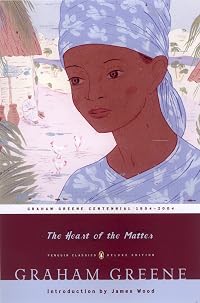
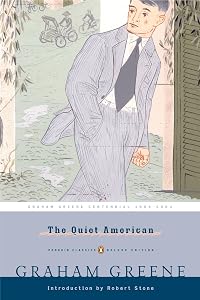
While it would be fair to call The Human Factor a non-thrilling thriller, that characterization is show more certainly not intended as a criticism. The conflict and intrigue in the story is cerebral rather than physical, which creates an appropriate canvass for compelling psychological profiles of Maurice and Sarah; indeed, Greene was a master at exploring the spiritual and emotional consequences of the actions taken by his protagonists (e.g., The Heart of the Matter, The End of the Affair, The Quiet American). This is not his best novel and some of the story line feels a little dated—for instance, a few significant events would not have occurred if the characters had cell phones. Nevertheless, it is still an effective and entertaining tale that any fan of the author will find to be quite satisfying. show less
While it would be fair to call The Human Factor a non-thrilling thriller, that characterization is show more certainly not intended as a criticism. The conflict and intrigue in the story is cerebral rather than physical, which creates an appropriate canvass for compelling psychological profiles of Maurice and Sarah; indeed, Greene was a master at exploring the spiritual and emotional consequences of the actions taken by his protagonists (e.g., The Heart of the Matter, The End of the Affair, The Quiet American). This is not his best novel and some of the story line feels a little dated—for instance, a few significant events would not have occurred if the characters had cell phones. Nevertheless, it is still an effective and entertaining tale that any fan of the author will find to be quite satisfying. show less
One of my favourite Greene novels so far. Character, plot and pacing are all superb. The contemporary (1970s) setting is highly unusual, given that the subject of spies in British intelligence was a feature of earlier decades. This topic is discussed with intelligence in the introduction (to this edition only) by Colm Tóibín. The problem with Greene writing in the 'spy' genre is how much he ruins the work of John Le Carré. Le Carré, who could write very well when judged on his own merits, seems a pale imitation when his works are compared with a book like The Human Factor. Highly recommended, especially for anyone new to Greene.
Members
- Recently Added By
Published Reviews
ThingScore 100
Greene builds the story slowly and methodically, ratcheting up the tension by careful and agonising degrees as Castle gradually realises the depth of the trap he has laid for himself. The climax culminates in a sickening plot twist that somehow manages to be both unexpected and oddly inevitable, and gives The Human Factor a frustrating but nonetheless realistic ending.
added by John_Vaughan
... Greene has returned ... [in The Human Factor] ... to his earliest style, has pared down his moral patterns to the barest essential, has abandoned his penchants for exotica and skirmishes. What remains is a story as apparently plain as Greene's perfect prose -- an open-hearted, tight-lipped pavane of conscience and sentiment that can be watched and enjoyed for all the wrong, and all the show more right, reasons. show less
added by Roycrofter
I know this is impudent to say- because Mr. Greene taught John Le Carre to write such novels, as Joseph Conrad taught Mr. Greene to write such novels- but Mr. La Carre now does the same thing better.
added by John_Vaughan
Lists

Recommend the 20 best books you've read in the last five years
2,168 works; 608 members

Folio Society
831 works; 53 members

20th Century Literature
1,161 works; 55 members

Best Espionage (Fiction)
55 works; 20 members

Canon de la narrativa universal del siglo XX
254 works; 6 members

1970s
657 works; 23 members

Top Five Books of 2014
1,064 works; 398 members
TML 200 Best Books 1950-1999
202 works; 10 members

Allie's Favourite 150 Books
145 works; 3 members

Huxley's reading log 2016
84 works; 3 members
Best Books of the 20th Century
193 works; 5 members

Swinging Seventies
255 works; 18 members

Books available on Open Library
171 works; 4 members

Tozai Mystery Best 100 | The Top 100 Mystery Novels
111 works; 3 members

The Complete Rory Gilmore Reading List
506 works; 5 members
School Made Us Read It
380 works; 197 members

The Modern Library (The Two Hundred Best Novels....
202 works; 1 member
Author Information

356+ Works 87,436 Members
Born in 1904, Graham Greene was the son of a headmaster and the fourth of six children. Preferring to stay home and read rather than endure the teasing at school that was a by-product of his father's occupation, Greene attempted suicide several times and eventually dropped out of school at the age of 15. His parents sent him to an analyst in show more London who recommended he try writing as therapy. He completed his first novel by the time he graduated from college in 1925. Greene wrote both entertainments and serious novels. Catholicism was a recurring theme in his work, notable examples being The Power and the Glory (1940) and The End of the Affair (1951). Popular suspense novels include: The Heart of the Matter, Our Man in Havana and The Quiet American. Greene was also a world traveler and he used his experiences as the basis for many books. One popular example, Journey Without Maps (1936), was based on a trip through the jungles of Liberia. Greene also wrote and adapted screenplays, including that of the 1949 film, The Third Man, which starred Orson Welles. He died in Vevey, Switzerland in 1991. (Bowker Author Biography) show less
Graham Greene has a Legacy Library. Legacy libraries are the personal libraries of famous readers, entered by LibraryThing members from the Legacy Libraries group.
Some Editions
Awards and Honors
Distinctions
Series
Belongs to Publisher Series
Work Relationships
Common Knowledge
- Canonical title*
- Der menschliche Faktor
- Original title
- The Human Factor
- Original publication date
- 1978
- People/Characters
- Maurice Castle; Arthur Davis
- Related movies
- The Human Factor (1979 | IMDb)
- Epigraph
- 'I only know that he who forms a tie is lost. The germ of corruption has entered into his soul.' Joseph Conrad
- Dedication
- To my sister Elizabeth Dennys, who cannot deny some responsibility.
- First words
- Castle, ever since he had joined the firm as a young recruit more than thirty years ago, had taken lunch in a public house behind St James's Street, not far from the office.
- Last words
- (Click to show. Warning: May contain spoilers.)She said, `Maurice, Maurice, please go on hoping,' but in the long unbroken silence which followed she realised that the line to Moscow was dead.
- Original language
- English UK
*Some information comes from Common Knowledge in other languages. Click "Edit" for more information.
Classifications
Statistics
- Members
- 3,632
- Popularity
- 4,506
- Reviews
- 50
- Rating
- (3.87)
- Languages
- 18 — Catalan, Chinese, Czech, Danish, Dutch, English, Finnish, French, German, Greek, Hungarian, Italian, Norwegian (Bokmål), Polish, Portuguese, Russian, Spanish, Swedish
- Media
- Paper, Audiobook, Ebook
- ISBNs
- 99
- UPCs
- 1
- ASINs
- 77