On This Page
Description
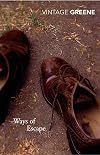
With superb skill and feeling, Graham greene retraces the experiences and encounters of a long and extraordinary life. His restlessness is legendary; he has travelled like an explorer seeking our people and political situations. 'at the dangerous edge of things' - Haiti during the nightmare rule of Papa Doc, Vietnam in the last days - of the French. , Cuba, Prague, Paraguay, Kenya during the Mau Mau rebellion. With ironic delight he recalls his time in the British Secret Service in Africa, show more and his brief involvement in Hollywood. He writes, as only he can about people and places, about faith, doubt, fear and, not least, the trials and craft of writing. show lessTags
Recommendations























Member Recommendations

Member Reviews
Ways of escape is a sequel to Graham Greene's earlier autobiography A sort of life. In fact, in the preface to Ways of escape, Greene apologizes to readers for overlap between the two works, a fact I would welcome rather than regret, since I read A sort of life more than 20 years ago.
I do not recall the style and tone of A sort of life, but what struck me reading Ways of escape is how incredibly impersonal an autobiography it is.
There is "very little of life" in this volume, and upon finishing the book, the readers may still wonder as much as before reading it, who Graham Greene is. There are none of the usual musings, descriptions of dwellings, friends and literary influences, which may transport the reader to the (imaginary) world of show more the past in which to observe the author and his or her development through history.
Instead, Ways of escape merely described Greene's travels and how they inspired the conception of his novels. Ways of escape was written as an amalgam of a series of introductions to the Collected Edition of Greene's books and "essays written occasionally on his life and troubled places in the world". In his own words, Greene compares his travels to his writing as "ways of escape," apparently, an escape from life. As this escape from life in the form of extensive travel and writing in itself also constitutes a form of living, one feels the author's regret that what would perhaps have been the most ideal title for this second volume, i.e. A sort of life, is no longer available.
As a result, the reader of Ways of escape will feel a sense of detachment. Ways of escape is not really what it purports to be, and readers who are looking for a biography or work of travel had better look elsewhere. Ways of escape would mostly interest readers wanting to read more about the background of Graham Greene's novels and the political conflicts which form the backdrop to many locations forming the setting of his fiction. There is too much hobnobbing with illustrious and often notorious heads of state. show less
I do not recall the style and tone of A sort of life, but what struck me reading Ways of escape is how incredibly impersonal an autobiography it is.
There is "very little of life" in this volume, and upon finishing the book, the readers may still wonder as much as before reading it, who Graham Greene is. There are none of the usual musings, descriptions of dwellings, friends and literary influences, which may transport the reader to the (imaginary) world of show more the past in which to observe the author and his or her development through history.
Instead, Ways of escape merely described Greene's travels and how they inspired the conception of his novels. Ways of escape was written as an amalgam of a series of introductions to the Collected Edition of Greene's books and "essays written occasionally on his life and troubled places in the world". In his own words, Greene compares his travels to his writing as "ways of escape," apparently, an escape from life. As this escape from life in the form of extensive travel and writing in itself also constitutes a form of living, one feels the author's regret that what would perhaps have been the most ideal title for this second volume, i.e. A sort of life, is no longer available.
As a result, the reader of Ways of escape will feel a sense of detachment. Ways of escape is not really what it purports to be, and readers who are looking for a biography or work of travel had better look elsewhere. Ways of escape would mostly interest readers wanting to read more about the background of Graham Greene's novels and the political conflicts which form the backdrop to many locations forming the setting of his fiction. There is too much hobnobbing with illustrious and often notorious heads of state. show less
The view of an outsider at a revolution is an odd and slanting one, rather lie a pretentious camera angle; he may sometimes even be unaware that anything is happening around him at all.
A most curious color of memoir, Ways of Escape plumbs and exposes Greene and his project. For myself I recall buying The Quiet American in New Orleans. It was a statement. Alongside viewing Man For All Seasons at party, this was a time when I finally decided how I wanted to live. I was not going to suffer fools, if that's what being normal promoted. Greene regards similar impulses here. His antidote was often travel and prostitutes. His coverage of events in Malaysia, Indochina and Haiti is simply astonishing, especially if one is wary of "the dangerous show more third martini." Plenty of spoilers concerning his work. show less
A most curious color of memoir, Ways of Escape plumbs and exposes Greene and his project. For myself I recall buying The Quiet American in New Orleans. It was a statement. Alongside viewing Man For All Seasons at party, this was a time when I finally decided how I wanted to live. I was not going to suffer fools, if that's what being normal promoted. Greene regards similar impulses here. His antidote was often travel and prostitutes. His coverage of events in Malaysia, Indochina and Haiti is simply astonishing, especially if one is wary of "the dangerous show more third martini." Plenty of spoilers concerning his work. show less
This memoir, which covers Greene's life from the start of his writing career up to about 1980, stitches together Greene's remembrance of what in his life influenced his writing, including his wartime experiences and his friendships; his response to being characterized as a Catholic writer; and his opinions on writing plays, novels and short stories.
Auto-biographical detail to Greene's writing life and the influences upon it. Background information to some of his novels and thoughts on writing and authors that he admired and the books that he enjoyed. A great look at the middle twentieth century.
Not my favorite author and not Graham's best work. Has occasional interesting parts.
always short of money--for drinking???, a great traveller, this book seems to be most about his spy books which he wrote for money and to escape from writing his more serious novels which he did not enjoy writing.
Biografía, Ficción especulativa
Apr 19, 2018Spanish
Members
- Recently Added By
Published Reviews
What ''Ways of Escape'' is really about is how the author's experience gets translated into fiction. And in a way this is a good deal more personal and revealing than the most intimate autobiography he could have written.
added by John_Vaughan
Lists

501 Must-Read Books
529 works; 72 members
Author Information

356+ Works 87,436 Members
Born in 1904, Graham Greene was the son of a headmaster and the fourth of six children. Preferring to stay home and read rather than endure the teasing at school that was a by-product of his father's occupation, Greene attempted suicide several times and eventually dropped out of school at the age of 15. His parents sent him to an analyst in show more London who recommended he try writing as therapy. He completed his first novel by the time he graduated from college in 1925. Greene wrote both entertainments and serious novels. Catholicism was a recurring theme in his work, notable examples being The Power and the Glory (1940) and The End of the Affair (1951). Popular suspense novels include: The Heart of the Matter, Our Man in Havana and The Quiet American. Greene was also a world traveler and he used his experiences as the basis for many books. One popular example, Journey Without Maps (1936), was based on a trip through the jungles of Liberia. Greene also wrote and adapted screenplays, including that of the 1949 film, The Third Man, which starred Orson Welles. He died in Vevey, Switzerland in 1991. (Bowker Author Biography) show less

Graham Greene has a Legacy Library. Legacy libraries are the personal libraries of famous readers, entered by LibraryThing members from the Legacy Libraries group.
Awards and Honors
Notable Lists
Series

Belongs to Publisher Series
Privé-domein (76)
Work Relationships
Is contained in
Contains
Common Knowledge
- Canonical title*
- Pakoteitä
- Original title
- Ways of Escape
- Original publication date
- 1980
- People/Characters
- A. J. Raffles; Graham Greene; Carol Reed; Alexander Korda; Pope Paul VI; Evelyn Waugh (show all 11); Barbara Greene; Omar Torrijos; Papa Doc Duvalier; Tonton Macoute; Mau Mau
- Important places
- Havana, Cuba; Freetown, Sierra Leone; Haiti; San Juan, Puerto Rico; Liberia; French Indochina (show all 10); Kenya; Mexico; Asuncion, Paraguay; Panama
- Important events
- World War II (1939 | 1945); Mau Mau Uprising; Battle of Dien Bien Phu; The Blitz
- Related movies
- The Third Man (1949 | IMDb); Our Man in Havana (1959 | IMDb); Our Men in Havana (2004 | IMDb); This Gun for Hire (1942 | IMDb)
- Epigraph
- As my body body continues on its journey, my thoughts keep turning back and bury themselves in days past. - Gustave Flaubert
- First words
- What a long road it has been.
- Last words
- (Click to show. Warning: May contain spoilers.)Was it even possible thst I might be Meredith de Varg?
- Original language
- English
*Some information comes from Common Knowledge in other languages. Click "Edit" for more information.
Classifications
Statistics
- Members
- 683
- Popularity
- 42,176
- Reviews
- 7
- Rating
- (3.86)
- Languages
- 7 — Dutch, English, Finnish, German, Norwegian (Bokmål), Spanish, Swedish
- Media
- Paper, Audiobook, Ebook
- ISBNs
- 25
- ASINs
- 8