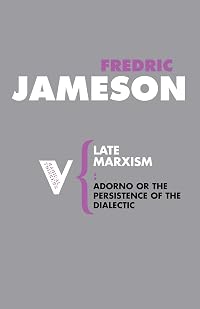
Late Marxism: Adorno or The Persistence of the Dialectic
by Fredric Jameson
On This Page
Description
Theodor Adorno is widely recognized as one of the intellectual giants of the twentieth century, as a foremost cultural critic and philosopher, and one of the most important figures in the Frankfurt School and Western Marxism more generally. And yet, Adorno's reputation has suffered from accusations about his alleged pessimism and, even worse, from attempts but postmodernists to recruit him to their war against all 'grand narratives', including, most importantly, Marxism itself. In this work show more Frederic Jameson rescues Adorno from the claws of his critics and the clutches of his false friends. Jameson sees Adorno as not only a thinker whose contribution to Marxism was unique and indispensable, but also as the theorist of late capitalism. Late Marxism introduces Adorno's thought to a new generation of dissidents and demonstrates the freshness and relevance of dialectical thinking to criticism and resistance today. show lessTags
Recommendations













Member Reviews
A solid option among books which introduce Adorno, and it has the benefit of being in print (unlike, say Martin Jay's 'Adorno'). The best thing here is that Jameson recognizes the importance of Marx for Adorno, which many of other books (especially Berstein's 'Adorno') don't. On the other hand, Jameson's Marx is a shifty figure based on Mandel and Harvey, and thus actually does a disservice to Adorno. It's like someone offering you chocolate with the promise that it's got just the right amount of cocoa in it... and then finding out that the perfectly proportioned cocoa was scooped up off the floor of a sawdust factory (Marx here = cocoa, not sure how clear that is).
Other downsides are a general vagueness which is probably inevitable show more given Jameson's Jamesian prose style; a too-swift examination of Negative Dialectics with a lot of chat about the aesthetics; and a fatuously 'hip' recourse to Althusser and the concept of hegemony as a corrective to Adorno's theory of ideology. This last is only necessary because Jameson doesn't understand Hegel at all, and fails to see how important the German Idealists were for Adorno's work.
That said, it's really not bad, and gets the general point right: Adorno's obsession with totality and so forth must be separated from an affirmation of totality and almost every other concept he uses, and we would do well to remember that. show less
Other downsides are a general vagueness which is probably inevitable show more given Jameson's Jamesian prose style; a too-swift examination of Negative Dialectics with a lot of chat about the aesthetics; and a fatuously 'hip' recourse to Althusser and the concept of hegemony as a corrective to Adorno's theory of ideology. This last is only necessary because Jameson doesn't understand Hegel at all, and fails to see how important the German Idealists were for Adorno's work.
That said, it's really not bad, and gets the general point right: Adorno's obsession with totality and so forth must be separated from an affirmation of totality and almost every other concept he uses, and we would do well to remember that. show less
Ratings
Members
- Recently Added By
Author Information

75+ Works 6,796 Members
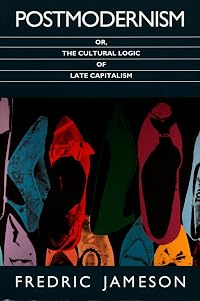
Fredric R. Jameson, Marxist theorist and professor of comparative literature at Duke University, was born in Cleveland in 1934. He earned a Ph.D. from Harvard University and taught at Harvard, the University of California at San Diego, and Yale University before moving to Duke in 1985. He most famous work is Postmodernism, or the Cultural Logic of show more Late Capitalism, which won the Modern Language Association's Lowell Award. Jameson was among the first to associate a specific set of political and economic circumstances with the term postmodernism. His other books include Sartre: The Origin of a Style, The Seeds of Time, and The Cultural Turn. (Bowker Author Biography) show less
Series
Belongs to Publisher Series
Radical Thinkers (18 - Set 2(6))
Common Knowledge
- Canonical title
- Late Marxism: Adorno or The Persistence of the Dialectic
- Original title
- Late Marxism: Adorno, or, the Persistence of the Dialectic
- Original publication date
- 1990
- People/Characters
- Theodor W. Adorno
Classifications
Statistics
- Members
- 244
- Popularity
- 133,786
- Reviews
- 1
- Rating
- (3.64)
- Languages
- 5 — English, German, Italian, Portuguese, Spanish
- Media
- Paper, Ebook
- ISBNs
- 9
- ASINs
- 1