New Lives for Old
by Margaret Mead
On This Page
Description
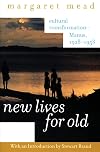
When Margaret Mead first studied the Manus Islanders of New Guinea in 1928, they were living with a Stone Age technology. Economically vulnerable and burdened by a complex moral code, the Manus seemed ill-equipped to handle the massive impact that World War II had on their secluded world. But a unique set of circumstances allowed the Manus to adapt swiftly to the twentieth century, and their experience led Mead to develop a revolutionary theory of cultural transformation, one that favors show more rapid, over piecemeal, change. As relevanttoday as it was a half-century ago, New Lives for Old is an optimistic examination of one society that chose to change, offering hope and a valuablemodel for today's developing societies. This edition, prepared for the centennial of Mead's birth, features introductions by Stewart Brand and Mead's daughter, Mary Catherine Bateson. show lessTags
Recommendations




































Member Reviews
Mead returns to Manus in 1953 to the village she studied in 1928 and describes the post cargo-cult type changes. Much better than her original Samoa tosh.
Read in Samoa Jan 2003
Read in Samoa Jan 2003
A thorough, observant, scientist documents the record of a people who moved from a life in pre-civilized Nature, to the 20th century, in less than 50 years.
Ratings
Members
- Recently Added By
Author Information

93+ Works 5,310 Members
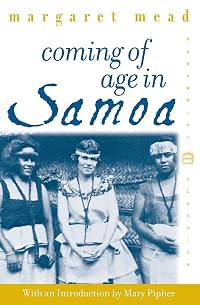
Margaret Mead, an American anthropologist, was for most of her life the most illustrious curator at the American Museum of Natural History in New York. She was famed not only as an anthropologist but also as a public figure, a popularizer of the social sciences, and an analyst of American society. While at Columbia University, she was a student of show more Franz Boas, whose teaching assistant, Ruth Benedict, became one of Mead's closest colleagues and friends; after Benedict's death, Mead became her first biographer and the custodian of her field notes and papers. Mead's early research in Samoa led to her best selling book, "Coming of Age in Samoa" (1928); it also led, after her death, to a well-publicized attack on her work by the Australian anthropologist Derek Freeman. Her importance was not damaged by his book; in fact, there is probably a greater awareness today of the important role that she played in twentieth-century intellectual history as an advocate of tolerance, education, civil liberties, world peace, and the worldwide ecumenical movement within Christianity. She was an active and devout Episcopalian throughout her life. On January 6, 1979, she was posthumously awarded the Presidential Medal of Freedom, the nation's highest civilian honor. (Bowker Author Biography) Margaret Mead was born on December 16, 1901 in Philadelphia. Her family moved a great deal during her childhood and encouraged her to pursue an education. She graduated from Barnard College in 1923 and earned a Ph.D. in Anthropology from Columbia University in 1929. The 1928 publication of her first book, "Coming of Age in Samoa," was based on her study of the sexual patterns of Samoan adolescent girls. It became a best-seller and changed American anthropology; it also established Mead as one of the leaders in American anthropology, a position she retained for 50 years. Mead was active in education most of her life and taught and lectured at many prominent schools, including Columbia University, Vassar College, Fordham University, and New York University. She was appointed assistant curator at the American Museum of Natural History in 1926, becoming successively associate curator in 1942, curator in 1964 and emeritus curator in 1969. In all, Mead wrote 23 widely read books. Some other titles include "Growing Up in New Guinea," "Sex and Temperament in Three Primitive Societies," and "Keep Your Powder Dry: An Anthropologist Looks at America." Margaret Mead died of cancer in New York City in 1978. (Bowker Author Biography) show less
Awards and Honors
Distinctions
Common Knowledge
- Canonical title
- New Lives for Old
- Original publication date
- 1956
- Important places
- New Guinea; Manus, Admiralty Islands, Papua New Guinea
Classifications
- Genres
- Anthropology, Nonfiction, General Nonfiction, Science & Nature, History
- DDC/MDS
- 301.29 — Society, government, & culture Social sciences, sociology & anthropology Sociology and anthropology Formerly: Culture and cultural processes Ethnography, By Region
- LCC
- GN671 .N5 .M44 — Geography, Anthropology and Recreation Anthropology Anthropology Ethnology. Social and cultural anthropology Ethnic groups and races By region or country
- BISAC
Statistics
- Members
- 97
- Popularity
- 332,886
- Reviews
- 2
- Rating
- (3.50)
- Languages
- English
- Media
- Paper, Ebook
- ISBNs
- 6
- ASINs
- 11