On This Page
Description
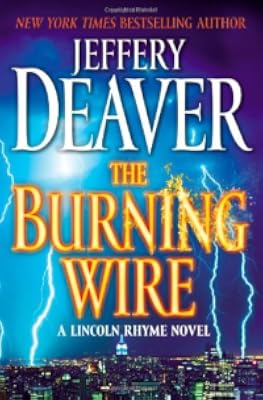
Quadriplegic forensic criminologist Lincoln Rhyme leads his team--NYPD detective Amelia Sachs, officer Ron Pulaski, and FBI agent Fred Dellray--to find and stop a killer who uses electricity as modus operandi. Meanwhile, Rhyme is consulting on another high-profile investigation in Mexico with a most coveted quarry in his crosshairs: the hired killer known as the Watchmaker, one of the few criminals to have eluded Rhyme's net.Tags
Recommendations







Member Recommendations
Member Reviews
It's been a while since I've really enjoyed the Lincoln Rhyme series. With the last 3, I seriously saw the plot twists coming way ahead and that hadn't usually been the case with Jeffrey Deaver.
The latest Rhyme/Sachs novel really captured my interest and attention, with the sick serial murderer using electricity and the electrical grid serving New York City as his weapon of choice. As with all the Rhyme series, there was much that was educational about The Burning Wire: I learned tons about electricity and wires and some about how NYC gets the electricity all its folks and services need.
It was good, again, to see all the characters from previous books, and with each book, they grow on the reader as we get to know them better.
Reading show more this book made me want to meet Lincoln Rhyme again for the first time. I am reading The Bone Collector again. show less
The latest Rhyme/Sachs novel really captured my interest and attention, with the sick serial murderer using electricity and the electrical grid serving New York City as his weapon of choice. As with all the Rhyme series, there was much that was educational about The Burning Wire: I learned tons about electricity and wires and some about how NYC gets the electricity all its folks and services need.
It was good, again, to see all the characters from previous books, and with each book, they grow on the reader as we get to know them better.
Reading show more this book made me want to meet Lincoln Rhyme again for the first time. I am reading The Bone Collector again. show less
This is a page turner and you want to get to the end as quickly as possible, if only because the more you reflect as you read the more you will realise the plot is weak and unrealistic. Aside from that I couldn't enter into his attempts to create angst in his readers by constantly reminding us that electricity is invisible, all around us and could kill us at any moment. It's a lot harder to kill someone with electricity than he makes out. I've met people who touched live overhead wires and they may have lost an arm but they lived. He mentions that electricity wants to get to ground asap but seems to forget that in creating electrified buildings and such. The most redeeming factor of this book is that develops Rhyme and furthers our show more understanding of him and his life. Deaver is certainly heavy on plot and light on characterisation that doesn't serve his plot. show less
One-tenth of one amp of electricity is enough to stop your heart and kill you. Your hairdryer pulls about ten amps. Scared now? I am.
Jeffery Deaver takes this simple bit of information and expands it into a thriller that you can't put down. He's writing at the top of his form in The Burning Wire and I loved this book. Non-stop thrills, plenty of things to be scared of, good guys and bad guys, and lots of things to learn about electricity.
Although he's always a good writer, I've been disappointed with the recent Lincoln Rhyme novels and was beginning to wonder if Deaver had jumped the shark with this series, but this book may be one of the best in this series yet.
The only downside of this book is that I'm now highly aware of how much show more metal I touch every single day even when it's raining and how easy it is to electrify things. Walking home from work in the rain last night I actually hesitated before pushing the button to cross the street. It's metal and has a light in it and thus could be easily wired to kill. I did touch it, but it took a minute. show less
Jeffery Deaver takes this simple bit of information and expands it into a thriller that you can't put down. He's writing at the top of his form in The Burning Wire and I loved this book. Non-stop thrills, plenty of things to be scared of, good guys and bad guys, and lots of things to learn about electricity.
Although he's always a good writer, I've been disappointed with the recent Lincoln Rhyme novels and was beginning to wonder if Deaver had jumped the shark with this series, but this book may be one of the best in this series yet.
The only downside of this book is that I'm now highly aware of how much show more metal I touch every single day even when it's raining and how easy it is to electrify things. Walking home from work in the rain last night I actually hesitated before pushing the button to cross the street. It's metal and has a light in it and thus could be easily wired to kill. I did touch it, but it took a minute. show less
Spoiler sensitive need not continue.
He didn't get me this time. I had my suspicions about the real plot and the Watchmaker's involvement. I don't know how much of it was me being clever or just suspecting everyone when I read one of these now, but when he showed up it wasn't surprising. Then it was only whether the thing was a set up (a trap) or if there would have to be some hair-brained rescue at the end since there was quite a bit of book left.
The handling of Dellray's side of the case and his boss's attitude was a bit heavy handed. I mean, what else could happen after all his ineffectiveness and brooding? Vindication, that's what and of course we got it. Eh, I wasn't caught up in it and so it fell kind of flat.
I also tripped over show more and was distracted by several clunky sentences scattered around, like "the criminalist said". Now really, that's a bit community college Creative Writing 1 if you ask me. We know who Rhyme is and what he is so just tell us who's speaking and leave the aides de memoir out of it. I haven't noticed this kind of amateurish prose in Deaver books before, but it stuck out this time.
Funny that at the beginning of the book I mused that Rhyme's condition didn't take up much time and that he seemed present and in top form at all hours of the day. In the past more emphasis was put on how much of his life was taken up by the necessities imposed by his paralysis and that we'd veered away from that for a while. Then he had that episode and again Rhyme was prevented by his condition from communicating or otherwise helping in an investigation. Trigger guilt and unhappiness. But the visit from Susan Stringer was enough to keep me from thinking the worst at the end and his trip to the hospital wasn't a guessing game for me; I knew he went to have something done to improve his condition and leave him more able and effective. I'm glad it went that way and we'll have a bit of bionic Rhyme to deal with in the future. show less
He didn't get me this time. I had my suspicions about the real plot and the Watchmaker's involvement. I don't know how much of it was me being clever or just suspecting everyone when I read one of these now, but when he showed up it wasn't surprising. Then it was only whether the thing was a set up (a trap) or if there would have to be some hair-brained rescue at the end since there was quite a bit of book left.
The handling of Dellray's side of the case and his boss's attitude was a bit heavy handed. I mean, what else could happen after all his ineffectiveness and brooding? Vindication, that's what and of course we got it. Eh, I wasn't caught up in it and so it fell kind of flat.
I also tripped over show more and was distracted by several clunky sentences scattered around, like "the criminalist said". Now really, that's a bit community college Creative Writing 1 if you ask me. We know who Rhyme is and what he is so just tell us who's speaking and leave the aides de memoir out of it. I haven't noticed this kind of amateurish prose in Deaver books before, but it stuck out this time.
Funny that at the beginning of the book I mused that Rhyme's condition didn't take up much time and that he seemed present and in top form at all hours of the day. In the past more emphasis was put on how much of his life was taken up by the necessities imposed by his paralysis and that we'd veered away from that for a while. Then he had that episode and again Rhyme was prevented by his condition from communicating or otherwise helping in an investigation. Trigger guilt and unhappiness. But the visit from Susan Stringer was enough to keep me from thinking the worst at the end and his trip to the hospital wasn't a guessing game for me; I knew he went to have something done to improve his condition and leave him more able and effective. I'm glad it went that way and we'll have a bit of bionic Rhyme to deal with in the future. show less
I tend to like Deaver's work, but this one was a little too technical and there just wasn't quite enough of a story - many pages devoted to the science of it all - I really prefer the thriller of it all. There were some good classic Deaver plot twists and the always present "just in time" saves, but this was not one of my favorites. I gave it three stars for effort, but would not recommend.
Murder by electricity substation…obviously, this is a case for paraplegic forensic consultant Lincoln Rhyme.
Jeffery Deaver continues to write tight, well-paced crime novels within each of which we are treated to a twisty ride through the author’s latest research project. It’s a wonderfully sustainable formula, keeping me coming back to Deaver’s novels when other crime writers might lose me at book five or six. I have to admit, I preferred Deaver’s writing in A Maiden’s Grave and his earlier Lincoln Rhyme novels, (The Bone Collector era) because it was less pared to down to accommodate the plot advancements, and he seemed to work harder at atmosphere, but the groove that he’s fallen into is an entertaining and intriguing show more one. I like that the author is still giving Rhyme and Sachs some character sketching, even growth, this far in, and using his peripheral characters well, too, giving them lots of depth.
That said, the ending to The Burning Wire was so projected that the reader is left slightly less impressed with the perp’s astonishing skills than we might otherwise have been; particularly given the character in question: we’ve been waiting for this particular wrap-up for a while, and in the end it was the other things going on in the plot that propped it up and kept it from being a bust (which it was. But not in that way. Grah, word-choice). For an author who has a well-deserved reputation for playing the plot-twist like an instrument, both the identity of the bad guy and method of collar were something of a let-down here. show less
Jeffery Deaver continues to write tight, well-paced crime novels within each of which we are treated to a twisty ride through the author’s latest research project. It’s a wonderfully sustainable formula, keeping me coming back to Deaver’s novels when other crime writers might lose me at book five or six. I have to admit, I preferred Deaver’s writing in A Maiden’s Grave and his earlier Lincoln Rhyme novels, (The Bone Collector era) because it was less pared to down to accommodate the plot advancements, and he seemed to work harder at atmosphere, but the groove that he’s fallen into is an entertaining and intriguing show more one. I like that the author is still giving Rhyme and Sachs some character sketching, even growth, this far in, and using his peripheral characters well, too, giving them lots of depth.
That said, the ending to The Burning Wire was so projected that the reader is left slightly less impressed with the perp’s astonishing skills than we might otherwise have been; particularly given the character in question: we’ve been waiting for this particular wrap-up for a while, and in the end it was the other things going on in the plot that propped it up and kept it from being a bust (which it was. But not in that way. Grah, word-choice). For an author who has a well-deserved reputation for playing the plot-twist like an instrument, both the identity of the bad guy and method of collar were something of a let-down here. show less
Thank goodness "The Burning Wire" rebounded from a lackluster 8th book (The Broken Window). This one is also not as long as previous reads so that was much appreciated. In this 8th book, Rhyme and Sachs get called in when a mysterious figure is set on attacking the people of New York with electricity. No this isn't Shocker. But honestly, you start thinking of this book that way when you get the POV of the man who is set on killing people due to his obsession with electricity.
We begin with Rhyme being bored since he has no cases to work on at the moment. Since the last book when we went into Rhyme doing more rehab, he had gained a little bit of movement, but that is it. Rhyme is still focused on catching his nemesis, The Watchmaker (see show more Cold Moon) so we do get updates about that character via another character this series introduced, Kathryn Dance (also see Cold Moon). When a bus nearby is damaged due to an explosion because of burning wire connected to a plant nearby, Rhyme and Sachs are called in to assist. Due to the NYPD and FBI being afraid of a missed terrorist connection, the clock is ticking for Rhyme and his usual companions to track down the person or persons responsible.
I can honestly say this is the most I liked Rhyme since around the first book. We get his vulnerability when he has a medical setback and also the book does a nice callback to how suicidal Rhyme used to be in The Bone Collector (Lincoln Rhyme #1). Rhyme knows that being able to still work cases and also his relationship with Amelia Sachs is what brought him back to the other side. Rhyme's encyclopedia knowledge of most things science does not extend much to electricity, so we have to get more information about that via the bad guy's POV and also what characters tell Sachs.
Sachs besides her POV working the scene here and there we don't get much time with. I am not complaining though. I think the last book with her and the nonsense with Pammy was a bit too much for me. I do wish we had seen Sachs interact with her mother more though. She's always this faceless character to me and that's about it.
We also go to Ron Pulaski's POV in this one. And either Deaver needs to toughen this character up, or just devote more of the POV to Sachs. I feel like Pulaski has not changed one iota since he was first introduced. I also find it odd that Rhyme's dream is one day that Sachs and Pulaski run the Crime Scene department or whatever it was referred to in this book. I wonder if Sachs and Pulaski even know about his dream or would agree with it. There was an interesting development regarding Pulaski in this one that I would have been more favorable to if Deaver wasn't so interested in resolving it by the end of the book. It could have been nice to follow up with it in the next book.
We also get Fred Dellray's POV which I liked a lot. We get to see him struggling with the changing nature of the FBI and what place if any he has in it anymore.
We also get the bad guy's POV and his obsession with electricity though seems at odds with his mission in this book. I won't get into it in the review otherwise I will have spoiled what I considered a great reveal.
I thought it was interesting in this one that we get a sense of the characters moving on with their lives between books which is nice. We get a reference to Rhyme and Sachs visiting Rhyme's cousin Arthur (see The Broken Window) who I still don't care for much. But also we get references to Sachs getting a new car and working on it with her pseudo niece Pammy. We get references to one of the characters still doing his ballroom dancing and everyone else asking about it.
The flow of the book works in this one though once again I have to say the little bits we get about the Watchmaker messes with things. I get why Deaver did that when I got towards the end, but I started to get tired of Dance and Rhyme talking via phone while Rhyme was trying to work the case in New York and another one elsewhere.
The book ends on a good note. Deaver tries to set up another twist but I wasn't fooled by it for a second. I guess if I was reading this book when it first came out, I would have been worried, but since I know other books follow this one I just went eh interesting. show less
We begin with Rhyme being bored since he has no cases to work on at the moment. Since the last book when we went into Rhyme doing more rehab, he had gained a little bit of movement, but that is it. Rhyme is still focused on catching his nemesis, The Watchmaker (see show more Cold Moon) so we do get updates about that character via another character this series introduced, Kathryn Dance (also see Cold Moon). When a bus nearby is damaged due to an explosion because of burning wire connected to a plant nearby, Rhyme and Sachs are called in to assist. Due to the NYPD and FBI being afraid of a missed terrorist connection, the clock is ticking for Rhyme and his usual companions to track down the person or persons responsible.
I can honestly say this is the most I liked Rhyme since around the first book. We get his vulnerability when he has a medical setback and also the book does a nice callback to how suicidal Rhyme used to be in The Bone Collector (Lincoln Rhyme #1). Rhyme knows that being able to still work cases and also his relationship with Amelia Sachs is what brought him back to the other side. Rhyme's encyclopedia knowledge of most things science does not extend much to electricity, so we have to get more information about that via the bad guy's POV and also what characters tell Sachs.
Sachs besides her POV working the scene here and there we don't get much time with. I am not complaining though. I think the last book with her and the nonsense with Pammy was a bit too much for me. I do wish we had seen Sachs interact with her mother more though. She's always this faceless character to me and that's about it.
We also go to Ron Pulaski's POV in this one. And either Deaver needs to toughen this character up, or just devote more of the POV to Sachs. I feel like Pulaski has not changed one iota since he was first introduced. I also find it odd that Rhyme's dream is one day that Sachs and Pulaski run the Crime Scene department or whatever it was referred to in this book. I wonder if Sachs and Pulaski even know about his dream or would agree with it. There was an interesting development regarding Pulaski in this one that I would have been more favorable to if Deaver wasn't so interested in resolving it by the end of the book. It could have been nice to follow up with it in the next book.
We also get Fred Dellray's POV which I liked a lot. We get to see him struggling with the changing nature of the FBI and what place if any he has in it anymore.
We also get the bad guy's POV and his obsession with electricity though seems at odds with his mission in this book. I won't get into it in the review otherwise I will have spoiled what I considered a great reveal.
I thought it was interesting in this one that we get a sense of the characters moving on with their lives between books which is nice. We get a reference to Rhyme and Sachs visiting Rhyme's cousin Arthur (see The Broken Window) who I still don't care for much. But also we get references to Sachs getting a new car and working on it with her pseudo niece Pammy. We get references to one of the characters still doing his ballroom dancing and everyone else asking about it.
The flow of the book works in this one though once again I have to say the little bits we get about the Watchmaker messes with things. I get why Deaver did that when I got towards the end, but I started to get tired of Dance and Rhyme talking via phone while Rhyme was trying to work the case in New York and another one elsewhere.
The book ends on a good note. Deaver tries to set up another twist but I wasn't fooled by it for a second. I guess if I was reading this book when it first came out, I would have been worried, but since I know other books follow this one I just went eh interesting. show less
Members
- Recently Added By
Lists

Jeffery Deaver
4 works; 1 member

Books Read in 2013
1,630 works; 51 members

Books Read in 2023
5,638 works; 147 members
Author Information

254+ Works 66,338 Members
Jeffery Deaver was born on May 6, 1950 in Chicago, Illinois. He received a degree in journalism from the University of Missouri and a law degree from Fordham University. Before attending law school, he worked as a business writer. After law school, he worked for a Wall Street law firm practicing corporate law. In 1990, he decided to stop show more practicing law and become a full-time writer. His first novel was a horror story entitled Voodoo. He is the author of more than 25 novels and has written some of those stories under the pseudonym William Jeffries. He writes the Lincoln Rhyme series and the Kathryn Dance series. A Maiden's Grave was adapted into a film by HBO called Dead Silence and The Bone Collector was adapted into a feature film starring Denzel Washington and Angelina Jolie. He received the Steel Dagger and Short Story Dagger from the British Crime Writers' Association, the Ellery Queen Reader's Award for Best Short Story of the Year three times, and the British Thumping Good Read Award. (Bowker Author Biography) show less
Some Editions
Awards and Honors
Distinctions
Series

Common Knowledge
- Canonical title
- The Burning Wire
- Original title
- The Burning Wire
- Original publication date
- 2010-06-01
- People/Characters
- Lincoln Rhyme; Amelia Sachs; Kathryn Dance; Lon Selitto; Thom Reston; Arlen Kopeske (show all 44); Gary Noble; Fred Dellray; Tucker McDaniel; Ron Pulaski; Mel Cooper; Luis Martin; Rodney Szarnek; Arthur Rhyme; Andi Jessen; Bob Cavanaugh; Bernard Wahl; Charlie Sommers; Linda Kepler; Martin Kepler; Ali Mamoud; Gerhart Schiller; Larry Fishbein; William Brent; Rodolfo Luna; Parker Kincaid; Sam Vetter; Joey Barzan; Nancy Simpson; Serena Dellray; Stanley Palmer; Bo Haumann; R.C.; Stipp; Jeep; Richard Logan; Arturo Diaz; Timothy Conradt; Jonathan Phelps; Tony Johnston; Peter Rahman; Robert Bodine; Susan Stringer; Franklin Tucker
- Important places
- Manhattan, New York, New York, USA; Mexico City, Mexico
- Epigraph
- "Hell, there are no rules here. We're trying to accomplish something."
--Thomas Alva Edison, on creating
the first electric grid - Dedication
- For editor extraordinaire, Marysue Rucci
- First words
- Sitting in the control center of Algonquin Consolidated Power and Light's sprawling complex on the East River in Queens, New York, the morning supervisor frowned at the pulsing red words on his computer screen.
- Last words
- (Click to show. Warning: May contain spoilers.)Rhyme was certainly prepared to sleep, but he chose instead to postpone oblivion for a few minutes, resting his eyes on Amelia Sachs's face, pale and half visible through her hair, like the midpoint of a lunar eclipse.
- Publisher's editor
- Rucci, Marysue
- Original language
- English
Classifications
Statistics
- Members
- 1,901
- Popularity
- 11,274
- Reviews
- 64
- Rating
- (3.73)
- Languages
- 9 — Czech, Dutch, English, French, German, Italian, Polish, Swedish, Portuguese (Portugal)
- Media
- Paper, Audiobook, Ebook
- ISBNs
- 61
- ASINs
- 21