The Majic Bus: An American Odyssey
by Douglas Brinkley
On This Page
Description
Excerpts from student journals and photographs mark a Hofstra University professor's account of his "travelling classroom," in which seventeen students took a six-week bus tour across America, reading, meeting cultural heroes, and experiencing the country. 25,000 first printing.Tags
Recommendations



























Member Reviews
Overall, an interesting account of Brinkley's "on the road" undergraduate seminar. At times, though, I wished the reader got to spend more time with the students. When it was just Brinkley talking, I felt like I was being lectured to, instead of being allowed to share the experience of going to all these places.
Books about teaching, we expect to be stuffy or sentimental or satiric, either a bit too idealistic or downright negative or very “how-to” practical. The Majic Bus is a book about teaching, though it is none of the above. But then the author Douglas Brinkley is not like other teachers, and the Majic Bus is certainly like no other classroom. Many teachers think of the journey as an apt metaphor for teaching and learning—a kind of pilgrimage if you will. For Brinkley the journey—traveling all across the United States in a bus—was not a metaphor but a method. The whole course became one long field trip, and the Majic Bus served as dais, library, conference room, and study hall.
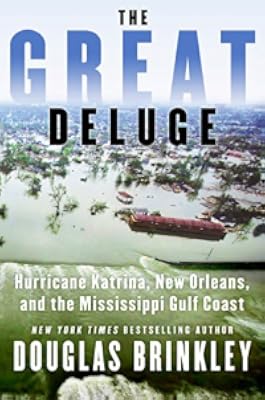
Douglas Brinkley is making himself a reputation as an show more American historian. He has a great many biographies and histories already to his credit, including The Unfinished Presidency, one of the best books available on Jimmy Carter; Tour of Duty, an account of John Kerry’s Vietnam experience; and the biography of Rosa Parks in the Penguin Lives series. He has scholarly books on Dean Acheson, the Henry Ford Company, and James Forrestal, and he has edited the diaries of Ronald Reagan, the journals of Jack Kerouac, and the letters of Hunter S. Thompson. With his colleague, the late Stephen Ambrose, he completed a number of projects, such as the coffee table book, The Mississippi and the Making of a Nation; the American Heritage History of the United States, a photographic extravaganza; and the revised edition of Rise to Globalism: American Foreign Policy Since 1938. The Great Deluge, Brinkley’s analysis of the Katrina disaster in New Orleans, where he now lives and teaches, is a no-holds-barred exposure of failures, ulterior motives, and incompetency.
One of these days, when a list is compiled of writers who have made American history not only readable and popular (best-seller popular, Book-of-the-Month club popular) but also scholarly, accurate, and detailed, his name will be joined with Samuel Eliot Morison, James MacGregor Burns, James McPherson, Daniel Boorstin, David McCullough, maybe Doris Kearns Goodwin, and his own colleague Stephen Ambrose.
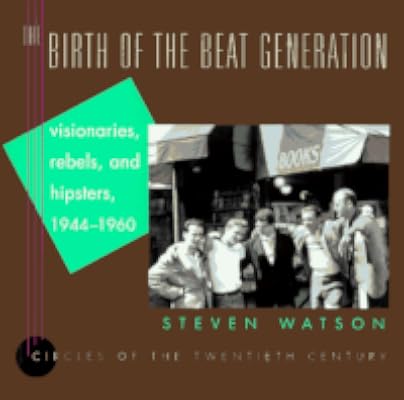
But back in the spring of 1992 Douglas Brinkley was a young, assistant professor at Hofstra University, teaching courses like “The Beat Generation and Counterculturism in America” in Hofstra’s New College. Having taken a field trip to Jack Kerouac’s hometown in one such class, students had bonded with each other and their instructor. At the last session, one student asked, “Why do we have to learn about America from a classroom on Long Island? Why don’t you teach us on the road?”
Thus, another New College course was born: “An American Odyssey: Art and Culture Across America.” Seventeen students joined Brinkley, his administrative assistant, and Frank Felugi, their driver/father figure on the Majic Bus for twelve weeks. The end papers of the book show their itinerary: from NYC through the Southeast to New Orleans, then to Chicago and the Midwest, thence through Denver and Santa Fe to California and back from Seattle by a northerly route via the Little Bighorn Battlefield and Deadwood, South Dakota.
Felugi, the driver, is a character himself, an American original. The Majic Bus was his lifelong dream, and this trek was its maiden voyage. “In my mind,” Brinkley explains, “I wanted someone who was a combination of the two contradictory impulses that had spawned American Odyssey in the first place: the educational intimacy of my family highway sojourns and the wild Dionysian frenzy of [Kerouac’s] On the Road. We needed a hybrid of Dad and Neal Cassady.” That’s exactly what he found in Frank Felugi. Full of homely tales and adages, he enforced three rules: “no smoking, drugs, or messiness.”
To see so much of the United States in twelve weeks could be a grueling task, but they slept on the bus and did their reading on the bus, and spent every available minute seeing places, meeting people, and doing things—to learn first-hand about American culture. Just a few representative sentences from Brinkley’s introduction will give you an idea of what their pilgrimage was like:
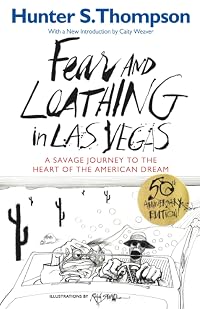
“My students would read Mark Twain in Missouri; Carson McCullers in Georgia; William Faulkner in Mississippi; Hunter S. Thompson in Las Vegas, John Steinbeck and Jack London in California; and Jack Kerouac, Langston Hughes, and Walt Whitman everywhere. . . . Instead of sitting in a Long Island classroom reading about Abraham Lincoln’s Illinois, Jimmy Carter’s Georgia, Harry Truman’s Missouri, or Thomas Jefferson’s Virginia, we would visit those states ourselves on a historical exploration of America.”
“Together we spit out spontaneous prose poems in Colorado; practiced lotus-style meditation at a Buddhist institute in Boulder; shouted Vachel Lindsay’s ‘Bryan, Bryan, Bryan, Bryan’ out loud on his rickety Springfield, Illinois, front porch; and sang the blues in the Mississippi Delta. We spent a light afternoon with the dark William S. Burroughs in Lawrence, Kansas, and a fog-shrouded dusk with Ken Kesey at this farm in Oregon, dressing in Day-Glo rain gear to whiz around the misty Bigfoot countryside in his psychedelic bus, ‘Further.’”
Because Brinkley taught well, his students learned. Because he writes well, we see them learning and join with them. He hoped his book would accomplish three objectives: become (1) a favorite guide for students hoping to discover the US; (2) a resource for parents; and (3) “an inspiration for educators looking for alternative approaches to teaching American history and literature.” All three, he accomplished.
So get on board the Majic Bus. You’ll be glad you did. show less
Douglas Brinkley is making himself a reputation as an show more American historian. He has a great many biographies and histories already to his credit, including The Unfinished Presidency, one of the best books available on Jimmy Carter; Tour of Duty, an account of John Kerry’s Vietnam experience; and the biography of Rosa Parks in the Penguin Lives series. He has scholarly books on Dean Acheson, the Henry Ford Company, and James Forrestal, and he has edited the diaries of Ronald Reagan, the journals of Jack Kerouac, and the letters of Hunter S. Thompson. With his colleague, the late Stephen Ambrose, he completed a number of projects, such as the coffee table book, The Mississippi and the Making of a Nation; the American Heritage History of the United States, a photographic extravaganza; and the revised edition of Rise to Globalism: American Foreign Policy Since 1938. The Great Deluge, Brinkley’s analysis of the Katrina disaster in New Orleans, where he now lives and teaches, is a no-holds-barred exposure of failures, ulterior motives, and incompetency.
One of these days, when a list is compiled of writers who have made American history not only readable and popular (best-seller popular, Book-of-the-Month club popular) but also scholarly, accurate, and detailed, his name will be joined with Samuel Eliot Morison, James MacGregor Burns, James McPherson, Daniel Boorstin, David McCullough, maybe Doris Kearns Goodwin, and his own colleague Stephen Ambrose.
But back in the spring of 1992 Douglas Brinkley was a young, assistant professor at Hofstra University, teaching courses like “The Beat Generation and Counterculturism in America” in Hofstra’s New College. Having taken a field trip to Jack Kerouac’s hometown in one such class, students had bonded with each other and their instructor. At the last session, one student asked, “Why do we have to learn about America from a classroom on Long Island? Why don’t you teach us on the road?”
Thus, another New College course was born: “An American Odyssey: Art and Culture Across America.” Seventeen students joined Brinkley, his administrative assistant, and Frank Felugi, their driver/father figure on the Majic Bus for twelve weeks. The end papers of the book show their itinerary: from NYC through the Southeast to New Orleans, then to Chicago and the Midwest, thence through Denver and Santa Fe to California and back from Seattle by a northerly route via the Little Bighorn Battlefield and Deadwood, South Dakota.
Felugi, the driver, is a character himself, an American original. The Majic Bus was his lifelong dream, and this trek was its maiden voyage. “In my mind,” Brinkley explains, “I wanted someone who was a combination of the two contradictory impulses that had spawned American Odyssey in the first place: the educational intimacy of my family highway sojourns and the wild Dionysian frenzy of [Kerouac’s] On the Road. We needed a hybrid of Dad and Neal Cassady.” That’s exactly what he found in Frank Felugi. Full of homely tales and adages, he enforced three rules: “no smoking, drugs, or messiness.”
To see so much of the United States in twelve weeks could be a grueling task, but they slept on the bus and did their reading on the bus, and spent every available minute seeing places, meeting people, and doing things—to learn first-hand about American culture. Just a few representative sentences from Brinkley’s introduction will give you an idea of what their pilgrimage was like:
“My students would read Mark Twain in Missouri; Carson McCullers in Georgia; William Faulkner in Mississippi; Hunter S. Thompson in Las Vegas, John Steinbeck and Jack London in California; and Jack Kerouac, Langston Hughes, and Walt Whitman everywhere. . . . Instead of sitting in a Long Island classroom reading about Abraham Lincoln’s Illinois, Jimmy Carter’s Georgia, Harry Truman’s Missouri, or Thomas Jefferson’s Virginia, we would visit those states ourselves on a historical exploration of America.”
“Together we spit out spontaneous prose poems in Colorado; practiced lotus-style meditation at a Buddhist institute in Boulder; shouted Vachel Lindsay’s ‘Bryan, Bryan, Bryan, Bryan’ out loud on his rickety Springfield, Illinois, front porch; and sang the blues in the Mississippi Delta. We spent a light afternoon with the dark William S. Burroughs in Lawrence, Kansas, and a fog-shrouded dusk with Ken Kesey at this farm in Oregon, dressing in Day-Glo rain gear to whiz around the misty Bigfoot countryside in his psychedelic bus, ‘Further.’”
Because Brinkley taught well, his students learned. Because he writes well, we see them learning and join with them. He hoped his book would accomplish three objectives: become (1) a favorite guide for students hoping to discover the US; (2) a resource for parents; and (3) “an inspiration for educators looking for alternative approaches to teaching American history and literature.” All three, he accomplished.
So get on board the Majic Bus. You’ll be glad you did. show less
One of the best books I've read. A historian takes a group of college students around the country, visiting sites connected with American history and literature.
Ratings
Members
- Recently Added By
Author Information

44+ Works 8,644 Members
Douglas Brinkley was born in Atlanta, Georgia on December 14, 1960. He received a B.A. from Ohio State University in 1982 and a Ph.D. from Georgetown University in 1989. He was a professor at Tulane University, Princeton University, the U.S. Naval Academy, Hofstra University, and the University of New Orleans. In 2007, he became a professor at show more Rice University and the James Baker Institute for Public Policy. He is a commentator for CBS News and a contributing editor to the magazine Vanity Fair. His first book, Jean Monnet: The Path to European Unity, was published in 1992. His other works include Dean Acheson: The Cold War Years, The Unfinished Presidency: Jimmy Carter's Journey Beyond the White House, Wheels for the World: Henry Ford, His Company, and a Century of Progress, The Boys of Pointe du Hoc: Ronald Reagan, D-Day, and the U.S. Army 2nd Ranger Battalion, The Wilderness Warrior: Theodore Roosevelt and the Crusade for America, Cronkite, and Rightful Heritage: Franklin D. Roosevelt and the Land of America. He also wrote three books with historian Stephen E. Ambrose: The Rise to Globalism: American Foreign Policy Since 1938, Witness to History, and The Mississippi and the Making of a Nation: From the Louisiana Purchase to Today. He has won several awards including the Theodore and Franklin Roosevelt Naval History Prize for Driven Patriot and the Robert F. Kennedy Book Award for The Great Deluge: Hurricane Katrina, New Orleans, and the Mississippi Gulf Coast. (Bowker Author Biography) show less
Classifications
Statistics
- Members
- 204
- Popularity
- 161,292
- Reviews
- 3
- Rating
- (3.76)
- Languages
- English
- Media
- Paper
- ISBNs
- 4
- ASINs
- 4