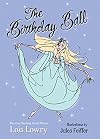
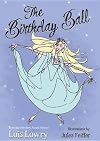
The Birthday Ball
by Lois Lowry
On This Page
Description
When a bored Princess Patricia Priscilla makes her chambermaid switch identities with her so she can attend the village school, her attitude changes and she plans a new way to celebrate her sixteenth birthday.Tags
Recommendations


Member Reviews
It’s amazing to me that the same author that wrote The Giver wrote the book I'm reviewing today because they couldn’t be more different. The Birthday Ball by Lois Lowry is a nontraditional fairytale about a princess who’d rather live among the people than follow any ridiculous royal decrees. (Roman Holiday, anyone?) Now that she’s turning 16 years old, Princess Patricia Priscilla's expected to marry one of the three suitors who are courting for her hand. Each man is more ghastly than the last. A lot of time is spent describing these hateful men (and the illustrations by Jules Feiffer really drive it home how disgusting and despicable her choices truly are. As in much of middle grade fiction, her parents are blind to her show more discomfort and unhappiness as they are caught up in their own lives and interests. (Dad is obsessed with butterflies and Mom is preoccupied with her wardrobe and appearance.) So neither takes any notice of her switching places with her maid and escaping out into the village to go to the local school. Dark humor coupled with the somewhat realistic portrayal of what it's like to be a village peasant plus the fantastic illustrations make this a quick, fun read. 7/10 show less
Obviously, I'm going to like this. It's a fun, funny, totally enjoyable, quick-read about a princess who sneaks out of her castle to go to school, invites all the peasants to her birthday ball, and finds a way to get out of marrying one of three (or four, technically) nasty (really gross-nasty) suitors.
My favorite parts:
1. So many things rhyme with delicious!
2. The norphan
3. The disgusting Duke of Dyspepsia, Prince of Pustula, and Conjoint Counts
4. An overall satisfying mixture of cute and gross
5. Just a smidge of feminism tucked in
6. Jules Feiffer's illustrations enhance it's Roald Dahl-ian smelly charm.
My favorite parts:
1. So many things rhyme with delicious!
2. The norphan
3. The disgusting Duke of Dyspepsia, Prince of Pustula, and Conjoint Counts
4. An overall satisfying mixture of cute and gross
5. Just a smidge of feminism tucked in
6. Jules Feiffer's illustrations enhance it's Roald Dahl-ian smelly charm.
Lowry, L. (2010). The Birthday Ball. New York: Houghton Mifflin Books for Children.
186 pages.
I first heard about this book through some positive reviews from some teachers that I knew. But the thing was, all the teachers would say was, "The Birthday Ball is fun!" or "The Birthday Ball is cute!" And that's it. All of them. Only those words. They wouldn't even describe the plot of the book. Just say that it was cute.
I started to think it was some kind of conspiracy. Why wouldn't anyone say more?
Having entertained ideas of being an investigative journalist for about three weeks when I was in high school, and then again for another two weeks while in college, I decided the job fell to me to try to understand the silence surrounding the cult show more of The Birthday Ball.
While I do agree that The Birthday Ball is fun AND cute, I will say more!
Appetizer: As Princess Patricia Priscilla's sixteenth birthday approaches the castle is preparing for her birthday ball and when she will meet suiters. The princess isn't nearly as excited about her birthday. She is bored. But with the help of a chambermaid, she soon finds a cure for her boredom: disguising herself as a peasant girl and attending school under the eye of a handsome young teacher.
As her birthday ball approaches, the princesses suitors prepare themselves and gifts for their potential wife. The Princess is going to have a veeeeeeery difficult decision over who to marry (not that she really wants to get married at all.
This book has a vague Shakespearian Twelfth Night feel. It's kind of a comedy of misuderstandings, with separated siblings, assumptions about people being of noble birth and secret identities.
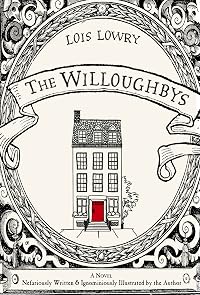
As I was reading, I was reminded of one of Lowry's other books, The Willoughbys. Both are kind of set in a time outside our own (but still with references to some modern things). Both make references to classic children's books and emphasize some excellent vocabulary words. Also in both books, Lowry did the illustrations herself.
There's a lot to love about this book: The fact that the princess gets so much joy out of attending school and the fact that those characters who are literate are very excited about their skill. I like that the story plays with class and that the princess comes to appreciate the peasants.
I think this book would be a great read aloud to do with a young girl. The humor and alliteration would go over well. Plus, since the book has a very modern sensibility, this is one princess I wouldn't mind early elementary school girls parading around, pretending to be (she feels driven to help others and learn, but isn't focused on having a prince in her life). But having said that, this book does put a lot of emphasis on appearances. While it is done for humor and some of the negatively characterized suitors do find acceptance, the beautiful people do end up with other beautiful people. Of course.
So, overall, it would seem the cult of the Birthday Ball are right: "A cute and fun book."
Dinner Conversation:
"When Princess Patricia Priscilla woke on the morning of the day that was five days before her birthday, her first thoughts were not Oh, I am almost another year older, hardly a child anymore! or I wonder what fabulous gifts will be presented to me at the Birthday Ball six nights from now!
No. Her thoughts were Bored, bored, bored." (p. 1).
"Below in the village, the new young schoolmaster was preparing his classroom. He set the little desks in straight rows, looked at the alignment, thought, then shook his head and moved the desks again until they formed a semicircle facing his own larger desk. He decided that he liked it better that way.
His name was Rafe" (p. 10).
"I'm a poor peasant girl only recently come to live in the village because my mother was killed by a wild boar and my pa has to take in washing."
The princess stood nervously in the doorway of the schoolhouse. She looked down at her own dirty bare toes, then, because of the silence, back up at the face of the schoolmaster. His mouth was set in a line and his forehead was furrowed. He looked very stern, just as Tess, the chambermaid, had described.
The children, each one seated at a small desk, giggled.
I said it wrong, she thought. "I mean my pa was killed, that's what, and it's my mother that has to take in washing. I mean my ma."
"And you would like to become a pupil?"
"Yes" (pp. 45, 47).
"My first day as a peasant was the loveliest day I've ever had. I was not bored for a minute" (p. 55).
Tasty Rating: !!! show less
186 pages.
I first heard about this book through some positive reviews from some teachers that I knew. But the thing was, all the teachers would say was, "The Birthday Ball is fun!" or "The Birthday Ball is cute!" And that's it. All of them. Only those words. They wouldn't even describe the plot of the book. Just say that it was cute.
I started to think it was some kind of conspiracy. Why wouldn't anyone say more?
Having entertained ideas of being an investigative journalist for about three weeks when I was in high school, and then again for another two weeks while in college, I decided the job fell to me to try to understand the silence surrounding the cult show more of The Birthday Ball.
While I do agree that The Birthday Ball is fun AND cute, I will say more!
Appetizer: As Princess Patricia Priscilla's sixteenth birthday approaches the castle is preparing for her birthday ball and when she will meet suiters. The princess isn't nearly as excited about her birthday. She is bored. But with the help of a chambermaid, she soon finds a cure for her boredom: disguising herself as a peasant girl and attending school under the eye of a handsome young teacher.
As her birthday ball approaches, the princesses suitors prepare themselves and gifts for their potential wife. The Princess is going to have a veeeeeeery difficult decision over who to marry (not that she really wants to get married at all.
This book has a vague Shakespearian Twelfth Night feel. It's kind of a comedy of misuderstandings, with separated siblings, assumptions about people being of noble birth and secret identities.
As I was reading, I was reminded of one of Lowry's other books, The Willoughbys. Both are kind of set in a time outside our own (but still with references to some modern things). Both make references to classic children's books and emphasize some excellent vocabulary words. Also in both books, Lowry did the illustrations herself.
There's a lot to love about this book: The fact that the princess gets so much joy out of attending school and the fact that those characters who are literate are very excited about their skill. I like that the story plays with class and that the princess comes to appreciate the peasants.
I think this book would be a great read aloud to do with a young girl. The humor and alliteration would go over well. Plus, since the book has a very modern sensibility, this is one princess I wouldn't mind early elementary school girls parading around, pretending to be (she feels driven to help others and learn, but isn't focused on having a prince in her life). But having said that, this book does put a lot of emphasis on appearances. While it is done for humor and some of the negatively characterized suitors do find acceptance, the beautiful people do end up with other beautiful people. Of course.
So, overall, it would seem the cult of the Birthday Ball are right: "A cute and fun book."
Dinner Conversation:
"When Princess Patricia Priscilla woke on the morning of the day that was five days before her birthday, her first thoughts were not Oh, I am almost another year older, hardly a child anymore! or I wonder what fabulous gifts will be presented to me at the Birthday Ball six nights from now!
No. Her thoughts were Bored, bored, bored." (p. 1).
"Below in the village, the new young schoolmaster was preparing his classroom. He set the little desks in straight rows, looked at the alignment, thought, then shook his head and moved the desks again until they formed a semicircle facing his own larger desk. He decided that he liked it better that way.
His name was Rafe" (p. 10).
"I'm a poor peasant girl only recently come to live in the village because my mother was killed by a wild boar and my pa has to take in washing."
The princess stood nervously in the doorway of the schoolhouse. She looked down at her own dirty bare toes, then, because of the silence, back up at the face of the schoolmaster. His mouth was set in a line and his forehead was furrowed. He looked very stern, just as Tess, the chambermaid, had described.
The children, each one seated at a small desk, giggled.
I said it wrong, she thought. "I mean my pa was killed, that's what, and it's my mother that has to take in washing. I mean my ma."
"And you would like to become a pupil?"
"Yes" (pp. 45, 47).
"My first day as a peasant was the loveliest day I've ever had. I was not bored for a minute" (p. 55).
Tasty Rating: !!! show less
This review was originally posted on Goodreads
I enjoyed this little book from my children’s bookshelf. My daughter mentioned it had some potty humor and since I don’t usually keep potty humor on my bookshelf (more out of a disdain for books that stoop to potty humor for easy laughs than my dislike of potty humor in general) I decided to give this one a read.
The potty humor is not pervasive nor is it the used for cheep lights but in the development of one of the characters (plural, sort of 😆). You’ll have to read to see what I mean. In this case the potty humor was a non issue for me.
I don’t agree with the reviewers who said the story plot was undeveloped. This reads like traditional fairy tales. Think of how simple the show more Cinderella story is. Even with all the variations from around the world the simple plot remains. I would say this fairy tale is slightly more plot heavy than most traditional fairy tales; more characters, more side stories, more happening in general. But again, still reads like a fairy tale not in spite of its lake of plot development but because of it.
I agree that this reads like a Roald Dahl book and the humor is more in the British style. For those worried about making fun of ugly or a kingdom named Bulimia, or being insensitive to those with hearing loss, I guess you will want to skip this one. But these things are funny… what humor in the world is left if you leave out making fun of the human condition? It isn’t personal. Besides in the end, the ugly duke got the child he had always wanted through adoption and she gave a good message, “it doesn’t matter if you are ugly, what counts is inside.” So, if you like British humor and fairy tales you will enjoy this.
This book gets to remain on our shelf. show less
I enjoyed this little book from my children’s bookshelf. My daughter mentioned it had some potty humor and since I don’t usually keep potty humor on my bookshelf (more out of a disdain for books that stoop to potty humor for easy laughs than my dislike of potty humor in general) I decided to give this one a read.
The potty humor is not pervasive nor is it the used for cheep lights but in the development of one of the characters (plural, sort of 😆). You’ll have to read to see what I mean. In this case the potty humor was a non issue for me.
I don’t agree with the reviewers who said the story plot was undeveloped. This reads like traditional fairy tales. Think of how simple the show more Cinderella story is. Even with all the variations from around the world the simple plot remains. I would say this fairy tale is slightly more plot heavy than most traditional fairy tales; more characters, more side stories, more happening in general. But again, still reads like a fairy tale not in spite of its lake of plot development but because of it.
I agree that this reads like a Roald Dahl book and the humor is more in the British style. For those worried about making fun of ugly or a kingdom named Bulimia, or being insensitive to those with hearing loss, I guess you will want to skip this one. But these things are funny… what humor in the world is left if you leave out making fun of the human condition? It isn’t personal. Besides in the end, the ugly duke got the child he had always wanted through adoption and she gave a good message, “it doesn’t matter if you are ugly, what counts is inside.” So, if you like British humor and fairy tales you will enjoy this.
This book gets to remain on our shelf. show less
A lighthearted take on the classic Prince and the Pauper, Princess Patricia Priscilla switches clothes with her chambermaid to enjoy the daily life of a village schoolgirl.
"'I'm a poor peasant girl only recently come to live in the village because my mother was killed by a wild boar and my pa has to take in washing'...The children, each one seated at a small desk, giggled. I said it wrong, she thought. 'I mean my pa was killed, that's what, and it's my mother that has to take in washing. I mean my ma.'"
With her birthday approaching and an impending marriage to one of several undesirable suitors, the princess is determined to make the most of the time she has left. Conjoined counts, singing triplet serving maids, a distracted king and show more his hearing-impaired wife - Lois Lowry and illustrator Jules Feiffer are having some fun with this humorous fairy tale jaunt with a predictable, yet satisfying ending. Pure entertainment. show less
"'I'm a poor peasant girl only recently come to live in the village because my mother was killed by a wild boar and my pa has to take in washing'...The children, each one seated at a small desk, giggled. I said it wrong, she thought. 'I mean my pa was killed, that's what, and it's my mother that has to take in washing. I mean my ma.'"
With her birthday approaching and an impending marriage to one of several undesirable suitors, the princess is determined to make the most of the time she has left. Conjoined counts, singing triplet serving maids, a distracted king and show more his hearing-impaired wife - Lois Lowry and illustrator Jules Feiffer are having some fun with this humorous fairy tale jaunt with a predictable, yet satisfying ending. Pure entertainment. show less
Narrated by Elissa Steele. Steele gives a soaring and animated interpretation of a princess story with an independent streak. Princess Pat conducts a fairly routine, if posh life in the castle. She is inspired by her serving maid to pretend she is poor and attend the village school and rub elbows with the peasants. It's all a delightful slumming experience for the princess but it comes to an end when she must pick from among three dreadful suitors on her 16th birthday. Lots of out-loud laughs; a great pick for a family road trip!
With this charming fairy tale, Lois Lowry shows her range. I love the dystopian worlds that Lowry creates in [The Giver] and [Gathering Blue], but [The Birthday Ball] is a much different sort of tale. As Lowry tells us about Princess Patricia Priscilla, who is about to be forced to choose a suitor (from some horrific choices) at her birthday ball, I was laughing out loud. Minor characters, like the princess's chambermaid and an orphan named Liz, add to this book's charm. I think I liked this book even better because I listened to it on audio and got the full effect of the alliteration. Not as deeply affecting as Lowry's other books, but enjoyable all the same.
Members
- Recently Added By
Lists

Swap identities, trade places -- children's/young adult fiction
54 works; 6 members

Princess Tales
130 works; 4 members
Author Information

99+ Works 118,578 Members
Lois Lowry (nee Lois Ann Hammersberg) was born on March 20, 1937, in Honolulu, Hawaii. She was educated at both Brown University and the University of Southern Maine. Before becoming an author, she worked as a photographer and a freelance journalist. Her first book, A Summer to Die, was published in 1977. Since then she has written over 30 books show more for young adults including Gathering Blue, Messenger, the Anastasia Krupnik series, and Son. She has received numerous awards including: The New York Times Best Seller,the International Reading Association's Children's Literature Award, the American Library Association Notable Book Award Citation and two Newberry Medals for Number the Stars in 1990, and The Giver in 1993. She was also awarded an honorary Doctorate of Letters by Brown University in 2014. The Giver is part of a Quartet of books; it is the first book, followed by Gathering Blue, messenger and Son. The Giver has been met with a diversity of reactions from schools in America, some of which have adopted it as a part of the mandatory curriculum, while others have prohibited the book's inclusion in classroom studies. It was also made into a feature film of the same name released in 2014. Lois Lowry also made the Hans Christian Andersen Awards 2016 finalists in the author category. (Bowker Author Biography) show less
All Editions
Some Editions
Awards and Honors
Common Knowledge
- Original publication date
- 2010
- People/Characters
- Princess Patricia Priscilla
- Dedication
- To Will and Sophie Clark, and the librarians in their lives.
- First words
- When Princess Patricia Priscilla woke on the morning of the day that was five days before her birthday, her first thoughts were not Oh, I am almost another year older, hardly a child anymore! or I wonder what fabulo... (show all)us gifts will be presented to me at the Birthday Ball six nights from now!
- Last words
- (Click to show. Warning: May contain spoilers.)"Ah!" she replied in delight, and reached out her arms to show him how to arrange his. "My first teaching assignment!"
The Happy End
Classifications
Statistics
- Members
- 279
- Popularity
- 115,591
- Reviews
- 23
- Rating
- (3.53)
- Languages
- English, French
- Media
- Paper, Audiobook, Ebook
- ISBNs
- 15
- ASINs
- 4