On This Page
Description
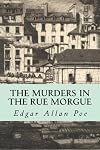
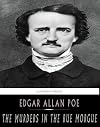
"The Murders in the Rue Morgue" is a short story by Edgar Allan Poe published in Graham's Magazine in 1841. It has been claimed as the first detective story; Poe referred to it as one of his "tales of ratiocination". Similar works predate Poe's stories, including Das Fräulein von Scuderi (1819) by E.T.A. Hoffmann and Zadig (1748) by Voltaire.C. Auguste Dupin is a man in Paris who solves the mysterious brutal murder of two women. Numerous witnesses heard a suspect, though no one agrees on show more what language was spoken. At the murder scene, Dupin finds a hair that does not appear to be human.As the first true detective in fiction, the Dupin character established many literary devices which would be used in future fictional detectives including Sherlock Holmes and Hercule Poirot. Many later characters, for example, follow Poe's model of the brilliant detective, his personal friend who serves as narrator, and the final revelation being presented before the reasoning that leads up to it. Dupin himself reappears in "The Mystery of Marie Roget" and "The Purloined Letter". show lessTags
Recommendations



















Member Reviews
While I typically love locked room mysteries, and I don't mind not being given enough clues to fully solve a locked room mystery for myself, I really disliked the way this one ended. It was a completely unexpected twist (since I have somehow managed to avoid spoilers for it) and left a very bad taste in my mouth for the story. However, I do appreciate this for what it was: probably the inspiration for Sherlock Holmes, as well as the first detective story. The language is more dated than I expected, and I didn't like it nearly as much as I remember liking Poe's other works. Not one I need to revisit, though I'm glad to have read it the once.
Two women are found murdered in a locked apartment in Paris, and none of the witnesses can agree on what they heard. A man named Auguste Dupin examines each clue methodically, and comes up with a most unusual solution to the mystery.
This is often credited with being the first detective story. The first section of the book is devoted to Dupin explaining how he uses deductive reasoning (at the time called ratiocination) to figure things out, and it's very tedious. The recounting of the crime scene and accompanying investigation are somewhat interesting. However, I think the solution is a bit too convenient and I don't think there's any way Dupin could actually have deduced it. Plus,if the sailor saw his orangutan murder two people, and show more then he ran away from the crime scene, why would he answer an advertisement asking if anyone had lost an orangutan?? I do find it interesting that the sailor is not held responsible for the orangutan's actions, though. That certainly would not be the case today. This is an important story to understand the history of the detective genre, but it's not actually that enjoyable to read.
I listened to the audiobook read by David Case. I'm not sure if it was the audio quality or the narrator's voice, but I didn't care for it. I was considering listening to more of the stories in this audio collection but I think I'll pass. show less
This is often credited with being the first detective story. The first section of the book is devoted to Dupin explaining how he uses deductive reasoning (at the time called ratiocination) to figure things out, and it's very tedious. The recounting of the crime scene and accompanying investigation are somewhat interesting. However, I think the solution is a bit too convenient and I don't think there's any way Dupin could actually have deduced it. Plus,
I listened to the audiobook read by David Case. I'm not sure if it was the audio quality or the narrator's voice, but I didn't care for it. I was considering listening to more of the stories in this audio collection but I think I'll pass. show less
This work by Poe is often described as the first mystery. With such a distinction, it is an important work to revisit from time to time, even if its plot is not as fully developed as later efforts, because of its influence on masters of the mystery genre such as Sir Arthur Conan Doyle. I remember reading this one back in high school and also in university. At the time, I was disappointed in it. As I read it this time, knowing the outcome, I think I appreciated it more because I found myself seeking the earlier hints which would lead to the crime's resolution. While I believe many questions remain unanswered regarding the sailor's role, I know I'm bringing my 21st century mindset to that question by envisioning lawsuits and other charges show more relating to harboring an orangutan in one's apartment . The use of deductive reasoning is the important contribution of this classic work which is probably appreciated most when it is re-read and studied for that reason. show less
The detective at the centre of this mystery, Auguste Dupin, was one of the inspirations for Conan Doyle's Sherlock Holmes. Dupin here uses the techniques of eliminating the impossible and arriving at a conclusion that, however improbable, must be the truth. But it felt more long winded here, and we didn't get to know Dupin at all. Indeed much of this felt more like an analytical essay than a story. 3.5/5
This stort story by Poe is considered to be the first detective story and has surely influenced other authors of such tales. It was the seemingly impossible scenario: two murdered women, one in a back yard and the other in a room locked from the inside. The murders are especially gory and violent. Monsieur C. Auguste Dupin is intrigued by the murders, and though the general concensus is that the situation is impossible, he believes that once the impossible is eliminated, whatever is left, though improbable, is the answer. Following Dupin’s thought process as he sifts through the information is an interesting study in the workings of a detective’s mind.
The Murders in the Rue Morgue by Edgar Allan Poe is a novella that was originally published in 1841. Today this story is mostly admired for its’ historic value as it is considered the first modern detective story. The main character, C. Auguste Dupin solves the brutal murder of two women in Paris. Poe has his detective display many of the traits that become literary conventions in many of the detectives that were to follow, including Sherlock Holmes and Hercule Poirot. The idea that the detective has great analytical talents, is exceptionally brilliant and has a personal friend do the narration are all plot points that were introduced in this story.
Although the language is rather dated, this is a fascinating story and well worth a show more quick read. show less
Although the language is rather dated, this is a fascinating story and well worth a show more quick read. show less
a real disappointment. the beginning was an utter slog and unrelated to the story, and then the story was just the solving of a locked room mystery in the most outrageous way possible, which i just found incredibly annoying.
Members
- Recently Added By
Lists

The Telegraph's 110 Best Books: The Perfect Library
101 works; 18 members

Survey of Classic Crime
39 works; 7 members

Las 10 mejores novelas policiacas clásicas (cicutadry)
10 works; 1 member

Tozai Mystery Best 100 | The Top 100 Mystery Novels
111 works; 3 members

Adult Stories Involving Animals
76 works; 6 members

Greatest Books, allegedly
484 works; 9 members
Victorian Period
113 works; 10 members

Literary Works Read in College
316 works; 15 members

Books Read in 2008
335 works; 8 members

1840s
10 works; 2 members

Books I read in high school
52 works; 1 member

Favourite Short Stories
153 works; 9 members

Overdue Podcast
806 works; 9 members

Books Read in 2017
4,249 works; 130 members

Literature which inspired Pop songs
85 works; 9 members
.
8 works; 2 members

The League of Extraordinary Gentlemen
87 works; 4 members
Works Referenced in The League of Extraordinary Gentlemen
122 works; 6 members
School Made Us Read It
380 works; 196 members
Talk Discussions
Past Discussions
Found: 1930’s short story, man reads mind in Name that Book (June 2024)
Author Information

3,805+ Works 107,434 Members
Edgar Allan Poe was born in Boston, Massachusetts on January 19, 1809. In 1827, he enlisted in the United States Army and his first collection of poems, Tamerlane and Other Poems, was published. In 1835, he became the editor of the Southern Literary Messenger. Over the next ten years, Poe would edit a number of literary journals including the show more Burton's Gentleman's Magazine and Graham's Magazine in Philadelphia and the Broadway Journal in New York City. It was during these years that he established himself as a poet, a short story writer, and an editor. His works include The Fall of the House of Usher, The Tell-Tale Heart, The Murders in the Rue Morgue, The Mystery of Marie Roget, A Descent into the Maelstrom, The Masque of the Red Death, and The Raven. He struggle with depression and alcoholism his entire life and died on October 7, 1849 at the age of 40. (Bowker Author Biography) show less
Some Editions
Awards and Honors
Notable Lists
Series

Belongs to Publisher Series
Work Relationships
Is contained in
Edgar Allan Poe: Collected Stories and Poems (Collector's Library Editions) by Edgar Allan Poe (indirect)
The Murders in the Rue Morgue / The Mystery of Marie Roget / The Purloined Letter and other stories by Edgar Allan Poe
British Mystery Multipack Volume 11 - The Murders in the Rue Morgue, The Mystery of Marie Roget, A Stolen Letter, Fountainblue, No Man's Land, The Clue and The Dream Doctor (Illustrated) by British Mystery Megapacks
Classic Crime Collection - 10 Books RRP£70.91 (Lady Audley's Secret, The Murders in the Rue Morgue, Raffles, Bleak House, Bulldog Drummond, Wulders Hand, Favourite Sherlock Holmes Stories, The Man Who was Thursday, The Collegians, The Riddle of the Sands) by Various
Penny Dreadful Multipack Volume 7 – The Americans: The Legend of Sleepy Hollow, The Murders in the Rue Morgue, Mosses From An Old Manse, Owl Creek Bridge, The King In Yellow and 26 more (Illustrated) by CreateSpace Multipack
The Works of Edgar Allen Poe in One Volume: Poems, Tales, Essays, Criticisms with New Notes by Edgar Allan Poe
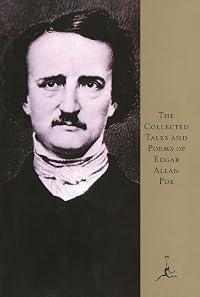
The Complete Tales and Poems of Edgar Allan Poe with Selections from His Critical Writings by Edgar Allan Poe
The Golden Argosy: A Collection of the Most Celebrated Short Stories in the English Language by Charles Grayson
The annotated tales of Edgar Allan Poe edited with an introduction, notes, and a bibliography by Edgar Allan Poe
The American Short Story: A Collection of the Best Known and Most Memorable Stories by the Great American Authors by Thomas K. Parkes
Club del misterio. Volumen I: Prólogo de J. J. BORGES. "El cuento policial, IX" . Dashiell HAMMETT: "Cosecha roja". Arthur CONAN DOYLE: "Las aventuras de Shrlock Holmes". Hellery QUEEN: "Cara a cara". Raymond CHANDLER: "El sueño eterno". Patricia IHGSMITH: Erle STANLEY GARDNER: "El cuchillo". "El caso del juguete mortífero". James HADLEY CHASE: "Impulso creador". "El secuestro de Miss Blandish". Nicholas BLAKE: "La bestia debe morir". Volumen 2: Prólogo de R. CHANDLER: " El simpl by AA.VV. (indirect)
The Complete Tales of Mystery and Imagination; The Narrative of Arthur Gordon Pym; The Raven and Other Poems by Edgar Allan Poe (indirect)
The fall of the House of Usher and other stories (Classics of mystery & suspense) by Edgar Allan Poe
The Murders in the Rue Morgue / The Mystery of Marie Roget / The Purloined Letter / The Gold Bug / Thou Art the Man by Edgar Allan Poe
Maigret's Pipe / The Bronze Door / The Murders in the Rue Morgue / The Murder on the Links by Georges Simenon
Has the adaptation
Inspired
Common Knowledge
- Canonical title
- The Murders in the Rue Morgue [short story]
- Original title
- The Murders in the Rue Morgue
- Alternate titles
- Murders in the Rue Morgue
- Original publication date
- 1841
- People/Characters
- C. Auguste Dupin; Madame L'Espanaye; Camille L'Espanaye; Pauline Dubourg; Pierre Moreau (French tobacconist, witness); Isidore Musét (show all 15); Henri Duval (French silversmith, witness); Odenheimer; Jules Mignaud; Adolphe Le Bon; William Bird (English tailor, witness); Alfonzo Garcio; Alberto Montani; Paul Dumas; Alexandre Etienne
- Important places
- Paris, France
- Related movies
- The Murders in the Rue Morgue (1914 | IMDb); Murders in the Rue Morgue (1932 | IMDb); Murders in the Rue Morgue (1971 | IMDb); Le double assassinat de la rue Morgue (1973 | IMDb); The Murders in the Rue Morgue (1986 | IMDb); Phantom of the Rue Morgue (1954 | IMDb)
- Epigraph
- What song the Syrens sang, or what name Achilles assumed when he hid himself among women, although puzzling questions are not beyond all conjecture. — Sir Thomas Browne, Urn-Burial.
- First words
- The mental features discoursed of as the analytical, are, in themselves, but little susceptible of analysis.
- Last words
- (Click to show. Warning: May contain spoilers.)I mean the way he has 'de nier ce qui est, et d'expliquer ce qui n'est pas.' "
- Blurbers*
- Toppi, Sérgio; Miller, Frank; Pratt, Hugo
- Original language
- English
- Disambiguation notice
- This work is for the original short story, "The Murders in the Rue Morgue" by Edgar Allan Poe. It should not be combined with collections containing additional stories, adaptations, etc.
*Some information comes from Common Knowledge in other languages. Click "Edit" for more information.
Classifications
Statistics
- Members
- 826
- Popularity
- 33,308
- Reviews
- 24
- Rating
- (3.54)
- Languages
- 20 — Catalan, Chinese, Czech, Danish, Dutch, English, Esperanto, Finnish, French, German, Greek, Italian, Japanese, Norwegian (Bokmål), Portuguese (Brazil), Portuguese (Portugal), Russian, Spanish, Swedish, Turkish
- Media
- Paper, Audiobook, Ebook
- ISBNs
- 150
- ASINs
- 41