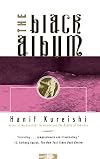
The Black Album
by Hanif Kureishi
On This Page
Description
Set in London in 1989, the year of the fatwah and the fall of the Berlin Wall, this is a thriller with a background of raves, ecstasy, religious ferment and sexual passion. By the author of The Buddha of Suburbia and Sammy and Rosie Get Laid.Tags
Recommendations





























Member Reviews
“what sort of people burn books and read aubergines?”
indeed, who does that? radical Muslim university students in London in the late ‘80s or early ‘90s, i think. that’s one of the shining insights this book provides.
Kureishi’s book about a young Pakistani attending college for the first time and finding his way in the world was sometimes confusing. i’m still not quite sure of the time period but since it does seem to center on the fatwa declared against Salman Rushdie’s book in 1988, a safe bet is 1988. where the main character Shahid lives and who he is does not really come into focus. he father is freshly dead only 6 months, his mother and sister-in-law are running the family business, and his older brother is involved show more in some serious back-alley druggie stuff. but not much else emerges. the characters are not that well developed, the plot is narrow but two-pronged, and following who said what in the dialogue can be difficult at times.
the story held me because i guess i am intrigued by these glimpses into such a different culture and lifestyle. Kureishi explores racism, classism, colonialism (inferred), relations between faculty and student, older and younger, etc., etc. he painted a picture involving lots of different kinds of boundary-crossings and evolution of philosophical talks to fanatical rampages and forbidden loves. it’s never said outright but the death of Papa has caused Shahid and his brother Chili to seek succor and peace of soul along very disparate routes. Shahid goes to school and learns about art and literature but falls in with another mind-altering cohort dealing in ideas steeped in racist and religious resentment and class inequality. Chili seeks his solace in drugs and street thugs. Shahid finds love in an older woman who is one of his professors; Chili loses his wife.
the seedy side of London is on display here with the characters frequenting all kinds of dingy speak-easy types of places, holes-in-the-wall, and rough dens of iniquity. this is contrasted with the middle scale life of Shahid’s family -but only just barely glimpsed- and his lover’s more upscale, white, professor’s life. again, Kureishi is showing us multiple levels of society in all its ugly and beautiful aspects by having a Hermes-like Shahid cross all of those boundaries with us in tow.
i stuck with it until the end because i was curious about where it would lead and was intrigued by the romance, mainly, i’ll admit because it resonated with my own life. and he’s not a BAD writer, it just didn’t really and truly satisfy like the Buddha of Suburbia. an odd, all-over-the-place novel about race and class relations in London in the late 1980s but nevertheless hits some truly deep notes at times. show less
indeed, who does that? radical Muslim university students in London in the late ‘80s or early ‘90s, i think. that’s one of the shining insights this book provides.
Kureishi’s book about a young Pakistani attending college for the first time and finding his way in the world was sometimes confusing. i’m still not quite sure of the time period but since it does seem to center on the fatwa declared against Salman Rushdie’s book in 1988, a safe bet is 1988. where the main character Shahid lives and who he is does not really come into focus. he father is freshly dead only 6 months, his mother and sister-in-law are running the family business, and his older brother is involved show more in some serious back-alley druggie stuff. but not much else emerges. the characters are not that well developed, the plot is narrow but two-pronged, and following who said what in the dialogue can be difficult at times.
the story held me because i guess i am intrigued by these glimpses into such a different culture and lifestyle. Kureishi explores racism, classism, colonialism (inferred), relations between faculty and student, older and younger, etc., etc. he painted a picture involving lots of different kinds of boundary-crossings and evolution of philosophical talks to fanatical rampages and forbidden loves. it’s never said outright but the death of Papa has caused Shahid and his brother Chili to seek succor and peace of soul along very disparate routes. Shahid goes to school and learns about art and literature but falls in with another mind-altering cohort dealing in ideas steeped in racist and religious resentment and class inequality. Chili seeks his solace in drugs and street thugs. Shahid finds love in an older woman who is one of his professors; Chili loses his wife.
the seedy side of London is on display here with the characters frequenting all kinds of dingy speak-easy types of places, holes-in-the-wall, and rough dens of iniquity. this is contrasted with the middle scale life of Shahid’s family -but only just barely glimpsed- and his lover’s more upscale, white, professor’s life. again, Kureishi is showing us multiple levels of society in all its ugly and beautiful aspects by having a Hermes-like Shahid cross all of those boundaries with us in tow.
i stuck with it until the end because i was curious about where it would lead and was intrigued by the romance, mainly, i’ll admit because it resonated with my own life. and he’s not a BAD writer, it just didn’t really and truly satisfy like the Buddha of Suburbia. an odd, all-over-the-place novel about race and class relations in London in the late 1980s but nevertheless hits some truly deep notes at times. show less
Kinda loses its way and becomes a bit too didactic in the final stretch but otherwise this is wonderful. Some interesting ideas about identity and youth, and a great LONDON novel
The people most adept at reviewing this book would be a British Asian, but from my experience of living in England for 3 years, the conflict between religion, particularly people engaged in its extremisms, and the fast pleasures of modern life (drugs, raving, crazy sex and fetishes) is very true. Kureishi knows his contradictions, and knows how to convey irony without being repetitive in any way. It's as truthful a description of modern London (well, relatively modern) as ever.
The only reason why I didn't give it a full rating was because there's something about contemporary writing that grates on me, even though I know that if it were written in any other way, it would have come off as false-sounding. That's just my personal opinion, show more though, but other than that it's well worth a read. show less
The only reason why I didn't give it a full rating was because there's something about contemporary writing that grates on me, even though I know that if it were written in any other way, it would have come off as false-sounding. That's just my personal opinion, show more though, but other than that it's well worth a read. show less
A deftly-handled portrait of a young man caught between the extremes of a destructive drug culture and radical Islam, and apparently unable to find a stable medium.
Dewt är en stundvis komisk bok, om en ung och bra kille som helt plötsligt hamnar i en värld där många olika viljor drar i honom, helt ointresserade av vad han själv vill.
Texten kan vara rörig ibland men annars så är det en helt ok bok.
Texten kan vara rörig ibland men annars så är det en helt ok bok.
From Library Journal
Kureishi's first novel, The Buddha of Suburbia (LJ 3/15/90), won England's Whitbread Prize; he is also famous for writing the screenplay of the film My Beautiful Laundrette (Faber & Faber, 1986). This, his second novel, is a portrait of Shahid Hasan, a young Pakistani student torn between a love affair with his college professor, DeeDee Osgood, and his political work with Islamics fighting racism. Kureishi portrays a bleak, drug-infested world full of offbeat sexual encounters. But like the student he depicts, he asks many questions: Can anywhere really be home for an immigrant living between two cultures? Should friends share similar values? Does wisdom come from what we know, or what we don't know? But this makes show more the novel sound too planned, too arranged. Instead, it's a rollicking, cross-cultural look at modern London life: sex, drugs, and rock'n'roll seen through the eyes of a minority not sure of what path to follow. Recommended for most collections.?Doris Lynch, Bloomington P.L., Ind.
Copyright 1995 Reed Business Information, Inc. show less
Kureishi's first novel, The Buddha of Suburbia (LJ 3/15/90), won England's Whitbread Prize; he is also famous for writing the screenplay of the film My Beautiful Laundrette (Faber & Faber, 1986). This, his second novel, is a portrait of Shahid Hasan, a young Pakistani student torn between a love affair with his college professor, DeeDee Osgood, and his political work with Islamics fighting racism. Kureishi portrays a bleak, drug-infested world full of offbeat sexual encounters. But like the student he depicts, he asks many questions: Can anywhere really be home for an immigrant living between two cultures? Should friends share similar values? Does wisdom come from what we know, or what we don't know? But this makes show more the novel sound too planned, too arranged. Instead, it's a rollicking, cross-cultural look at modern London life: sex, drugs, and rock'n'roll seen through the eyes of a minority not sure of what path to follow. Recommended for most collections.?Doris Lynch, Bloomington P.L., Ind.
Copyright 1995 Reed Business Information, Inc. show less
Se ne stava nella libreria da un mucchio di tempo – il prezzo è ancora in lire – ed un motivo ci doveva essere. E difatti la scintilla non è scattata: il romanzo di formazione di Shahid, un giovane pakistano inurbato a Londra, sconta piani narrativi che si sovrappongono senza amalgamarsi e alcuni snodi narrativi fastidiosamente legnosi. La parte più interessante è quella che descrive la comunità di giovani estremisti islamici: una realtà che abbiamo imparato a conoscere, ma che quando il libro uscì, nella prima metà degli anni novanta, non era così di dominio pubblico. Un po’ stucchevole invece l’iniziazione sessuale e superficiale la descrizione del lato selvaggio della strada, dove il protagonista viaggia show more miracolosamente indenne all’ombra del caricaturale fratello. Anche il finale lascia un po’ di amaro in bocca, facendo incontrare le varie esperienze di Shahid e concludendole in maniera frettolosa: non si capisce neppure quanto si sia veramente ‘formato’ lo stesso protagonista, quanto abbia capito cosa vuol fare della sua vita. Così il libro resta in altalena - sempre ben scritto, è a volte interessante e divertente, come in tutto l’episodio della melanzana, ed altre noioso e banale – ed una volta girata l’ultima pagina il lettore si ritrova contento di potersi dedicare ad altro. show less
Oct 28, 2016Italian
Members
- Recently Added By
Lists

Books Read in 2012
815 works; 34 members
Author Information

90+ Works 8,961 Members
Hanif Kureishi won England's prestigious Whitbread Prize for his first novel, The Buddha of Suburbia. His screenplays include Sammy and Rosie Get Laid and My Beautiful Laundrette, which received an Oscar nomination for Best Screenplay. His other works include the novels The Black Album and Gabriel's Gift and the short story collection Love in a show more Blue Time. He lives in London. (Publisher Fact Sheets) show less
Series
Belongs to Publisher Series
Work Relationships
Has the adaptation
Common Knowledge
- Canonical title*
- L'àlbum negre
- Original title
- The Black Album
- Original publication date
- 1995
- People/Characters
- Prince Rogers Nelson
- Important places
- London, England, UK
- Original language
- English
*Some information comes from Common Knowledge in other languages. Click "Edit" for more information.
Classifications
Statistics
- Members
- 882
- Popularity
- 30,508
- Reviews
- 7
- Rating
- (3.24)
- Languages
- 12 — Catalan, Danish, Dutch, English, Finnish, French, German, Italian, Norwegian (Bokmål), Portuguese, Spanish, Swedish
- Media
- Paper, Audiobook, Ebook
- ISBNs
- 39
- ASINs
- 11